Denby Fawcett: Understanding 'The Odyssey' In Territorial Hawaiʻi
There were many similarities between ancient Greek and traditional Hawaiian cultures. In the 1950s, educators weren’t thinking that way.
August 12, 2026 · 5 min read

About the Author

It is exciting to know that a story I heard more than 70 years ago as a fifth grader at Punahou School has been transformed into a blockbuster movie everybody is talking about this summer.
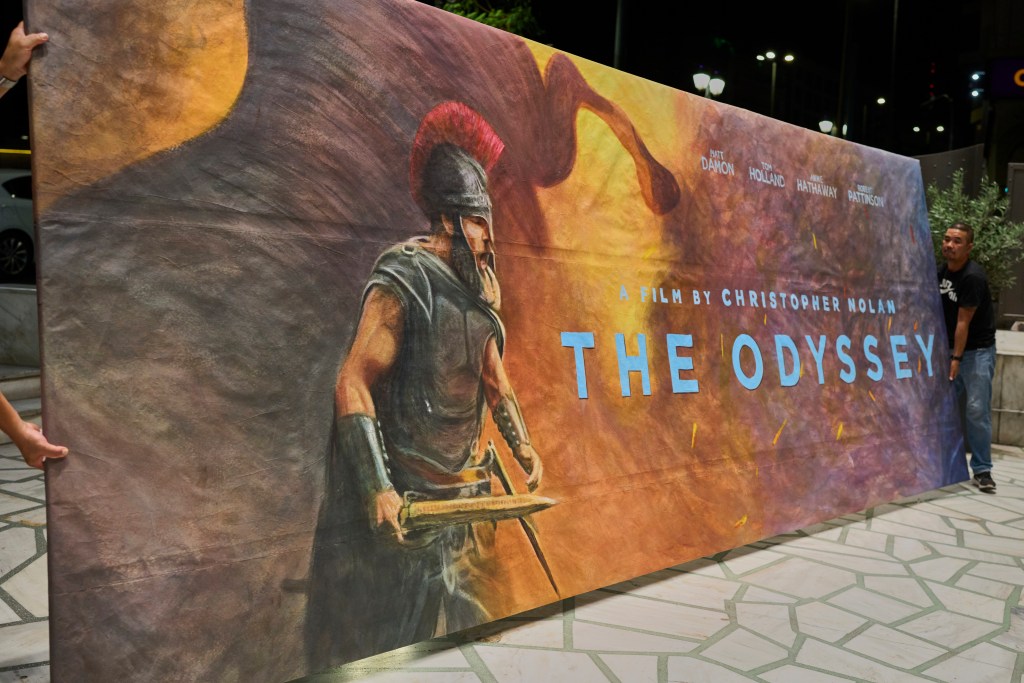
Filmmaker Christopher Nolan has reinvigorated the 2,800-year-old Greek epic poem “The Odyssey,” to make it highly entertaining and current when, to us as 10-year-olds in Territorial Hawaiʻi, it seemed like a distant tale from another world.
Each person who sees Nolan’s “Odyssey” seems to have an opinion about it. The movie has turned attention, at least temporarily, from bleak topics like political corruption and spiraling inflation to an ancient story highlighting human values we share with people of Homer’s world: loyalty, perseverance and love for family.

Ideas showcases stories, opinion and analysis about Hawaiʻi, from the state’s sharpest thinkers, to stretch our collective thinking about a problem or an issue. Email news@civilbeat.org to submit an idea or an essay.
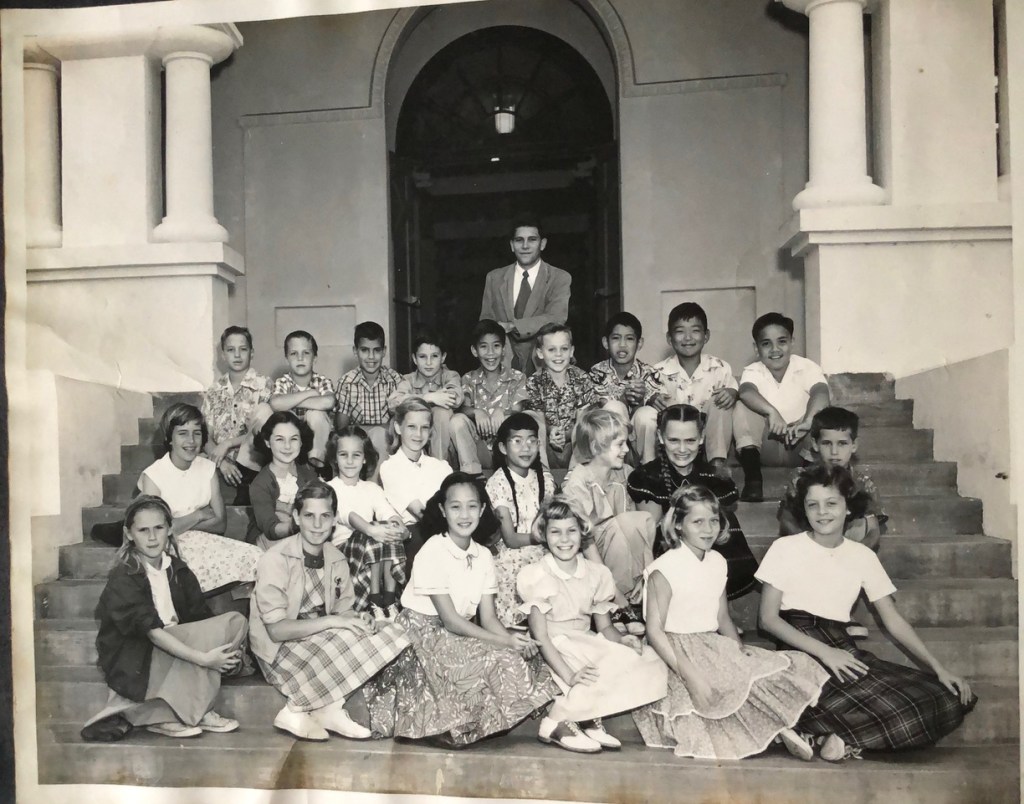
Our fifth grade teacher William Knowlton read us parts of “The Odyssey” in 1952 with a special emphasis on Greek mythology and story telling. Exposure to the epic poem in elementary school was a tradition then at Punahou School.
One of my favorite high school teachers, Elspeth Cantlay Kerr, told me when she was a fifth grader at Punahou in 1937, her teacher also taught them about “The Iliad” and “The Odyssey.” She said it was the best year she ever spent at the school.
For our fifth grade class projects inspired by “The Odyssey,” my classmate Teddie Lam Ching was fascinated to find out the Greeks loved plays. She made a diorama of a Greek theater. But she said her humble cardboard structure looked more like Dillingham Hall, our school’s theater building, than an ancient Greek amphitheater.
Another classmate brought a stuffed Walt Disney dog Pluto from home to discuss Hades, the Greek god of the underworld whom the Romans called Pluto.
My project had something to do with the Trojan Horse. Not because I understood or cared about why the Greeks fought the Trojans but mainly because I liked horses.
We were clueless.
So much of “The Odyssey” was outside of our experience. In the pre-jet era, very few of us traveled far from Hawaiʻi, especially not to the Greek islands.
But we were at a private college preparatory school when prep school curricula throughout the country emphasized the Western literary canon including works by Shakespeare and familiarity with the Greek and Roman epic poems.
Americanization was also a major force in all Hawaiʻi’s schools. The Territory was trying to model its education system on mainland schools as part of a broad effort to convince Congress that Hawaiʻi was ready to become a state.
But not all young students in the Territory were similarly introduced to Greek classics.
The Hawaiʻi public school system at the time was socially and economically segregated in ways that would be considered discriminatory today.
In the 1920s a group of 100 haole parents speaking on behalf of 400 students had successfully lobbied the Territorial Legislature to create a separate system of more academically rigorous public schools.
Admission was limited to children who could demonstrate through testing that they were able to speak standard English.
Not surprisingly, that meant students at the so-called English standard schools were disproportionately white, while children of plantation-era parents who spoke Pidgin or Asian languages were largely excluded.
Non-English standard school students were enrolled instead in regular district public schools where the instruction was perceived to be less academically challenging.
The two-track school system that began in 1924 was finally ended by the Legislature with the last graduating class at Roosevelt in 1960.
Today, many teachers engage students in “place-based education,” connecting what they teach to the culture, history and home communities of their students,
I have been thinking how much more fully “The Odyssey” would have resonated with all of us in pre-statehood Hawaiʻi if our teachers pointed out some of the similarities between ancient Greek and Hawaiian cultures: the voyaging tradition, the courage to head out in wooden boats to explore unknown seas, the importance of extending hospitality to strangers, the worship of many gods, an oral, poetic literary tradition and frequent battles between warrior chiefs.
In Territorial Hawaiʻi, we were living among the descendants of a great seafaring culture while studying another culture of daring Greek ocean explorers yet no one was helping us make the connection.
But that was then and this is now.
So hail to Christopher Nolan for his sweeping cinematography and for re-awakening us to a shared text that has generated so many thoughts about what it has always meant to be human.
 Sign up for our FREE morning newsletter and face each day more informed.

Local reporting when you need it most
Support timely, accurate, independent journalism.
Honolulu Civil Beat is a nonprofit organization, and your donation helps us produce local reporting that serves all of Hawaii.
ContributeAbout the Author