Eric Stinton: School Phone Ban Is A Good Idea, But The Problem Runs Deeper
Like so many of the problems that teachers must cope with, the root of the problem lies at home.
August 3, 2026 · 7 min read


About the Author

A new kind of classroom awaits students this upcoming school year, one where cellphones will no longer buzz and ping under desks and inside of pockets. Instead, they will buzz and ping in backpacks, or on pouches hung on the wall.
The DOE announced new rules prohibiting cellphone usage across all schools. Specifically, no phone use at all during the school day for elementary and intermediate schools, and no phone use during instructional time for high schoolers.
These are undeniably good policies. Phones have always done more harm than good in learning environments. They are incredibly distracting, presenting kids with a multitude of options that are multiply more entertaining – and less challenging – than schoolwork. Why work through a frustrating math problem or struggle through a challenging text when you can chill in the bathroom watching endless 15-second video clips and playing gambling-lite phone games?
Of course students have always taken extended bathroom breaks and gone on hallway walking tours, but smartphones and all the additional activities they provide have only made it easier to avoid work and do something else until the bell rings.
Phones are also a dependable source of cyberbullying and schoolyard drama. Students take and hide each other’s phones for starters. Phones also incentivize misbehavior by adding the potential to record it, and they allow interpersonal conflicts to fester and build via texts and app messages during the school day. When phones are nearby, students can snap pictures of their peers on the sly, catching them at inopportune moments and spreading them around school and on social media before the victim is even aware they had their picture taken. To name a few examples.
One of the most damning influences of phones is how they stunt social development. School has long been an essential place for learning how to interact with others. It’s where most of us learn the basics of how to make friends, solve conflicts, work cordially with people we may not like, and navigate all manner of situations that arise in complex and dynamic social settings. School is a petri dish for the real life joys and challenges of living among other people in adulthood.
Throw phones in the mix, and a great deal of those social opportunities disappear. Time and attention is siphoned away from human interaction and into the easy comforts of mindless games and infinite scrolls.
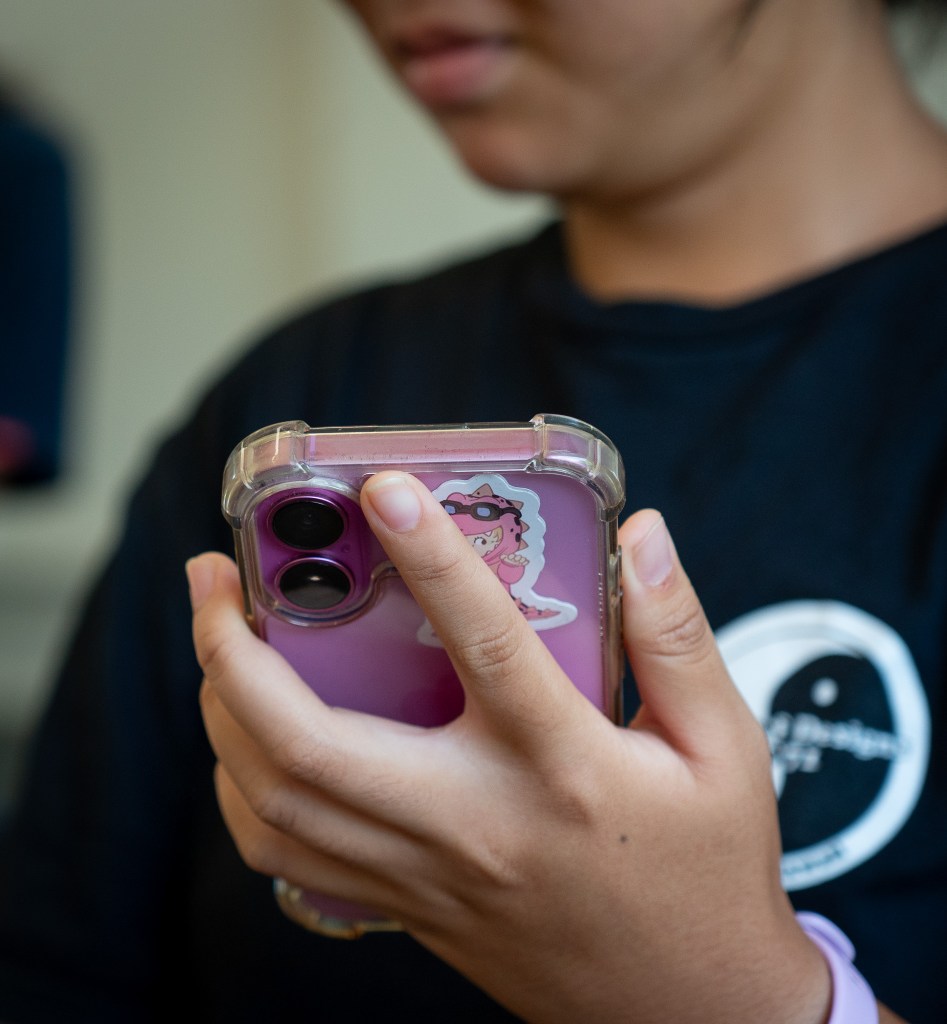
To be sure, valid social interactions can take place digitally, but the design of social media is to funnel us toward things we already know and like. True social development requires a degree of unfamiliarity and discomfort that phones mostly shield us from.
And this is not something that only affects young people. Adults are just as prone to sitting around each other staring at our phones instead of conversing; we are often the worst models of the behaviors we wish to see in our kids. But it is a significant difference that most adults today had a smartphone-free school experience during which traditional social skills were embedded. We had fewer obstacles to developing social skills in our formative years.
It’s worth taking a look at the Program for International Student Assessment scores in this context. Across Organisation for Economic Co-operation and Development nations, average scores for math, reading and science have all seen significant drops starting around 2009 to 2012, when smartphone usage became the global norm. Different demographics, different cultures, different school systems and education policies — similar declines.
Although I’m wary of pinning international education trends on a single cause, I suspect the widespread adoption of devices that fracture our attention, erode our concentrative stamina and waste our time explains a lot.
Given the severity of the harms associated with phones, you might think that the effects of prohibiting them will show up in measurable ways, like improved test scores and decreased student behavior problems. Don’t hold your breath.
When I asked a friend on the continent what his school’s phone policy was, he responded “on paper or how it actually is?” This matches my experience.
I’ve taught at two schools that have enacted similar prohibitions on phone usage, and in both cases it went something like this: Students were initially frustrated by the ban, got used to it, and in many cases even felt relief at being forced to take a break from being on their phones. But sometime around the holidays, they reverted back to their pre-prohibition norms, figuring out ways to bend and sneak past the rules as they always do.
Teacher and administrative enforcement started strong, but as the school year went on and the regular, non-phone related responsibilities started to pile up, confiscations and calls home increasingly became verbal warnings and blind eyes. The teeth of the policies were dulled into corks.
Enforcing phone policies became yet another task to manage, another spinning wheel to balance alongside social-emotional care and behavior management and parent communication and special needs accommodations and instruction and grading and the latest curricular strategy du jour to implement with fidelity until the next year’s and … I won’t go on, but I could. All teachers could.
Ultimately these policies were still an improvement over unmitigated phone usage at school, and consequences were still carried out, even if they became less frequent. But the benefits, while real, were incremental on the whole, averaged out between students who benefitted a lot and students who only learned how to more effectively fight and evade those benefits. The difference between those groups of students can almost always be found at home.
At least in my personal experience parents were universally supportive of the phone policies, which is not always the case. Hell hath no fury like a parent who is slightly inconvenienced by their child’s school for the greater good of the community.
Alas, outside of criminal behavior, you can’t legislate good parenting, so it is easier and more convenient to blame schools, even when accountability for kids rightfully begins at home. Imagine being able to help your kid learn and build social skills and all you have to do is not send them to school with an expensive distraction machine.
If you’ve been reading my column for a while, not only do you have exquisite taste, you will likely know my stance that most – though of course not all – of our critiques of public schools are actually critiques of social problems that merely show up in schools, exacerbated by teachers’ perpetually increasing workloads and historically flatlined pay.
Phones are among the most obvious examples of this thesis. They are enormously harmful to student learning, behavior and social development, and the general expectation has been that schools – which often ultimately means individual teachers – just have to deal with it and figure it out. When schools inevitably fail to solve problems that are not within their jurisdiction to fix, everyone gets up in arms about The State Of Public Education and how the schools are “failing our keiki,” and the cycle endlessly repeats. We learn nothing.
The DOE deserves props for taking action that parents should have been taking all along. These kinds of school policies are an important step in the right direction, but if you really want to see change, it will, as is so often the case, be up to parents.
 Sign up for our FREE morning newsletter and face each day more informed.

Local reporting when you need it most
Support timely, accurate, independent journalism.
Honolulu Civil Beat is a nonprofit organization, and your donation helps us produce local reporting that serves all of Hawaii.
ContributeAbout the Author