Meaningful Oversight Needed To Improve Honolulu's CORE Operations
We need to invest in an alternative 24-hour, seven-day-a-week mobile crisis response.
August 3, 2026 · 4 min read

About the Authors


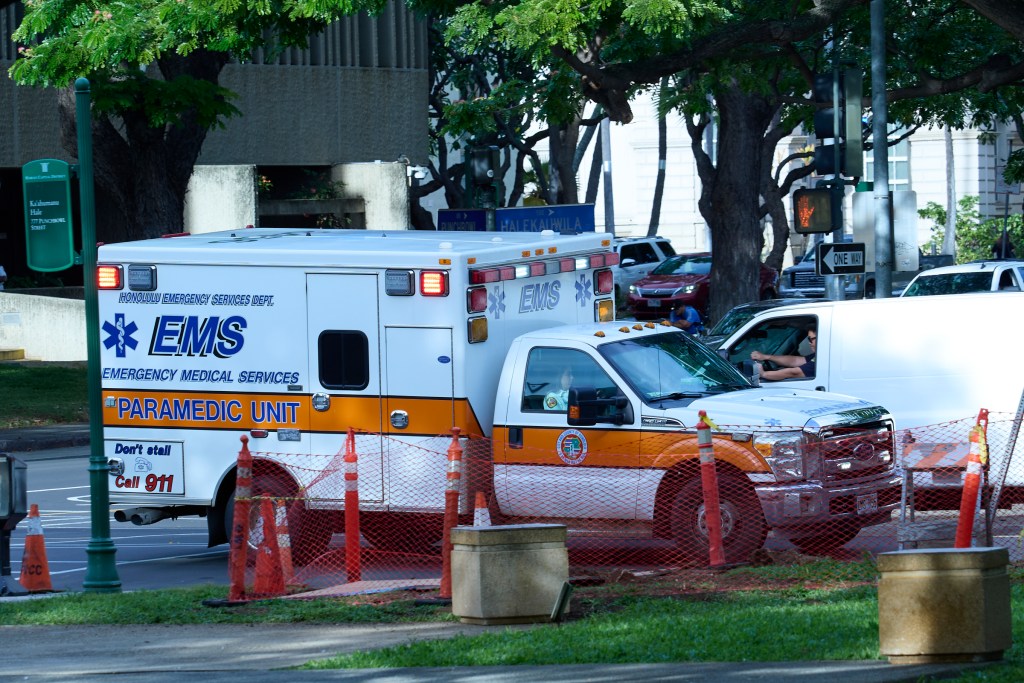
The Honolulu City Auditor recently released a report noting that it had suspended its audit of the Crisis Outreach Response and Engagement program. According to the report, unreliable government-provided data and frequent program changes made it impossible to determine whether CORE is effective or a judicious use of public funds.
The suspended audit reflects the foundational problems at the heart of CORE’s operations: unclear goals, weak accountability, and a failure to follow proven mobile crisis response models.
Advocates and elected officials have repeatedly called on CORE to align with national best practices. Instead, the program has continued to operate without reliable data while moving further from those practices by partnering with law enforcement to involuntarily hospitalize people in crisis.

Ideas showcases stories, opinion and analysis about Hawaiʻi, from the state’s sharpest thinkers, to stretch our collective thinking about a problem or an issue. Email news@civilbeat.org to submit an idea or an essay.
To be clear, Honolulu needs an effective mobile crisis response program. This critique is offered in service of building one that makes our communities safer.
Across the country, non-coercive mobile crisis programs use behavioral health professionals and peer specialists to respond to acute mental health episodes and other nonviolent emergencies.
These models improve safety by connecting people to immediate and ongoing care, reducing emergency room use, and limiting unnecessary encounters with law enforcement. Evidence and experience show that less law enforcement involvement can reduce arrests, injuries, and preventable deaths.
From the outset, CORE has lacked clear goals, objectives, and operational standards. A report released last year by the Reimagining Public Safety Coalition identified several major shortcomings: CORE relies on EMTs rather than behavioral health professionals and peers; it does not operate 24 hours a day, seven days a week, or islandwide; and it maintains weak referral partnerships with little formal follow-up.
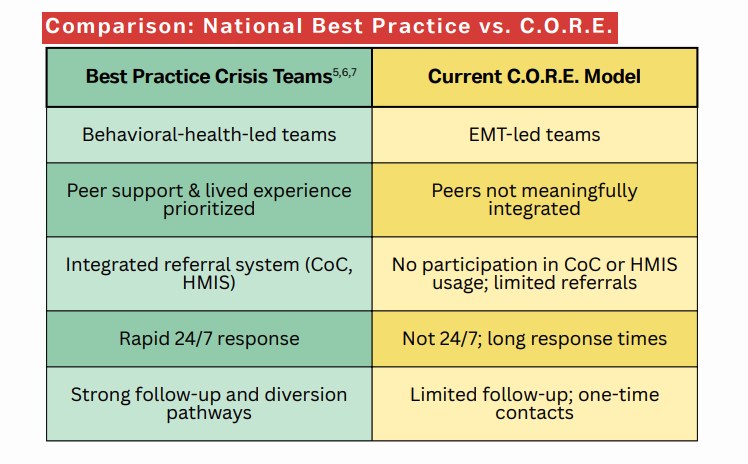
These deficiencies are not inevitable. They can be addressed by adopting established best practices: behavioral health-led teams with meaningful peer support, voluntary treatment, an integrated referral system, rapid 24/7 response, and strong follow-up.
Instead, CORE has taken the troubling step of joining law enforcement in forcing people in crisis into involuntary treatment. Its use of the “MH-3” mechanism, involving involuntary short-term confinement in medical facilities, can compound harm and is less effective than voluntary care.
Physical or chemical restraints can deepen psychological trauma, particularly for people with histories of abuse. Coercive intervention also undermines the trust that effective crisis response depends on.
In February 2024, Gov. Josh Green issued an executive order making Hawaiʻi the nation’s first “trauma-informed state” and directing state departments to integrate trauma-informed care into their operations. A crisis response model that relies on MH-3 and makes vulnerable people feel less safe is inconsistent with that commitment.
We agree with City Councilmembers Val Okimoto and Andria Tupola that Honolulu must reconsider CORE’s current model. However, we are not calling for a temporary pause in CORE’s participation in MH-3. We are calling for that participation to end.
CORE should not assist law enforcement in involuntarily hospitalizing people in crisis.
Honolulu needs an effective mobile crisis response program.
Ending CORE’s role in MH-3 should not mean ending mobile crisis response or dismantling needed services. Honolulu should maintain a 24/7 response led by behavioral health professionals, supported by peers, and governed by goals, safeguards, oversight, provider partnerships, and meaningful measures of effectiveness.
Community oversight and routine, transparent evaluation must be central to any program accountable to the public. It should protect dignity, preserve access to care, and strengthen confidence through measurable, publicly reported outcomes over time.
The Honolulu City Council should continue demanding meaningful reform so CORE can become an effective and reliable part of our community safety system. We invite everyone who cares about safer communities to help ensure that CORE meets the needs of our most vulnerable residents by moving toward proven best practices.
 Sign up for our FREE morning newsletter and face each day more informed.
Community Voices aims to encourage broad discussion on many topics of community interest. It’s kind of a cross between Letters to the Editor and op-eds. This is your space to talk about important issues or interesting people who are making a difference in our world. Column lengths should be no more than 800 words and we need a photo of the author and a bio. We welcome video commentary and other multimedia formats. Send to news@civilbeat.org. The opinions and information expressed in Community Voices are solely those of the authors and not Civil Beat.
Read this next:

Local reporting when you need it most
Support timely, accurate, independent journalism.
Honolulu Civil Beat is a nonprofit organization, and your donation helps us produce local reporting that serves all of Hawaii.
ContributeAbout the Authors