Jeta: Intellectual Theft In The Artificial Age
Hawaiʻi musicians confront extraction, exploitation and ownership in the age of AI music.
August 25, 2026 · 7 min read

About the Author

Michael Jackson drops a posthumous comeback album. It channels the King of Pop, reimagined for Gen Alpha appeal, and absolutely slaps. A holographic MJ goes on a live tour featuring new music and never-before-seen choreography.
Eventually, everyone learns it was AI-generated.
You’ve conjured up this “Black Mirror” episode before. What’s grotesquely unsettling is how plausible it has become.
As early as 2014, five years after his death, a digitally resurrected MJ performed live using projection technology that predates today’s generative AI capabilities.
AI-generated music has since inundated the industry. Generative AI models can now be trained on MJ’s performances, bringing fiction closer to fact.
Industry Property
“Rewriting identity is next,” warns kī hōʻalu (slack-key guitar) musician Makana.
If companies extract from the voices of dead legends, he said, their identities can also be remastered for profit.
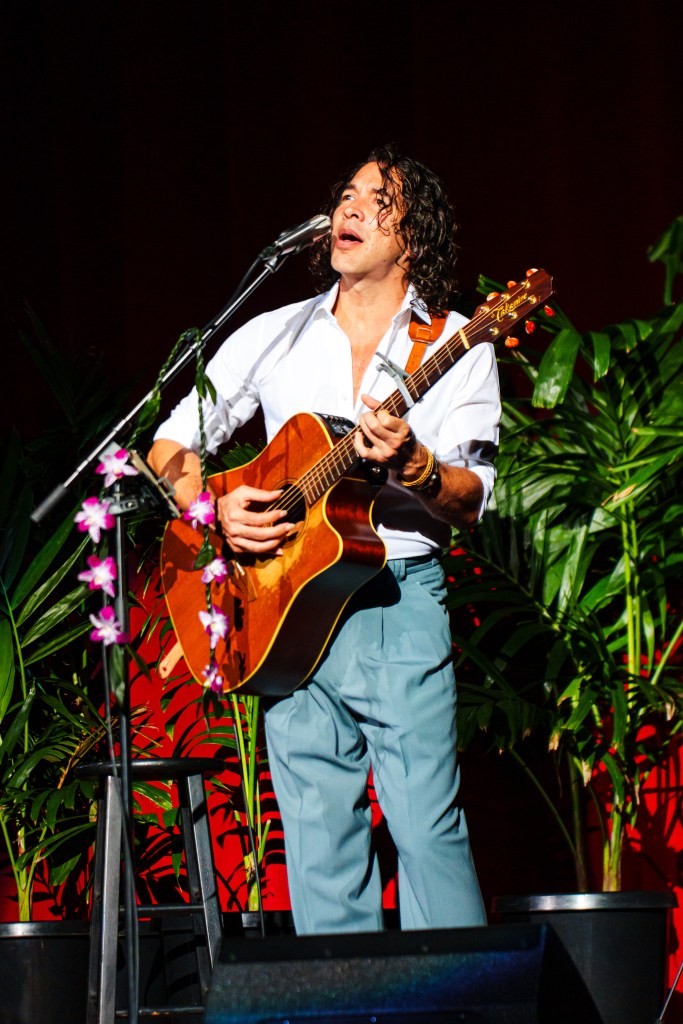
“You’re taking a corpse from the ground and turning it into a slave,” Makana said. “Who they were to humanity, not just through their art, gets distorted and changed.”
Exploitation has long been an industry standard. Streaming revolutionized music consumption, but artists still got screwed.
Makana says Spotify initially offered a fairer pay structure, but major labels pushed back and leveraged a loophole: “They accepted lower royalty rates in exchange for equity and ad revenue that they weren’t contractually obligated to pay artists.”
Of the “pittance of a royalty,” Makana said: “To make as much as we used to on an album, someone has to listen 1,500 times. That’s never going to happen.”
Nearly 70% of global recorded-music revenue came from streaming in 2025 — and now, AI has upended how music gets made, carrying on the tradition of screwing over artists.
Dead On Arrival
“I know a band that was trained on. An AI product created similar music under a different brand. Fans found it through algorithmic suggestions, and soon the AI band had more fans than them. They’d spent years building their career,” Makana said.
AI is evolving faster than policy. In response, Hawaiʻi introduced House Bill 2357 to ban AI-generated music from streaming platforms statewide and require disclosures on AI works.
It died within a month under constitutional scrutiny.
Trump’s executive order from December 2025 threatens to penalize “onerous” state-level regulations in an effort to “sustain global AI dominance,” flagging mandatory AI disclosures as potential First Amendment violations.

Ideas showcases stories, opinion and analysis about Hawaiʻi, from the state’s sharpest thinkers, to stretch our collective thinking about a problem or an issue. Email news@civilbeat.org to submit an idea or an essay.
Coincidentally, opponents of HB 2357 argued it infringed on protected speech. Hawaiʻi’s Attorney General’s Office warned of “significant adverse litigation risk.”
Mainland tech lobbyists also criticized its failure to distinguish “AI-assisted” from “AI-generated,” warning that legitimate human work could be removed and categorical bans could isolate Hawaiʻi from the global music market.
Following testimony, HB 2357 was deferred.
AI, Already Onboard
Two months later, Civil Beat outed Daniel K. Inouye International Airport for playing AI music. The Hawaiʻi Department of Transportation acknowledged AI songs had been in rotation since 2025.
Native Hawaiians heard them differently.
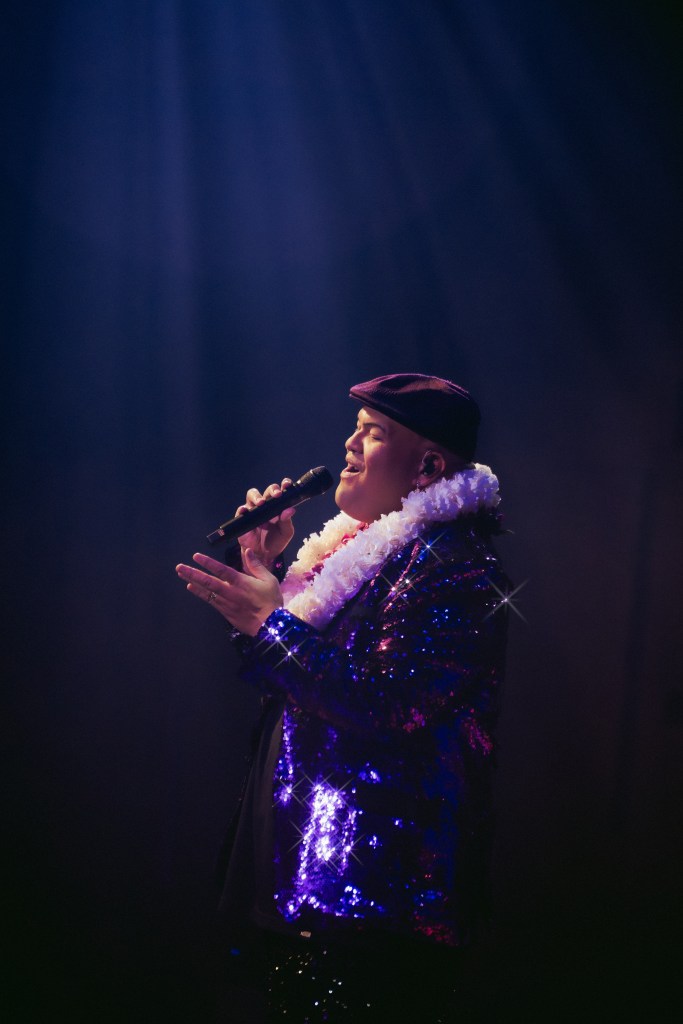
Kānaka Maoli singer-songwriter Kalani Peʻa says, “It’s exasperating hearing some random robot mispronouncing the Hawaiian words. They say Spam and pineapple and ‘aleuha.’ The diction and phrasing is incorrect.”
ʻŌlelo Hawaiʻi only has around 25,000 speakers today.
The disrespect, Peʻa says, is that state agencies approved it over Hawaiian artists like Genoa Keawe, Loyal Garner, or himself, a four-time Grammy Award winner.
‘Farm-To-Table’ Music
AI robs Hawaiʻi of licensing opportunities, too. Music at the airport was generated with AI platforms such as Udio and Suno, which local musicians have accused of copyright theft. Hacked source code confirms the multibillion-dollar company trained its models on unlicensed, copyrighted material scraped from the internet.
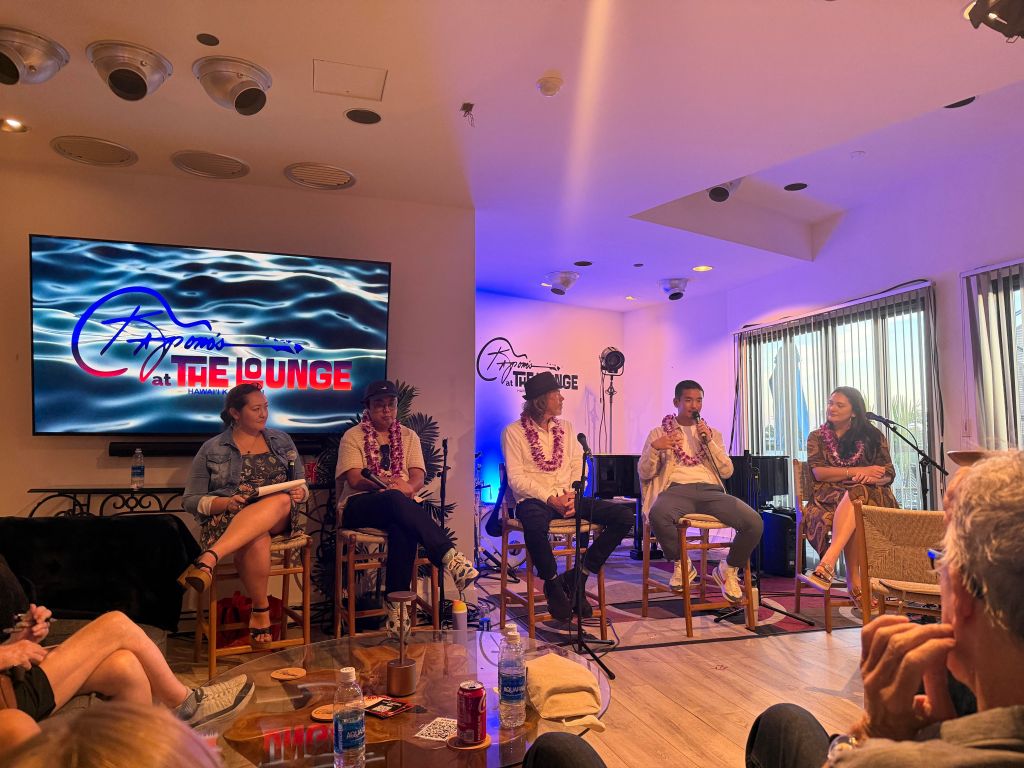
Chaz Umamoto is co-founder of Craft Brewz Music and a board member of the Hawaiʻi Songwriting Festival. He urges local institutions to source music locally, cutting out the mainland middle and treating “farm-to-table” music as a luxury. His agency helps artists like SHIZUE protect their assets and collect royalties.
“If generative AI music were licensed,” Umamoto says, “the money would come back to creators.”
Right now, it doesn’t.
Stolen Property
Historically, Western property rights were forced onto Hawaiʻi, then weaponized to strip Native Hawaiians of land. Under capitalism, private property is fiercely defended.
Yet generative AI can exploit an artist’s intellectual property — intangible but no less private — as a free-for-all. Makana and Peʻa both appear in The Atlantic’s AI Watchdog datasets, indicating their work may have been used to train AI models without consent or compensation.
Peʻa puts it bluntly: “This is beyond cultural appropriation. It’s an abomination to our culture.”
AI can never inherit culture or fully interpret human artistry.
“What’s terrifying about AI training on cultural knowledge and music is that without context, culture doesn’t mean anything,” Makana said. “Just imitation simulacra of an art form with no lineage. It’s empty.”
Cultural Ownership
Companies frequently make offers to buy Makana’s catalog, but he refuses to comply with “monopolistic market forces.”
In protest of AI, he plans to move most of his music off major streaming platforms onto his paywalled Patreon by year’s end, where subscribers can access unreleased tracks, legacy concerts, tutorials, and interact with him directly.
Makana argues musicians only need 5,000 to 10,000 committed supporters to make a living. Chasing fame, he says, is a “race to the bottom.”
For Peʻa, money is secondary to ʻohana and community. “Always remember that you do not own that music once you sign the contract,” he cautions.
As owner of Peʻa Records & Entertainment, he calls for the repatriation of Hawaiian music.
“Many Hawaiian musicians regret selling for quick cash,” he said. “That’s why it’s imperative for Kanaka songwriters like myself to own my music and ensure it stays in the hands of our people.”
The Bill Is Due
Since HB 2357’s deferral, guardrails have emerged worldwide.
Last month, German music-rights organization GEMA defeated Suno in a landmark copyright lawsuit. Suno later settled with the label BMG, establishing an opt-in agreement that compensates artists whose music is used in AI training.
Other labels, including Sony Music Entertainment, proposed banning fully AI-generated tracks from music charts. Spotify announced “AI Persona” badges to identify AI artists and algorithmic changes to demote them.
In 2018, the Music Modernization Act passed with overwhelming bipartisan support for improving how royalties are paid in the streaming era.
Both parties found common ground again in AI regulation: States led by Republicans and Democrats introduced a record number of bills in 2026, pushing for greater AI transparency despite Trump’s attempt to restrict state laws.
The onus now falls on Hawaiʻi lawmakers to turn that bipartisan momentum into stronger protections for local creators. Just because HB 2357 died doesn’t mean the fight should go with it.
 Sign up for our FREE morning newsletter and face each day more informed.
Local reporting when you need it most
Support timely, accurate, independent journalism.
Honolulu Civil Beat is a nonprofit organization, and your donation helps us produce local reporting that serves all of Hawaii.
ContributeAbout the Author