More Bureaucracy Is Not The Answer To A Struggling Economy
Hawaiʻi is now at the very bottom when it comes to business rankings. Here’s what to do about that.
August 2, 2026 · 9 min read


About the Author
For 20 years CNBC has been ranking states for business. Hawaiʻi had never finished last. Now it has.
Fiftieth out of 50. Dead last in infrastructure. Dead last in the cost of doing business. Near the bottom in workforce, access to capital, and whether the state is even friendly to the businesses trying to survive in it.
Quality of life used to save us. For two decades it was the one category that let Hawaiʻi hold its head up regardless of the rest. This year even that slipped sadly to sixth, pulled down by childcare that now costs more here than anywhere else in the country.

I ran budgets for close to 40 years — as a CFO at Ohio State, as an athletic director at the University of Hawaiʻi, in rooms where the money had to balance whether anyone liked the number or not. I have made payroll. I have answered for every line item to people who had every right to ask hard questions.
So I don’t read a ranking like this as a verdict on the islands. I read it as a receipt. It tells you exactly how much friction we’ve built between a person with an idea and the ability to act on it.
Not the beauty of the place. Not the people. The friction. And we’ve spent years adding to it
Nothing illustrates the absurdity of the approach better than two stories that happen to share a single bank account.
A Boondoggle, Audited
Start with the one I’ve written about before: Honolulu’s Office of Economic Revitalization.
The city auditor took a hard look at the 6-year-old office and reached a blunt conclusion. It had run through hundreds of millions of dollars, accomplished very little and operated with a striking lack of transparency.
The Honolulu City Council did the fiscally responsible thing and cut its funding. When opponents lobbied Mayor Rick Blangiardi to veto the cut and restore the $2.9 million he had requested, he did — and enough council members held the line to override him.
Grassroot Institute’s Ted Kefalas was among the handful of people at that hearing urging them to do exactly that. Remember what the office was created to do in the first place: manage the distribution of federal stimulus money during the pandemic.
That is the tell. Hawaiʻi took an emergency windfall and, instead of using it to remove the barriers that make this the hardest state in the country to do business, stood up a permanent bureaucracy to hand it out. Six years and hundreds of millions of dollars later, the auditor found Hawaiʻi had little to show for it.
That is the instinct that put Hawaiʻi at 50th — the belief that a new office, a new program, one more layer of bureaucracy is the answer to a struggling economy.
A Counter-Example, Running Right Now
Now the second story — because it comes out of the same pandemic windfall, and it points in the opposite direction.
For years, the single most reliable way to strangle a small business in Honolulu was to make it wait for a building permit.
A restaurant signs a lease, starts paying rent, and then sits — months, sometimes more than a year — while its plans crawl through the Department of Planning and Permitting.
Every one of those days is rent paid against zero revenue. The meter runs and the doors stay closed.
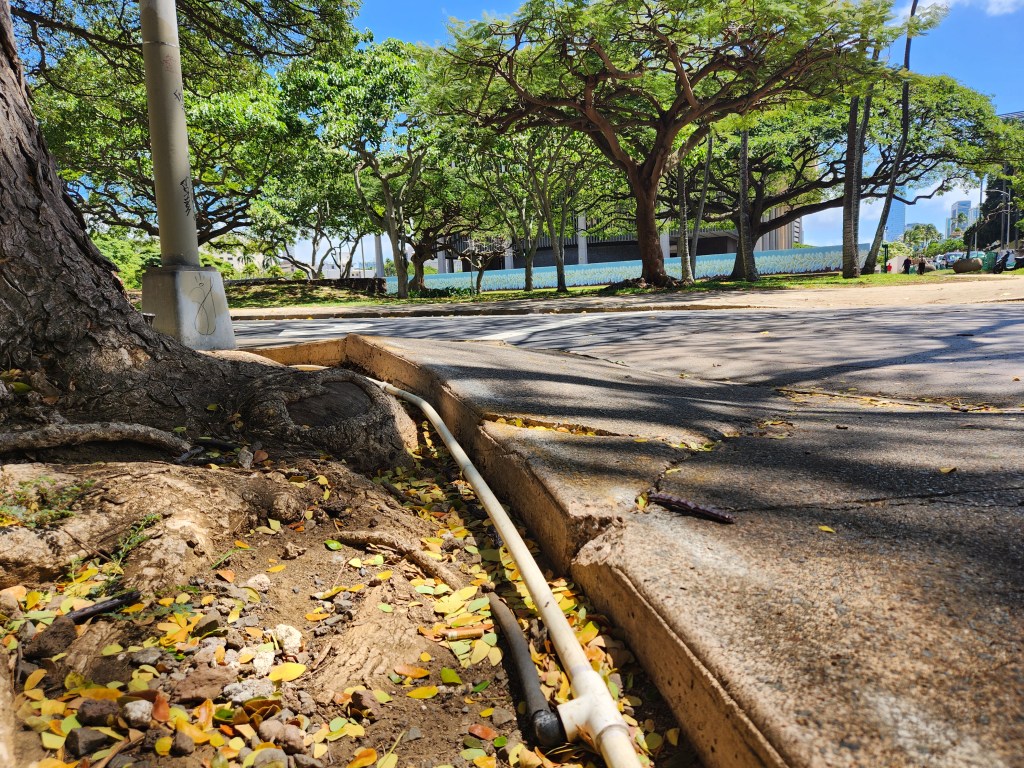
Then the city did something genuinely smart. It put technology to work.
DPP began automating the front end of the process. A software tool now runs every application through a completeness check and returns anything missing before it ever reaches a human reviewer. That one change collapsed the pre-screening step from roughly six months in 2022 to a matter of days, and cleared a backlog of some 3,600 stuck applications.
On top of that, the city rolled out an artificial intelligence plan-review tool called CivCheck, which guides applicants toward complete, code-compliant submittals up front so fewer trips through review are needed. Residential plans that clear the tool now get routed into a priority track that has cut average review times from about 73 days to roughly 33.
Read that again. Not a new office. Not a new program. A tool that subtracts friction instead of adding a layer.
Here is the part worth sitting with.
The permitting overhaul — the new cloud platform replacing software that dated to 1998, and the AI tools running on top of it — was paid for out of the same federal pandemic relief Honolulu received in 2021. The very same windfall the Office of Economic Revitalization was created to distribute.
Same money. Two philosophies. One built a bureaucracy and produced an audit. The other bought a tool and produced results you can measure in weeks saved and doors opened.
Honest About The Limits
Now, I ran finance offices for a living, so I won’t sell you the brochure. The AI is not a miracle, and it is not replacing anyone’s judgment. It helps most at intake — checking whether an application is complete and flagging the relevant sections of code.
The hard part, the substantive review that requires someone who truly knows local code, still belongs to a human being. The people who build these tools say as much themselves: The design keeps a human in the loop, and the software does not make the decision.
But that limitation is exactly why this matters here more than almost anywhere. Hawaiʻi cannot hire its way out of a labor shortage in a place where its own reviewers can barely afford to live. When you cannot staff up, technology that lets a small team do the work of a large one is not a luxury. It is the only realistic path to throughput.
Two cautions, though, or Hawaiʻi will fumble even this.
First, automating a bad process only gives you a faster bad process. If the underlying code is a thicket of contradictory, obsolete rules, an AI will churn through them more quickly without lightening the actual burden.
The tool has to come paired with the harder political work of clearing out the regulations that no longer serve anyone. Otherwise, Hawaiʻi would have simply digitized the bureaucracy instead of reducing it.
Second — and this is the structural weight nobody at the ribbon-cutting wants to name — there is the general excise tax. Unlike an ordinary sales tax, the GET lands on gross receipts at every stage of a transaction, so the same economic activity gets taxed again and again as it moves down the chain.
The folks at Grassroot call it the tax that keeps on taxing, and for a small business running on thin margins it is precisely that. You can lose money on the year and still owe the state its cut of your gross. No permitting tool fixes that. Only lawmakers can.
Where The New Money Actually Comes From
Which brings me to the question I get asked most: If we are not going to tax our way to prosperity, where is the money supposed to come from?
Not from higher rates on a shrinking base. That is the death spiral, and Hawai’i is already in it — you cannot out-tax the family that has given up and moved to Nevada. The top of our income tax already ties for the highest in the nation.
Squeezing harder only accelerates the very exodus that made the state 50th. The money is supposed to come from what the state already owns.
Hawaiʻi is asset-rich and revenue-poor because the state insists on behaving like a tax collector when they should be behaving like an owner. The state holds well over a million acres of land, the ports that are the chokepoint for nearly everything crossing the Pacific and some of the best untapped renewable energy potential in the country. Managed like assets — leased at fair value, modernized, partnered, put to work — those holdings can generate revenue that never touches a struggling business’s bottom line.
It is a harder conversation than raising a rate, and it comes freighted with real obligations, including the commitments to Native Hawaiians that any honest plan must honor. But it is the difference between drawing down a shrinking account and finally earning on the capital the state was handed.
One Reform, Four Problems
Notice how the pieces connect. Faster permits mean more gets built. More building means more housing and more commercial space, which lowers the cost of living and the cost of doing business — the very categories where Hawaiʻi finished dead last.
It feeds demand for exactly the skilled trades our community colleges ought to be training people to fill, which keeps young people home instead of exporting them to the mainland. One unglamorous reform, quietly pulling on four of our worst problems at once, without a dime of new tax.
That is what the way out actually looks like. Not a ribbon-cutting. Not a new agency with a hopeful name. Less friction, honestly measured, and the discipline to steward what Hawai’i has.
The Buried Talent
There is an old parable about a master who entrusts his servants with his wealth before a long journey. Two of them put what they were given to work and hand it back multiplied. The third, afraid, digs a hole and buries his portion in the ground, and returns it exactly as he received it. It is that last servant the master calls wicked and slothful — not for losing the money, but for letting it sit idle when it might have done some good.
Hawaiʻi’s residents have been given a great deal in these islands. Land, position, beauty, and a people willing to work.
For too long the state has buried it — in bureaucracies that hand out money without moving the needle, in a tax that punishes the very activity they claim to want, in assets left idle underground and offshore. Fiftieth out of 50 is what burying your talents in the ground eventually earns you.
The good news is that the hole is one Hawai’i dug — which means it is one that Hawai’i can climb out of, the moment the ones in charge decide to put what they have been given back to work.
CORRECTION: An earlier version of this essay mistakenly referenced without citation a recent column from Keli’i Akina of the Grassroot Institute and an interview with him on KITV.
 Sign up for our FREE morning newsletter and face each day more informed.

Local reporting when you need it most
Support timely, accurate, independent journalism.
Honolulu Civil Beat is a nonprofit organization, and your donation helps us produce local reporting that serves all of Hawaii.
ContributeAbout the Author