Olin Lagon: The Government Decided This Food Was Dirty
After a cholera outbreak, it took 100 years to make it legal to sell unregulated and hand-pounded kalo again.
August 27, 2026 · 6 min read

About the Author

In 1911, a government looked at a food its people had pounded by hand for a thousand years and decided it was a public health threat.
There had been a cholera outbreak in Tokyo that winter. That was all it took. Investigators blamed the mochi shops. The wooden mallets. The stone mortars. Porous surfaces. You cannot sterilize wood. You cannot inspect a stone. From then on, mochi would be made in approved facilities, pressed between metal parts into a mushy paste. Gone were the days when someone swung a mallet while another turned the rice between blows. No more coaxing that stretch and chew out of the grain by hand.
The government tried to soften the blow with free machine-milled mochi. Some rice farmers could not supply the new factories because their crop was already promised to the shops the government had just padlocked. It took a century to unwind the rules. By then a whole generation had grown up believing mochi was supposed to be a paste squeezed out of a plastic bag.
If you went looking for that story, you would not find it anywhere. I made it up.
But if it felt obviously false, if something in your gut said no government would ever do that to its own people, one actually did. Ours.

Ideas showcases stories, opinion and analysis about Hawaiʻi, from the state’s sharpest thinkers, to stretch our collective thinking about a problem or an issue. Email news@civilbeat.org to submit an idea or an essay.
Swap Japan for the Territory of Hawaiʻi. Swap mochi for poi. Every beat of that story happened here. I barely had to change a detail.
On March 2, 1911, territorial Food Commissioner Edward B. Blanchard ordered every poi factory in Honolulu to stop and closed every poi shop in the city. The Board of Health told families to destroy the poi already sitting in their ʻumeke at home. The outbreak was real. Between Feb. 25 and March 14, Honolulu had 31 cases of cholera and 22 deaths.
The Board of Health began handing out more than 7,500 pounds of free machine-milled poi a day, made under its own supervision at the Kalihi Poi Factory.
The approved factories could not get enough kalo. Eleven growers in Mānoa told the papers they were not running a boycott. Their crop was under contract to the poi shops the government had just closed.
Within three weeks the House passed the territory’s first poi law, 21 to 9. Cement floors. Walls at least 6 feet high. A supply of pure water. Nothing operating near a stable or a slaughterhouse or a laundry. The Senate approved it in April and the governor signed the next day.
Then Donald Currie, a surgeon with the U.S. Marine Hospital Service, traced the outbreak to its source. A sick man in Mānoa. His clothing washed in a stream. That stream ran into a loʻi and got mixed into poi. A nearby dairyman even diluted his milk with the same water, and that milk made people sick.
The problem was the water. It was never the pōhaku or the papa or anyone’s hands.
Currie needed about six weeks to find the truth. The government took 100 years to act on it. There was now a poi law and it kept going, getting even stiffer over time. New permits. Certified kitchens. Surfaces that could be sanitized. If you wanted to sell poi, you sold smushed and extruded kalo.
In 2010, I met Daniel Anthony at a Jack Johnson concert. He was in a malo selling plates of hand-pounded paʻi ʻai, kalo pounded with almost no water added.
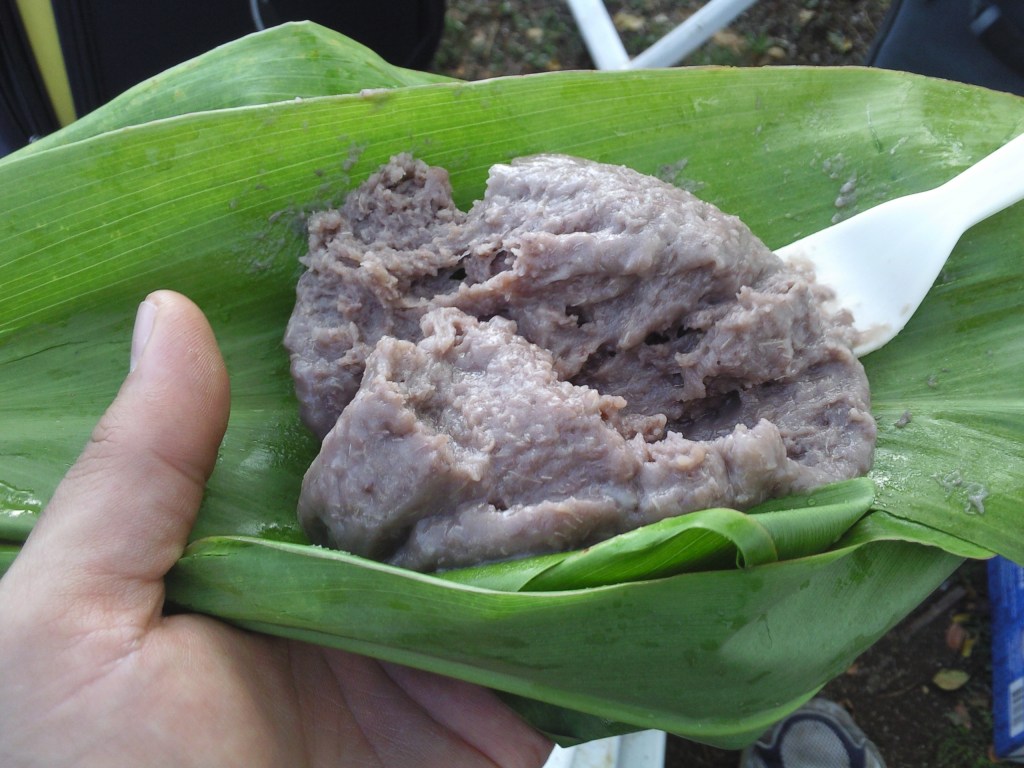
I was floored, and a little confused. I liked poi. I would choose it. I never really craved it. This was something else. Dense and sweet and chewy, still warm from the friction of the stone, closer to fresh mochi than to anything I had ever spooned out of a bag. I was a grown man eating my ancestral food for the first time. I took the picture at the top of this column right after that bite because I did not want to lose the moment.
By then the state had already come for him. In late 2009, the Department of Health cited Anthony because his pōhaku and papa could not be sanitized — and shut him down. He had been pounding close to 10,000 pounds of kalo a year for sale and another 15,000 for his workshops. Then zero. Inspectors also went after paʻi ʻai that had made its way to Town, the restaurant ran by Ed Kenney, one of my favorite chefs.
The shutdown made the news and Richardson law student Amy Brinker read about it and took the fight to the Legislature. Daniel kept pounding and kept talking. Sen. Maile Shimabukuro and Uncle Earl Kawaʻa championed the bill, and hundreds of people testified. It still almost died. In 2011, the Legislature passed SB 101 and Gov. Abercrombie signed it. Legal again, 100 years after Blanchard locked the doors.
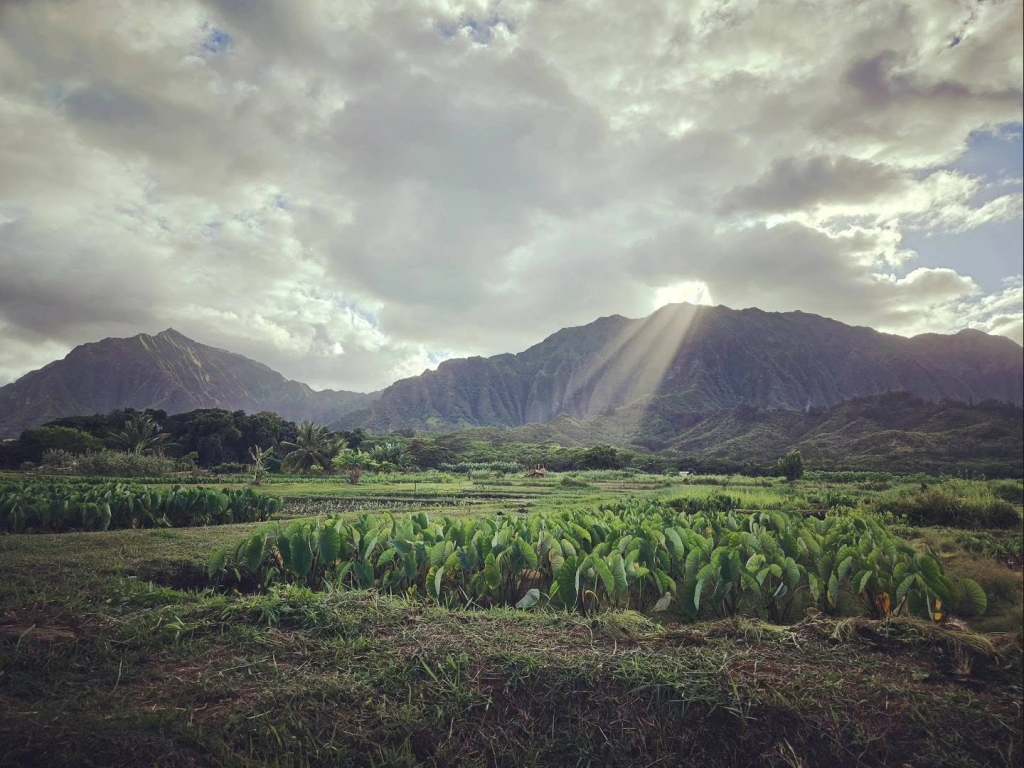
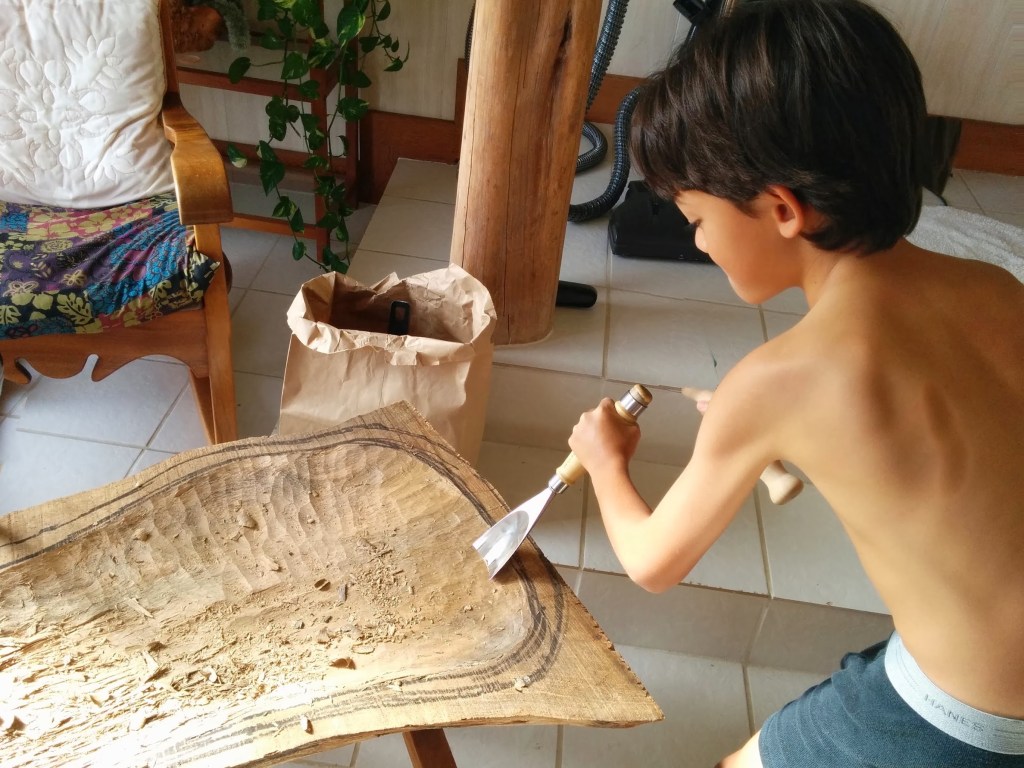
That bite rearranged the next decade and a half of my life. I took a class and carved my own papa and shaped my own pōhaku. I started growing kalo. Our boys got involved. The photo above is the loʻi that my ʻohana helped steward every week. Since then I have introduced hundreds of people to growing kalo and watched the same confused look come over some of them that must have come over me at that concert.
So if you have eaten machine-milled poi your whole life and never had it fresh off a board, there is a flavor your kūpuna knew that you have never met. It survived a century of being called dirty. It is still here, and someone near you is still pounding it.
You can be robbed of a taste and never know to miss it. Go find some.
 Sign up for our FREE morning newsletter and face each day more informed.
Local reporting when you need it most
Support timely, accurate, independent journalism.
Honolulu Civil Beat is a nonprofit organization, and your donation helps us produce local reporting that serves all of Hawaii.
ContributeAbout the Author