Beth Fukumoto: Who Doesn't Like Ranked Choice Voting? Incumbents
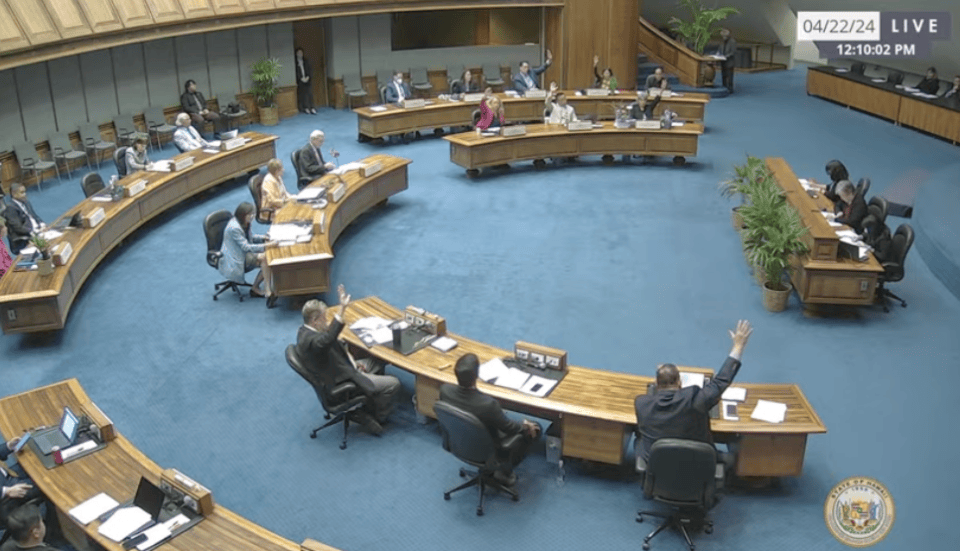
Hawaiʻi lawmakers, even the progressive ones, have not embraced voting reforms including ranked choice.
September 6, 2026 · 6 min read

About the Author

Ranked choice voting has only one real enemy in American politics, and it isn’t a political party. It’s incumbency.
I’m a fan of ranked choice voting. That’s no secret. But this column isn’t actually about the reform itself. It’s about power: how those who have it work to keep it and how the rest of us can change the balance.
Ranked choice voting, which will be on Honolulu residents’ ballots in November, is one of the fastest growing voting reforms in the country. Seventeen cities, counties and states now use some version of ranked-choice voting, which advocates say broadens who can actually run and win. That’s precisely why the reform has gained powerful enemies.

The conservative American Legislative Exchange Council adopted a model bill to ban ranked choice voting in 2023. Since then, I’ve watched states across the country, almost all of them led by Republicans, roll the reform back. Roughly 19 states now prohibit ranked choice voting outright, and in 2024, Hawaiʻi’s own House Republicans attempted to ban the narrow ranked choice law we already have.
None of this opposition is organic. A Rolling Stone/Documented investigation traced the ban’s funding to a well-organized, right-wing network that included the Heritage Foundation and Turning Point Action. Now, Alaska is the site of the biggest RCV fight in the country, where a ballot measure would repeal ranked choice voting and campaign finance disclosure in a single question. The repeal campaign has found supporters in conservative billionaires Jeff Yass and Elon Musk, who added $1.5 million of his own in July.
But it’s not just Republicans blocking reform. Last week, the Democratic National Committee’s rules and bylaws committee came close to effectively nullifying ranked ballots for the 2028 presidential delegate count, an attempt that only failed because advocates pushed back hard.
Maine state Sen. Rachel Talbot Ross argued out-of-state operatives had no business dictating how Mainers vote. Alaska’s Jessica Cook told the committee the proposal “would render a voter’s choice meaningless.” After pushback from party members and election reform advocates, the full DNC killed the proposal on a voice vote.
Following the decision, U.S. Rep. Jamie Raskin posted on X that he was “delighted” with the decision and thanked members for “protecting the popular innovations that make ours a party of strong democracy.” But it’s a rare politician who risks a process they’re already winning in the name of a more inclusive democracy.
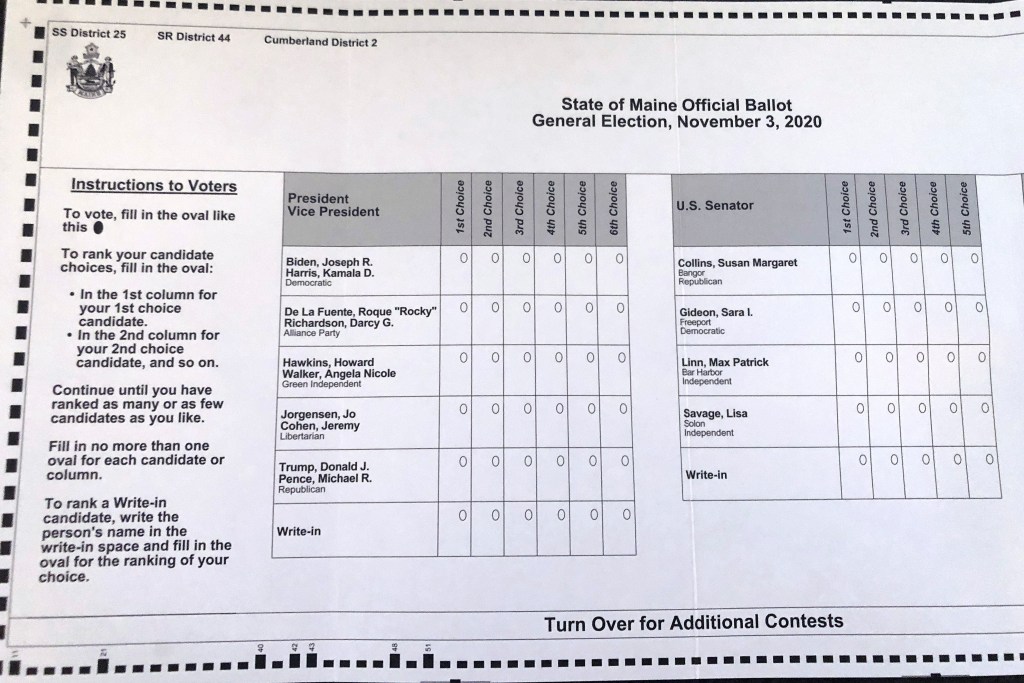
More often, we see responses like that of outgoing Washington, D.C., Mayor Muriel Bowser, who told voters she was “totally against ranked choice voting” and would personally vote no on the measure. D.C. voters approved it anyway in 2024, with 73% support.
This summer, D.C. voters used an RCV ballot for the first time. Unsurprisingly, D.C. elected officials — some newly elected under the RCV system — pushed back on the DNC’s attempted rule change.
Oye Owolewa, Democratic nominee for an at-large council seat and D.C.’s shadow representative, expressed the same concerns I have. In the Washingtonian, he suggested that the DNC was trying to prevent RCV from further boosting progressive candidates’ wins, stating, “This looks like a way for the old regime and the old guard to keep progress from happening.”
And that’s the lesson for us here. While Honolulu’s own RCV ballot measure is unlikely to draw meaningful interest from conservative, out-of-state super PACs, it’s sure to meet opposition closer to home. As progressive as our state seems, this reform hasn’t gained much traction amongst sitting elected officials, particularly in the Legislature.
To be fair, the Hawaiʻi Legislature is one of the few state legislative bodies to put any version of ranked choice voting into law without a citizen initiative or referendum. Yet the measure that passed in 2022 illustrates a simple truth: People who benefit from a system are usually the last to suggest changing it.
The RCV law, passed in 2022, applies narrowly to only two types of elections: special federal elections held outside the normal primary or general election calendar and special elections to fill a vacant county council seat. It doesn’t reform the usual primary or general election ballots. And it does not apply to any legislative seats, even if there is a vacancy. That’s not an oversight.
Earlier attempts in 2019 and 2020 to include legislative seats in the reform sailed through the state House only to die in the state Senate. There are technical reasons, of course — special legislative elections didn’t exist at the time. But it’s more political than that.
The closest use cases in memory, though not all that recent, took place in 2010 when Republican Charles Djou won a 1st Congressional District seat in a special election that included Democrats Colleen Hanabusa and Ed Case. In another 2010 special election, Republican Tom Berg won a seat on the Honolulu City Council with only 18% of the vote.
The RCV law passed in 2022 is designed to do no harm to incumbent legislators. It reduced Republicans’ chances of winning in a special election without increasing competition for legislative seats, which broader RCV would do.
Why does that matter now?
First, Honolulu Question 5, which will appear on Oʻahu ballots in November, is our best opportunity to implement a broadly applicable ranked choice voting system that could increase competition, build a more civil campaign culture and engage more voters.
Second, if voters choose to implement ranked choice voting in City and County of Honolulu elections, state legislators still need to approve it. And, an overwhelming yes vote in November would help ensure the legislator takes it seriously.
Third, a few legislators are still trying to pass statewide RCV reform, and most will be returning next session. Those of us who believe we need a better system that truly represents Hawaiʻi voters need to pay better attention and actively support reform-minded legislation next session.
 Sign up for our FREE morning newsletter and face each day more informed.
Read this next:

Local reporting when you need it most
Support timely, accurate, independent journalism.
Honolulu Civil Beat is a nonprofit organization, and your donation helps us produce local reporting that serves all of Hawaii.
ContributeAbout the Author