Collaboration During A Disaster Is Critical
No single organization can see or do everything.
September 13, 2026 · 4 min read

About the Author

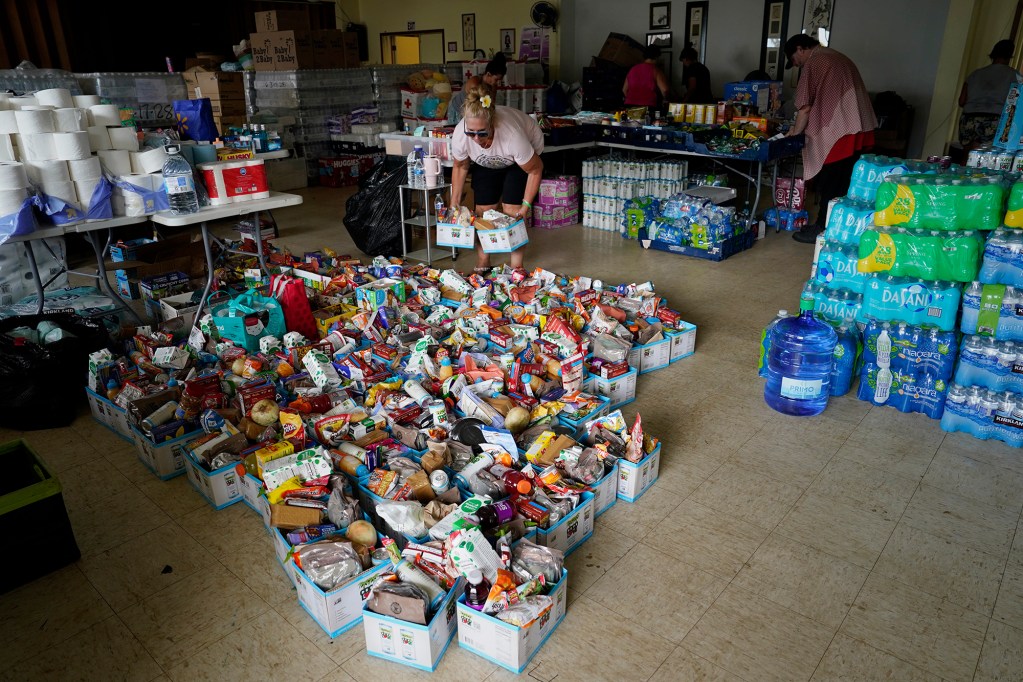
As I stood in our Hilo warehouse during the height of the Hurricane Lala response, pallets of drinking water and emergency rations filled the floor as our trucks rolled out across Hawaiʻi Island.
Yet right in the middle of that rush, a staff member came to me with word of families who were cut off, whose needs had not yet surfaced through any official channel we were monitoring.

Ideas showcases stories, opinion and analysis about Hawaiʻi, from the state’s sharpest thinkers, to stretch our collective thinking about a problem or an issue. Email news@civilbeat.org to submit an idea or an essay.
That moment stayed with me, because it cut straight to the core reality of emergency work. Hurricane Lala reminded us that Hawaiʻi Island does not lack organizations willing or able to step up.
What it revealed is how much more effective we can be when we deliberately connect those capabilities with the relationships already rooted across our communities.
The plain truth is that no single organization can see or do everything. Even with The Food Basket’s islandwide reach and over one hundred long-standing partner agencies, we did not know every need in real time.
We could be moving emergency groceries into one community while learning hours later that another, only miles away, urgently needed water, tarps, or other supplies. Other organizations knew things we did not, just as we knew things they did not. That is why collaboration during a disaster is not a courtesy; it is critical infrastructure.
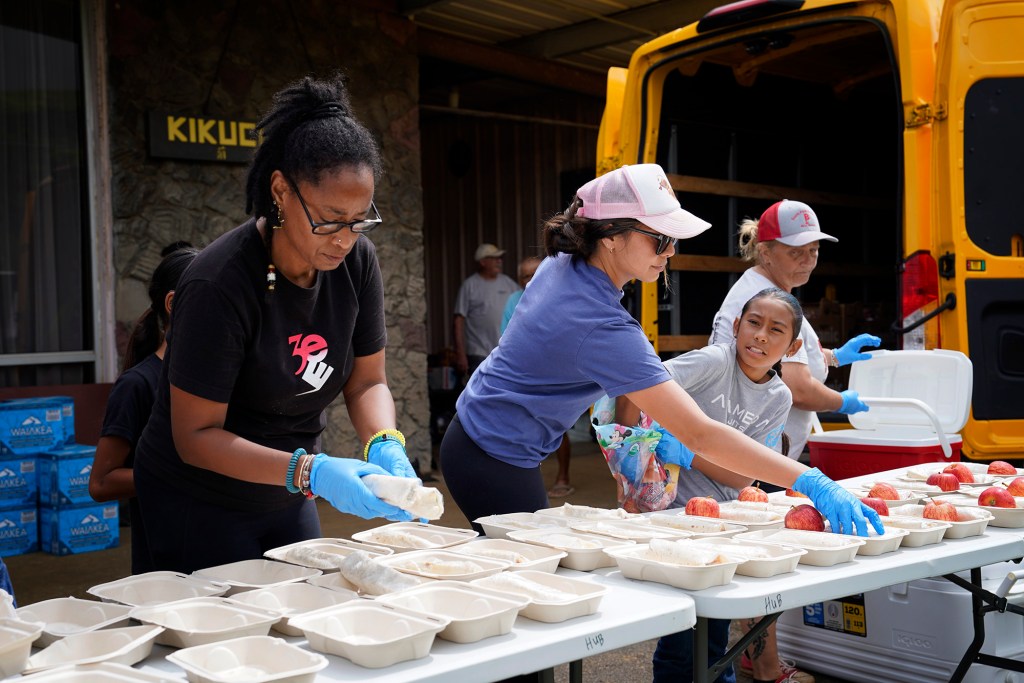
Nearly a million pounds of food and water moved through our operations in August. In the weeks following Lala, we distributed more than one hundred thousand ready-to-eat meals and $375,000 dollars in grocery vouchers while continuing regular hunger-relief programs serving approximately 60,000 residents. Those numbers demonstrate the scale of the response, but they are not what I think about most.
I think about the people who can disappear between the lines of a large-scale response.
During the storm, I heard from an older resident living alone in North Hawaiʻi. A fallen branch had torn out power to her home, threatening her ability to safely store essential medication. She had transportation, and because of that, she was uncertain whether her situation even qualified for help. Her need was real, but it was quiet.
Through relationships already embedded in the community, trusted neighbors responded immediately. Food, ice, and practical help reached her door, and while there, a volunteer checked on another homebound resident nearby. No single agency directed that act of care; it happened because deep, trusted relationships were already in place.
In every disaster, some needs are immediately visible, while others remain unspoken. Some residents know whom to call and how to navigate relief systems. Others are separated from help by geography, language, transportation, downed power lines, or simply the hesitation to ask. If our collective response depends only on needs that are formally reported, we risk reaching only the people who are easiest to see and hear.
That is where long-standing community organizations, neighborhood leaders, and everyday Good Samaritans become essential.
They do not arrive when a disaster begins and disappear when the skies clear. During blue-sky days, relationships are built quietly: at food distributions, farms, schools, community gathering places, in uncle’s garage, and across kitchen tables. When the skies turn gray, those relationships become disaster infrastructure.
Sometimes the most important question is not, “How do we reach this community?” It is, “Who already knows them? Who do they trust?”
Hurricane Lala revealed an extraordinary outpouring of care.
An inclusive disaster response recognizes that no central authority can hold every answer or locate every quiet crisis. It relies instead on a shared network where information is generously shared, organizations contribute what they do best, and local trust helps guide the response.
Hurricane Lala revealed an extraordinary outpouring of care across our island. We do not need to create a willingness to help; that aloha already lives here.
Our challenge before the next storm is to strengthen the connective tissue between us, ensuring our systems are as responsive and generous as our island neighbors, so that when disaster comes, we never lose sight of who we might have missed.
 Sign up for our FREE morning newsletter and face each day more informed.
Local reporting when you need it most
Support timely, accurate, independent journalism.
Honolulu Civil Beat is a nonprofit organization, and your donation helps us produce local reporting that serves all of Hawaii.
ContributeAbout the Author