Denby Fawcett: Aloha Tower Has Lived Many Lives In Its 100 Years
As this Honolulu landmark turns 100, what is ahead after decades of failed development efforts?
September 23, 2026 · 10 min read

About the Author

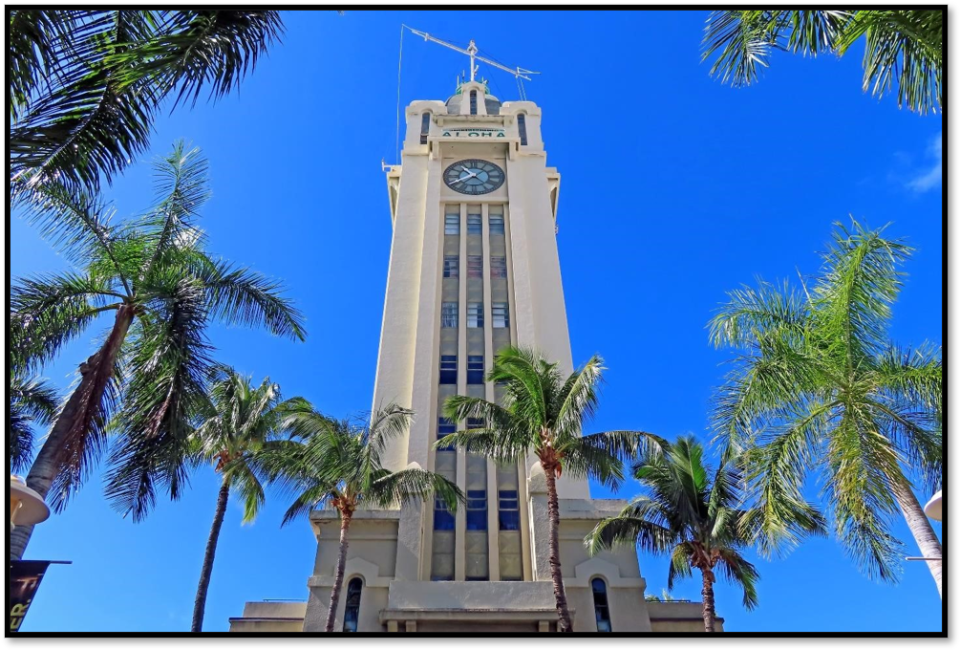
Looking ahead to the state’s celebration of Aloha Tower’s centennial next month makes me think back to the start of my working life. During the summer of 1956, I worked for my father in his advertising and public relations company Vance Fawcett Associates on the eighth and ninth floors of the Aloha Tower.
I was 14 — underage to be employed — but my father was a strong believer in work; he thought no matter how wealthy a person was, everyone should experience the value of working and should start early.
Going to my job at the Aloha Tower was an adventure from the beginning with the ride up the original elevator, a metal cage with its accordion-grate door. “Like the elevator in a hotel in Paris in the 1930s,” my brother Tony said.
Machinery from the tower’s huge clock poked down into the ceiling of my father’s office, which he disguised with a ceiling planter filled with dangling pothos vines.
And there was the wind. The tower was not air-conditioned. Swirling winds the Hawaiians called Kūkalahale blasted through the windows sending papers flying with my father’s secretary Rosalie Char Tam constantly on the lookout for more paperweights to hold everything down.
My friends teased me about being trapped in an office while they swam and surfed all summer. But I was in the heart of downtown Honolulu, the center of action in Territorial Hawaiʻi, working inside the city’s most iconic building. I was making money while meeting new friends as I filed papers and answered phones. I felt respected and grown up.
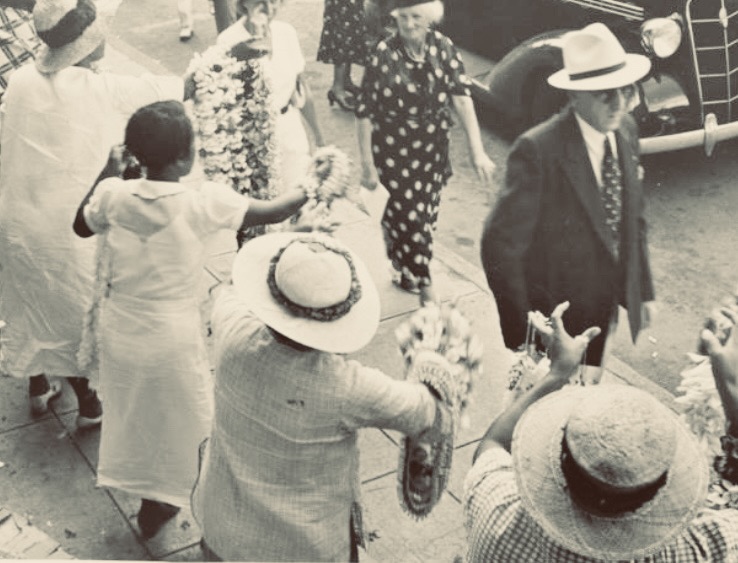
Looking out from the front windows, we had a spectacular view of incoming passenger ships easing into Honolulu Harbor – especially on the colorful “boat days” that featured hula dancers and swimmers diving for coins alongside the ships.
The Royal Hawaiian Band was there to greet the arrivals as dozens of women in muʻumuʻu sold leis on the street below. Out the back windows, the view was peaceful: Nuʻuanu Valley, a deep green expanse with banks of clouds hovering over the Koʻolau mountains.
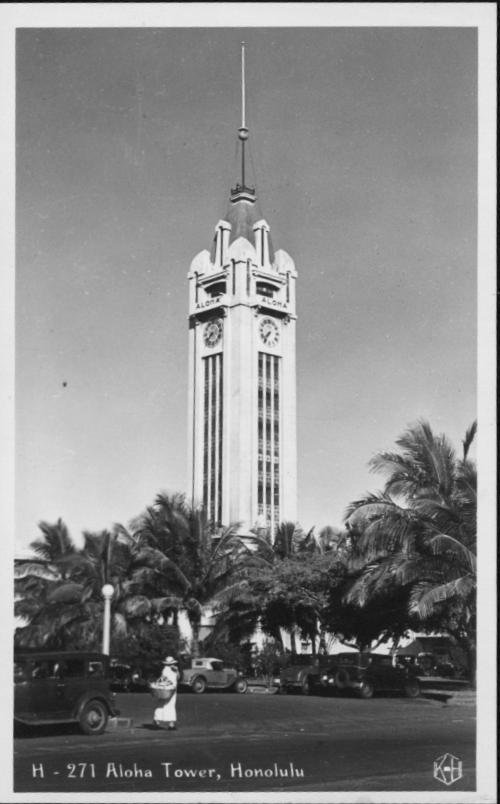
Aloha Tower was the tallest building in Hawaiʻi then. An imposing Art Deco structure, it was built in 1926 for $160,000 to create a welcoming landmark at the recently modernized Piers 8, 9 and 10.
My father’s business stationery featured a colored picture of the tower with the caption: “Aloha Tower, 10 stories. Tallest building in Hawaii.” He knew his business contacts in skyscraper New York would think it was hilarious but it was also clever marketing. The New Yorkers would pay attention to his company by holding on to his letters to show their friends.
Hawai‘i was still perceived to be a remote, exotic place with most people traveling to the islands by ship. Aloha Tower was the first sight they saw as they entered the bustling maritime harbor that had defined Honolulu for generations.
A Camouflaged Aloha Tower
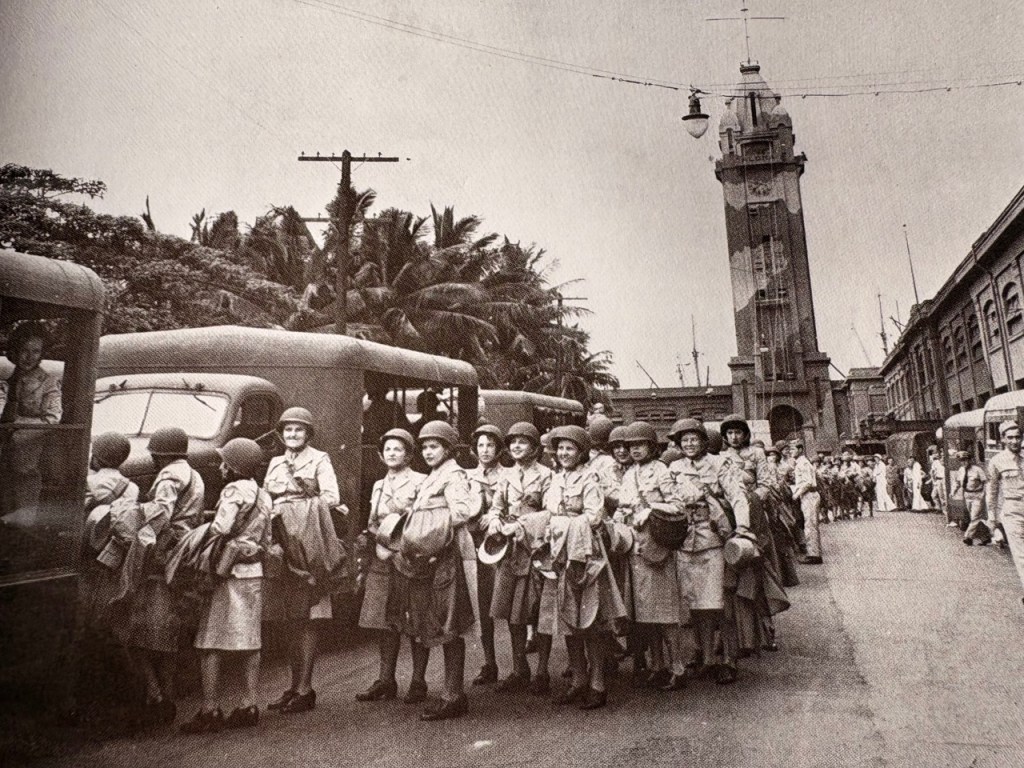
The tower served a critical role after the Japanese bombing of Pearl Harbor. The Navy commandeered it to become a control center for Allied ship convoys through the Pacific.
The white stucco structure was painted with dark brown and green stripes for camouflage. Passenger liners that once carried tourists became carriers of troops and war supplies. The tower was not returned to the public until 1947, when the camouflage was sandblasted off its sides.
Aloha Tower resumed its former peacetime role as a visitor entryway to Honolulu. Residents returned for the fun of riding the quaint elevator to the 10th-floor viewing platform. It was so thrilling to be up there in low-rise Hawai‘i that my brother Tony said, “The people down below looked like ants.”
But life at the harbor changed rapidly after statehood on Aug. 21, 1959 and the rise of the jet age. A few months later, Qantas and Pan American World Airways became the first carriers to launch regular Boeing 707 passenger flights to the islands. The jets significantly reduced travel times, turning nine-hour flights from the West Coast on propeller planes to less than five hours.
The era of mass tourism was beginning, shifting the visitor gateway from Honolulu Harbor to Honolulu International Airport. The final blow for the harbor was when Matson Navigation ended its ship passenger service to Honolulu in 1970 to concentrate on cargo and container shipments.
The Redevelopment Era
In the years that followed the state tried various projects to reinvigorate the largely dormant harbor into revenue-producing real estate. Proposals abounded, including one by Gov. George Ariyoshi in 1978 to replace the industrial harbor facilities with a world trade center and public facilities. That and other ideas lacked financial support.
In 1981, the Legislature created the Aloha Tower Development Corp., a semi-autonomous agency eventually housed in the State Transportation Department to spark development of what was then called the Aloha Tower Project. This was the land under Aloha Tower and state harbor property stretching 17 acres from Piers 5 to 14.
What followed was a series of grandiose proposals and failed projects that triggered lawsuits against the state and developer bankruptcies.
The grandest fiasco happened in 1989, when Aloha Tower Development Corp. sought redevelopment plans from real estate interests and received bids from four companies, including major developers Chris Hemmeter and Jack Myers. The winner was a $544 million proposal from the Aloha Tower Associates, a group of local investors partnered with Baltimore developer James Rouse, who had built successful retail marketplaces in Boston and Baltimore.
ATA proposed a business hotel, two luxury condominium towers, an office building, a new cruise ship terminal and a festive retail and restaurant marketplace. It was also supposed to include affordable housing and 2,000 underground parking spots.
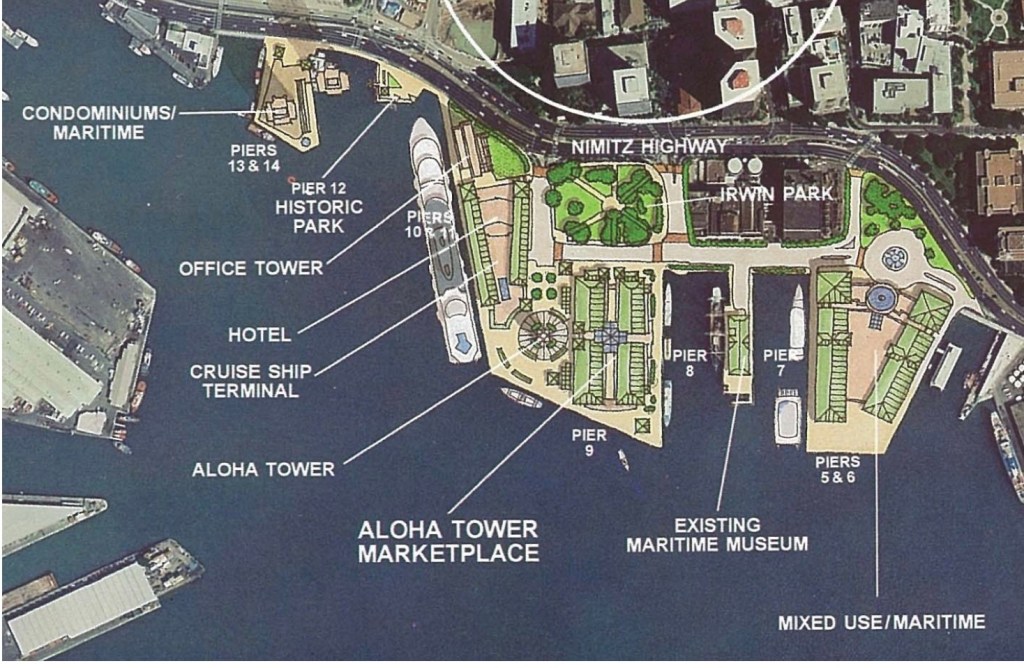
An angry loser, Hemmeter, whose $1.3 billion plan was much more ambitious, mocked the winning proposal saying: “If I had known the process was to create a project with the least impact, we would have started out with three palm trees and a dollar bill.”
Hemmeter also ridiculed the proposed underground parking as “underwater parking.” He moved away from Hawai‘i soon after his loss to develop casino gambling projects in New Orleans and Colorado and died in 2003.
ATA was only able to finish the $95 million Aloha Tower Marketplace, which opened in 1994. Three years later, the group declared bankruptcy. It had promised the proposal would generate $4 billion in lease revenue over 65 years but the state never saw that or the $60 million lease premium or other projected benefits.
That debacle was followed by two other businesses failing to make a go of the area, one of them also declaring bankruptcy.
The Aloha Tower Marketplace became what Honolulu Magazine described as “a sadly underwhelming ghost mall with a reputation for taking down brave local restaurateurs and boutique owners.”
From Mega-Project To College Campus
There was so much wrong with the sweeping schemes, including a lack of convenient free parking and also the barrier that busy Nimitz Highway, with its six lanes of traffic, poses to pedestrians trying to cross from downtown to the harbor. In addition, Aloha Tower Associates failed to get financing to finish the entire promised project — the parking, luxury condos and a hotel necessary to bring needed customers to the marketplace.
In a 2010 management audit of the state’s Aloha Tower Development Corp., State Auditor Marion Higa criticized the agency as flawed and inept. She recommended that the agency be abolished for its failure in 30 years to develop a steady, reliable revenue stream for the state from the harbor properties.
“The Marketplace was supposed to generate $22.2 million from 1996 to 2001. It only generated $4.8 million,” she wrote.
In spite of the scathing audit, the state retained ATDC which continues to operate today.

Developer Ed Bushor partnered with Hawai‘i Pacific Universityʻs business arm Hawai‘i Lifestyle Retail Properties LLC in 2011 to take over Aloha Tower Marketplace from its last failed tenant, AREA Property Partners, for $14 million.
In 2014, HPU acquired sole ownership of the marketplace property, along with the state lease for the land under it that extends to the year 2058. That is where things stand today.
HPU has turned the marketplace into a college campus with 330 student residents living on the second and third floors.
The ground floor features meeting rooms for students along with 15 retail operations including a student cafeteria called Pier Nine by Sam Choy.
A Hushed, Sober Reality
I walked through the marketplace Friday night to check out how its retail vibe today compares to the grand promises of the past. The ground-floor retail area was quiet, really quiet. Only a smattering of people — mostly families — were dining in the Old Spaghetti Factory.
Outside on the waterfront, a few hundred tourists at the tenant Ka Moana Luau were engaged in a contest to see which audience group could shout “A-looooha” the loudest.
Of course, HPU wants its retail tenants to be successful but says its approach is to create an environment that supports student life. Many HPU freshmen living there are too young to drink – bars being a driver of past plans to draw thousands of tourists and residents to the area each night.
“The overall focus of the campus is quite different from the Marketplace’s earlier era as a nightlife and entertainment destination,” wrote HPU’s chief communications officer Jeffrey Rich.
Rich says instead of bars crafting fancy cocktails, HPU is favoring amenities to make it a comfortable and safe place for students to live and study with a tenant mix of coffee shops, a bookstore and dining options. He says such operations also appeal to cruise ship passengers walking down to the marketplace in the day from Pier 2, where most of the mega cruise liners now dock.
He was unable to say what HPU pays the state in annual rent but a 2025 state financial audit says HPU must pay the Aloha Tower Development Corporation at least $1 million a year, a far cry from the billions promised by earlier developers.

When people gather next month to celebrate Aloha Tower’s 100th birthday, I will be looking back to the summer 70 years ago when I worked at my father’s office in the tower. Back then, the busy working harbor was the center of life in downtown Honolulu – a more optimistic time we are unlikely to experience again.
 Sign up for our FREE morning newsletter and face each day more informed.
Local reporting when you need it most
Support timely, accurate, independent journalism.
Honolulu Civil Beat is a nonprofit organization, and your donation helps us produce local reporting that serves all of Hawaii.
ContributeAbout the Author