Election Integrity Is About Protecting Every Voter — And Every Candidate
They put their names, reputations, families and ideas before the public. That is the integrity our democracy requires.
September 24, 2026 · 5 min read

About the Author

Our elections do not belong to candidates, political parties or government officials. They belong to the people.
But the integrity of our elections also deeply matter to the people who step forward and offer themselves for public service.
That is why I filed a complaint with the Hawaiʻi Elections Commission on September 20, 2026. Subsequently I also submitted a report to the U.S. Department of Justice Civil Rights Division regarding what occurred during Hawaiʻi’s 2026 primary election.

Ideas showcases stories, opinion and analysis about Hawaiʻi, from the state’s sharpest thinkers, to stretch our collective thinking about a problem or an issue. Email news@civilbeat.org to submit an idea or an essay.
I took action as a registered Hawaiʻi voter who believes that when serious questions arise about whether voters received the correct ballots, government has a responsibility to fully examine what happened and take appropriate steps to correct it.
Election integrity protects two fundamental participants in our democracy: the voter who casts the ballot and the candidate who agrees to have the people decide.
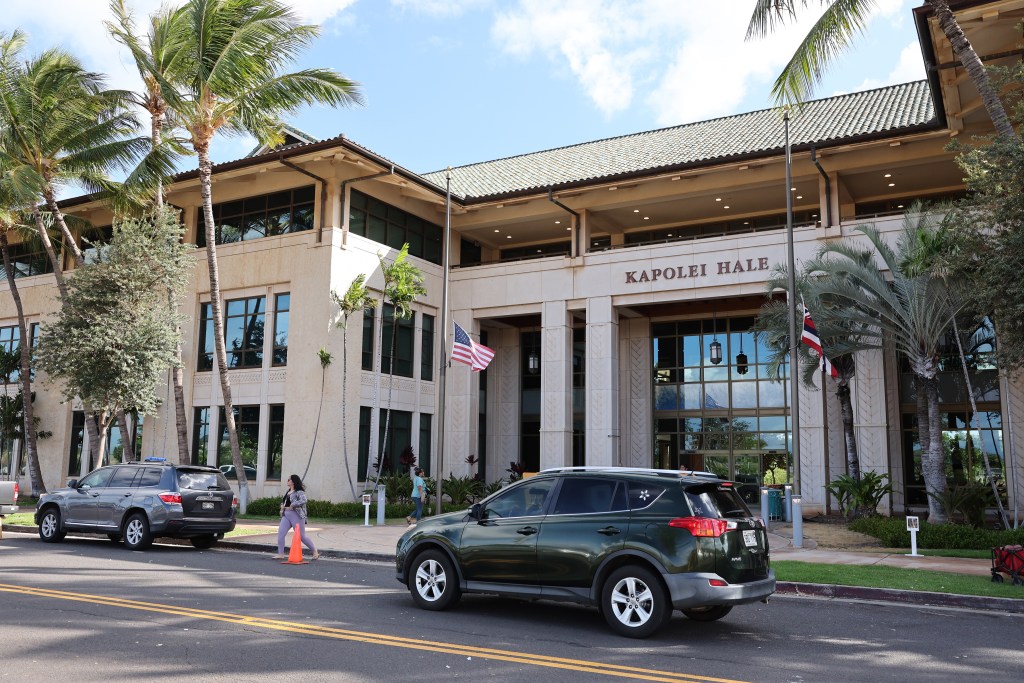
During litigation over the House District 43 Republican primary, it became public that two voters who went to vote in person at Kapolei Hale had requested ballots for House District 40, Precinct 3, but were mistakenly issued ballots for House District 43, Precinct 3.
In an ordinary election decided by hundreds or thousands of votes, two ballots might not affect the outcome.
But this was not an ordinary election.
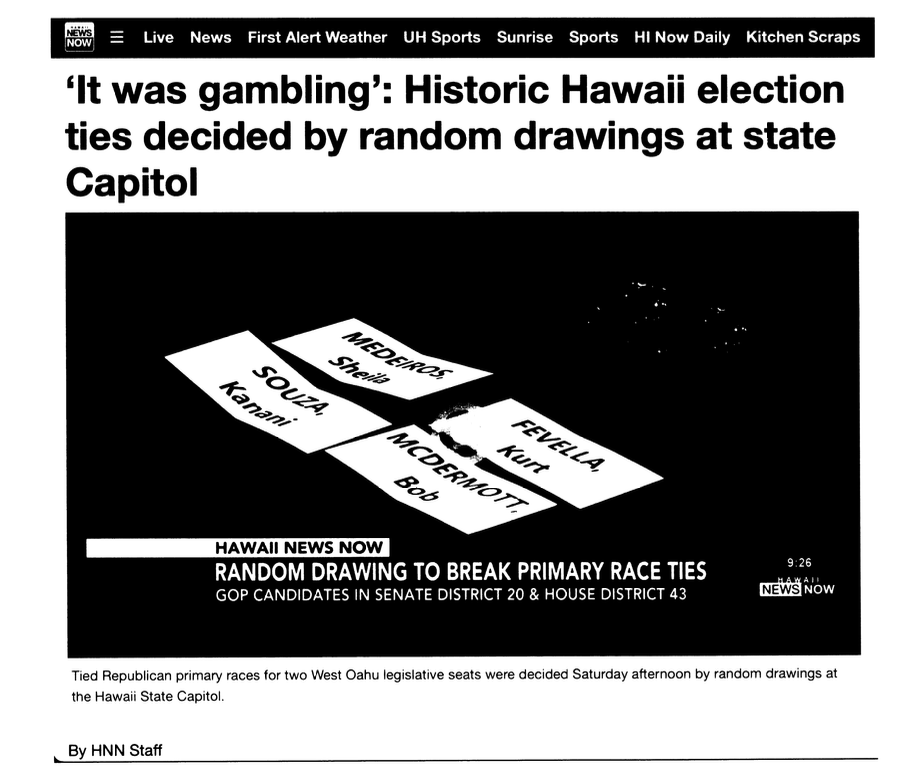
The House District 43 primary ended in a tie. The Senate District 20 Republican primary also ended in a tie.
The Hawaiʻi Supreme Court ultimately ordered another election in House District 43. The same ballot problem was also relevant to Senate District 20, although the court subsequently declined the request for another Senate election based on procedural circumstances that differed from the House case.
The voters deserve a voice.
For me, however, an important public-interest question remains: What happened to the votes of the two voters who went to a government voting center expecting to receive the proper ballots for the districts in which they were registered?
Those voters did what citizens are supposed to do. They showed up. They participated. They trusted the election system to give them the proper ballots.
Candidates Deserve Election Integrity, Too
Running for public office requires something from a person.
Candidates put their names, reputations, families and ideas before the public. They spend months campaigning. They raise money, knock on doors, attend community meetings, answer questions and ask voters to place their trust in them.
Some are incumbents. Some are challengers. Some have significant financial support. Others may be ordinary residents stepping forward for the first time because they believe they can make a difference.
Whatever their political party or background, they enter the election with one fundamental expectation: Let the voters decide.
Election integrity therefore protects candidates, too.
When an election ends in an exact tie, those protections become even more important because a single ballot can determine the winner.
Our standards for election integrity cannot change depending upon whose name appears on the ballot.
We frequently say that we want good people from our communities to step forward and serve. We encourage younger generations, working families, Native Hawaiians, small-business owners, educators, community advocates and ordinary residents to consider public service.
Running for office is difficult. Yet potential candidates may reasonably wonder: If I spend months campaigning and an election comes down to one vote, will the system be able to demonstrate that every ballot counted in my race belonged there?”
If a ballot discrepancy is discovered, will I receive the information necessary to understand what happened? Will there be clear procedures? Will those procedures be established before Election Day?
And if something goes wrong, will there be a meaningful process for addressing it?
Those questions are important because public confidence in elections affects more than voter turnout. It can also affect who is willing to become a candidate in the first place.
My complaints ask government institutions with responsibility in this area to review the circumstances and determine what, if anything, should be done.
The U.S. Department of Justice Civil Rights Division issued a record number acknowledging my online submission. The existence of that record does not mean the department has reached any conclusion about my concerns. It means I have placed those concerns before the appropriate federal civil-rights office for its consideration.
We should be able to discuss election mistakes without turning every question into a partisan battle. All voters deserve properly administered elections.
And every candidate — incumbent or challenger, Republican or Democrat, experienced officeholder or first-time community candidate — deserves an election system in which the rules are clear and the voters determine the outcome.
Neither expectation is unreasonable. They are two sides of the same democratic promise.
Public confidence cannot be demanded. It has to be earned through accuracy, transparency and accountability.
Protecting the integrity of Hawaiʻi’s elections therefore does not mean protecting one candidate or challenging another. It means protecting all voters and all candidates.
 Sign up for our FREE morning newsletter and face each day more informed.
Community Voices aims to encourage broad discussion on many topics of community interest. It’s kind of a cross between Letters to the Editor and op-eds. This is your space to talk about important issues or interesting people who are making a difference in our world. Column lengths should be no more than 800 words and we need a photo of the author and a bio. We welcome video commentary and other multimedia formats. Send to news@civilbeat.org. The opinions and information expressed in Community Voices are solely those of the authors and not Civil Beat.
Read this next:

Local reporting when you need it most
Support timely, accurate, independent journalism.
Honolulu Civil Beat is a nonprofit organization, and your donation helps us produce local reporting that serves all of Hawaii.
ContributeAbout the Author