Denby Fawcett: Can Oʻahu Spend Millions On Pandas And Also Upgrade The Zoo?
Giant pandas could be a big draw for the Honolulu Zoo. But would they distract from the mission of protecting species endemic to Hawaiʻi?
September 9, 2026 · 9 min read

About the Author

I love the idea of being able to get close to giant pandas, right here at the Honolulu Zoo, which is within walking distance of my house. It sure beats flying to Chengdu, China to see them.
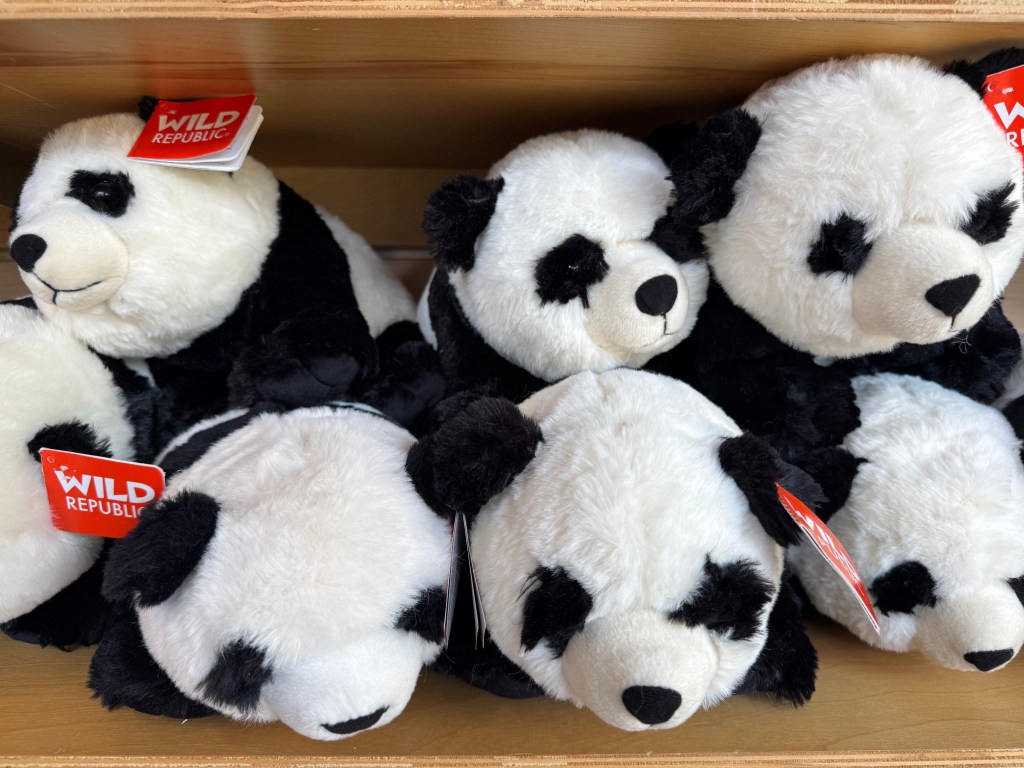
If China’s leaders were to grant Mayor Rick Blangiardiʻs request for two giant pandas, people would be certain to flock to the zoo who had never visited or who had not been back since they were kids.
Yet a Honolulu home for pandas would come at a cost. China’s typical charge for loaning a pair of pandas if they stay for a decade is $10 million. Many other expenses would follow, such as the need for new habitat to keep them cool and piles of bamboo that pandas typically crunch through each day.
You have to wonder if the pandas might compete with new director John Berry’s ambitious plans to upgrade the zoo into Honolulu’s top tourist attraction. He’s looking to double visitor numbers from 550,000 to a million a year.

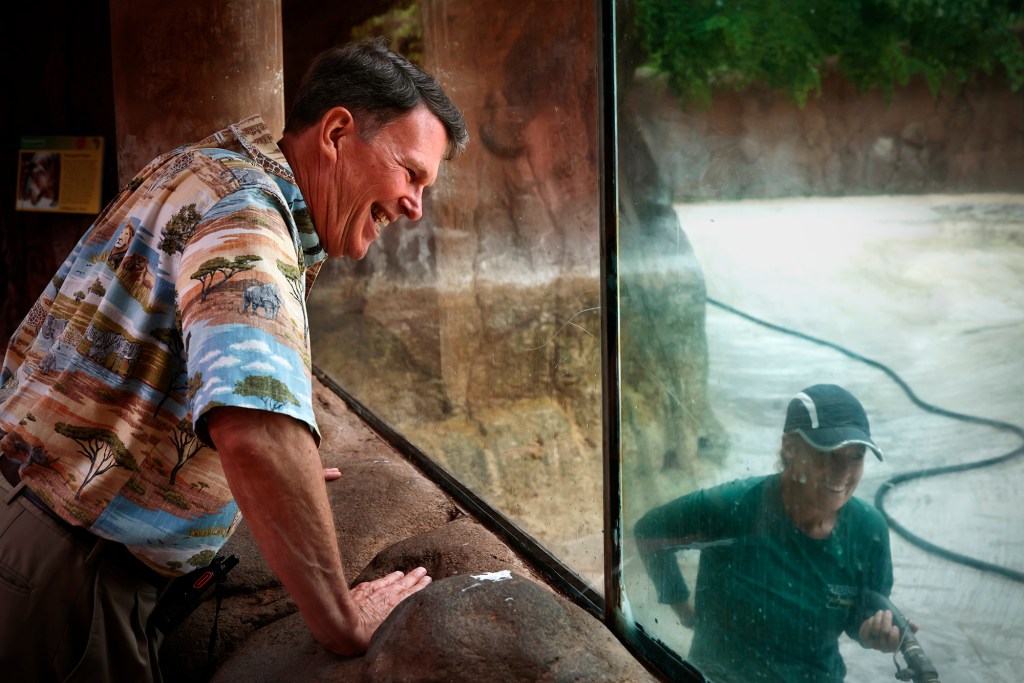
Berry recently took me and photographer Kevin Fujii on a two-hour golf cart ride through the zoo. During that visit, he said it all could be done. The Honolulu Zoo could care for giant pandas while also building the institution into a powerhouse for animal conservation with a focus on helping save endangered Hawaiian species. He is also pursuing the less glamorous but critical goal of catching up with the zoo’s many deferred maintenance projects.
We got a firsthand look at how much work is needed. Right from the start, we saw carpenters loudly and rapidly pounding their hammers to reconstruct and put a new roof on the zoo’s most frequently used restroom, the one by the snack bar.
It is the first of the zoo’s four restrooms to be refurbished. “None of the bathrooms has been upgraded for 60 years. Like everything else in Hawaiʻi — deferred maintenance,” Berry said.
It could take a decade of tackling three of four big building projects — at a cost of about $2 million a year — to get to “a very strong place,” he added.
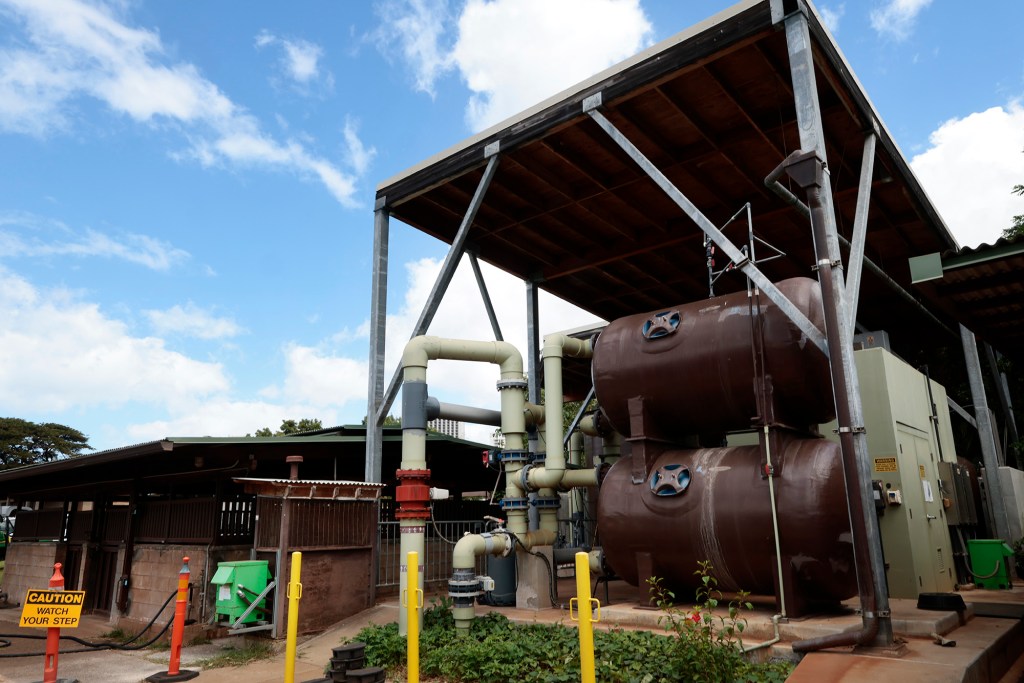
Many projects are non-showy, behind-the-scenes upgrades such as the recently completed nearly $490,000 water filtration system for the African penguin and hippopotamus exhibits. It looks like a mini electrical power plant, chugging away at the task of filtering poop out of the animals’ swimming ponds.
Berry is not just another zoo administrator. He ran the Smithsonian National Zoo from 2005 to 2009, when it had a troubled history of underfunding and deferred maintenance. He faced the challenges the Honolulu Zoo now confronts with a much bigger operation — and succeeded.
When he was director, the National Zoo already had years of practice hosting giant pandas. The zoo’s giant panda couple in residence during his tenure had a cub named Tai Shan. The panda cub was so beloved by zoo visitors they nicknamed him “Butterstick” for his size at birth, as small as a stick of butter.

Ideas showcases stories, opinion and analysis about Hawaiʻi, from the state’s sharpest thinkers, to stretch our collective thinking about a problem or an issue. Email news@civilbeat.org to submit an idea or an essay.
Previously, Berry was director of the National Fish and Wildlife Foundation and had served as an assistant secretary at the U.S. Department of the Interior. While there, he helped lead the Native Hawaiian reconciliation process, working closely with Esther Kiaʻaina and her then-boss Sen. Daniel Akaka.
Kiaʻaina, now a Honolulu City Council member, told me she was initially concerned upon hearing of the panda’s possible arrival. She feared that without adequate private funding the pandas might overwhelm the capabilities of our relatively small zoo.
When she heard Berry was appointed as the zoo’s new director she changed her mind.
“I have the utmost respect for him. He makes anything he’s involved with better,” Kiaʻaina said. When he was managing 60,000 employees at the Department of the Interior, she added, he improved sinking morale, even making sure food in the cafeteria was more delicious.
President Barack Obama — impressed with Berry’s skills as a turnaround manager at the National Zoo — asked him to direct the U.S. Office of Personnel Management and years later appointed him U.S. Ambassador to Australia.
Family Ties To Hawaiʻi
Berry has strong connections to Hawai’i through his husband Curtis Yee, an attorney now retired from the Federal Trade Commission. They have been coming to Hawai‘i regularly for more than 30 years. They recently decided to live here to spend more time with Curtis’ mother Patricia Yee, who will be 100 on Christmas Eve.
“Turns out our moving closer was unnecessary. She lives on her own, takes Zumba classes and loves cooking for her large dinner parties,” said Berry.
Yee has deep family ties in Hawai‘i. He is a 1971 graduate of Roosevelt High School. His grandfather’s sister Ellyn Lo was married to former U.S. Sen. Hiram Fong, a Republican from Hawaiʻi.

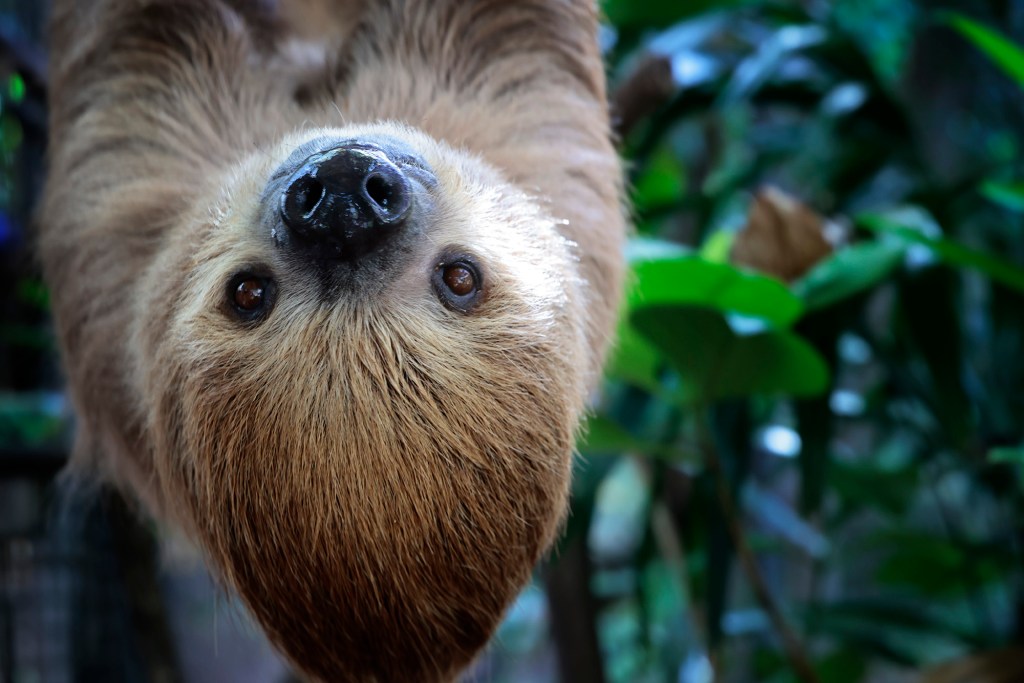
Our zoo tour with Berry continued to a more peaceful stop. We were invited into the cage of the two-toed sloths, and fed apple slices to Pono, a young sloth. While we were feeding him, Pono fell asleep. His keeper, Madeline Hammond-Chambers, told us sloths sleep for about 20 hours a day to conserve energy because their grass and fruit diet produces only about 135 calories a day.
Like sloths, giant pandas sleep a lot. The bears evolved to be bamboo eaters even as they retained the meat-eating digestive system of carnivores. They must eat 30 to 60 pounds of bamboo a day to get enough nutrients to live. And they are picky about the types of bamboo they will eat.
Bamboo Preparations Are In Place
In a text Monday, the mayor confirmed that — if the giant pandas come — Alec Sou of Aloun Farms will help the zoo grow the four kinds of bamboo that pandas like. Part of the bamboo supply will also be grown on the zoo grounds. Berry says zoo staffers will hand cut the bamboo, sort and refrigerate it and truck it to the zoo from Sou’s farm.
The mayor says private donations will fund nearly all of the panda expenses. Donors also funded the giant pandas at the National Zoo in Washington, D.C., and the San Diego Zoo — the only two places in the country with giant Chinese panda exhibits.
Blangiardi said he expects zoo visitor numbers to triple in the first year. The pandas will “bring in an unprecedented and considerable amount of working capital to reinvest into the future of our zoo operations,” he said.
It is unknown to what degree the pandas could boost visitation. Also unknown is the identity of the donors and or how much they plan to donate, and for what purposes.
The mayor texted he is not ready to talk about donors “because it is not certain how much money I will need to raise. I do intend to raise all the money privately and also have the construction done that way as well.”
Given Honolulu’s climate, pandas would need an air-conditioned enclosure featuring chilled ponds and rocks to climb. Berry said the zoo doesn’t have a design yet for the 120,000-square-foot complex, which would take up roughly 6.6% of the zoo’s 42 acres.
The location will depend on the choice of a Chinese delegation expected to visit Honolulu before a final decision is made about loaning Hawaiʻi the pandas.
There are tradeoffs to consider.
On our tour, we stopped next in front of a nondescript concrete building, off limits to visitors. It is where the zoo for years has worked to try and prevent the extinction of certain species endemic to Hawaiʻi.
Currently inside are nine critically endangered ʻanianiau, a species of honeycreeper found only in forests on the highest peaks of Kaua‘i. Honolulu Zoo is working with San Diego Zoo to find ways to keep the ʻanianau from disappearing forever. Ravaged by avian malaria disease, scientists think there are only 100 of the tiny yellow birds still alive in the wild.

“They may all be gone by Christmas. This may be our last chance,” Berry said.
Berry wants Honolulu Zoo to do more conservation projects and is preparing to spend about $200,000 to upgrade another existing building to make it mosquito-proof, with air conditioning and specialized lighting to allow endangered birds to thrive and reproduce.
“If the zoo is not benefiting animals in the wild, we should close our doors,” he said.
In the end, what will make Honolulu Zoo as special as Berry intends will be his ability to do it all: Feature exotic creatures from afar, such as giant pandas, but also upgrade the aging facility and save the lives of small, less glamorous endangered species that have always lived here.
CORRECTION: A previous version of this story misstated John Berry’s past work in Congress with Esther Kiaʻaina and her then-boss Sen. Daniel Akaka.
 Sign up for our FREE morning newsletter and face each day more informed.
Local reporting when you need it most
Support timely, accurate, independent journalism.
Honolulu Civil Beat is a nonprofit organization, and your donation helps us produce local reporting that serves all of Hawaii.
ContributeAbout the Author