Honolulu Zoo Case Isn't As Simple As 'Granting Human Rights' To Elephants
A court is not necessarily precluded from extending a writ of habeas corpus to nonhuman animals, such as elephants Mari and Vaigai.
September 17, 2026 · 5 min read

About the Author

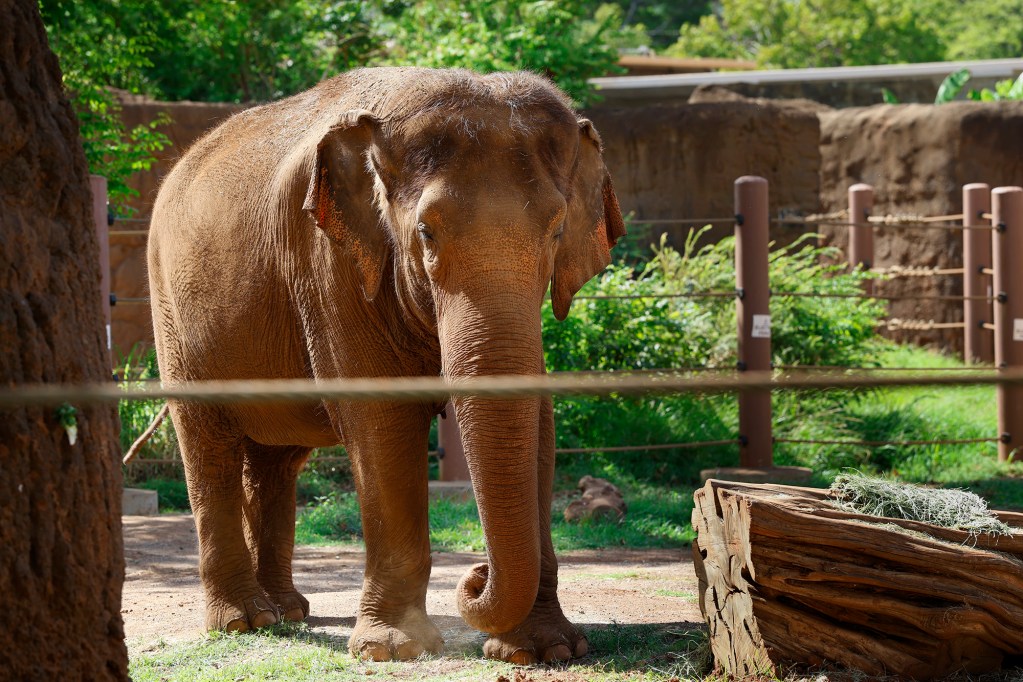
Granting animals “human rights” is an overly simplistic framing of the arguments presented by the Nonhuman Rights Project in the case of Mari and Vaigai, the Honolulu Zoo’s two elephants.
Earlier this summer, Civil Beat published an article entitled “Should Animals Have Human Rights? Hawai‘i Court To Decide.” The article details the case pending before the Hawaii Supreme Court, Nonhuman Rights Project v. C&C of Honolulu, et al.
In this case, the Nonhuman Rights Project argues that Mari and Vaigai, the two Asian elephants being held at the Honolulu Zoo, should be transferred to a sanctuary that can better provide for the complex needs of these cognitively advanced creatures. The Nonhuman Rights Project asserts that we should extend the protection of habeas corpus to some of the animal kingdom’s most intelligent and complex members.
The Nonhuman Rights Project argues for Mari and Vaigai’s release through what is called a writ of habeas corpus. This is a legal process in which an individual’s detainment is assessed by a court to determine whether this is illegal and thus if the individual is entitled to freedom. In the case of Mari and Vaigai, the Hawaii Supreme Court is deciding whether such a claim may be heard in defense of the elephants to grant their release to a sanctuary.
Traditionally, habeas corpus has been used as a protection for humans, not elephants. However, this does not preclude a court from extending it to nonhuman animals. In fact, many things thought to be reserved for humans are legally granted to other entities. For example, the United States Supreme Court held in 2010 that corporations are entitled to free speech protections under the First Amendment. This is not to say that corporations possess human rights, but that their core functions are sometimes protected by the same avenues used to guard the rights of human beings.

Ideas showcases stories, opinion and analysis about Hawaiʻi, from the state’s sharpest thinkers, to stretch our collective thinking about a problem or an issue. Email news@civilbeat.org to submit an idea or an essay.
The case need not be understood as an argument that animals are entitled to the same set of rights as humans. Instead, it is to say that our evolving legal system should come to recognize the advanced cognitive abilities of certain animals and grant them the specific and limited legal protections needed to support those abilities.
In this case, the protection of bodily liberty is at stake. Sometimes, the needs of animals may overlap with those of humans. Providing for these needs through a writ of habeas corpus is a far cry from granting human rights as a whole to nonhuman animals.
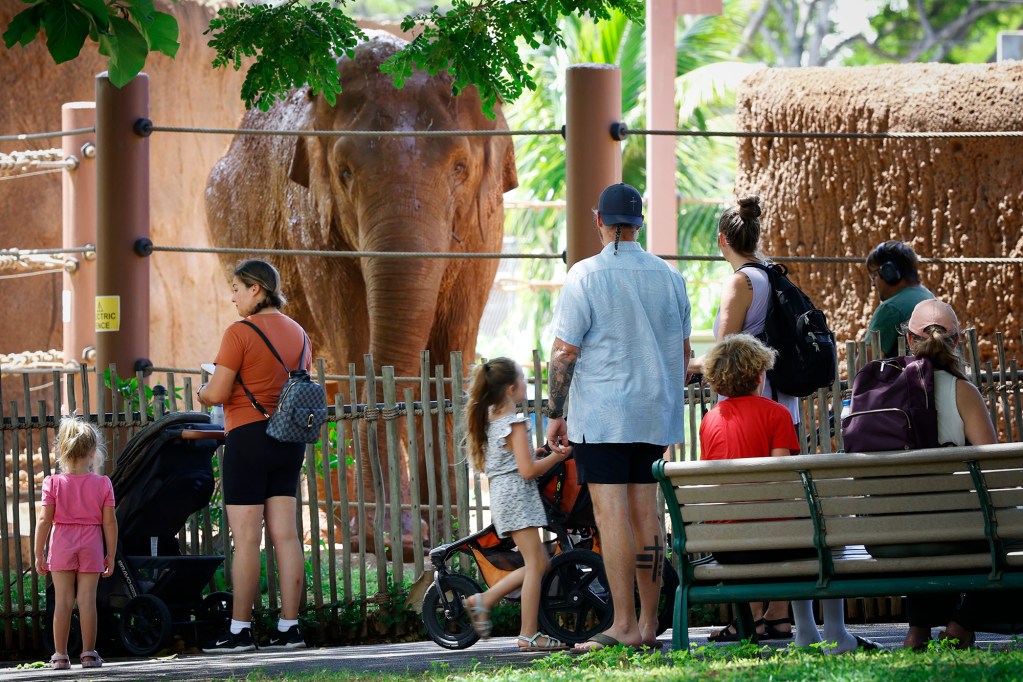
Civil Beat pointed out several conditions that raise questions about the welfare of Mari and Vaigai. The two elephants are held in a 1.5-acre exhibit at the Honolulu Zoo, where they have lived for 34 years. In the wild, Asian elephants travel up to ten miles each day and occupy a home range of roughly 500 square miles. The entire 42 acre property of the zoo is just a small fraction of the total land these animals would naturally roam.
Civil Beat interviewed Jake Davis, the Nonhuman Rights Project attorney leading Mari and Vaigai’s case. He shared that the enclosure is small, noisy and lacks shaded areas. Further, he stated that the hard concrete is harmful to the elephants’ foot pads. As Civil Beat mentioned, the Honolulu Zoo was rated as one of the ten worst zoos in the country four times by In Defense of Animals. Perhaps these conditions are among those that caused visitors to share the opinion with Civil Beat that the elephants are beautiful, but suffering.
Mari and Vaigai’s case is not to say that elephants are the same as humans. Instead, it is to advocate for the use of a narrowly-tailored legal mechanism to protect the animals’ most basic needs. Elephants travel hundreds of miles in the wild, form close-knit social circles, and engage in a wide variety of natural behaviors. Such behaviors and socialization are not possible for two elephants within an urban enclosure.
By having Mari and Vaigai’s case heard, the legal system has the ability to recognize and respect the needs of these extraordinary creatures without having to hold that elephants are entitled to the same set of rights as human beings. Instead, perhaps just one protection – that of habeas corpus – should be used to protect the most basic needs of certain animals.
Savannah Sherman, Esq. is the Chair of the Animal Law Section of the Hawaii State Bar Association. These statements reflect the views of the author alone and not necessarily the Animal Law Section or the Hawaii State Bar Association as a whole.
 Sign up for our FREE morning newsletter and face each day more informed.
Community Voices aims to encourage broad discussion on many topics of community interest. It’s kind of a cross between Letters to the Editor and op-eds. This is your space to talk about important issues or interesting people who are making a difference in our world. Column lengths should be no more than 800 words and we need a photo of the author and a bio. We welcome video commentary and other multimedia formats. Send to news@civilbeat.org. The opinions and information expressed in Community Voices are solely those of the authors and not Civil Beat.
Read this next:

Local reporting when you need it most
Support timely, accurate, independent journalism.
Honolulu Civil Beat is a nonprofit organization, and your donation helps us produce local reporting that serves all of Hawaii.
ContributeAbout the Author