Jeta: The Artist Restoring Hawaiʻi's Capitol With Many Hands
The State Capitol’s failed reflecting pools are being transformed into communal art. Spoiler alert: It won’t be done this year.
September 1, 2026 · 7 min read

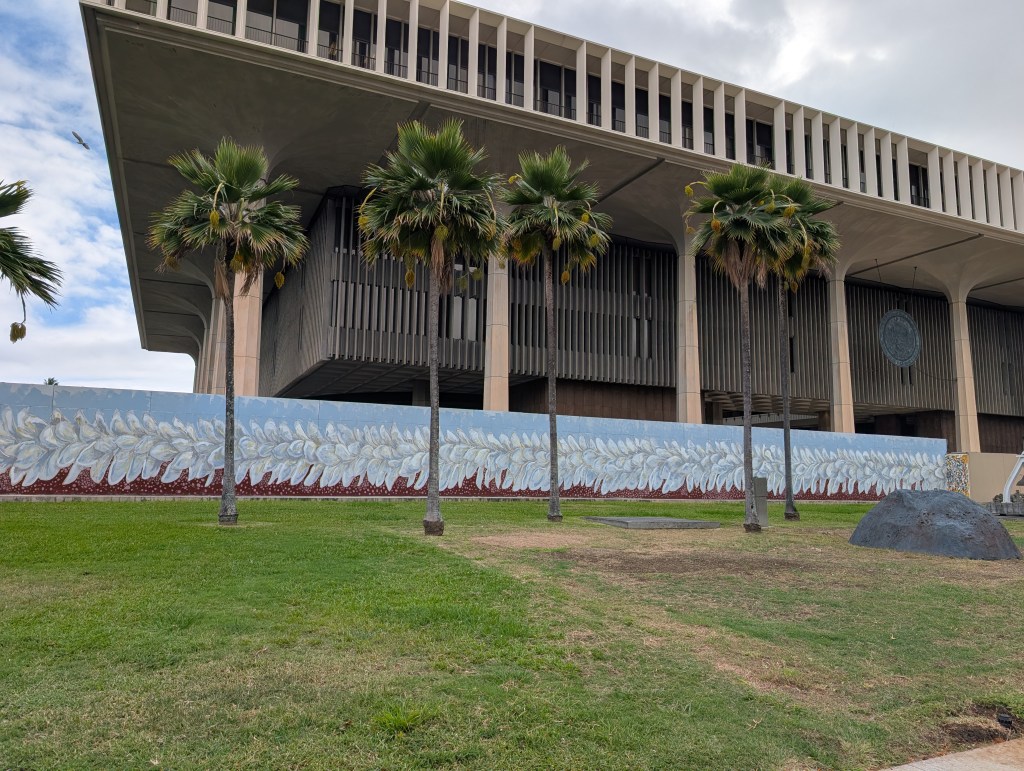
About the Author
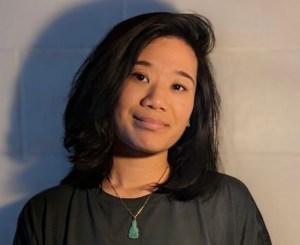
Long before Kānaka Maoli artist Solomon Enos was commissioned for the Capitol pools project, he learned restoration through the ʻāina of Waiʻanae Valley.
Growing up during the Hawaiian Renaissance, Enos spent Saturdays with family and volunteers clearing invasive vegetation, uncovering acres of ancient loʻi (taro). They rebuilt earthen banks and redirected artesian springs, returning water to places it had flowed for generations.
The lesson became larger than farming: Healing the ʻāina is communal work, and restoration happens through many hands.
That early conditioning would later emerge in Enos’ art. But the Capitol he is helping transform was built from a very different interpretation of place.
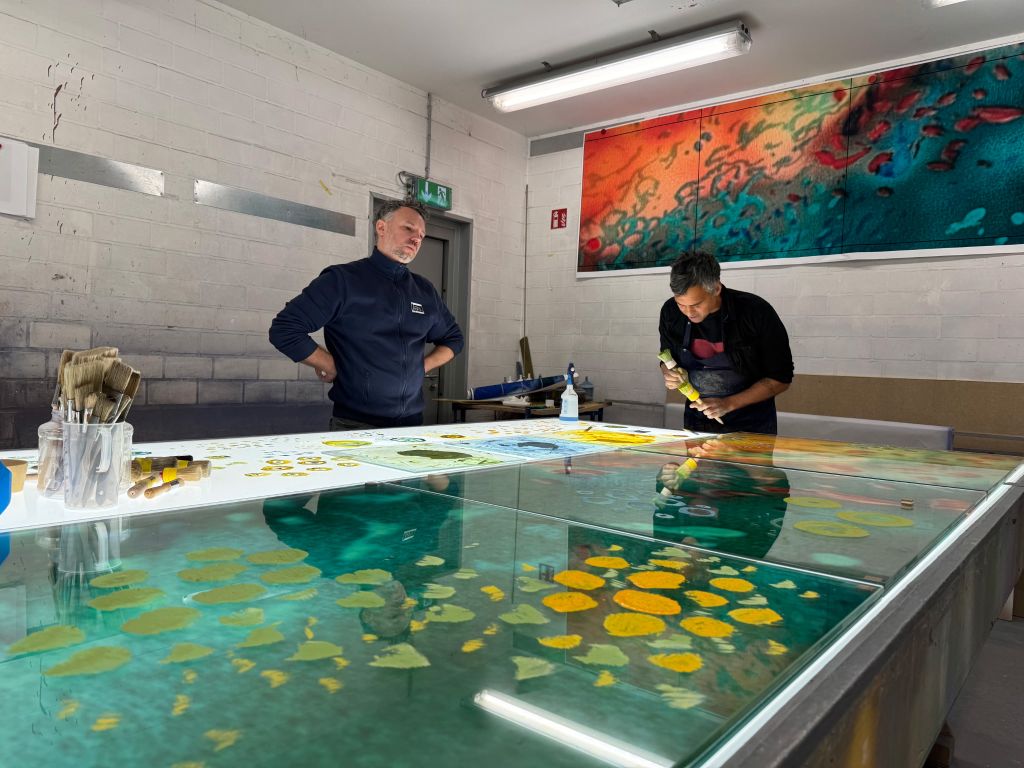
Symbols of Hawaiʻi
Famed architect John Carl Warnecke was a privileged outsider from California with no deep connection to Hawaiʻi, raised in an elite family that all but guaranteed he would become someone. He graduated cum laude from Stanford before attending Harvard’s Graduate School of Design.
In true American fashion, Warnecke pushed boundaries. He believed architecture needed “contextual modernism,” rooted in history and place. A building should tell the story of where it stands.
That philosophy landed him a role designing the Hawaiʻi State Capitol in 1961.
Rejecting the mainland’s conventional domed capitols, Warnecke wanted a building that embodied Hawaiʻi: an open-air rotunda filled with sunlight, cone-shaped legislative chambers evoking volcanoes, palm-like pillars, and a blue mosaic symbolizing the Pacific.
And how could the Capitol truly represent Hawaiʻi without water surrounding it?
The Capitol opened in 1969 to great fanfare as the country’s most modern statehouse. But Warnecke’s abstraction of Hawaiʻi was no match for the islands’ true nature.
It took only one year for the ambitious architect to earn his Harvard architecture degree. In roughly the same time, the Capitol’s reflecting pools became a swamp.
The Cost Of Symbolism
Poor aeration under Hawaiʻi’s intense sun fueled rampant algae growth. Within the first decade, the state released algae-eating tilapia into the pools. They still reeked, their thick muck resembling raw sewage.
By 2015, the state was spending about $75,000 a year on three maintenance workers who devoted half their shifts to wet-vacuuming algae and fish droppings. Three years later, costs reached $100,000, eventually climbing to $150,000 to $200,000.
The 2-acre pools each held 380,000 gallons of water. Together, they lost about 25,000 gallons a day to evaporation, equivalent to a standard in-ground swimming pool.
And the water only made it worse.
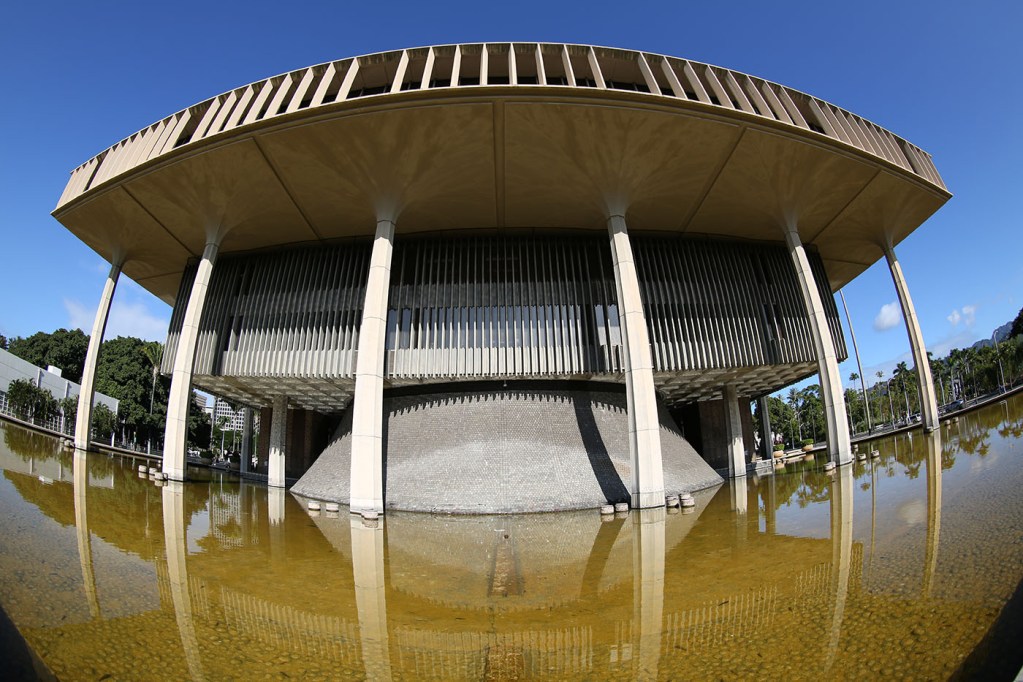
The Capitol started leaking shortly after it opened. Brackish water pumped from wells beneath the building became increasingly saline and corrosive, accelerating the building’s deterioration as legislators contended with the stench outside.
By 2021, after a $67 million renovation in 1993 failed to stop the leaks, the state finally drained the pools, spending another $100,000 on a wooden perimeter to prevent falls into the empty basins, devising a plan for a waterless solution.
And reader, there is more to say about the spending, but I have to respect the word count.
A Waterless Ocean
In 2011, artist Doug Young installed “Waikui,” a series of enamel-infused glass panels at Capitol Modern. Now used as a dance floor, the installation looks just like water.
That illusion inspired the solution to the Capitol pools problem. Instead of refilling them, the state plans to build a permanent, walkable ocean around the legislative chambers.
And what is an ocean without a story?
Out of 50 submissions, Enos was selected to create the public art.
Gordon Wood, Public Works Administrator for the Department of Accounting and General Services, which oversees the Capitol, says Enos’ design stood out for its deeper narrative of the Pacific.
“All of the proposals were just strikingly beautiful, but Solomon’s ability to tell a story, not just about water but of the ocean itself, drew us.”
Enos’ refusal to limit the ocean to shades of blue also caught the committee’s attention. But what ultimately set him apart was his commitment to communal art.
Leaving Your Mark
“It doesn’t belong to you, it belongs to everyone. People come in and become like water. They come in and fill the spaces,” Enos says.
He carried two master canvases across Oʻahu, Kauaʻi, Maui and Big Island, collecting dots from more than 3,500 participants, including former governors, legislators and hordes of schoolchildren.
“One at a time, people would line up and I’d say, ‘OK, make three dots right there. Good job. Take a picture. Here’s a map. Your dots are gonna be right over there. Now move along,’” Enos recalls.
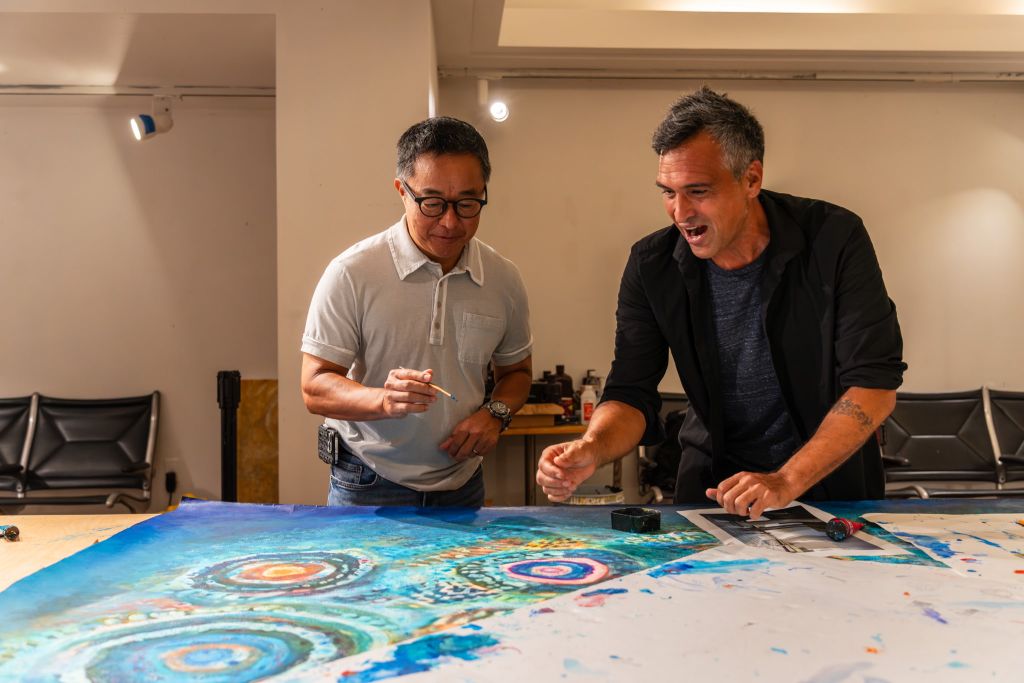
When the 55,000-square-foot promenade opens, participants can use those photos like an “organic QR code” to find their marks among 6,000 glass panels illuminated by an advanced interactive lighting system.
The canvases were sent to fabricators in Paderborn, Germany, where scanners will magnify every contribution. Fingernail-sized dots will become the size of oranges, printed onto nearly 3-inch-thick panels forming the walkable ocean.
“Every dot you see is not arbitrary,” Enos said. “Somebody from the community showed up and put it there. Their mana has gone into the work.”
Waiting for the Walk
The Capitol pools will not open by year’s end as originally planned. Like most government contracts, the project must go through public bidding, with the state awarding the job to the “lowest, responsive, responsible bidder.”
Losing bidders can protest. One complaint froze the project for nine months through administrative hearings and court appeals. After the ruling, DAGS restarted the process.
Bid opening is scheduled for Sept. 3, followed by six to eight weeks to finalize the contract once a winner is selected. But another protest could put the brakes on the whole show again.
Even once a contractor is secured, construction must go completely “quiet” from January through May while the Legislature is in session, cutting five months from the schedule.
The delays have pushed the estimated cost from $52 million to as much as $85 million. Wood says the project could be completed by 2028 if the next award goes uncontested.
Sooner? “Probably not.”
After 10 years with DAGS, Wood will retire Sept. 1 and move off-island, years before the public can walk on the finished pools. Still, the project is a fitting capstone to his 50-year architecture career.
“To finally get to the end of my career and work on something so astounding … It will change the way people interact with the State Capitol. Can you walk on the Mona Lisa? No, no you cannot.”
A Symbol Of Community
It took the state half a century to abandon actual water, but never its ocean symbolism. For all the building’s shortcomings, the state preserved the spirit of Warnecke’s vision.
Enos deepens it through communal art.
“If it’s not a fully polished painting, it doesn’t matter,” Enos says. “Because the experience people get is more valuable than a perfect image. It’s a form of visual solidarity.”
Warnecke made the ocean a symbol of Hawaiʻi. Enos made the people part of it. The symbolism finds new meaning through participation.
 Sign up for our FREE morning newsletter and face each day more informed.
Read this next:

Local reporting when you need it most
Support timely, accurate, independent journalism.
Honolulu Civil Beat is a nonprofit organization, and your donation helps us produce local reporting that serves all of Hawaii.
ContributeAbout the Author