Slick New Ads Urge You To Vote For Better Roads. Here's Who's Behind Them
The carpenters union is spending hundreds of thousands of dollars to turn a boring ballot proposition into one that might get voters’ attention.
September 27, 2026 · 6 min read

About the Authors


Hawaiʻi’s biggest political powerhouse is throwing its considerable financial weight behind an obscure ballot measure in an all-out effort to persuade voters to approve a new bond-financing program.
Pacific Resource Partnership, which has already spent millions of dollars this election cycle on its favored candidates, last month formed a new ballot issue committee called RISE Together Hawaiʻi to help pass the statewide ballot Question No. 2, a constitutional amendment aimed at building infrastructure to support new housing development.
No one should be surprised. PRP is a consortium of the 6,000-member Hawaiʻi Regional Council of Carpenters and more than 250 contractors who employ them. The Carpenters Union and the contractors want to build stuff — housing, roads, bridges. And the constitutional amendment would ostensibly make it a whole lot easier to build these projects by providing counties with an innovative way to pay for them.

RISE Together Hawaiʻi is paying for hundreds of television spots airing throughout the day and night on Hawaiʻi’s major TV networks. Public records on file with the Federal Communications Commission show ad buys totaling about $200,000 for the month of September. And that’s just with the TV networks.
State campaign spending reports for the ballot committee (which is a type of political action committee that can only raise and spend money on ballot propositions, not candidates) aren’t due until Oct. 1, but it’s a safe bet that the well-endowed PAC will be making a significant investment in the ballot proposition.
John White, a consultant to RISE Together (and longtime PRP advisor) calls ConAm No. 2 “a game changer.”
RISE is the acronym for “resilient infrastructure for shelter and equity” bonds, a financing system used in 48 other states but not explicitly authorized in Hawaiʻi and Arizona. The constitutional change would allow counties to set up special tax districts and then sell bonds to be repaid with revenue generated from projects within that new tax district. So existing property taxes would stay the same.
White says this mechanism would allow Hawaiʻi to pay for new infrastructure and fix old infrastructure without having to raise taxes.
The issue moved smoothly through the Legislature this past session with little opposition and a lot of support from the state, counties, planners, public policy experts, developers and the construction industry. The only concern was raised by the Tax Foundation of Hawaiʻi, which objected on the grounds that counties already have the ability to do this sort of financing. It was the attorney general who insisted that the state constitution needed a tweak before the counties can take advantage of the existing laws.
The media blitz being funded by PRP (although White says more businesses and trade unions will be hopping on board) is all about raising awareness of what the ballot measure would do and getting people to relate to it.
“Our philosophy is we need to educate voters and help them understand what it means to them and to do it in a way to meet them where they are,” he says.
Consider the challenge of explaining a bland bond proposition and getting the average voter to pay attention.
Here’s what voters will see on their ballots:
Shall the Hawaii State Constitution be amended to direct the legislature to authorize the counties to issue resilient infrastructure for shelter and equity bonds to fund public improvements in designated districts, repaid solely by future growth in property tax revenues within those districts, not by increasing real property tax rates, where such bonds are excluded from the counties’ debt limit and are subject to accountability and oversight requirements as may be provided by law?
Here’s what PRP and its allies want them to see:
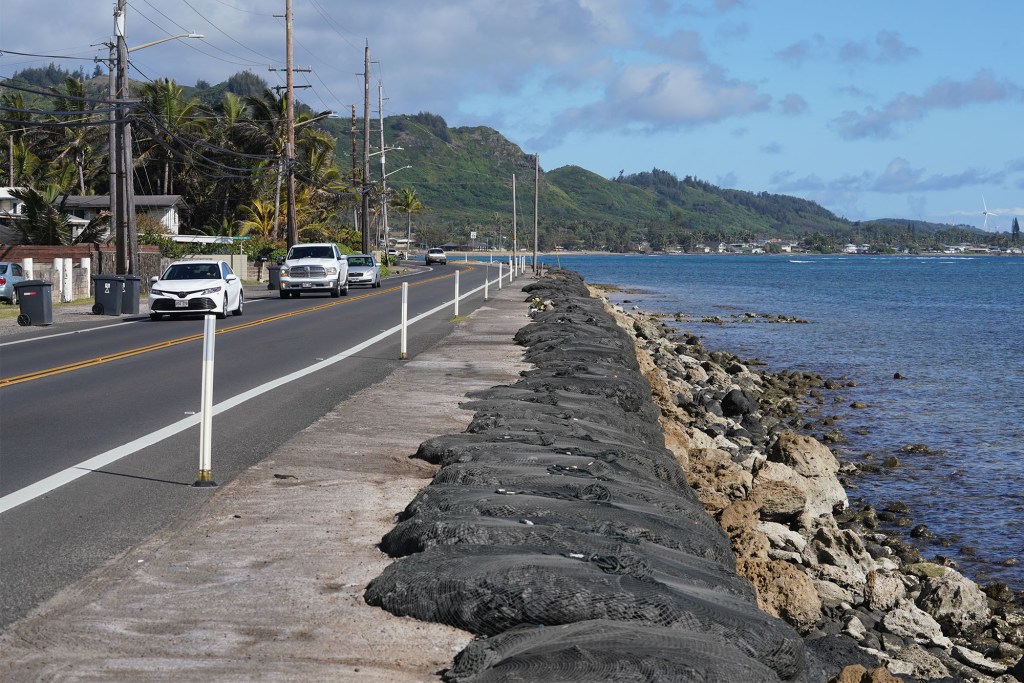
“Aging bridges. Century-old pipes. Crumbling roads. When extreme weather hits, the things we take for granted become our biggest threats.”
In “Next Time,” one of the spots that’s airing, the narrator invokes the recent storms and floods and reminds us just how battered our basic infrastructure is: “Next time you pass them don’t look the other way. To protect our families at home, strengthen our economy and build for the future, vote yes on Question 2.”
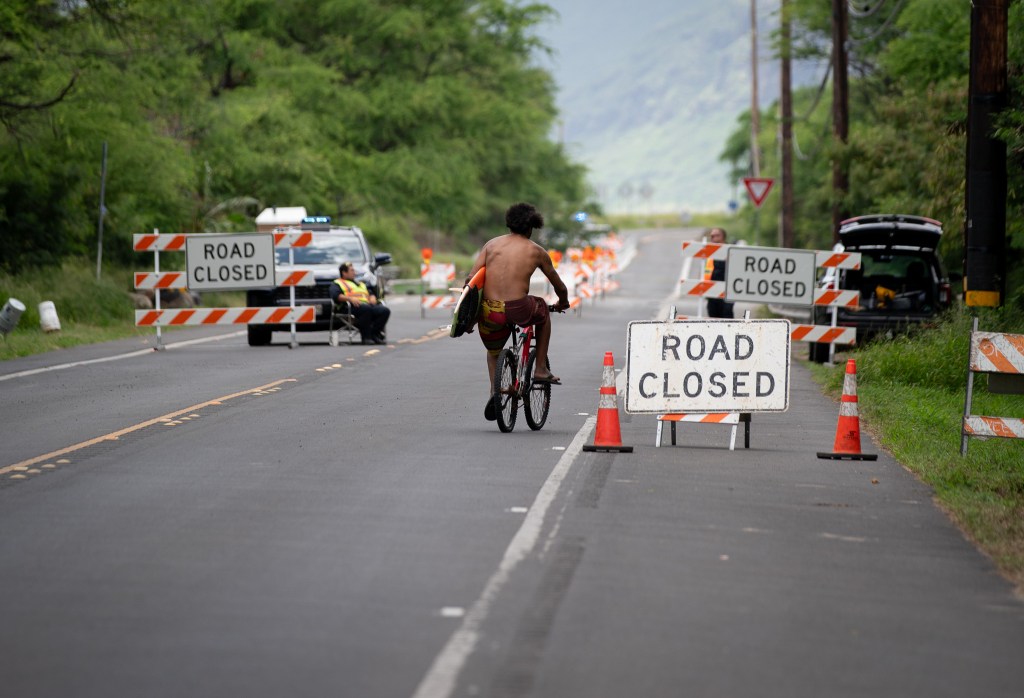
And what would a political campaign be without a personal saga? In a spot called “Road Between,” a young mother hits the road every day to deliver medicine to hospice patients. But the road is full of potholes and Question 2 would make her life (and ostensibly the lives of the people she’s helping) so much easier because it would pay to fix those rough roads.
Pretty slick marketing for a snoozy bond financing scheme that many voters probably won’t even take the time to read. Aside from transportation infrastructure, the financing could also go to dams and power facilities, and there is a nod to expanding cellular service in parts of the state.
What the ads don’t talk about is the largest public works project in state history, the Honolulu rail system, and the housing proposed along the line. That will also need major financial support. But mentioning rail would probably turn off many voters given Skyline’s enormous cost and never-ending construction delays.
Also not mentioned — but what will likely be emphasized in future ads, says White — is that a blank ballot counts as a “no” vote. Apathetic Hawaiʻi voters have been known to kill ConAms by leaving complicated ballot questions blank.
White won’t say exactly how much PRP is planning to invest in this campaign. But since it’s statewide, “it will cost a lot of money,” he says.
And as we’ve seen time and again, PRP is not hesitant to spend whatever it takes to get whatever it wants. Perhaps this time it’s an issue that the public can also buy into.
 Sign up for our FREE morning newsletter and face each day more informed.
Read this next:

Local reporting when you need it most
Support timely, accurate, independent journalism.
Honolulu Civil Beat is a nonprofit organization, and your donation helps us produce local reporting that serves all of Hawaii.
ContributeAbout the Authors