Why Hawaiʻi Should Take Advantage Of This Workforce Development Moment
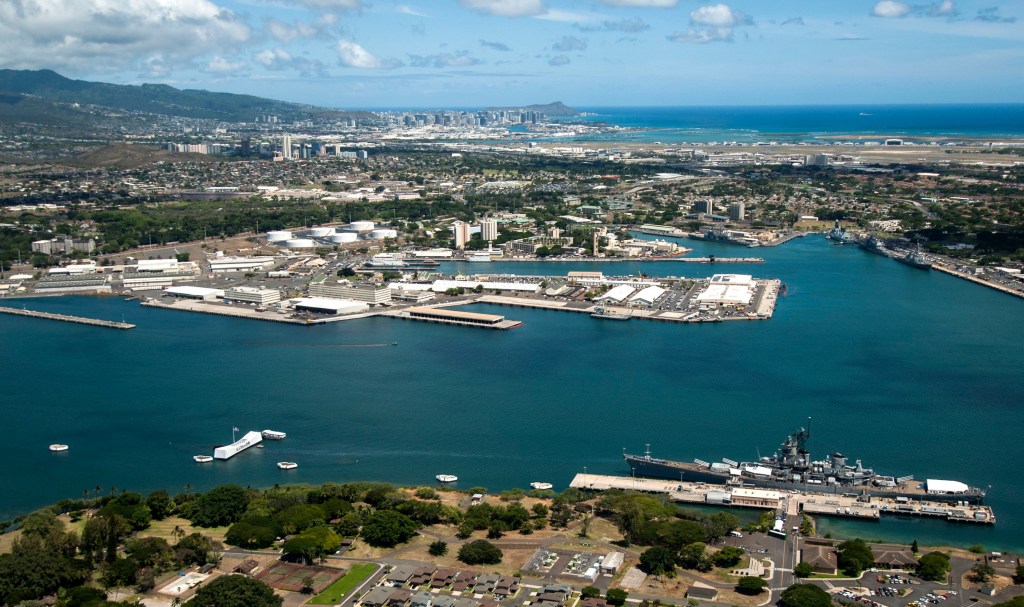
The Indo-Pacific region is home to major military commands but is also a hub for regional diplomacy.
September 4, 2026 · 5 min read

About the Author

I didn’t grow up thinking about a career in national security. What changed that were internships in government and foreign policy, plus scholarships that enabled me to travel and work abroad. That hands-on exposure allowed me to experience the field before deciding whether I wanted to pursue it. I think about that now that I’ve hosted an intern through P3I — the local program placing students in paid defense and cyber internship — watching someone else experience the same realization that a career in national security was within reach.
While the opportunity exists, far too few young people in Hawaiʻi ever get close enough to see that possibility. Hawaiʻi sits at the operational center of the Indo-Pacific, home to major military commands and a hub for regional diplomacy. That position draws real interest from companies well beyond defense because proximity to that mission matters to them too.
But interest alone doesn’t build an economy, it must be met with people who can do the work: engineers, robotics technicians, AI and software specialists, machinists, welders, and international relations specialists. Employers in Hawaiʻi report difficulty finding workers in many of these fields, while too few students have clear, affordable pathways into them. The question isn’t whether the opportunity exists, but whether Hawaiʻi can prepare local people to seize it.

Ideas showcases stories, opinion and analysis about Hawaiʻi, from the state’s sharpest thinkers, to stretch our collective thinking about a problem or an issue. Email news@civilbeat.org to submit an idea or an essay.
Workforce development in Hawaiʻi should be treated as critical infrastructure; because a state that can’t produce and retain talent will struggle to keep industries that would otherwise plant roots here. Approximately 500,000 U.S. cybersecurity positions sit unfilled, with demand growing faster than the economy overall.
Engineering also faces national shortage challenges: in 2022, roughly 184,000 engineers retired or left the field while only about 166,000 new graduates entered it. Defense-specific roles requiring security clearances narrow the pool further.
A 2023 industry survey found more than 65% of defense companies struggle to hire qualified STEM workers, and over half said the shortage now threatens contract fulfillment. These are fields where Hawaiʻi’s location should allow to compete, including cybersecurity, systems engineering, AI-enabled defense work.
Defense and security investment can help build that capacity. Private and public investments along with contracts tied to shipbuilding, advanced manufacturing, robotics, cybersecurity, and AI-enabled systems can support more than individual jobs.
It can expand training capacity, provide modern equipment and infrastructure, connect local students directly with employers in industries that strengthen and diversify Hawaiʻi’s economy including in energy, transportation, technology, shipping, construction, robotics, and manufacturing. The goal should be to produce lasting benefits for communities across the state.
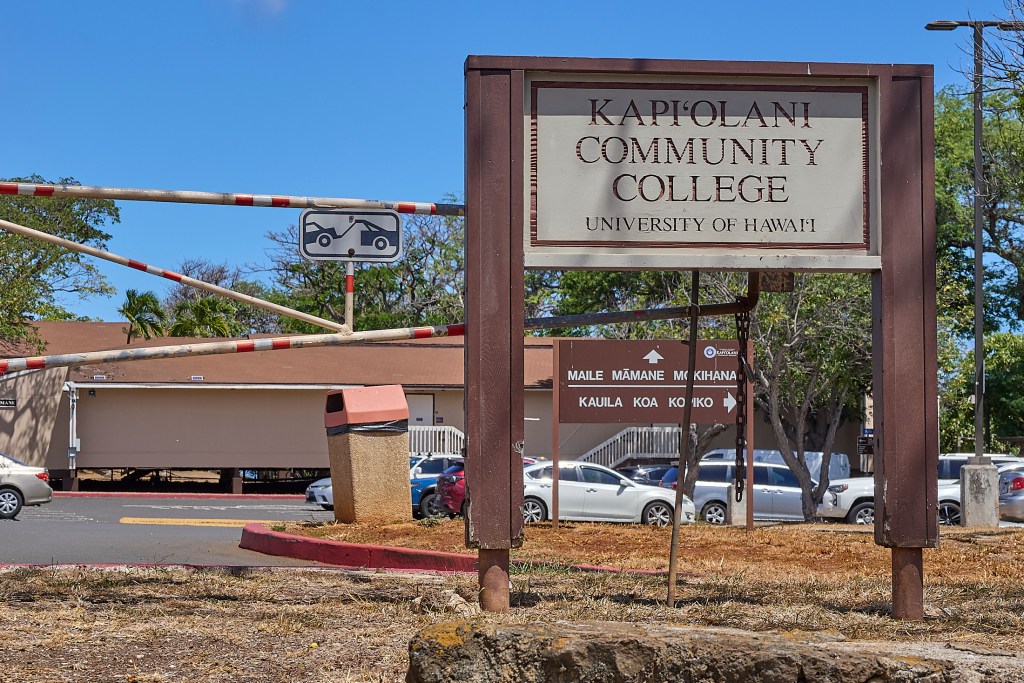
We already have some of the pieces. Our community colleges are building advanced manufacturing and trades programs, while others are early efforts connecting students to AI, cyber, and defense-adjacent careers. The Chamber of Commerce Hawaii’ Sector Partnerships, the Hawaiʻi Workforce Development Council, and programs like P3I are contributing to this work; however, what is still needed is greater scale, coordination, and urgency.
Youth apprenticeship is a clear example.
The federal model connects high schoolers with paid, registered apprenticeships in fields like IT, cybersecurity, and advanced manufacturing while they’re still enrolled, not just after graduation. Hawaiʻi has an apprenticeship system, but many established pathways remain concentrated in construction trades. Expanding youth pathways into emerging technical fields would give students earlier exposure and a clearer transition from school to employment.
Three concrete steps could move Hawaiʻi from potential to practice.
First, the state should build out Hawaiʻi’s youth apprenticeship network beyond construction trades. The Department of Labor and Industrial Relations, Department of Education, University of Hawaiʻi, and participating employers could explore a coordinated statewide system covering cybersecurity, IT, robotics and advanced manufacturing alongside the trades.
Second, Hawaiʻi’s community colleges should expand formal dual-enrollment pathways that allow high school students to earn credit toward a registered apprenticeship and industry credentials before graduation.
Third, Hawaiʻi should better engage its large population of retired military personnel, engineers, and defense professionals, many who spent careers in exactly the fields where mentors are needed. A state-supported “encore workforce” initiative connecting them to apprenticeship programs and classrooms could ease the mentorship and instructor shortage. In addition to technical knowledge, they could help develop the leadership and critical thinking skills needed for a future shaped by AI.
The growth must be intentional and should complement Hawaiʻi’s broader economic priorities, including pressures on housing, infrastructure, land and natural resources. Success should also not be solely measured by contracts awarded or positions created, but by how many Hawaiʻi residents can enter, advance in, and remain in these careers.
The opportunity before Hawaiʻi is real but not guaranteed to stay. We must build for it through classrooms, apprenticeships, employer partnerships and sustained commitment. If we are successful, Hawaiʻi can become a place that trains and keeps the people this moment demands.
Editor’s note: All statements of fact, opinion, or analysis expressed are those of the author and do not reflect the official positions or views of the U.S. government. Nothing in the contents should be construed as asserting or implying U.S. government authentication of information or endorsement of the author’s views.
 Sign up for our FREE morning newsletter and face each day more informed.
Community Voices aims to encourage broad discussion on many topics of community interest. It’s kind of a cross between Letters to the Editor and op-eds. This is your space to talk about important issues or interesting people who are making a difference in our world. Column lengths should be no more than 800 words and we need a photo of the author and a bio. We welcome video commentary and other multimedia formats. Send to news@civilbeat.org. The opinions and information expressed in Community Voices are solely those of the authors and not Civil Beat.

Local reporting when you need it most
Support timely, accurate, independent journalism.
Honolulu Civil Beat is a nonprofit organization, and your donation helps us produce local reporting that serves all of Hawaii.
ContributeAbout the Author