Deep-Sea Mining Is A Threat To The Pacific And Hawaiʻi
The deep sea plays a critical role in the planet’s ecosystems. The Trump administration ignores that to boost a speculative industry.
October 21, 2026 · 5 min read

About the Author

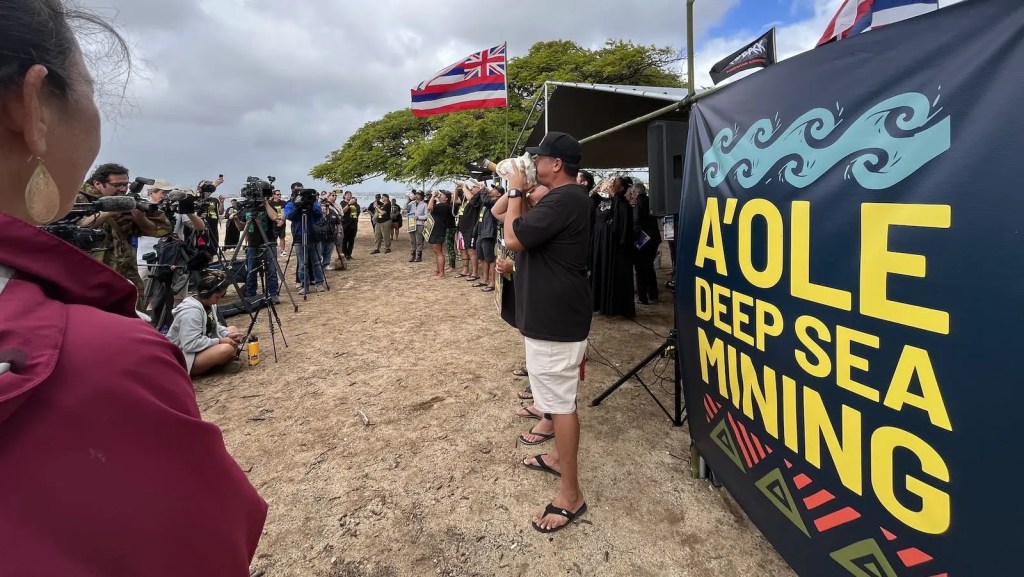
As a native Hawaiian and executive director for Conservation Council for Hawai‘i, my work to defend Hawai‘i’s natural wonders – from the animals and plants to the ecosystems they rely on – and Hawaiian cultural practices that depend on them spans decades. Deep-sea mining is one of the greatest emerging threats to our planet’s natural world that I’ve faced in my lifetime.
This is a speculative industry that proposes extracting metals from some of the deepest and most unexplored parts of the ocean. Up until recently, the threat of destroying something we don’t have the tools to fully explore or understand – coupled with high economic costs – have been enough to stop deep-sea mining. But we’re living through a new era where facts and reason do little in the face of potential corporate profit.
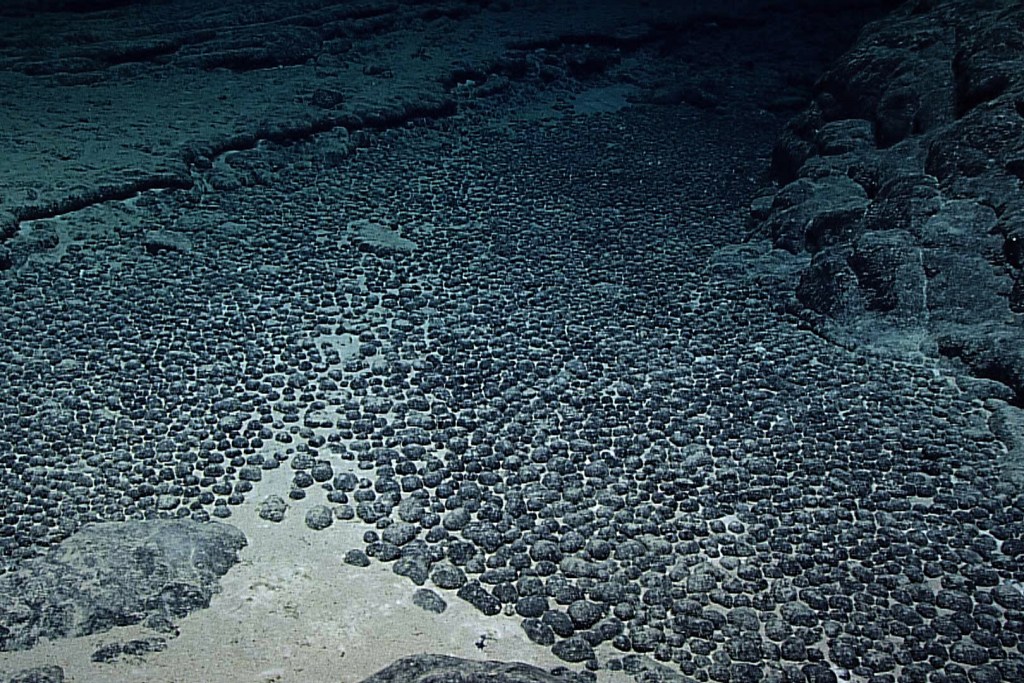
The Trump administration has shown little concern for the consequences of upending deep-sea ecosystems. President Trump issued an executive order in April 2025 directing agencies to fast-track deep-sea mining in both U.S. and international waters, prompting the National Oceanic and Atmospheric Administration and the Marine Minerals Administration to advance mineral leasing, exploration, and development.
The government has proposed lease sale dates before the end of this year for seabed mining off the coasts of American Samoa and the Mariana Islands in the Pacific.
Conservation Council for Hawai‘i has joined other community and conservation groups to file four lawsuits — the latest coming this week — challenging the Trump administration’s advancement of deep-sea mining.
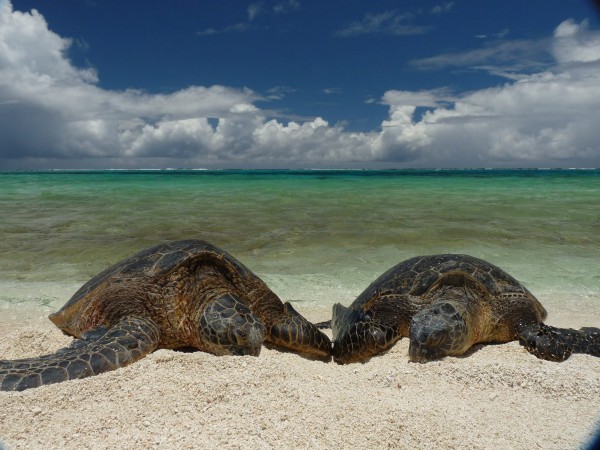
Our mission is to protect Hawai‘i’s native wildlife and to restore the ecosystems that those species depend upon for future generations. Some of the species we’ve worked to protect include threatened and endangered whales, sea turtles, sharks, rays and seals that are found in Hawai‘i’s waters, and travel the waters of the Mariana Islands, American Samoa and throughout the Clarion-Clipperton Zone.
We believe that allowing deep-sea mining-related activities in and around the proposed lease areas, as well as associated increased vessel traffic in Hawai‘i’s waters, puts these species, which are protected under the Endangered Species Act, at risk.
Seabed mineral exploration and mining activities can harm marine wildlife in multiple ways, exposing them to toxic minerals that create exposure risks throughout the food chain, disrupting their ability to communicate and feed with loud equipment, and striking them directly with mining vessels as they motor to and from operation locations.
The Trump administration ignored nearly all of these harms when it concluded that the lease sales it approved “will not adversely affect” any ESA-protected species.

Ideas showcases stories, opinion and analysis about Hawaiʻi, from the state’s sharpest thinkers, to stretch our collective thinking about a problem or an issue. Email news@civilbeat.org to submit an idea or an essay.
Scientists believe there could be as many as 10 million different species in the deep sea, which contains biodiversity as complex as tropical rainforests.
The deep sea plays a critical role in supporting the planet’s ecosystems, including those surrounding the Hawaiian Islands. It provides irreplaceable ecological services that stabilize the planet like supporting healthy fisheries and combatting climate change by absorbing carbon from the atmosphere. It also holds vast, untapped potential for research that could benefit medicine and other human advancements.
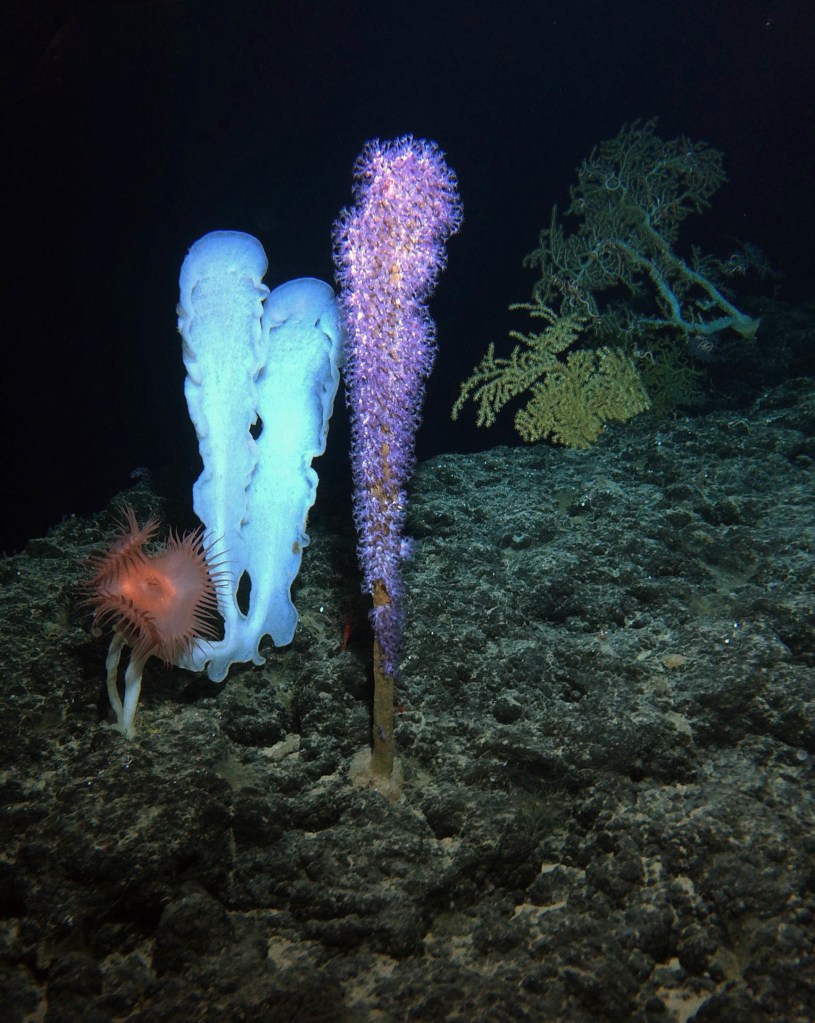
For example, sponges that grow on deep-sea coral reefs produce a chemical that has been used to fight cancer. Offering up the deep sea to profit-driven corporations hunting for metals used in weapons and electronics puts this all at risk.
The truth is, we don’t need to mine the seabed to achieve technological progress.
These corporate mining ventures rely on the premise that society simply must have certain metals like lithium, cobalt, nickel and copper to advance. This premise is wrong.
New battery designs are emerging fast, cutting the need for metals such as cobalt and nickel to begin with. Prioritizing circular economy practices – recovery, recycling, repurposing, refurbishing, repairing and reuse – can recapture these metals without smothering deep-sea life with sediment plumes, heavy equipment and noise pollution. Metal recycling alone could supply up to 40% of copper and nickel and 25% of cobalt by 2050.
While deep-sea mining in American Samoa and the Marianas may feel like a distant threat, we know that destruction in any part of our interconnected oceans will bring trouble back home to Hawai‘i.
We’re standing with indigenous and native groups around the world who have opposed deep-sea mining to protect our oceans for future generations.
 Sign up for our FREE morning newsletter and face each day more informed.
Community Voices aims to encourage broad discussion on many topics of community interest. It’s kind of a cross between Letters to the Editor and op-eds. This is your space to talk about important issues or interesting people who are making a difference in our world. Column lengths should be no more than 800 words and we need a photo of the author and a bio. We welcome video commentary and other multimedia formats. Send to news@civilbeat.org. The opinions and information expressed in Community Voices are solely those of the authors and not Civil Beat.
Read this next:
Local reporting when you need it most
Support timely, accurate, independent journalism.
Honolulu Civil Beat is a nonprofit organization, and your donation helps us produce local reporting that serves all of Hawaii.
ContributeAbout the Author