Olin Lagon: The Legacy Of Kalo May Teach You About Your Tomorrow
It made me think about lei, and the possibility that a kalo plant could flower and deliver a different version of itself.
October 1, 2026 · 6 min read

About the Author

So many of us have more than a few photos of ourselves, buried in lei. There are few limits to what we will string together to drape on someone we care about.
My heart loves the humble plumeria because it takes me back to my first lei memories. But my stomach secretly hopes my next lei comes with packets of olive cake, that elusive li hing mui that seems to be going extinct. Graduates nowadays can probably restock a manapua truck with their lei haul.
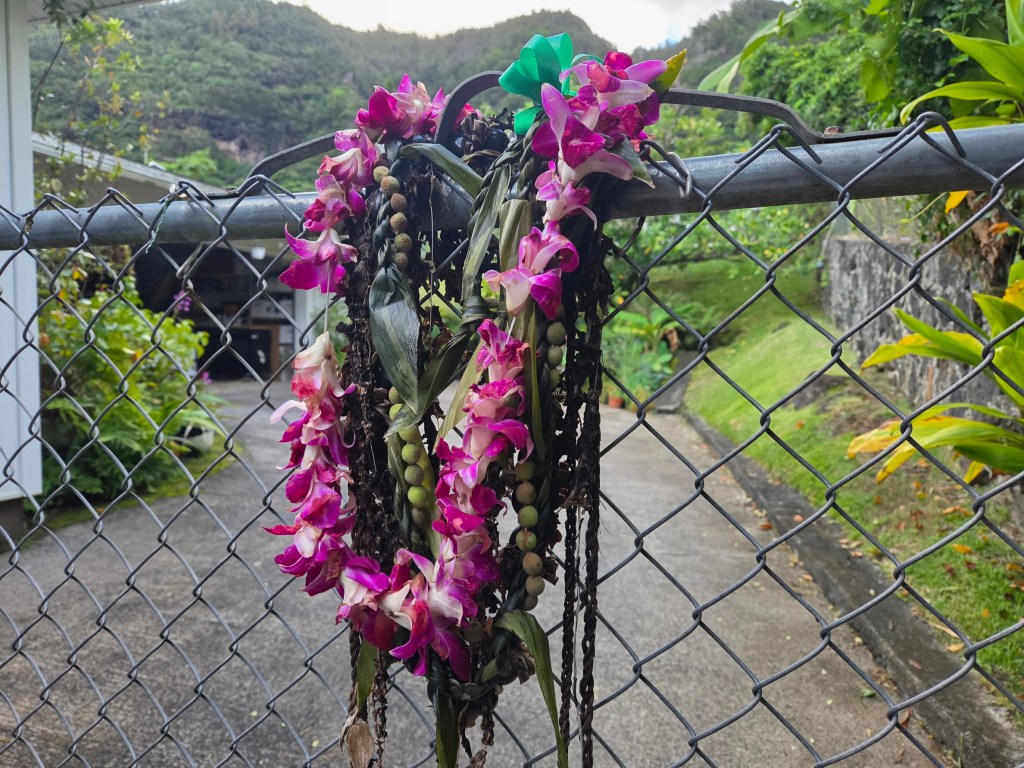
For most of my life, I thought I understood lei. A lei is an honoring, usually to mark a milestone, even if that milestone is just another day of loving someone. Then an immortal plant in a flooded patch of mud showed me something about ordinary life here that I had missed. I now cannot look at lei the same way again.
To explain, I have to talk about kalo.
We do not grow kalo from seed. We grow it from huli, the stalk trimmed of the corm and leaves. After harvest we push the huli back into the mud. It’s resilient. It just keeps on growing, over and over again, not as a descendant but the exact same living tissue.
There are varieties of kalo here that have been alive for centuries, maybe longer. If you are lucky to have poi on your table, it might have come from a plant that was alive well before the version of the language I am writing this in ever existed.
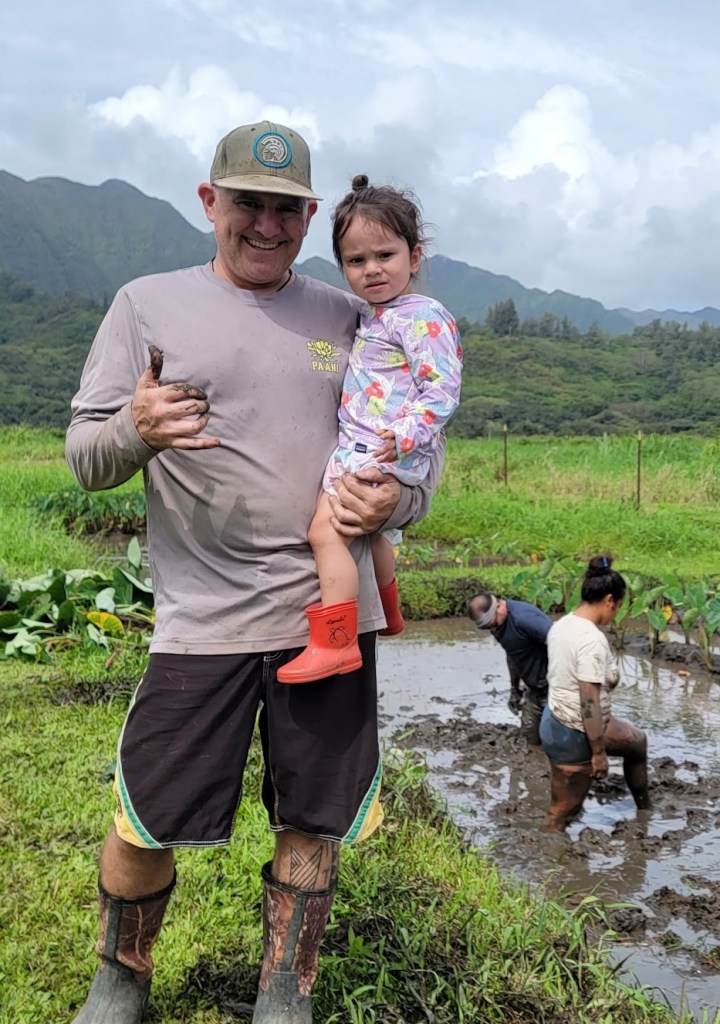
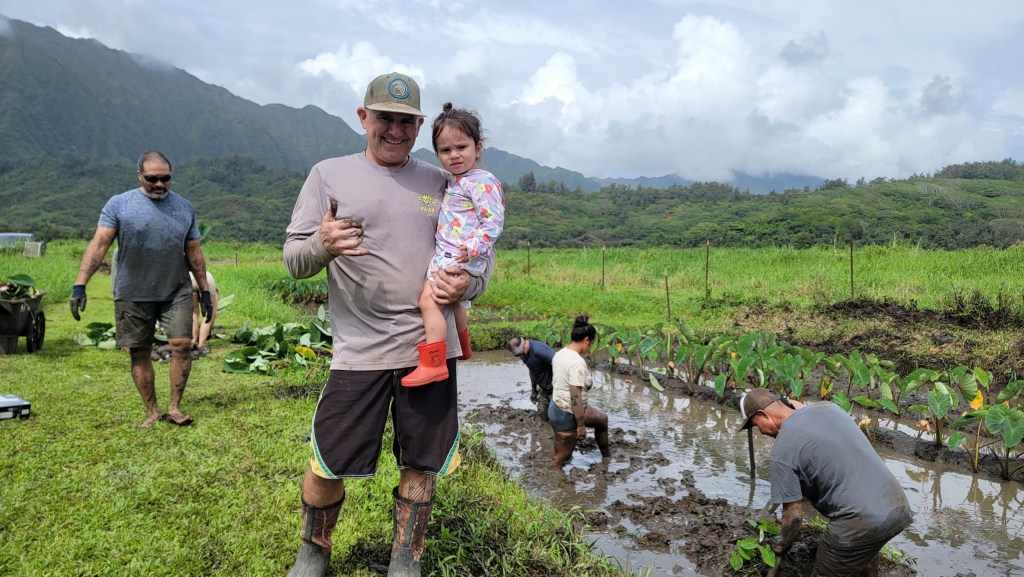
Over six years ago the Frizzells, the Kealohas, and our ʻohana took on kuleana for a kalo patch. None of us were experts. The plan was to develop a deeper relationship with Hāloa and learn by doing. Experiment, watch, reflect, adjust.
Nine months in, we thought we had grown rows of kalo that would make hundreds of pounds of poi.
These first plants were Instagram-worthy with big healthy leaves. I was proud of them. When we started to harvest them, the corms were manini with most too small to process into poi. All that green above the water had been hiding almost nothing below it.

Ideas showcases stories, opinion and analysis about Hawaiʻi, from the state’s sharpest thinkers, to stretch our collective thinking about a problem or an issue. Email news@civilbeat.org to submit an idea or an essay.
Our patch did not seem to hold enough nutrients to feed both the makua, the main stalk, and all of the ʻohā, the new shoots crowded around her. Maybe the makua was holding back so her runners would thrive?
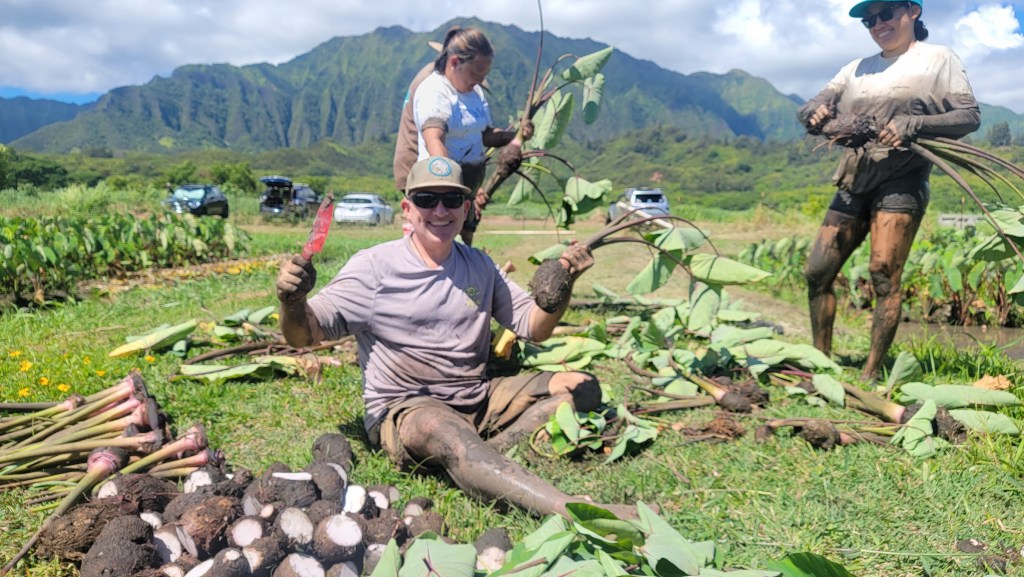
For the next batch we started to cull ʻohā. Nine months later we had an abundance of corms. Culling those shoots felt wrong. It still feels wrong every time I do it.
But then, a couple of years in, a single kalo plant flowered.
From the bank, it looked like a weed. It resembled a yellow anthurium that had not opened up yet. I had no idea kalo could flower. Why would an immortal plant ever need to? The flower was simple and beautiful, like my beloved plumeria. Then I searched the sea of clones for another one. There was none. One flower in the whole patch.

I drove home thinking about that flower. I understand the science of a flower, but I had never thought of it as a reach for something new, something the world has never seen. A huli is an act of faith. The plant trusts that it does not need to change.
A flower is a different bet. If another kalo flowers nearby and the pollen crosses, the flower makes seed, and a seed grows a new plant. Not a copy. A descendant with a mix of traits new to the world. The plant is saying, keep who I am, but let a different version of me try.
This kalo was reaching for something new. When I found out why, I was shocked.
Kalo flowers mostly when it suffers. Drought. Heat. Cold. And, ahem, my inexperienced farming hands. Breeders who need kalo to flower to create hybrids will spray plants with acid until they cry uncle and bloom. The most gorgeous thing our patch ever produced came from a plant under stress. I had been admiring my own mistake.
Which brings me back to lei.
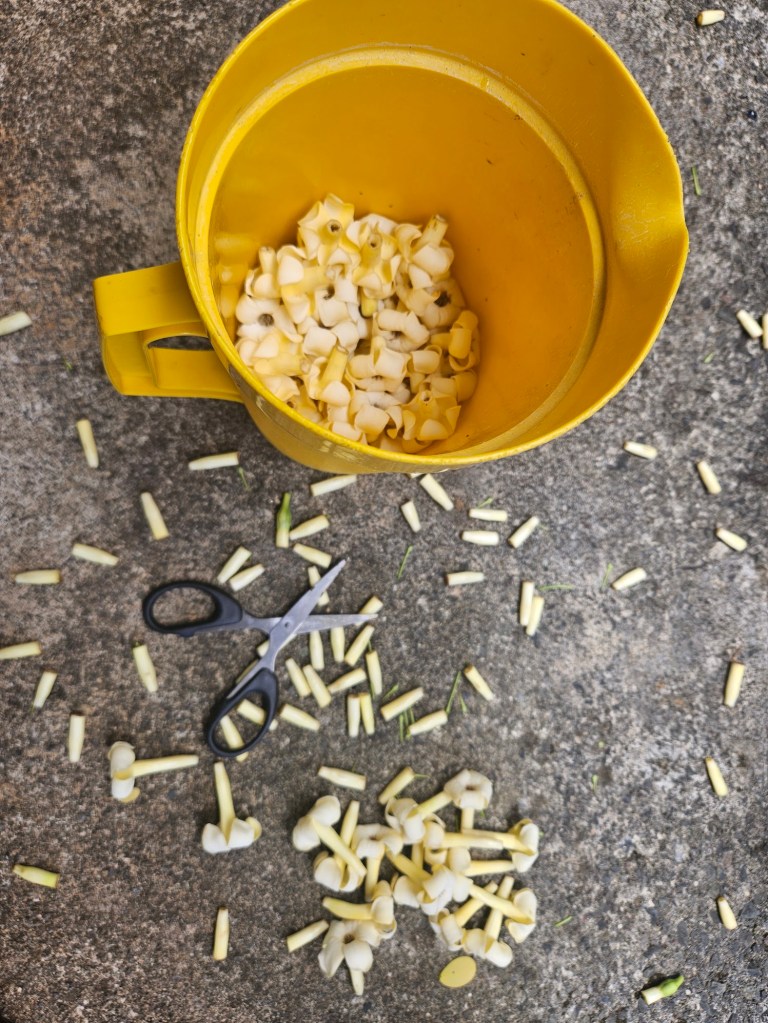
We have a pua kenikeni tree, and I have made a few lei from it over the years. One lei takes a few dozen flowers.
I have been told that I need to cull the green seed balls from the tree, the same way we cull ʻohā, and the tree would give even more flowers. I tried that but then I ended up with too many biting black ants dropping down all over me. I settled for normal flower delivery.
I say all this like I would be the one up on a ridge at dawn with a bolo knife every time I need to harvest something. Nearly every lei I give as a gift gets harvested out of a refrigerated case while somebody circles Chinatown looking for parking.
At the heart of a lei are flowers. Some carry hundreds of flowers from a dozen different plants.
A lei may be the ultimate gift of seeing someone, honoring them, celebrating them and draping a million possible tomorrows around their neck.
Our flowering kalo reached out and no other plant answered back. We do not let this happen to each other. We bury each other in a lei of possibilities.
I am not the best at remembering movie scenes, but I recall an Avengers movie where a strange doctor sat down and played out every scenario that could ever be, so he could wiggle through to the one future he wanted. The doctor kept that one and threw the rest away.
A lei is the opposite. Nobody hangs a lei on you and tells you which future to walk into. They hang all of them on you and step back.
I will still keep pulling out ʻohā so the makua can grow, even if it always feels bad. Maybe I will start culling the green seed balls from our pua kenikeni tree too, ants and all, because tomorrow requires hard choices about which versions of ourselves we do not feed.
And even though our loʻi has not flowered again, I am hoping it will. There will always be a tomorrow that needs a different version of us. When that day comes for someone I love, I hope to be the flower that answers back.
 Sign up for our FREE morning newsletter and face each day more informed.
Read this next:

Local reporting when you need it most
Support timely, accurate, independent journalism.
Honolulu Civil Beat is a nonprofit organization, and your donation helps us produce local reporting that serves all of Hawaii.
ContributeAbout the Author