Hawaiʻi's Preschool Expansion Is Bigger Than a Seat Count
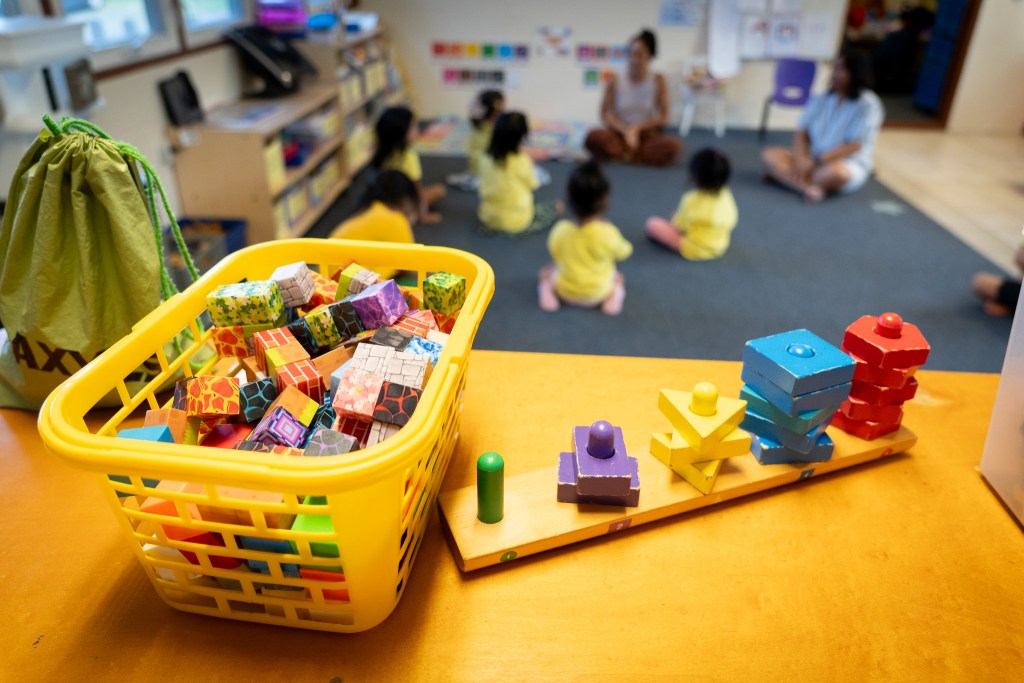
Comparing the preschool seats today with the number that existed six years ago does not tell the whole story of Hawaiʻi’s progress.
October 1, 2026 · 4 min read

About the Author
Civil Beat recently published an article, “Hawaiʻi Spent Millions On More Preschool Seats. Now There Are Fewer,” that examines the state’s investment in preschool expansion and raises important questions about the future of our early childhood system. We should pay attention when programs close, providers struggle to recruit and retain educators and families are unable to find care that is affordable, accessible and meets their needs.
Comparing the total number of preschool seats today with the number that existed six years ago does not tell the whole story of Hawaiʻi’s progress.
Over the past several years, Hawaiʻi has made significant progress in strengthening support for ʻohana. Thousands of Hawaiʻi families now have greater access to affordable early learning opportunities.
Free public prekindergarten has expanded, including in communities where early learning options have historically been limited, as well as through Hawaiian language sites that give families opportunities to participate in early learning grounded in ʻōlelo Hawaiʻi and culture.
Concurrently, the Preschool Open Doors subsidy has grown significantly, helping thousands more families afford preschool at community-based sites licensed by the Department of Human Services. Expanded eligibility has further increased access by reaching younger children and more working families.
University of Hawaiʻi campuses are creating new pathways into the early childhood workforce, while the Executive Office on Early Learning, Kauaʻi, Maui, and Hawaiʻi counties, Kamehameha Schools and Chaminade University are investing in the workforce through stipends, scholarships, and apprenticeship programs.
The School Facilities Authority is expanding the physical infrastructure needed to serve more children by renovating vacant state spaces and supporting new facilities in partnership with community-based projects.

Ideas showcases stories, opinion and analysis about Hawaiʻi, from the state’s sharpest thinkers, to stretch our collective thinking about a problem or an issue. Email news@civilbeat.org to submit an idea or an essay.
Notably, Hawaiʻi has expanded access while maintaining a strong commitment to quality. Hawaiʻi’s state-funded preschool programs have met all 10 quality benchmarks established by the National Institute for Early Education Research for four consecutive years. These benchmarks address teacher qualifications, early learning standards, professional development, class size, staff-to-child ratios, health screenings, and continuous quality improvement.
Community-based programs also continue to strengthen program quality through accreditation. Currently, 91 programs are accredited by the National Association for the Education of Young Children, and 66 are accredited by the National Early Childhood Program Accreditation. In addition, five family child care programs are accredited by the National Association for Family Child Care.
Hawaiʻi’s future is not an either-or choice between public preschool and community-based programs. To collectively meet the diverse needs of our Hawaiʻi families, we need a mixed-delivery system of public schools, charter schools, community-based preschools, family child care providers, Head Start programs, family-child interaction learning programs and other early learning providers and community-based organizations.
Building a strong early childhood system is about far more than counting seats. It is about building a sustainable network of programs, educators, and supports that work for children and families in every community. Every child — regardless of where they live or their family’s circumstances — should have access to a high-quality early learning opportunity that is affordable, accessible, and realistic for their family. The goal is not simply to create more seats, but to ensure that every child has a meaningful opportunity to thrive from the very start.
Hawaiʻi has made meaningful progress in expanding access to early learning, strengthening quality and investing in the educators and infrastructure our system depends on. The work ahead is to build on that progress — not simply by creating more preschool seats, but by ensuring that those seats are sustainable, high-quality and responsive to the diverse needs of Hawaiʻi’s families.
A strong early childhood system is one where every child and family can find an opportunity they can realistically access, wherever they live and whatever their circumstances. That is the measure of progress we strive for.
 Sign up for our FREE morning newsletter and face each day more informed.
Community Voices aims to encourage broad discussion on many topics of community interest. It’s kind of a cross between Letters to the Editor and op-eds. This is your space to talk about important issues or interesting people who are making a difference in our world. Column lengths should be no more than 800 words and we need a photo of the author and a bio. We welcome video commentary and other multimedia formats. Send to news@civilbeat.org. The opinions and information expressed in Community Voices are solely those of the authors and not Civil Beat.
Local reporting when you need it most
Support timely, accurate, independent journalism.
Honolulu Civil Beat is a nonprofit organization, and your donation helps us produce local reporting that serves all of Hawaii.
ContributeAbout the Author