Lee Cataluna: Songs Of Resistance, Songs Of Hope
As Protect Kahoʻolawe ʻOhana marks a half century of working to save and restore the island, a new album of songs honors that legacy.
October 25, 2026 · 9 min read

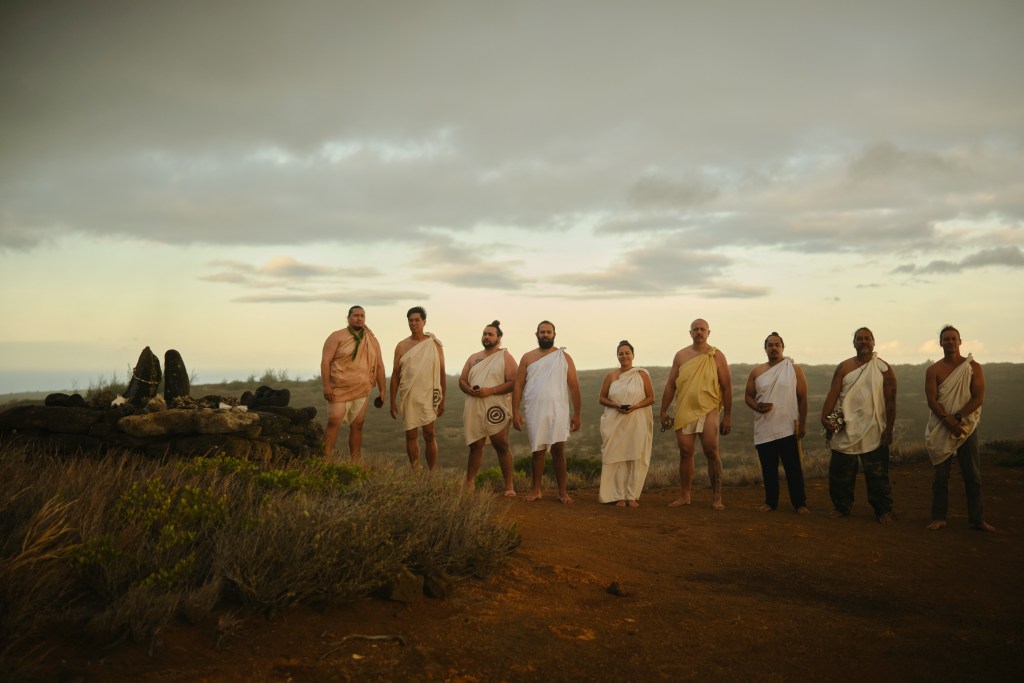
About the Author

Fifty years ago, when the founders of what would become the Protect Kahoʻolawe ʻOhana began their mission to stop the U.S. military from using the island off Maui for bombing practice, they may have never dreamed that someday they would be celebrated as heroes, their work documented at Bishop Museum, their names honored in songs.
Or maybe they did. Those first ʻOhana members dared to dream big and act boldly. They looked at an island left barren and scarred and saw life and spirit and the promise of rebirth.
Now, half a century later, their legacy of Aloha ‘Āina is being celebrated by the next generation of dreamers, fighters, strategists and scholars who are reflecting on all the PKO has accomplished and all that is yet to be done.
This is a story about how an exceptional music project was created, but it is also a story about honoring the people who worked over the last decades to protect and restore a precious part of Hawaiʻi.
Grammy-nominated singer Kimié Miner describes a trip to Kahoʻolawe in 2022 as life changing. “I met my family there,” she said. “I met myself there.”
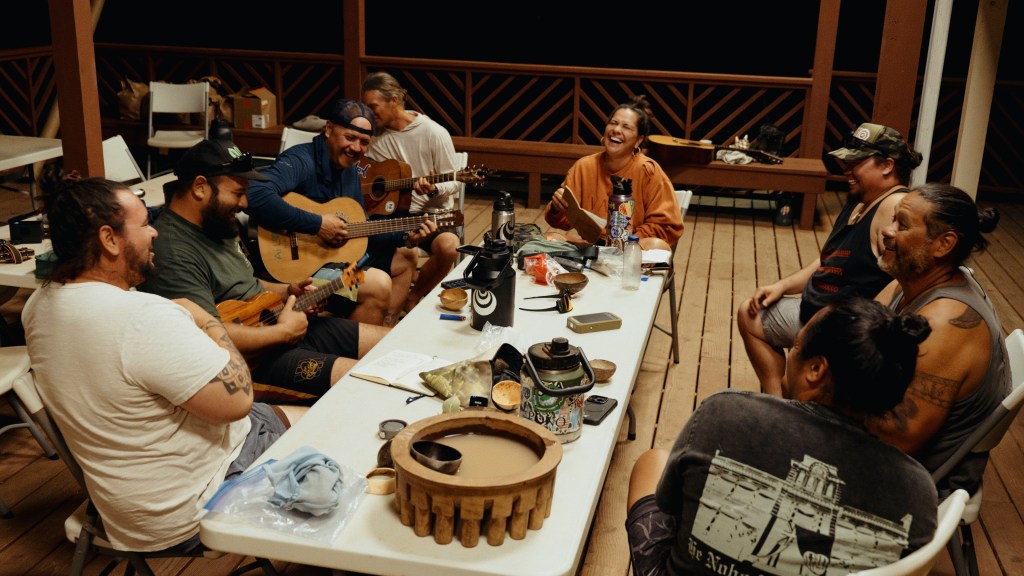
Last year, she went back to the island as part of a group assembled by longtime PKO stalwart Craig Neff, who had an idea of bringing together young Hawaiian musicians to compose songs for the island. The group sat together on a high point on the island under the sun, and inspiration found them.
The songs just came forth.
“We were out there for hours and it felt like minutes,” Miner said.
“It’s like time doesn’t exist there,” Kaʻikena Scanlan said. “Uncle Craig Neff says that on Kahoʻolawe, the veil is thin between you and the kupuna and akua world…you feel it in your bones.”

Ideas showcases stories, opinion and analysis about Hawaiʻi, from the state’s sharpest thinkers, to stretch our collective thinking about a problem or an issue. Email news@civilbeat.org to submit an idea or an essay.
That writing session resulted in four songs for the album “50 Years of Aloha ʻĀina” recorded by a group of celebrated Hawaiian musicians including Miner, Scanlan, Keahi Piʻiōhiʻa, Pōkiʻi Seto, Kiliona Young and Ikaʻakamai Nāhuewai, known collectively as the Protect Kahoʻolawe Band. Later discussions and recording sessions brought more songs to the collection.
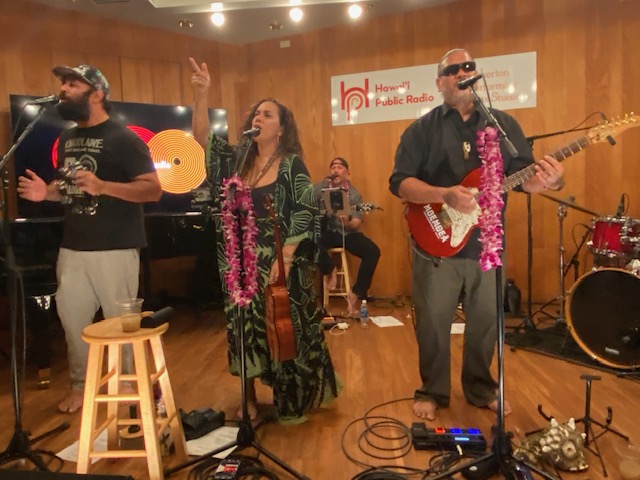
In a preview concert at Hawaiʻi Public Radio’s Atherton Studio last weekend, Miner sang about living the dream of the ancestors, her clear, sure voice rising to proclaim, “This is reality. Kanaka reality” in a song of gratitude for the people who never accepted that Kahoʻolawe’s identity was the pejorative nickname, “The Target Island.”
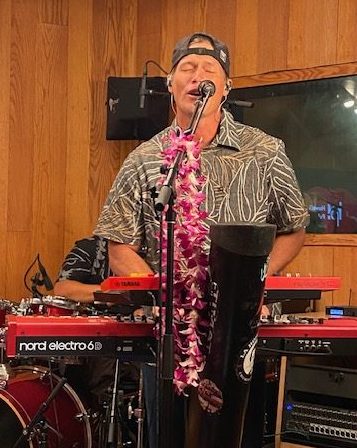
Over the years, Scanlan’s big hits have included songs that are playful and naughty. On this album, his voice carries both the sorrow of the past and the fierce determination for the future. On the track “Naʻulu Love Song,” he sings from the perspective of the island itself calling back the rain that historically bridged over the channel from Haleakalā.
The Protect Kahoʻolawe Band does a modern version of the classic Mele O Kahoʻolawe composed in the 1970s by Uncle Harry Kunihi Mitchell. It’s the kind of song where every kamaʻaina knows the last refrain: Imua na pua lanakila o Kaho’olawe (forward young people to bring victory to Kahoʻolawe)
Kaipulaumakaniolono Keala, a kua in PKO and composer on the album project, performed an ‘oli that honors the late Dr. Emmett Noa Aluli, who was at the heart of PKO from the beginning and was one of the famous Kahoʻolawe Nine 50 years ago that defied the U.S. Navy by occupying the island to stop the bombing.
“Jan. 4, 1976, the first occupation, was a big moment, but only one moment in the last 50 years,” Keala said. “That line that we all sing,imua na pua lanakila o Kahoʻolawe, that victory wasn’t promised. Continuing into the future, we will work to realize that victory.”
Historically, Kahoʻolawe was inhabited. Hawaiians lived and worked and worshipped on Kahoʻolawe.
In the 1850s, during a time of great pressure from foreign business interests attempting to control land in the Hawaiian kingdom, Kahoʻolawe was turned into a livestock ranch.
After the bombing of Pearl Harbor, the U.S. Navy declared martial law and took over the 45 square mile island to use for target practice. One of the most shocking assaults on the island happened in 1965, when the U.S. Navy set off three blasts of 500 tons of TNT each on the island in an attempt to simulate the effects of an atomic bomb. Ships were anchored offshore to see how they would be affected by the blasts.
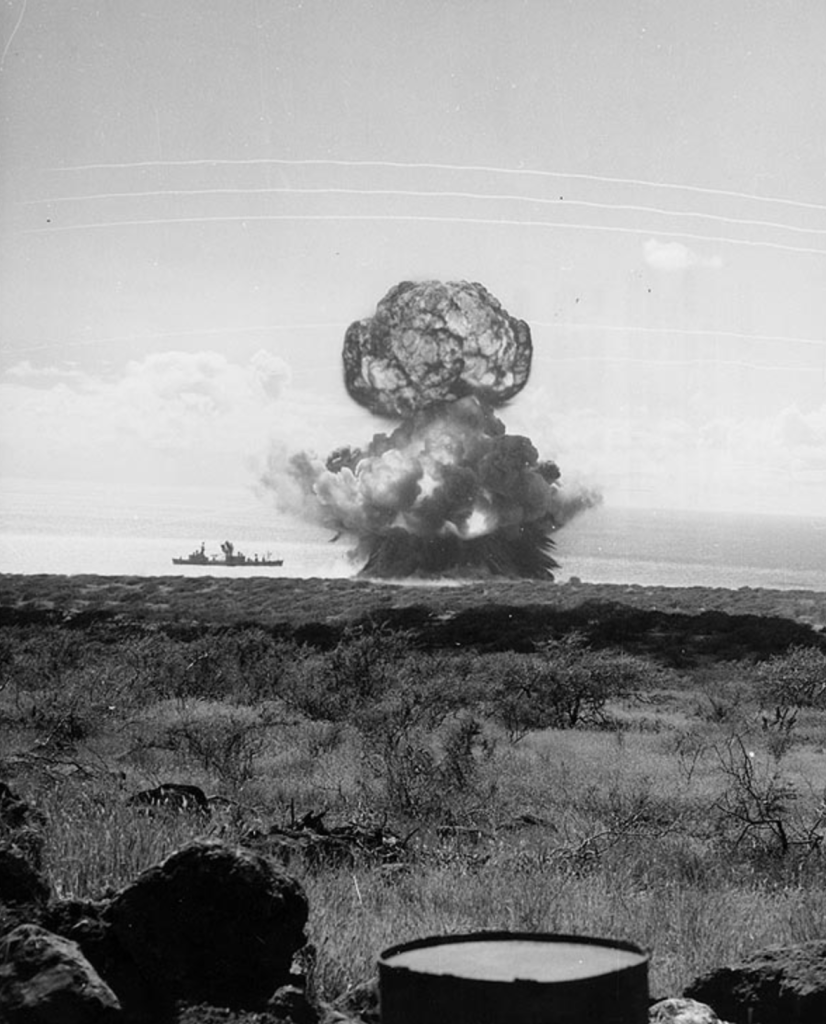
The tests left a huge crater on Kahoolawe’s southeast shore, euphemistically called “Sailor’s Hat.” Imagine that happening today just six miles off Maui’s sunny resort areas, how reckless and barbaric that would seem. It was reckless and barbaric back then too, even without tourism money at stake. That was at the heart of PKO’S Aloha ‘Āina, that the island was sacred in and of itself, regardless of its potential for resort development or other modern measures of land value.
It wasn’t until 1990 that President George Bush ordered a stop to the bombing of the island.
I’m not trying to make myself part of the story, because I am only a witness among many, but I can tell you what it was like to be a child on Maui when Kahoʻolawe was being bombed.
You could see the smoke from the explosions and the clouds of earth rising up with every detonation. In our wooden classroom at Wailuku Elementary, the windows shook and the teacher had to talk louder on bombing days. I remember lots of bombing days.
One time, my mom took us to the beach in Kihei, and as we played in the sand, a mortar shell rolled ashore in the waves. This was in the days when you could be the only family on the beach. My mom yelled at us to run to the car. She drove all the way back home to Wailuku (no cell phones, no 911) to call the police and report what we saw. I remember a police officer coming to our front door to get her statement and later coming back to tell her that the mortar had been safely removed.
The thing is, we were expected to just ignore these things and go about our business.
In January 1976, my father woke me up early on a Saturday and took me to Maʻalaea Harbor where a group of people who would later form the PKO were preparing to leave for Kahoʻolawe for religious ceremonies. This was several weeks after the Kahoʻolawe Nine had made the first historic occupation of the island.
I remember hundreds of people standing in the pre-dawn darkness. I remember impassioned speeches and tears and a feeling of tension and danger in the air. I was 9. That was the first time I understood that the bombs didn’t have to be something we accepted and endured.
That Jan. 24, 1976 trip to Kahoʻolawe was called off that morning because the Navy and the Coast Guard were on high alert and it was deemed unsafe for people to cross the channel. But the movement that became the Protect Kahoʻolawe ʻOhana was already coalescing and proved to be unstoppable.
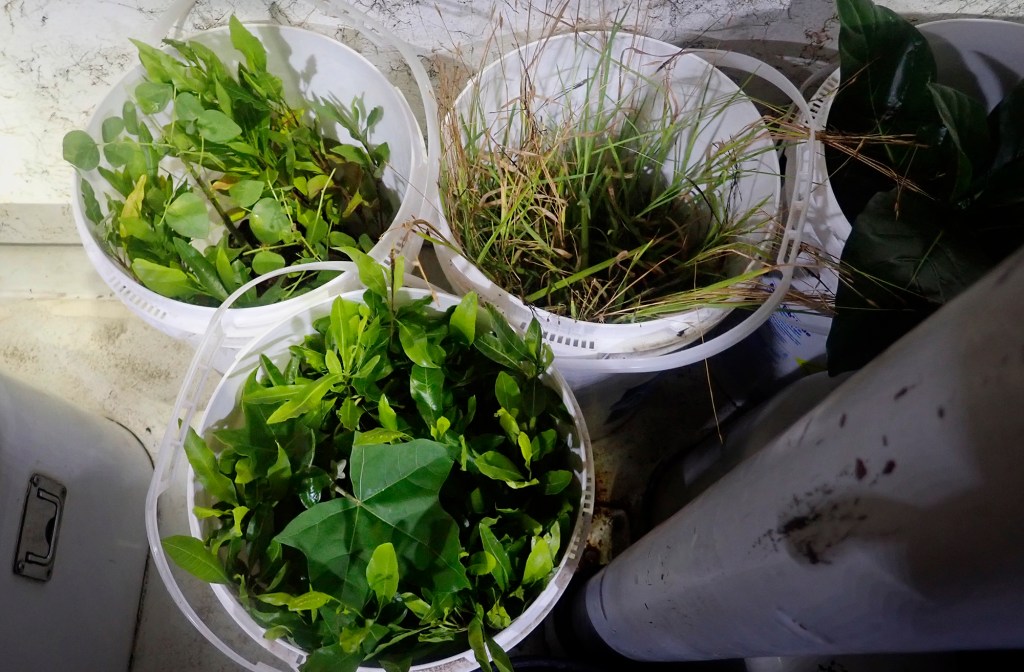
Kaliko Baker, Ph.D., professor of Hawaiian language at University of Hawaiʻi Mānoa, has brought groups of Hawaiian language students to Kahoʻolawe and led Makahiki ceremonies on the island for decades. These visits include replanting projects and efforts to slow erosion.
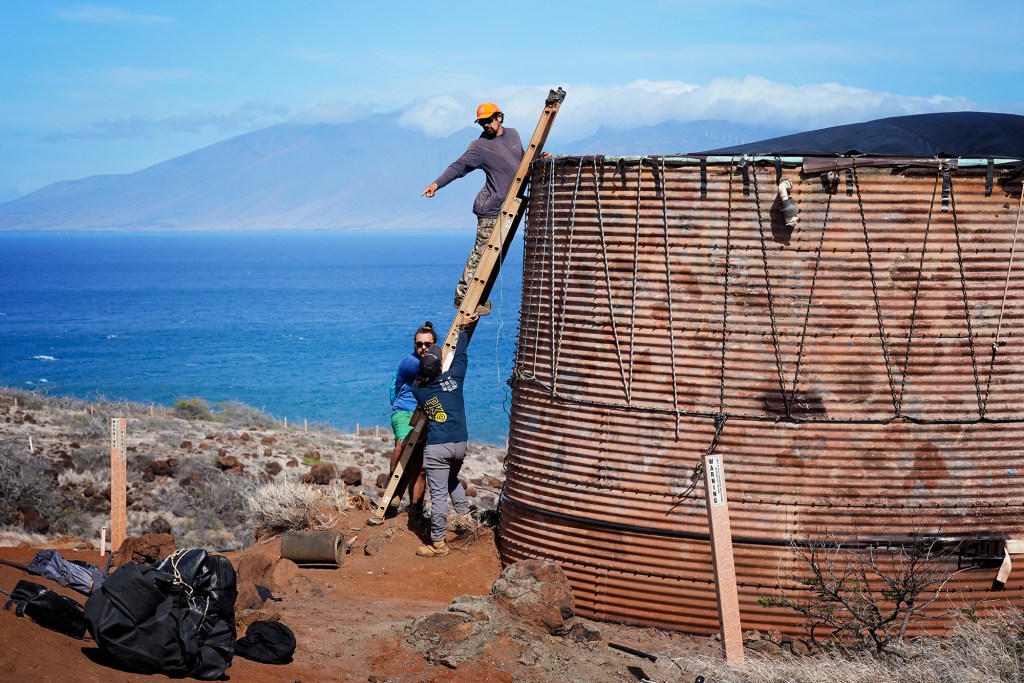
Baker smiles when asked how many people are now part of the Protect Kahoʻolawe ʻOhana. “PKO is as big as the amount of people we brought to the ʻaina over the years,” he said. “If you come to Kahoʻolawe, you become a part of it. But I would say the core group of the PKO is about 50 people.”
The digital album was released Oct. 23 (with talk of perhaps a vinyl version to come), and a concert to celebrate the music and the mission is being planned for Nov. 13 at Bishop Museum. The album is part of a yearlong celebration and fundraising effort with the slogan, “Not Pau Yet!”
Much of the album is in the genre Scanlan calls Hawaiian reggae – upbeat music that also expresses the suffering and oppression of island people.
“It’s the whole spectrum of emotions,” Miner said. “We can be joyful and grieving at the same time. We can celebrate and still know there’s more fight ahead.”
 Sign up for our FREE morning newsletter and face each day more informed.
Read this next:

Local reporting when you need it most
Support timely, accurate, independent journalism.
Honolulu Civil Beat is a nonprofit organization, and your donation helps us produce local reporting that serves all of Hawaii.
ContributeAbout the Author