Beth Fukumoto: My Ballot Has 22 Questions Yet Almost No Choices
Voters have few competitive races to decide upon, but numerous budget and financial issues that elected officials should be handling.
October 25, 2026 · 5 min read

About the Author

I watched the Charter Commission’s work for over a year. I tracked constitutional amendments at the Legislature. I knew my ballot would be full of questions. What I didn’t expect was how annoyed I’d be when I actually received it.
It’s not just that 22 questions take hours to research. Or that many aren’t the kinds of issues voters should decide one by one. It’s that I had almost no say over the people who are supposed to make these decisions for me.
My ballot has a race for governor and one for Congress. Neither is competitive. My state House seat was settled in the primary, and my City Council member ran unopposed, the kind of race I wrote about earlier this month. My one local race is a special election for state Senate that never had a primary at all. Former Senate Vice President Michelle Kidani retired June 30, four weeks after the filing deadline. Under a new law that took effect in April, the parties chose their own nominees through internal processes. None of the three candidates had to win a primary to get there.
So, this year, I don’t have much choice over who represents me at the State Capitol or Honolulu Hale. Yet I’m being asked to settle questions about budgets and finances that those officials are elected to handle.
That’s backward.

Our representatives in government have the time and resources to properly weigh these decisions. Most voters don’t. Ballot questions are notoriously difficult to read because they must describe specific legal changes in limited space. And while the full amendments are online, most of us will vote based on snippets of information.
That’s why ballot measures should be tools we use sparingly. And only when laws and ordinances can’t do the job.
The state constitution and county charters set the framework everything else is built on. They decide how government is organized and what powers it has. That’s why every voter has a say whenever we change them. Within the framework we’ve authorized, legislators and council members make policy through laws and ordinances, and they can change those without asking voters. That’s what we elect them to do.
One of the state amendments on this year’s ballot models that division well. Constitutional Amendment 2 would let counties borrow against future property tax growth in designated districts to build the water, sewer and road infrastructure housing needs, and keep that debt from counting against their limits. It gives counties a power they don’t clearly have. And it’s a power I think they need, so I’m voting yes.
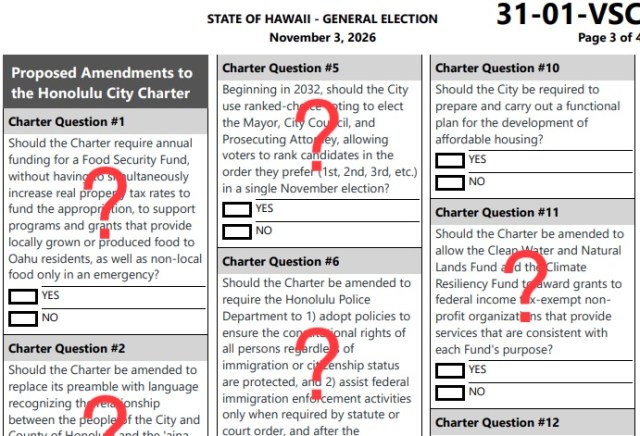
Then there are Honolulu’s 20 charter questions. Too many of them ask voters to make spending decisions the council would normally make. Questions 11 through 14 adjust special funds the charter already sets aside. One asks whether the Clean Water and Natural Lands Fund can spend 5% or 10% of last year’s deposits on upkeep, roughly $440,000 or $880,000 a year. That’s a budget detail, and it takes a citywide vote only because the cap is written into the charter itself.
That’s the trap with putting a fund in the charter to start with. Every adjustment needs another ballot question. The city’s climate fund can’t make direct grants to nonprofits because the charter makes the Grants in Aid Fund the city’s “sole source” for them, so the city’s own climate office asked the Charter Commission to ask voters to fix it.
The clean water fund has a similar problem. Its rules mostly limit it to buying land, with a small cap on upkeep, and the commission’s committee found that money it couldn’t spend under those rules had piled up into “nearly a decade of unused allocations.” Questions 13 and 14 each try to loosen those rules, one by adding historic buildings to what the fund can pay for, the other by doubling what it can spend on upkeep.
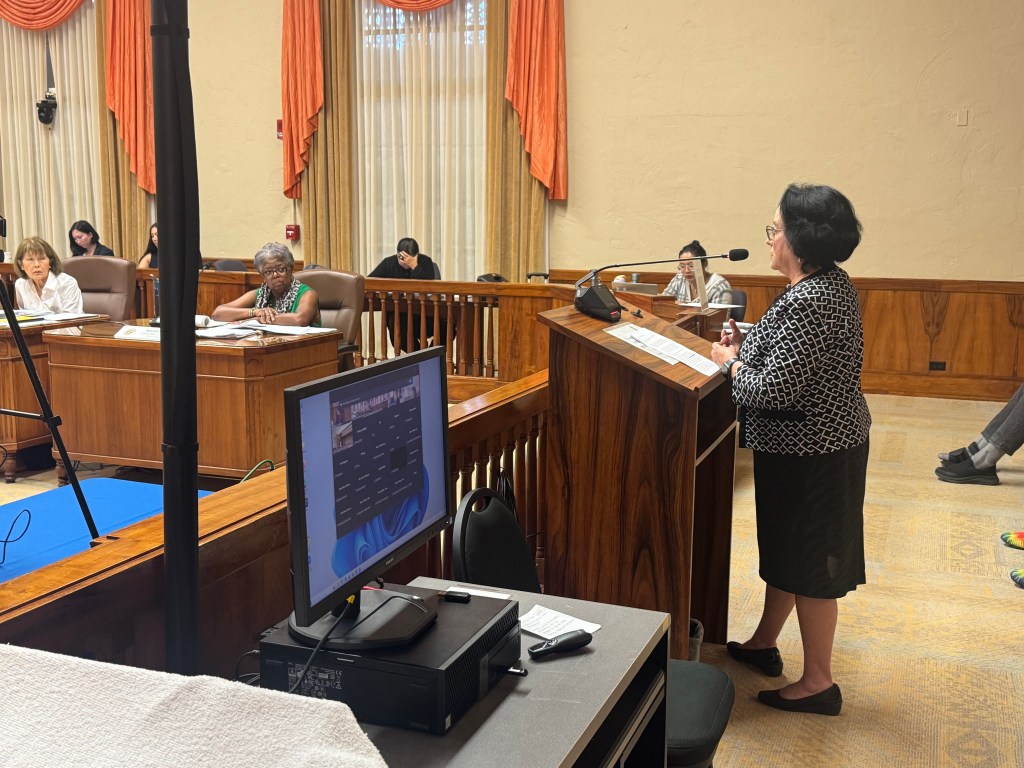
The commission’s committee also considered a simpler fix. The charter splits 1.5% of the city’s property tax revenue evenly among three funds: clean water, affordable housing and climate resiliency. The committee looked at letting the council move that money among them through its normal budget, with a minimum for each, so a fund that couldn’t spend its share wouldn’t keep piling it up. The idea never made the ballot.
Why not? I think the answer hangs over this whole ballot, and it comes from the same place as my frustration with the candidate list. Competitive elections do more than decide who wins. They give voters a reason to believe the people in office are listening. Without them, confidence erodes, and decisions we’d normally leave to elected officials start showing up on our ballots instead.
The clearest example is Question 1, which would create a Food Security Fund. The Hawaiʻi Foodbank, which proposed it, argued that feeding people shouldn’t depend on who sits on the council. I’m voting yes. Hunger is an important issue, and if we’re going to keep using the charter to set budget priorities, it belongs among them. But the council has always had the power to make steady investments in food security on its own. Voters shouldn’t have to force it.
But Nov. 3 is coming, and these are the choices in front of me. So I’ll say yes to most of them, with the same reservation, again and again. We should have been able to trust elected officials with these decisions.
Rebuilding that trust will take time. It takes elections competitive enough to give voters real choices, and enough participation that people can believe their votes matter. That can sound abstract, but this ballot shows what it looks like in practice when the connection between voters and the people meant to make a lot of these decisions has frayed.
 Sign up for our FREE morning newsletter and face each day more informed.
Read this next:

Local reporting when you need it most
Support timely, accurate, independent journalism.
Honolulu Civil Beat is a nonprofit organization, and your donation helps us produce local reporting that serves all of Hawaii.
ContributeAbout the Author