

Fund To Help Hungry Appears On Its Way To Honolulu’s November Ballot
Fund would use existing property tax revenues to support programs to help people who experience food insecurity access locally produced food products.
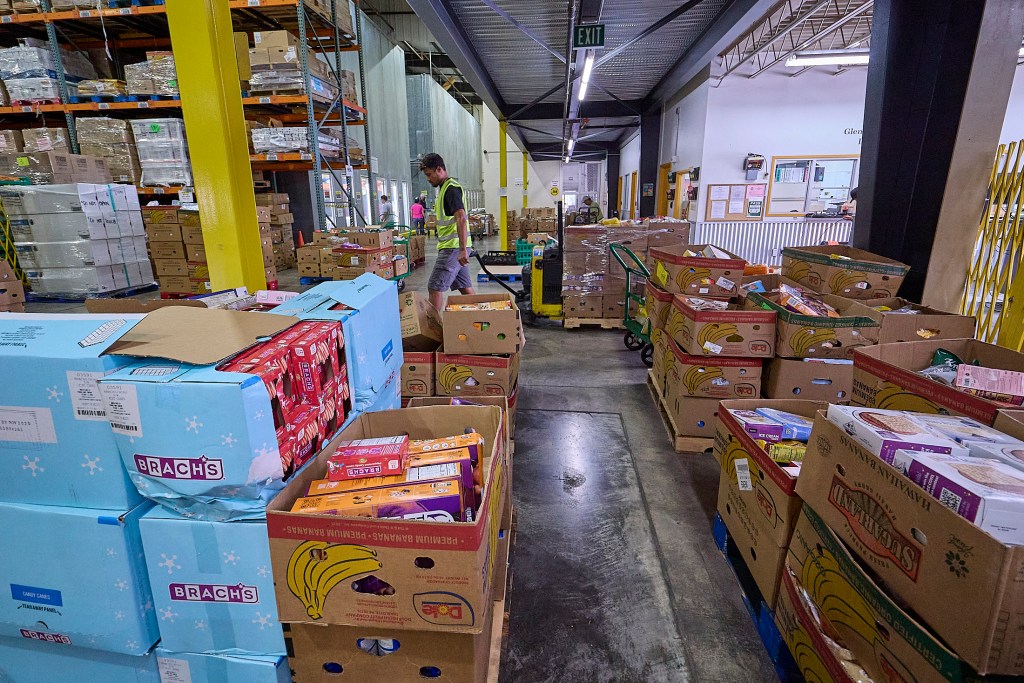
A proposal to start a fund to help hungry Oʻahu residents get more locally produced foods appears headed for the November ballot, after the Honolulu Charter Commission advanced it on Tuesday.
The proposal submitted by Hawaiʻi Foodbank would not raise taxes. Instead, it would use a slice of existing property tax revenues to direct $8 million a year to a food security fund.
The fund would support programs to increase “access to healthy and affordable foods grown, raised, or harvested in the State of Hawaiʻi, and value-added or processed products derived primarily from such foods,” the commission said in a report recommending the proposal move forward.
Commission Vice Chair Sommerset Yamamoto choked up speaking about children too hungry to concentrate in class and said Honolulu’s response to hunger among its residents “has remained reactive, sometimes inconsistent and subject to politics of annual budget cycles. And that has to change.”
Supporters of Proposal 119 — one of nearly 300 initially submitted to the commission — applauded the decision, which followed nearly five months of discussion, research and testimony. If voters approve it in November, the fund would make tackling food insecurity an ongoing Honolulu priority, said Elia Herman, the food bank’s director of advocacy.
“The reason to do a fund like this is that it shouldn’t matter who is in office and on the council,” Herman said. “This would ensure, essentially in perpetuity, that the city and county is invested and committed to being part of the solution to fighting hunger, and to making sure every child, every kūpuna, every household has enough to eat.”
The food bank’s latest report on hunger in Hawaiʻi, released in November 2025, found that benchmarks of food-related distress are worsening.
One in four of Oʻahu’s roughly 1 million residents lack access to enough food to live an active healthy life, the report found. Two-thirds of those — about 165,000 people — have very low food security, meaning they’re skipping meals because they don’t have enough money for food.
‘Strengthen Our Local Food System’
The commission committee that recommended the proposal be advanced said special funds have downsides because they commit future resources and limit budget flexibility.
On Tuesday, some commissioners highlighted that concern.
“The budget function of the City Council is among the greatest powers that the City Council holds under our charter, and the more general fund resources that are allocated to special funds erodes that authority of the City Council,” Commissioner Diane Kawauchi said. She joined Commissioner Trey Gordner in opposing the proposal.
But the committee’s declaration that “food insecurity rises to that level of importance and warrants a dedicated and sustained investment” won out.
Currently, 1.5% of Honolulu’s annual property tax revenue, or about $24 million, goes to three special funds, one for affordable housing, a clean water and natural lands fund, and a climate resiliency fund voters approved in 2024.
“By supporting efficient utilization of locally produced food, we connect supply with need. We strengthen our local food system.”
Sommerset Yamamoto, Honolulu Charter commissioner
The food bank’s proposal would increase the tax revenue set aside to 2%, and divide it equally among those three and the food security fund. That way each of the existing funds would receive the same amount as they do now, without new taxes being levied.
Over the months the commission discussed and gathered testimony about the proposal, it increased the emphasis on using locally produced food — which commissioners noted does not always make it to the marketplace — to address the food insecurity crisis.
“By supporting efficient utilization of locally produced food, we connect supply with need,” Yamamoto said. “We strengthen our local food system.”
One section in the proposal allowed for the use of non-locally produced food to assist residents when an emergency is declared, but says only 10% of the funds can be used in those cases.
The proposal now goes to another commission committee and the city and county’s corporation counsel to determine its wording on the ballot. It then returns to the commission for a final vote.
Voters have the opportunity to amend the charter — the city’s governing document — through ballot amendments every decade. Final recommendations for which proposals should be on the November 2026 ballot are expected around mid-July so they can be sent to the City Clerk in mid-August.
Civil Beat’s reporting on economic inequality is supported by the Hawaiʻi Community Foundation as part of its work to build equity for all through the CHANGE Framework; and by the Cooke Foundation.

