Before We Learn To Love Coqui Frogs, Let’s Consider What We're Accepting
Yes, the frogs are revered — in Puerto Rico, not here. We seem to be normalizing the continued loss of Hawaiʻi’s native ecosystems.
November 2, 2026 · 5 min read

About the Author
I’m writing in response to Makana Eyre’s recent opinion piece, “If Bad Bunny Can Love Coqui Frogs, So Can We.” Its message was deeply troubling, especially after Civil Beat’s important reporting on the spread of coqui frogs across Oʻahu.
First, the article conflates the cultural importance of a native species in Puerto Rico with its ecological impacts as an introduced invasive species in Hawaiʻi.
It’s beautiful that coqui frogs are revered in Puerto Rico, celebrated in songs and stories. I would love to experience that connection. In Puerto Rico.
But just because a species is beloved in its native home doesn’t mean it belongs everywhere it goes.

Ideas showcases stories, opinion and analysis about Hawaiʻi, from the state’s sharpest thinkers, to stretch our collective thinking about a problem or an issue. Email news@civilbeat.org to submit an idea or an essay.
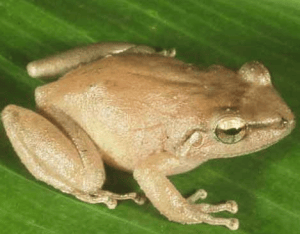
Coquis in Puerto Rico live within an ecosystem that has evolved alongside them, with natural predators that help control their populations. In Hawaiʻi, those relationships don’t exist in the same way. Our climate and the absence of effective predators allow their populations to grow to extraordinary densities, and the frogs to extraordinary sizes.
Second, the article gives too little attention to what coqui frogs are doing to our islands. Despite citing arguments for continued containment, the article ultimately encourages us to embrace the frogs.
Coqui frogs consume enormous quantities of insects and other invertebrates. We need more research on the full impacts. But from everything we know in Hawaiʻi, these frogs threaten our native insect populations, with consequences for our native species that rely on insects for food.
Yet the article’s central question seems to be whether people can learn to enjoy their calls.
This framing simplifies a very serious ecological threat to just a question of personal preference at bedtime. Whether we find their calls cute or irritating matters little.
The question should be what their continued spread means for Hawaiʻi’s already vulnerable ecosystems, and what responsibility we have to prevent further harm.
Third, I take issue with the use of the word “we.”
The word we is powerful. Itʻs increasingly used in the invitation to make something a kākou thing, recognizing our shared responsibility and connection to one another.
But especially when we speak about environmental issues, we must intentionally include our plants, animals, insects, and ʻāina.
So when Eyre asks whether we can learn to love coqui frogs, what I ask is: What about the ʻōpeʻapeʻa, our native bat, and the potential consequences of changing nighttime soundscapes and insect populations? What about our native insects being consumed by this introduced predator? What about the native birds whose food sources may be altered?
Where do their interests stand in this collective we? To quote a close friend, “Please don’t ʻwe’ on me.” And certainly, don’t “we” on our ʻāina.
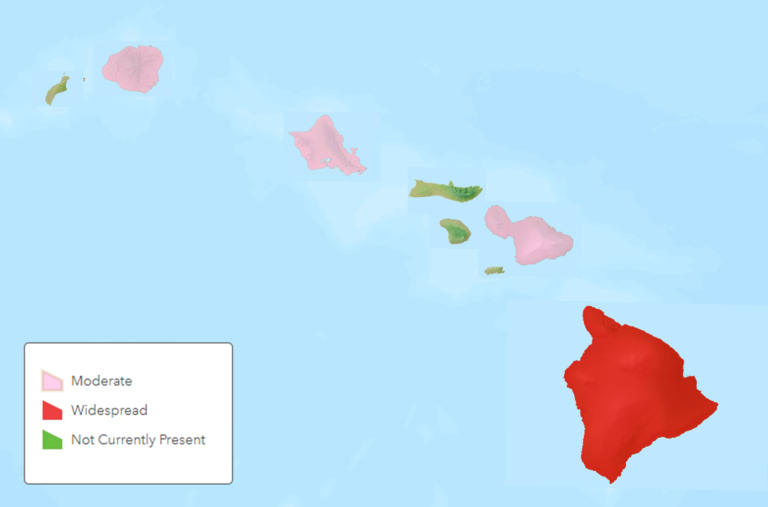
Just days earlier (Oct. 12), Civil Beat published an important account of the tireless work of residents in Pālolo and Waimānalo trying to control these frogs. These community members are putting in significant time and resources to protect their neighborhoods and prevent the frogs from spreading across Oʻahu.
In Pālolo alone, volunteers have contributed over 2,000 hours and removed nearly 11,000 frogs, a remarkable and admirable example of community commitment in the face of an increasingly difficult fight.
Inviting acceptance feels more like a dismissal of their efforts.
I understand that eradication may be extremely difficult, perhaps sadly impossible in some places. But there is a significant difference between admitting the difficulty of a fight and suggesting that we should stop fighting.
What saddens me is our repeated inability to hold our institutions accountable for their failures to adequately prevent and control invasive species. And when those species take hold after years of kicking the can down the road, the response is that we should just accept the new normal.
No wonder our government continues to struggle with combating this and other invasive species threats.
At first, I wondered whether the article was simply intended to be cute or tongue-in-cheek. But the idea that we might learn to celebrate the sounds of an invasive species is not something we should joke about. I’m troubled by what seems to be the normalizing of continued loss to our native ecosystems.
Hawaiʻi faces significant threats from invasive species.
Perhaps the calls of coqui frogs are easier to appreciate from a distance. Harder to hear are the quieter voices of the native species whose habitats and relationships are being altered.
I hope I never reach a point where I love the sound of coqui frogs in Hawaiʻi. I hope their calls continue to remind us all of what we have allowed to happen to these islands, and of our responsibility to prevent further harm.
Hawaiʻi faces significant threats from invasive species. Too often, the response has been delayed action, inadequate resources, and eventual resignation to a new normal. In this moment, we should be challenging that pattern, not finding cute ways to make peace with it.
 Sign up for our FREE morning newsletter and face each day more informed.
Community Voices aims to encourage broad discussion on many topics of community interest. It’s kind of a cross between Letters to the Editor and op-eds. This is your space to talk about important issues or interesting people who are making a difference in our world. Column lengths should be no more than 800 words and we need a photo of the author and a bio. We welcome video commentary and other multimedia formats. Send to news@civilbeat.org. The opinions and information expressed in Community Voices are solely those of the authors and not Civil Beat.

Local reporting when you need it most
Support timely, accurate, independent journalism.
Honolulu Civil Beat is a nonprofit organization, and your donation helps us produce local reporting that serves all of Hawaii.
ContributeAbout the Author