Jeta: This Tongan NFL Star Pivoted To Opera, Then Found His Voice
After a career-ending football injury, Taʻu Pupuʻa reinvented himself. Now, he’s telling his story in a new film, hoping to inspire more Polynesians to take the stage.
November 6, 2026 · 10 min read

About the Author
Polynesians account for less than half a percent of the U.S. population, yet make up an estimated 5% of NFL players. In Hawaiʻi, this overrepresentation is a source of local pride, with some celebrating football as a modern expression of Polynesian warrior heritage.
For some families, this so-called “Polynesian pipeline” is their ticket out of poverty.
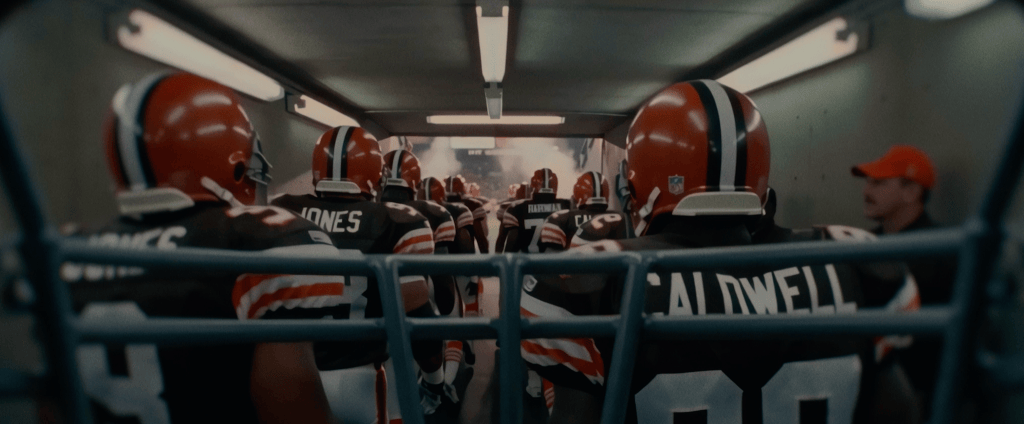
Taʻu Pupuʻa was among the first generation of Tongan NFL athletes when the Cleveland Browns drafted him in 1995. The pipeline offered his family a taste of the American Dream they had emigrated from Tonga to find.
The promise, though, was short-lived.
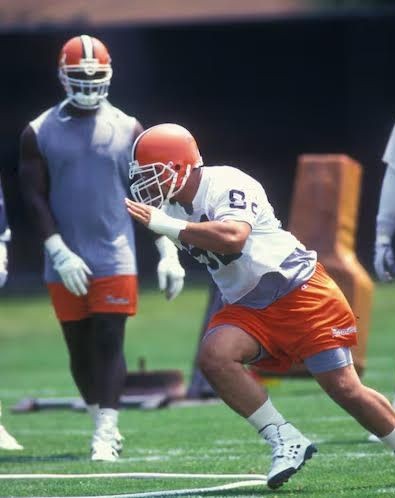
Within two years, before playing a regular-season game, a teammate landed on Pupuʻa’s foot during practice, crushing his arch and ending his NFL career. But, as if by fate, the injury became the catalyst for his second life – in the classical arts.
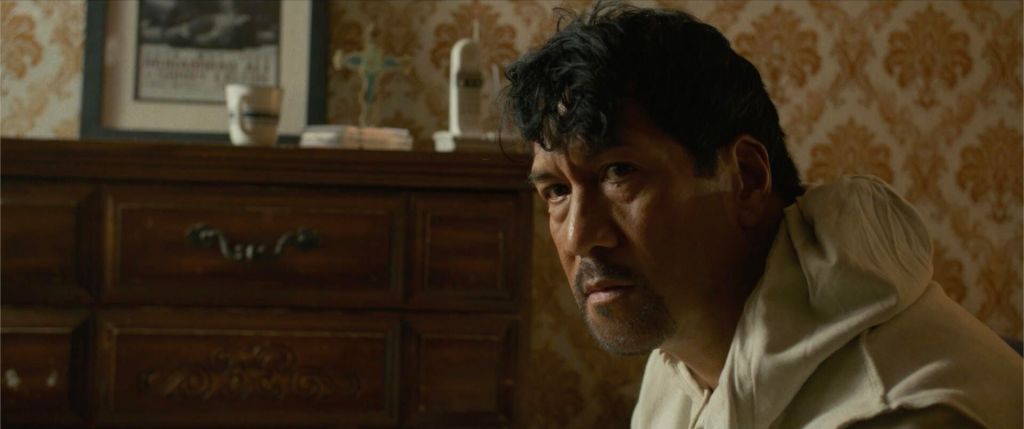
Now, Pupuʻa is embarking on his third act, starring as himself in “The Platform,” a 2026 biographical short film directed by Mark Harris.
Harris found inspiration in Pupuʻa’s reinvention while navigating his own second act, returning to narrative filmmaking after years in unscripted television.
“Taʻu is someone who does that [reinvention] at an astonishing scale,” Harris says. “While the details are truly extraordinary, and that’s what makes it a movie, the underpinnings of his story are very much something that we can all relate to.”
Together with his wife, award-winning screenwriter Monica Foley, the duo brought cinematic flair to Pupuʻa’s unconventional journey.

Ideas showcases stories, opinion and analysis about Hawaiʻi, from the state’s sharpest thinkers, to stretch our collective thinking about a problem or an issue. Email news@civilbeat.org to submit an idea or an essay.
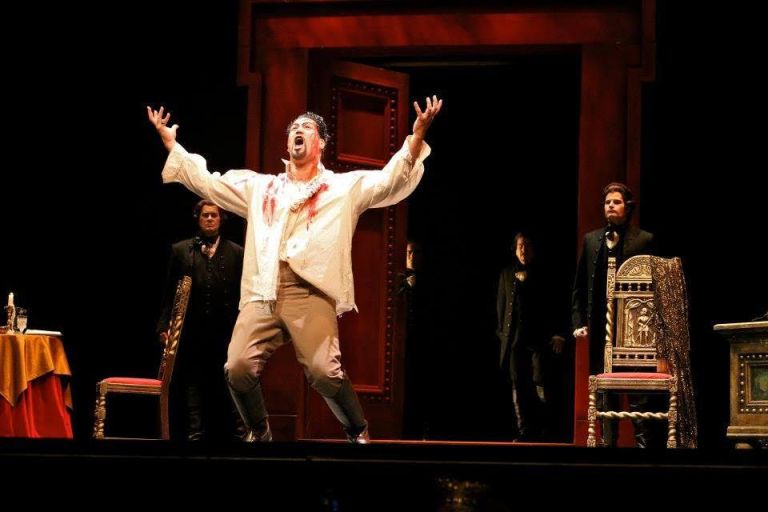
Set in Manhattan, the film dramatizes Pupuʻa’s transition from the NFL to opera in just 10 fast-paced minutes, capturing the audacity of a man determined to dream again.
Harris cast Pupuʻa as himself for authenticity, saying it would be nearly impossible to find another 6-foot-5, 250-pound Tongan actor who could convincingly portray an NFL lineman and deliver elite tenor vocals.
For Pupuʻa, his acting debut was an opportunity to advocate for Pacific Islander representation, rather than pursue another career. He wants to show that success need not end on the football field, nor should it have to start there.
Polynesians belong on the stage, too.
The Pipeline Promise
In the mid-1970s, Pupuʻa’s parents arrived in the U.S. with nine children, including five-year-old Pupuʻa. They briefly settled in Hawaiʻi before relocating to Salt Lake City.
Back in Tonga, the family lived in destitution, often without hot water or electricity. Even in the land of opportunity, they remained devastatingly poor. His father worked as a landscaper and dishwasher, an upgrade from farm work in Tonga. Yet unpaid utility bills sometimes left them exposed during Utah’s brutal winters.
Pupuʻa’s older siblings dropped out of high school, lying about their ages to find work so the younger children could stay in school.
“And so you grow up thinking to yourself, ‘I don’t want to live like this and I don’t want my parents to live like this,’” the former defensive tackle says.
Pupuʻa began playing football at nine, recognizing it as his only path to college. He eventually earned a football scholarship to Weber State University.
He recalls a Little League concussion: “I remember I had a concussion in elementary school. My neck was just tilted the wrong way and I got hit. They had to use that smelling salt on me and I came to life.”
His anxious father watched from the sidelines.
Football promised financial opportunity, and he couldn’t afford to walk away. “You just get up, shake it off, and then you go and hit some more,” he says.
“The body, the injuries and everything, comes second because family means a lot in Polynesia. If you get hurt, you get hurt.”
For Samoan players, the largest Polynesian group in the NFL, faʻa Samoa (the Samoan way of life) informs their sense of duty in the game. Under this cultural framework, failure can feel anything but individual. As former Kahuku High School coach Famika Anae put it: “A loss reflects on the parents, the chiefs, and the race.”
Pupuʻa adds, “A lot of the football coaches really love Polynesian players. We listen and respect the elders. We are taught at a very young age to be respectful of people that are there to help you.”
But cultural fit doesn’t protect against football’s deadly consequences.
A 2026 study of nearly 20,000 NFL players found they were nearly four times as likely to die of neurodegenerative diseases as the general population. But in Hawaiʻi, where football is woven into local culture, acknowledging the risks could feel like desecrating a sacred tradition.
And perhaps for families like Pupuʻa’s, the promise of a better life outweighs the harms, making playing football a no-brainer.
When the Curtain Fell
After Pupuʻa’s career-ending NFL injury, fear of gossip within the Tongan community fueled his depression.
“My main thing wasn’t my parents because I knew they would still love me,” he says. “It was the Tongan people, how they’re going to talk about it, you know. ‘Oh, he wasn’t good enough. That’s why he got hurt. Oh, blah, blah, blah, blah, blah.’”
He spent three months in his parents’ Salt Lake City basement before deciding to “crawl out.” Through church, he resumed his childhood passion for singing.
Music had always been there; it just never paid the bills like football did.
His brother Tipiloma had introduced him to opera and classical music, including the work of Māori soprano Dame Kiri Te Kanawa, who would later set the stage for his reinvention.
“Can you believe she’s Polynesian?” Pupuʻa recalls his brother asking. His response:
“I’m like, ‘What? There’s one [Polynesian opera singer]?’ And so, yes, I knew about her. And then my whole family knew about her.”
The Second Act
Pupuʻa moved to NYC to pursue opera with the same blind faith his parents had brought to America: that somehow, it would all work out.
His father was skeptical, urging him to get a traditional job rather than chase an improbable dream. “Nobody has two dreams,” he told his son.
But Pupuʻa couldn’t be dissuaded, leaving his father little choice but to support him.
“When you go to New York, I want you to look for that Māori lady,” Pupuʻa recalls his father advising. “She’ll help you because she’s Polynesian. Polynesian people help each other.”
This time, Pupuʻa said that he was the skeptic: “Dad, you don’t walk up to a famous person and say, ‘Hey, can you help me?’ I don’t know what world you live in. It won’t happen.”
Pupuʻa had his own strategy.
He took a job as a server at O’Neals’ Restaurant, across from the Metropolitan Opera, where he could observe the industry firsthand.
That proximity paid off when he learned Te Kanawa was holding a book signing at the Met. After waiting an hour for her autograph, the imposing Tongan man stood before the soprano.
“What do you do?” he recalls her asking, sensing the kinship.
Faking it till he made it, the NFL player turned restaurant server puffed out his chest: “I’m a tenor.”
When she asked how things were going, he admitted it had been difficult.
“Is anyone helping you?” she asked.
No, he told her.
Then came the unexpected offer: “Can I help you?”
Turns out, his father was right.
Not A Pipe Dream
Under Te Kanawa’s tutelage, Pupuʻa secured his first audition and then a full scholarship to Juilliard’s opera program, becoming its first Polynesian graduate in 2011.
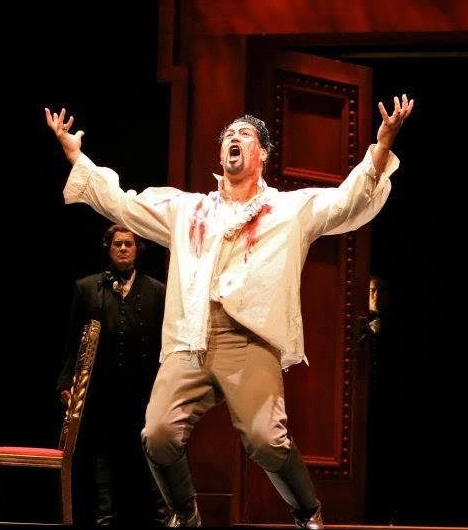
Since then, he has brought Polynesia to the global stage. During the world premiere of “CO2” at Italy’s prestigious La Scala opera house in 2015, the composer asked him to sing a few lines in Tongan.
It became one of Pupuʻa’s proudest moments: “I thought, ‘Wow, I think I’m the first Tongan to be on this stage, but also the first that this opera house has ever heard…to hear a Polynesian language sung in this house. I think I’m making history here.’”
Pupuʻa routinely closes his solo recitals with a Tongan song, sharing his cultural roots after performing in Italian, French, German or Russian.
Having made a dent in opera, the tenor now turns to film to represent Polynesia. Today’s youth have far more career opportunities than previous generations, but Pupuʻa observes that Polynesians remain sorely underrepresented in creative fields such as ballet, classical music and theater.
“Sports is what the Polynesian people know. And hip-hop, rap, and reggae music,” he says.
“But when it comes to classical [arts], there are very few Polynesians and also very few Polynesians in acting. I’d like to help out the younger generation in finding their voices in those fields.”

Pupuʻa also takes issue with how Pacific Islanders are portrayed on screen, often in films about warriors, gangs or violence. With “The Platform,” he wants to share a different Polynesian story, one of kinship, vulnerability, resilience and the courage to start over.
Winner of Best Drama at the 2026 LA Shorts International Film Festival, “The Platform” will have its final Hawaiʻi screening at the Maui Arts & Cultural Center on Sunday, Nov. 15 at 1 p.m. as part of HIFF46’s 79-minute “Pacific Showcase Shorts: Where We Belong” program.
https://drive.google.com/file/d/147dFYy4pyH4GQ2WQCaLczMybNWk-IoHP/preview
Harris says production on a feature-length film, being developed with producer Mark Ciardi, will begin next year, with plans to film scenes from Pupuʻa’s childhood on the beaches of Tonga.
But representation isn’t only about being seen; it’s also about being heard.
“I just feel like there is this beautiful depth in their voices, a majority of them,” Pupuʻa says. “… it needs to be expressed and shared to the world.”
 Sign up for our FREE morning newsletter and face each day more informed.
Read this next:

Local reporting when you need it most
Support timely, accurate, independent journalism.
Honolulu Civil Beat is a nonprofit organization, and your donation helps us produce local reporting that serves all of Hawaii.
ContributeAbout the Author