Makana Eyre: Why Talk Of Football Brain Injuries Is Taboo In Hawaiʻi
Local doctors don’t want to comment on the risks young people face playing tackle football, despite mounting research detailing those risks.
October 7, 2026 · 8 min read


About the Author

Here’s a question that deserves more attention in Hawaiʻi. Given the torrent of alarming new research about the risks of tackle football, is it still defensible to allow our children to play?
Hawaiʻi seems to recognize that there’s a problem, as seen in 2018 in a proposed Senate resolution requesting the governor to examine the risk of a progressive neurodegenerative disease – CTE – in youth football.
The resolution did not, however, make it out of committee, despite a high-profile politician backing it.
This has been on my mind a lot since the August release of a sobering study – one of many of its kind – that found that at minimum, nearly one in four NFL players who died between 2016 and 2021 had CTE.
Now, you might say this is the NFL, where the biggest, fiercest men play, where the hits are hardest, where the players, on average, have played the longest.
To that I’d say you should consider two other studies, both published in 2023 by researchers at Boston University.

Ideas showcases stories, opinion and analysis about Hawaiʻi, from the state’s sharpest thinkers, to stretch our collective thinking about a problem or an issue. Email news@civilbeat.org to submit an idea or an essay.
One found that the greater the cumulative force of hits a player takes — even if they don’t result in concussions — the more likely he is to develop CTE. In other words, a player doesn’t need to be knocked out or concussive for meaningful exposure to accumulate.
The other study is just as startling, and more heart wrenching. In this one, the researchers examined the brains of 152 athletes who died before 30. They found CTE in 63 of them — about two in five. Nearly all of them showed mild CTE. Most of the 63 athletes with CTE played football. Very few made it to the pros.
In case it didn’t sink in, these researchers were examining the brains of deceased young adults playing mostly at the amateur level.
Some were as fresh to the world as the 18-year-old Wyatt Bramwell. Bramwell, a longtime football player, took his own life in 2019 after suspecting the sport had damaged his brain. Testing later confirmed he had CTE.
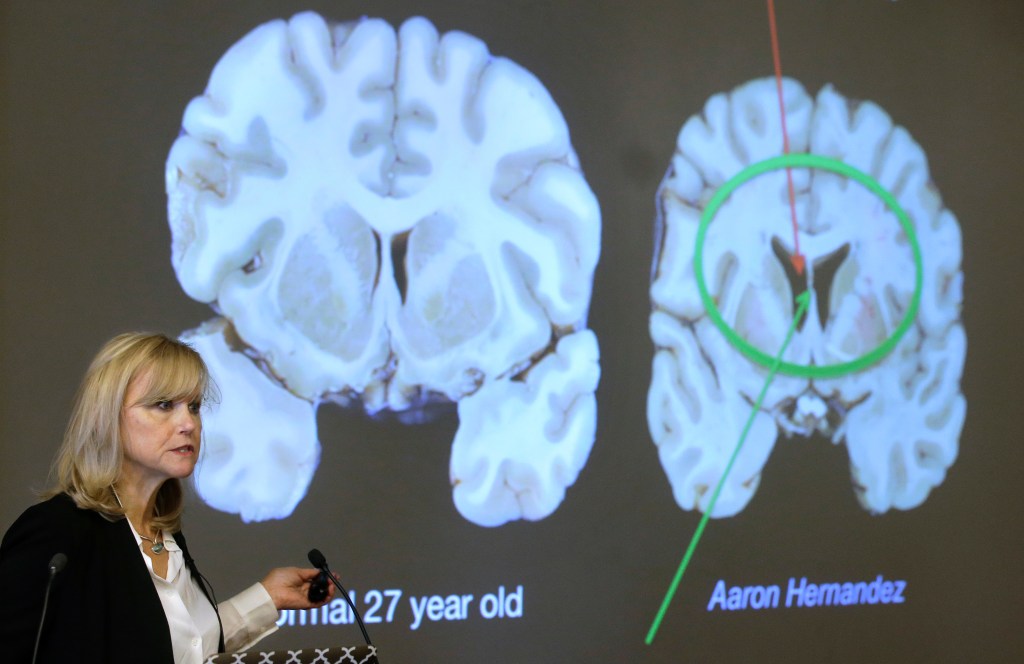
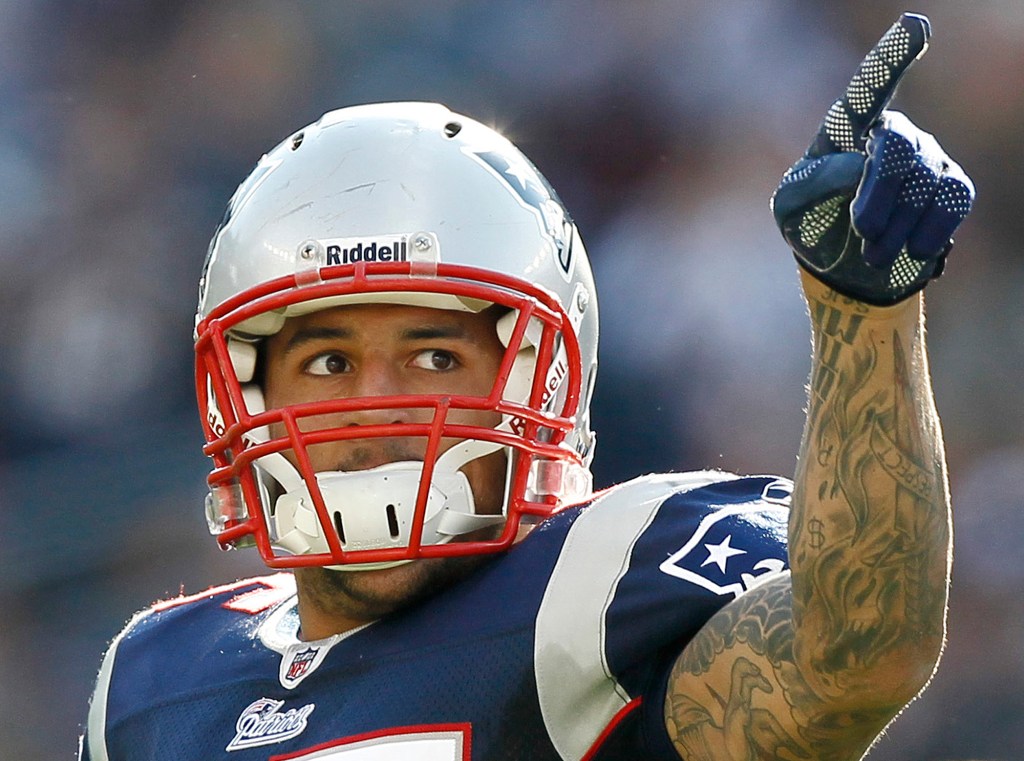
There was also Aaron Hernandez, a former New England Patriots tight end who hanged himself in a Massachusetts prison in 2017 while serving a life sentence for murder. Boston University researchers examined his 27-year-old brain that year and determined he suffered the most severe case of CTE ever discovered in a person his age.
While there are questions about CTE that remain to be answered, the recent research paints a very dark picture.
Given how deep football runs in our culture, I wanted to see what local doctors had to say about the risks.
Doctors Decline To Go Public
To my surprise, I encountered a wide reluctance to weigh in on the matter. Some doctors offered to comment off the record, others agreed to an interview and then changed their minds. Most never returned my calls at all.
One practitioner I did manage to reach was William Tsushima, a clinical neuropsychologist at Straub Medical Center. Tsushima, who is not a physician, has spent years researching concussions and head impacts among local athletes.
After such sustained study, he believes that football carries real risks. “It’s far from a safe sport,” he told me.
“Physicians should step up and be a little bit more vocal,” he added, “Especially those who are treating sports injuries.”
Tsushima stopped short of endorsing a ban. That decision, he explained, should be led by clinicians actually treating brain injuries.
Another person willing to speak was Erik Swartz, a professor at the University of Hawaiʻi and the Director of the Hawaiʻi Concussion Awareness Management Program.
Swartz made the case that football can be made safer, and while head impacts are inherently undesirable, it’s still not known how much risk remains once you’ve reduced their number and force.
“Physicians should step up and be a little bit more vocal.”
William Tsushima, a clinical neuropsychologist at Straub Medical Center.
He also cautioned against applying studies like ones from BU to all players. This research, he maintains, relies on brain banks, which he argues introduces a strong selection bias. Swartz’s own son currently plays prep football.
If you’ve spent any amount of time in Hawaiʻi you’ll understand the importance of football. It starts young. Pop Warner’s regional directory lists nearly 50 community associations in the state. Some children start playing at the age of 5.
From there, they join high school programs, where football dominates other boys sports. According to one count from the National Federation of State High School Associations, football dwarfs every other boys’ sport in the state. Twice as many kids play it than in the next most popular sport.
Why does this game center so much in our society?
Hawaiʻi’s Deep Ties To The Gridiron
The likeliest reason, I suspect, is that Hawaiʻi produces talent and excels on a national level. We all love it when we can root for players like Tua Tagovailoa, Marcus Mariota or DeForest Buckner.
These successes also have an impact on families. Despite the overwhelming odds, they see football as a route to opportunity — college scholarships and big paydays if a player makes the pros.
There’s also the historical context. In their fascinating 2009 essay, UH professor Ty P. Kāwika Tengan and football researcher Jesse Makani Markham wrote that football’s cultural power in the islands is tied up in the fulfilment of warriorhood, family and spiritual obligation, pride and a “rugged ‘local’ working-class masculinity.”
These explanations on why we love football are compelling, but they don’t answer whether it makes playing the game worth the risk. I’m not so sure.
Aside from the sidelined Senate resolution I cited, Hawaiʻi also has laws on the books that govern what happens after an athlete is suspected to have a concussion and what sort of medical clearance he needs before he can return to the field.
For more full-throated critiques, you have to go to national doctors such as Robert Cantu, a neurosurgeon and co-founder of BU’s CTE Center. Way back in 2012, long before these new studies, Cantu told the Boston Globe, “There is no way to make tackle football safe for youngsters.”
In a 2016 editorial, the orthopedic surgeons Seth Leopold and Matthew Dobbs wrote that “physicians — including orthopaedic surgeons — should recommend that young people not play tackle football.”
What will it take for change to happen in Hawaiʻi?
Maybe this:
Sons play football because their fathers and grandfathers did, because their friends do. Families gather to watch big games. They cheer their teams from the stands. In other words, it’s culture, it’s history, it’s emotion — and it takes a hell of a lot of effort before any of that can be undone, rerouted.

Yet children are where our emotions burn strongest, where we go the greatest distance, sacrifice the most to set them up for a good life.
In Hawaiʻi, we do much to protect our young – requiring them to wear bike helmets, to sit in carseats, to wear seat belts.
We don’t let minors buy cigarettes or lie in tanning beds. We don’t let them buy fireworks. There are rules about electric scooters, mopeds and life jackets on boats.
It’s surprising that more people aren’t concerned about boys — as young as five or six years old — smashing their heads together on the football field.
Gov. Josh Green has built his career on presenting himself as a highly concerned doctor. He was brave during the pandemic, earned political points for it and still does appearances wearing scrubs. He also sponsored the 2018 senate resolution on football head injuries, an appropriate move by a former ER doctor who has possibly treated such injuries among young athletes.
Maybe it’s time for Green to take on this sport and its risks.
 Sign up for our FREE morning newsletter and face each day more informed.
Local reporting when you need it most
Support timely, accurate, independent journalism.
Honolulu Civil Beat is a nonprofit organization, and your donation helps us produce local reporting that serves all of Hawaii.
ContributeAbout the Author