Olin Lagon: A Subsidy Is A Statement About Who Matters
We take a monthly fee from nearly every renter in Hawaiʻi and hand about $5,000 to households that already own a roof.
August 6, 2026 · 7 min read

About the Author

In 1923, William Bailey sold the patent rights to the most successful solar water heater ever built. He had spent 14 years turning it into an industry. A design so good we would recognize it on a roof today. Then he walked away and built the machine that killed it. Bailey got rich twice in one lifetime because he noticed when the world changed.
This is a story about what happens when you don’t. Go look at the water heater in a rental. It is almost always a plain electric tank, making heat the least efficient way we know how. The renter pays that bill every month. And buried inside that bill is a surcharge, the public benefits fee, that helps buy solar water heaters for single family homes across town.
Think about what that means. Renters are subsidizing homeowners to upgrade to a machine renters can almost never install. Then they keep paying more to heat their water than anyone else in the islands.
How did we end up here? Through winning. We led the world for a century on solar water heating, and that turns out to be exactly the problem.
In 1936, Punahou students built the world’s largest solar water heater in their shop class and installed it on their dormitory roof. The tank held 500 gallons, and in summer the water came off the roof at 180 degrees. It made news coast to coast.
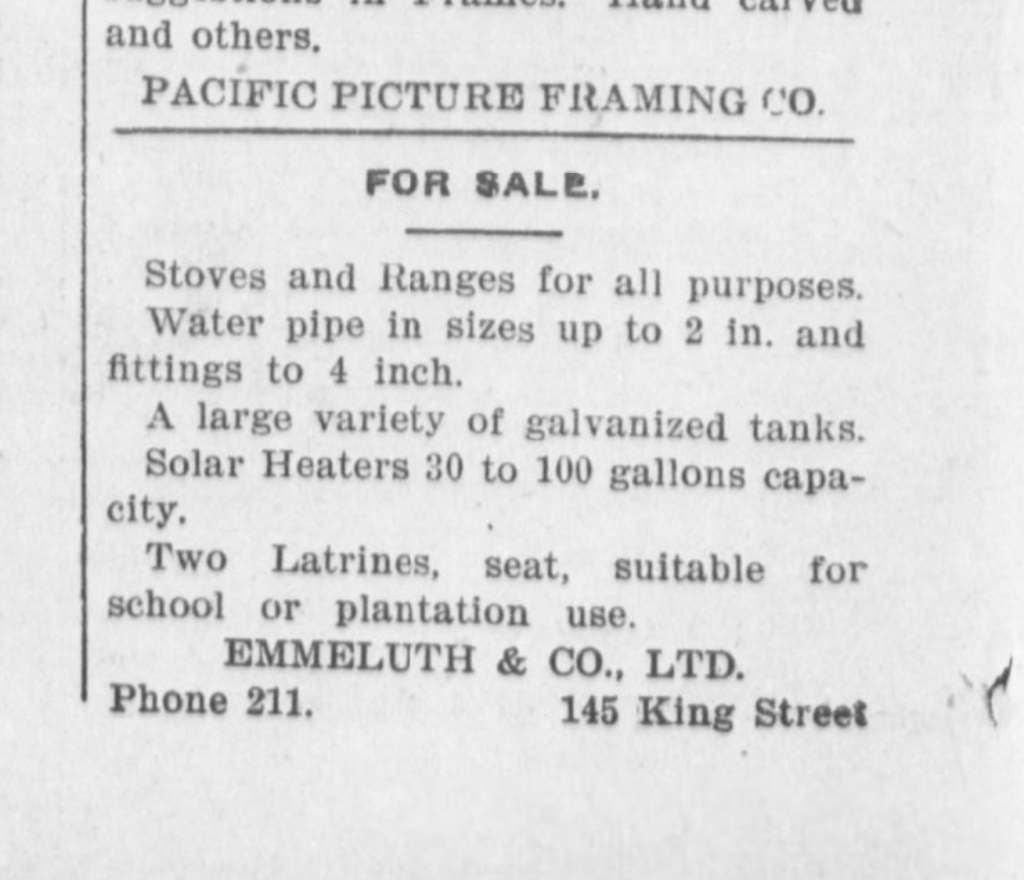
The technology was not new even then. In 1897, when commercial solar water heating barely existed anywhere, the Pacific Commercial Advertiser marveled at one on display at John Emmeluth’s Honolulu store. By 1909 Emmeluth & Co. was advertising solar heaters in the Hawaiian Star. That is the 1909 ad you see here.
Two months after that ad ran, Bailey filed the patent that created the modern solar water heater. He sold thousands of systems across Southern California, and shipped to Hawaiʻi too. Then cheap natural gas was discovered in the Los Angeles basin, and his market began to die. But Bailey did not go down with his invention. He took what he had learned and built a gas water heater instead. The man who scaled the solar water heater industry switched to the technology that killed it.
Remember Bailey. A better technology arrived, and he noticed.
Hawaiʻi went the other way. Gas never reached us, and solar hot water never left our shores. In 1976 we created a tax credit for it. In 2008, Act 204 made Hawaiʻi the first state to require solar water heaters on every new single family home. The policy was right for its moment. But hold that thought.

Ideas showcases stories, opinion and analysis about Hawaiʻi, from the state’s sharpest thinkers, to stretch our collective thinking about a problem or an issue. Email news@civilbeat.org to submit an idea or an essay.
Then came the loophole wars. The law allowed a variance for gas tankless heaters, and builders drove through it, more than 300 variances in the first 10 months. It took amendments and a lawsuit before a judge ordered the state, in 2019, to follow the statute’s intent. Eleven years in, the mandate finally worked as designed.
But while we spent 11 years perfecting a 2008 idea, the technology moved on.
I watched it move up close. This photo is from 2019 at the National Renewable Energy Laboratory in Colorado, where I did R&D on heat pumps for grid services with researchers like Bethany Sparn.
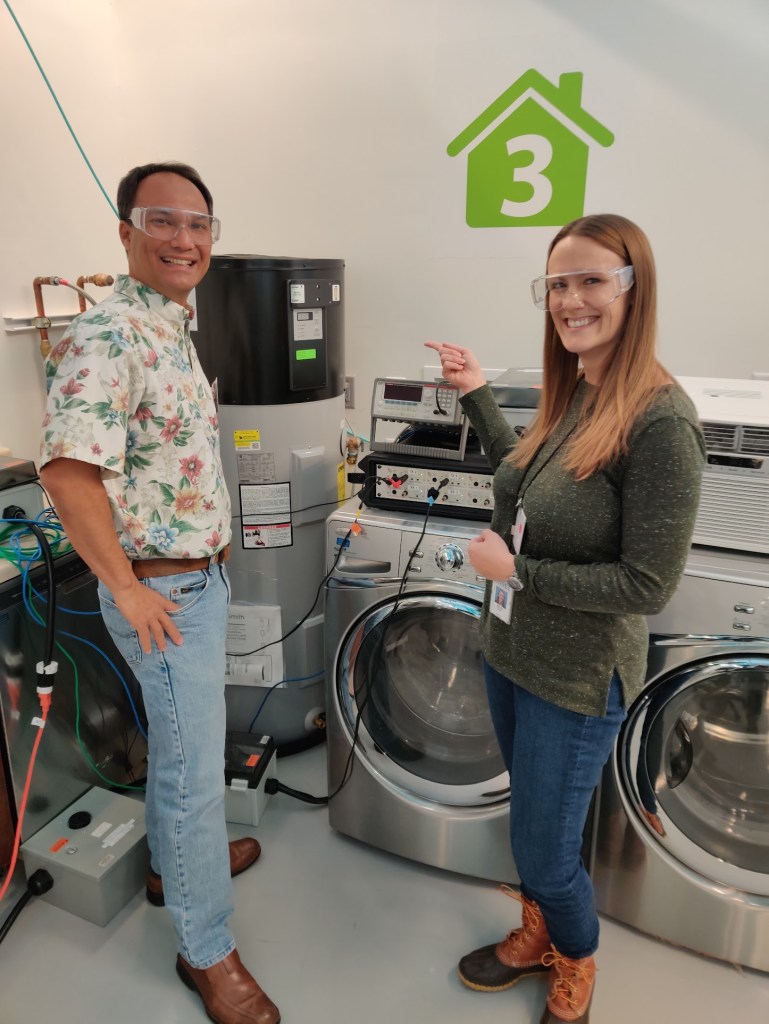
A heat pump water heater is a regular tank with a small refrigerator running in reverse on top. Instead of making heat, it moves heat from the warm air into the water. In our climate that is almost cheating. By Hawaii Energy’s numbers, it is two to three times as efficient as a standard electric tank and runs roughly $3,000 installed. And falling. It works at noon, at midnight, and through a week of Kona lows, when a solar system falls back on its electric element, the least efficient heat we make.
I love that the heat pump does not care who you are. Rentals. Townhomes. Multifamily buildings. The Legislature’s own findings say exactly that. It is the first efficient water heater in a century that serves a renter as readily as a homeowner.
So which one does our public money chase?
The rooftop. Hawaii Energy puts the average solar system at $9,390 installed, and quotes often run higher. To close that gap, we hand out a rebate of about $2,750 from the public benefits fee plus a 35% state tax credit worth up to $2,250. When Congress killed the federal credit last year, Hawaii Energy did its job and raised the rebate to fill the hole. We doubled down. One rooftop system can now draw about $5,000 in public money.
The heat pump gets up to $700 from that same public benefits fee. And no state tax credit at all. Our credit covers solar thermal, photovoltaics, even wind. Not heat pumps.
To be fair, the rooftop system does save more energy. A family of four with an electric tank burns roughly 4,000 kilowatt hours a year heating water. A good solar system saves about 3,600 of those. A heat pump saves about 2,700. If raw savings were the whole story, the rooftop wins.
But divide the subsidy by the savings and the story flips. Every kilowatt hour the solar system saves each year costs the public about $1.40. Every kilowatt hour the heat pump saves costs about $0.25. Even after the heat pump’s shorter lifespan, each public dollar buys at least three times the savings.
Or make it simpler still. The $5,000 we sink into one rooftop could fund seven heat pump rebates instead. Option one, a single homeowner saves 3,600 kilowatt hours a year. Option two, seven households, renters and apartment dwellers included, together save nearly 19,000. Same money. Five times the impact. Going to the people who actually pay the fee.
We are investing in inefficient efficiency. We built our biggest household energy subsidy around homeownership, the one asset that divides Hawaiʻi most sharply, then asked everyone to fund it.
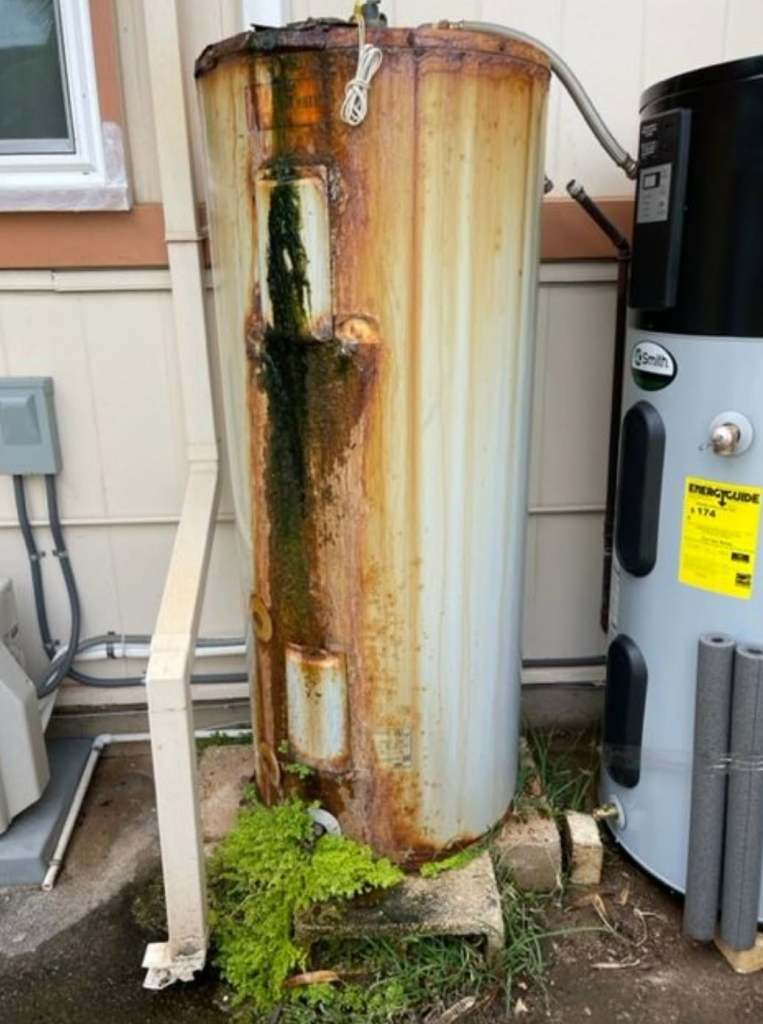
And let me be crystal clear. None of this is Hawaii Energy’s fault. They just about lead the nation if not the world in pushing heat pumps into the communities that need them most. In this picture, a family’s broken solar system, leaking and running 24/7, was driving an electric bill near $1,000 a month. Our company, Shifted Energy, working with Hawaii Energy, replaced it with a heat pump and the bill fell to about $150. An extreme case, but that is what the program can do when the policy lets it. The inefficiency sits in statewide policy, not in the people running the programs.
The Legislature has had the fix in front of it for two years. In 2025, House Bill 350 and Senate Bill 748 would have let an ENERGY STAR heat pump satisfy the mandate. They stalled without a hearing. This year, House Bill 2608 would have done that and added heat pumps to the tax credit. The House stripped out the credit, then parked what was left in committee until the session adjourned. Three bills, two sessions, zero laws.
Meanwhile, everyone who copied us moved on. When California adopted a solar mandate for new homes in 2020, it required photovoltaic panels, not solar thermal. Ours still stands, a monument to the future we imagined in 1976.
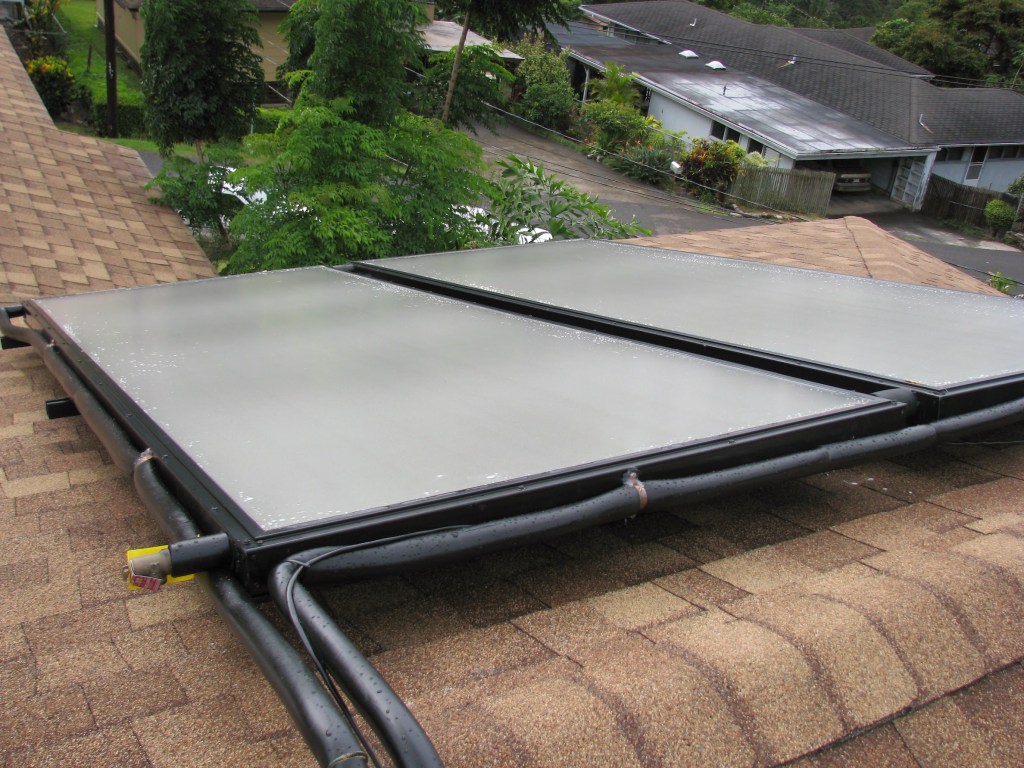
That does not mean tearing systems off roofs. If you have one, maintain it. The photo at the top of this column is ours, over 20 years old and likely on its last legs. We keep fixing it and it saves real money.
But remember Bailey. He built an industry on the sun, watched a better machine arrive and pivoted.
Go back to that rental where we started. The electric tank is still making some of the most expensive hot water in the country. The family paying that bill has chipped in, year after year, on solar systems they will never own, for houses they may never be able to afford.
A subsidy is a statement about who we think is worth taking care of. Ours has been making the same statement for 50 years.
Bailey noticed a machine. The harder thing to notice has always been the people paying for it.
 Sign up for our FREE morning newsletter and face each day more informed.

Local reporting when you need it most
Support timely, accurate, independent journalism.
Honolulu Civil Beat is a nonprofit organization, and your donation helps us produce local reporting that serves all of Hawaii.
ContributeAbout the Author