Mayor Rick Blangiardi: Why Honolulu Needs CORE Now More Than Ever
Successful public safety and public health programs adapt as practitioners learn what works.
August 6, 2026 · 6 min read

About the Author

Recent commentary has called for greater oversight of Honolulu’s Community Outreach Response and Engagement (CORE) program. Government programs should absolutely be accountable. Taxpayers deserve transparency, measurable outcomes and continuous improvement.
But accountability begins with understanding the mission.
Much of the recent criticism overlooks why CORE was created in the first place and the complex reality of the people it serves.

Ideas showcases stories, opinion and analysis about Hawaiʻi, from the state’s sharpest thinkers, to stretch our collective thinking about a problem or an issue. Email news@civilbeat.org to submit an idea or an essay.
Homelessness on Oʻahu, like in many cities across the country, is not simply a housing problem. It is a public health crisis that often involves untreated mental illness, addiction, chronic medical conditions and profound human suffering playing out in public every day.
For years, the traditional response wasn’t working.
Outreach teams did important work, but outreach alone could not reach everyone. Encampments continued to grow. Public parks, sidewalks and beaches became increasingly occupied by individuals who were often too sick to accept help.
Some suffered from severe psychosis. Others experienced methamphetamine-induced episodes that led them to wander into traffic, assault others or place themselves in life-threatening situations. Many lived with untreated diabetes, vascular disease, cancers, and infected wounds that eventually resulted in amputations or premature death.

As a community, we simply could not continue watching this unfold while relying on systems that clearly weren’t enough.
That is why CORE was created.
Originally known as Crisis Outreach Response and Engagement, CORE has evolved into Community Outreach Response and Engagement to better reflect its broader mission of serving all individuals experiencing homelessness, not just those in acute crisis. The program fills a critical gap between law enforcement and emergency medical services by responding to people who need help, but neither belong in jail nor necessarily require an emergency room.
That mission has required CORE to evolve.
Some critics point to that evolution as evidence of a program lacking direction. The opposite is true.
Successful public safety and public health programs adapt as practitioners learn what works. Emergency medicine evolves. Community policing evolves. Behavioral health evolves. A program tackling one of society’s most complicated challenges should evolve as well.
Improvement requires change.
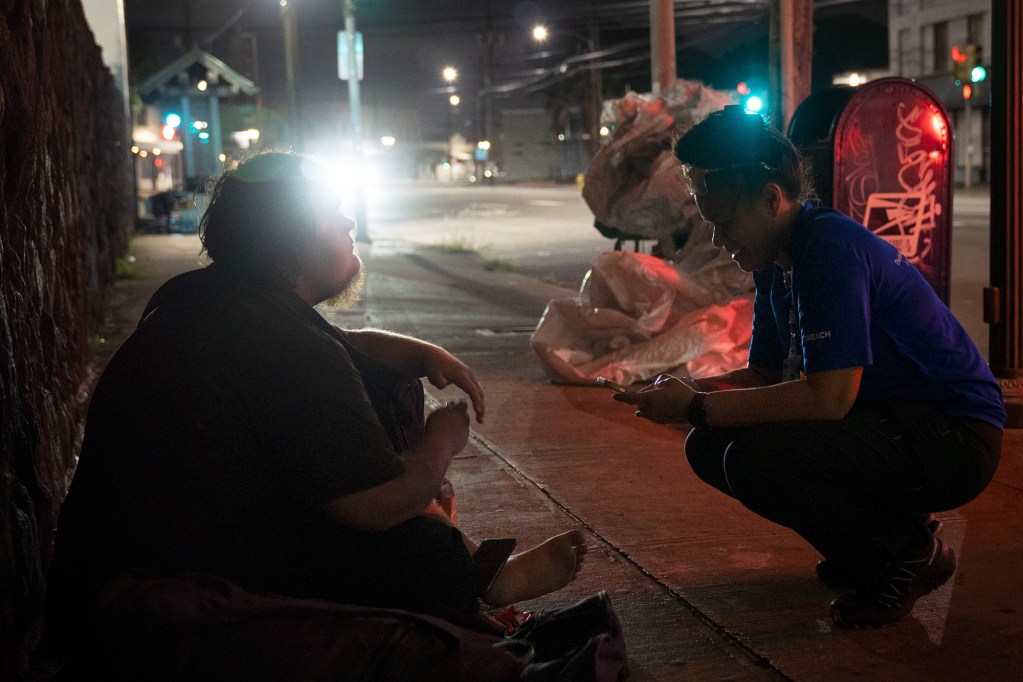
Today, CORE is staffed by paramedics, EMTs, registered nurses, nurse practitioners and community health workers working alongside physician leadership. Together, they connect individuals with shelter, medical respite, behavioral health treatment, addiction services and ultimately housing.
Every individual encountered by CORE is entered into the federally recognized Homeless Management Information System, creating continuity of care and ensuring outreach efforts are coordinated across service providers.
The city’s progress demonstrates that this collaborative approach is making a difference.
The January 2026 Point-in-Time Count documented a 22% reduction in unsheltered homelessness and a 35% increase in sheltered homelessness. Those results were not achieved by CORE alone. They reflect a coordinated effort involving expanded kauhale communities, additional shelter capacity, new medical respite facilities, nonprofit providers and state partners. CORE has become an important part of that larger system.
The program has also continued to evolve in response to new tools available under state law.
Act 219, passed by the 2025 Hawaiʻi Legislature and signed by Gov. Josh Green, created a process allowing individuals experiencing severe mental illness or substance-induced crises, who present a danger to themselves or others, to receive emergency psychiatric evaluation through the MH-3 process.
Recognizing the opportunity to help some of Oʻahu’s most vulnerable residents, CORE partnered with the Honolulu Police Department and the Hawaiʻi Sheriffs to pilot this approach.
The program has also continued to evolve in response to new tools.
From late December 2025 through July 2026, these teams conducted more than 100 MH-3 interventions. More than half of those individuals were transported directly to the Behavioral Health Crisis Center, while others received emergency psychiatric or medical care at Queen’s Medical Center, Adventist Health Castle and Tripler Army Medical Center.
Every intervention involved a physician or nurse practitioner conducting the required medical assessment, CORE EMTs or paramedics providing safe medical transport, and law enforcement officers fulfilling the legal requirements established under state law.
These are not simply transportation calls.
These interventions reconnect people with psychiatric medications. They treat severe medical illnesses that might otherwise become life-threatening. They begin recovery from substance use disorders. In some cases, they reunite individuals with family members who had long since lost contact.
Medical privacy laws prevent sharing many of those stories publicly.
But the people working in CORE see those successes every week.
Measuring Outcomes
Critics often ask for more measurable outcomes, and that conversation is worthwhile. The city welcomes thoughtful evaluation and continues refining performance measures and data collection.
At the same time, we should recognize that not everything that matters can be captured in a quarterly report:
- How do you measure the psychotic individual who finally accepts treatment after months of building trust?
- How do you quantify the diabetic patient whose infected wound is treated before amputation becomes necessary?
- How do you calculate the assault that never happened because a behavioral health crisis was de-escalated before violence occurred?
- How do you assign a metric to the emergency room visit, ambulance response or arrest that never became necessary?
Those outcomes are real.
They save lives.
They improve public safety.
They reduce strain on hospitals, first responders and taxpayers.
Most importantly, they restore dignity to people who have too often fallen through every crack in the system.
No one working in CORE believes the job is finished. Homelessness remains one of O‘ahu’s greatest challenges. Every day, the team encounters people still living in unimaginable conditions.
But for the first time in many years, we have a coordinated system bringing together the city, the state, nonprofit providers, expanded shelter capacity, kauhale communities, medical respite facilities and affordable housing.
CORE is a critical part of that system.
The answer is not to retreat from innovation because measuring every outcome is difficult.
The answer is to continue improving, continue measuring and continue building on what is already making a difference.
Oversight is important.
So is understanding the extraordinary work being done every day by the professionals on the front lines who are helping some of Oʻahu’s most vulnerable residents reclaim their lives.
 Sign up for our FREE morning newsletter and face each day more informed.
Community Voices aims to encourage broad discussion on many topics of community interest. It’s kind of a cross between Letters to the Editor and op-eds. This is your space to talk about important issues or interesting people who are making a difference in our world. Column lengths should be no more than 800 words and we need a photo of the author and a bio. We welcome video commentary and other multimedia formats. Send to news@civilbeat.org. The opinions and information expressed in Community Voices are solely those of the authors and not Civil Beat.

Local reporting when you need it most
Support timely, accurate, independent journalism.
Honolulu Civil Beat is a nonprofit organization, and your donation helps us produce local reporting that serves all of Hawaii.
ContributeAbout the Author