Makana Eyre: If Bad Bunny Can Love Coqui Frogs, So Can We
Hawaiʻi may need to come to grips with these little invaders. Can we learn to live with them, and their chirps?
October 19, 2026 · 7 min read


About the Author

There is a place where coqui frogs are the subject of great affection. They appear in tender songs and children’s poems. People print them on tee-shirts and tea towels. Even pop superstar Bad Bunny wove their nocturnal love call into a recent track.
That place, of course, is Puerto Rico, the native home of these amphibians. You could argue that the coqui is, as much as anything else, a defining symbol of that island and its heritage. It was so even in centuries past when the Taíno, the island’s indigenous people, etched them into petroglyphs.
For Puerto Ricans today, the coqui is wrapped up in deep feelings of rootedness, nostalgia and resilience. For five hundred years, this tiny Caribbean island endured upheaval, colonization and immense outside pressures. What better metaphor than a tiny creature with a huge, unwavering voice?
In Hawai‘i, an adopted home of the coqui, we see things a bit differently. Ask anyone in Hilo, Haʻikū, or more recently Pālolo Valley for their view and you’re sure to get a lively reply. People have compared their din to a wall of sound, a jet engine, a dying and tortured animal.
Fierce opinions about the coqui are nothing new. In 2000, Linda Stevens, a resident of Leilani Estates, south of Hilo, put it bluntly to the Star-Bulletin, “Either you get used to it or you go insane.”
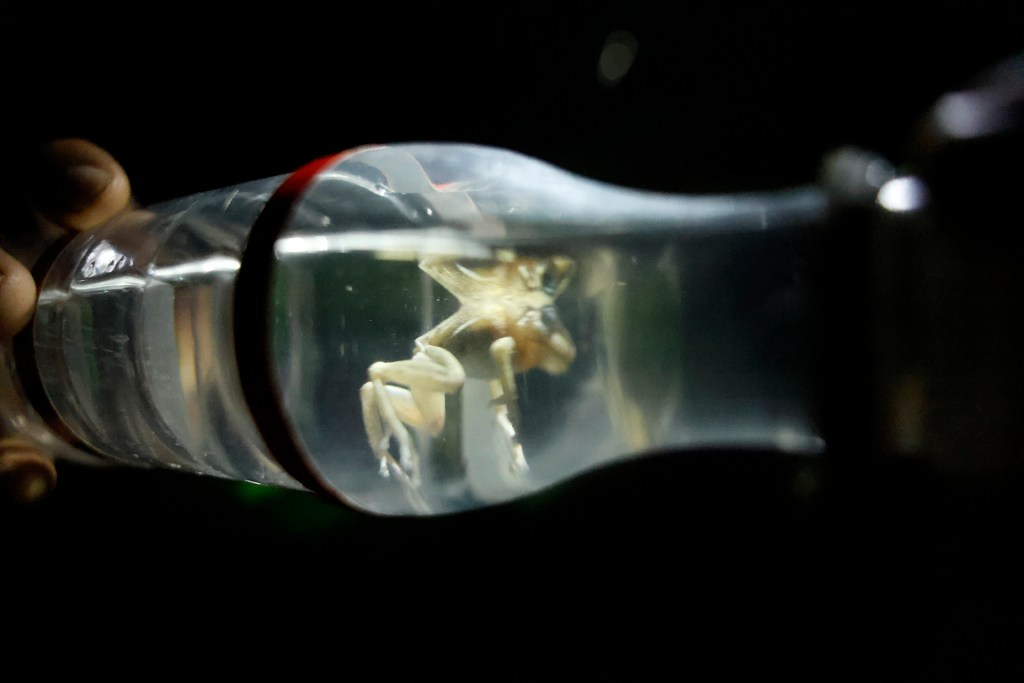
And yet, dare I say. It might be time we come to grips with the likelihood that the coqui is part of our lives — now, and probably forever.
Last week, Civil Beat published an extensive feature about the coqui’s rapid spread to O‘ahu and containment efforts that appear to be less effective than some have argued. Without a shift in approach, the article continued, these frogs will become a permanent part of the Pālolo Valley — and expand across the island.
This perspective rings true. Many of us can remember the coqui frog’s relentless spread on the Big Island, infesting Hilo and then expanding southeast to Keaʻau, Kurtistown, Mountain View and ever higher altitudes while also venturing north, toward the Hāmākua coast. That pattern seems to be repeating itself elsewhere in Hawai‘i.

Ideas showcases stories, opinion and analysis about Hawaiʻi, from the state’s sharpest thinkers, to stretch our collective thinking about a problem or an issue. Email news@civilbeat.org to submit an idea or an essay.
So, have we reached the tipping point? Is it too late to contain the coqui? Am I right to say it’s time we figured out how to live with them? I asked three experts for their view.
Karen Beard, a conservation biologist at Utah State University who has studied coqui frogs for decades, was the most optimistic — though guardedly so. She told me that while there’s still a chance for containment on Oʻahu, action needs to happen immediately. Her recommendation: removing vegetation followed by chemical treatment.
“At this point,” Beard added, “I would direct most coqui control efforts toward Oʻahu to maximize the chances of containing the invasion.”
Allen Allison, a herpetologist and zoologist at the Bishop Museum, is far less confident. He told me that “eradicating coqui frogs will require a massive, costly effort, and it may well be too late for even that to succeed.”
One of the troubles is that the coqui has several advantages in Hawaiʻi. One is the lack of natural predators. In Puerto Rico, where coqui densities are lower, snakes, nocturnal owls and large insects hunt the frog. In Hawaiʻi, the mongoose is the most dominant predator, yet experts say it can’t meaningfully control the population.
Beard also noted that Hawaiʻi, unlike Puerto Rico, is filled with ideal coqui nesting sites. With its extensive rainforest and lava rocks, the Big Island is particularly attractive.
Then there is the question of governmental resolve. Mark Wright, an entomologist at the University of Hawaiʻi who specializes in invasive species and biological pest control, told me, “I hate to be the pessimist, but the lack of political will is an issue. The Hawai‘i Department of Agriculture and Biosecurity and the DLNR are understaffed, and their ability to address issues like this is limited. HDAB doesn’t even pay overtime so tracking frogs at night becomes completely reliant on volunteers.”
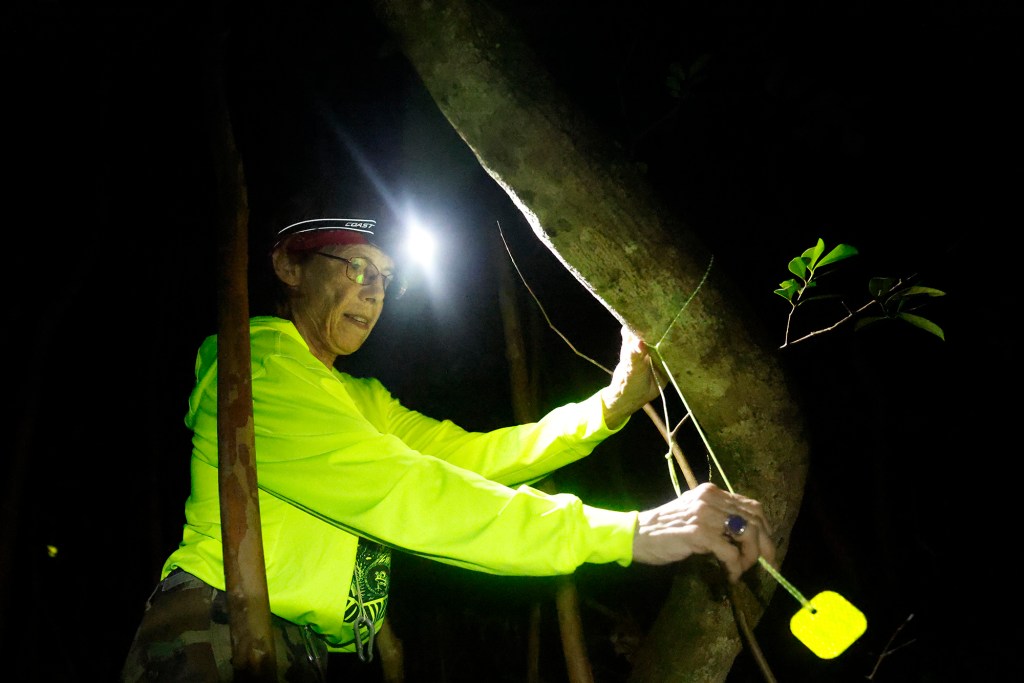
What’s more, biological control — that is, using natural enemies such as predators, parasites or pathogens — doesn’t seem to be a realistic solution.
“I struggle to think of an example of vertebrate biocontrol that has provided sustainable suppression of invasive species,” Wright told me.
God forbid we introduce snakes or tarantulas to eat the coquis.
For their part, state officials seem less optimistic than ever about the coqui problem. In the late 1990s and early 2000s, they said publicly that eradication was possible. That view has faded considerably in recent years.
I asked the DLNR for their view. The department’s spokesman, Andrew Laurence, acknowledged that the coqui is spreading on Oʻahu, though added that it remains too early to know if they will become permanently established. He stressed that the agency is continuing its eradication and containment efforts, working closely with the community, and testing new tools including chemicals, acoustic deterrents, tracking, and biocontrols.
All the same, according to the experts, containment is far easier said than done.
Years ago, I got a glimpse of how hard it is. One night in 2013, my dad and I were sitting on the porch of his Volcano home when, from out in the rainforest, we heard the unmistakable frogsong: ko-KEE, ko-KEE, ko-KEE.
At the time, the coqui hadn’t taken root in Volcano, and residents were desperate to keep it that way. My dad grabbed his phone and called the Coquistadors, a volunteer group trying to stop the spread.
To my surprise, the Coquistadors arrived with nearly the speed of firefighters. Then, among the ʻōhiʻa trees wet with mist, they listened to the chirp from several positions, taking bearings and plotting where those bearings intersected.
Soon, they had triangulated the frog to a tall hāpuʻu fern in the garden. We pulled aside its fronds and found, in the soft pith, a tiny frog.
Today, on that same property, thousands — maybe tens of thousands — of coquis roar to life as the sun sets each night. Noble as the Coquistadors might have been, they eventually faded away: the scale of the frog invasion was just too great.
Since then, I’ve come to enjoy the coqui’s call. It is a companion in the quiet night, a reminder of life and nature beyond our doors.
Yes, the coqui is invasive. Yes, it affects our ecosystems. I also don’t underestimate how hard it might be to adapt to its racket, especially if youʻre a light sleeper.
Curious to know how Linda Stevens, the woman who gave that quote to the Start-Bulletin, feels about the coqui today, I sent her an email. Has she gotten used to it?
“I did not go insane,” she told me, “But I am still saddened at the changes the coqui brought.” Still a resident of Leilani Estates, she told me that they’ve wiped out other insects, and she has lost the silence of night where once she heard owls hunting.
“I wear earplugs at night, so no, I haven’t embraced them at all. I know that some people find them charming, I am not one of them!”
It seems to me, though, that the headwinds we face to contain the coqui are too strong. It may be time to accept that and find a way to live alongside them.
And who knows, maybe one day we’ll get a reggae song or some verses from our State Poet Laureate about this little frog with a tremendous voice. Lee, are you reading?
 Sign up for our FREE morning newsletter and face each day more informed.
Local reporting when you need it most
Support timely, accurate, independent journalism.
Honolulu Civil Beat is a nonprofit organization, and your donation helps us produce local reporting that serves all of Hawaii.
ContributeAbout the Author