Danny De Gracia: Beware Of Expanding Hawaiʻi’s War On Fentanyl
The White House is invoking fentanyl as its justification for some extreme policy shifts.
March 24, 2025 · 5 min read


About the Author

Remember back in May 2023 when everyone was so tired of the Covid-19 pandemic that we didn’t actually beat the virus, the federal government just said, “We’re outta here,” and ended the public health emergency?

A little over three years of a state of emergency was just too much.
It might shock the public to know, however, that another public health emergency declaration has been in effect even longer. It dates back to 2017 (during Donald Trump’s first administration) and has been renewed, every 90 days, every year, ever since.
For those not familiar, Section 319 of the Public Health Service Act is the legal basis for public health emergency declarations at the federal level, and it grants the presidency broad, but temporary, powers to take action. Normal checks and balances do not apply to spending, and to some extent the status blurs the use of military personnel in domestic settings.
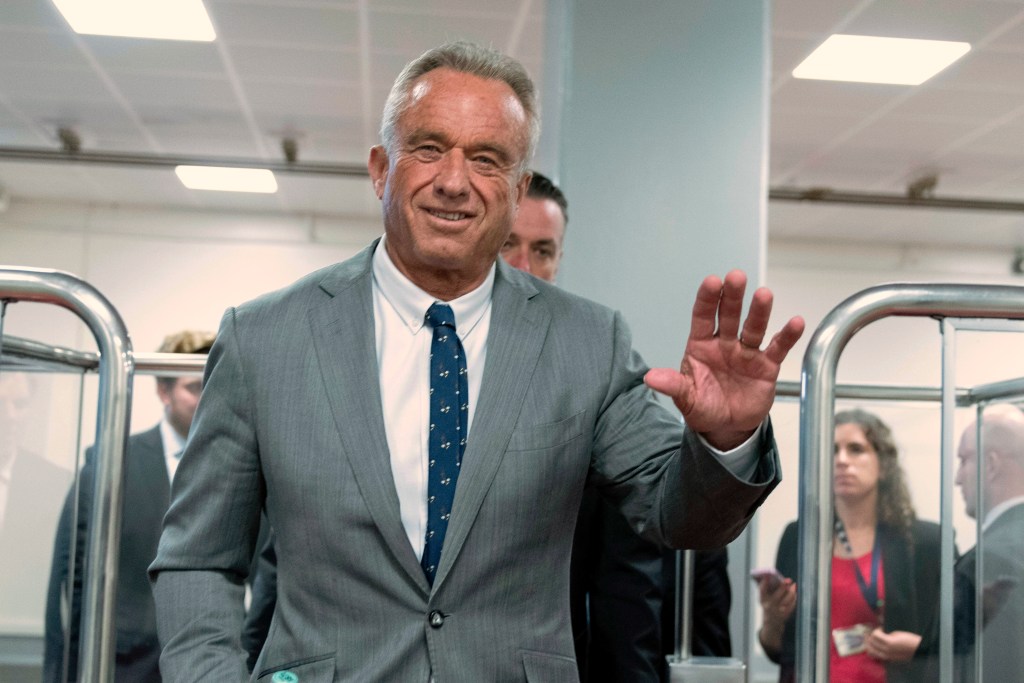
Secretary of Health Robert F. Kennedy Jr. extended the emergency for another 90 days last week, which at first blush might not seem scary. What reasonable person wouldn’t want to stop fentanyl from killing innocent people? But the problem is that fentanyl is starting to become a 2025 password for “let’s do anything we want.”
Where Could This Lead In Four Years?
We’re told that fentanyl is the reason we’re engaging in a trade war with Canada and Mexico, but then there’s the whole rhetoric about turning Canada into the 51st state, which muddles the claim. The goods targeted for tariffs have absolutely nothing to do with stopping fentanyl production. Read the 2020 Drug Enforcement Agency’s intelligence report, and you’ll see that the production of precursor chemicals is actually where the rubber meets the road in this crisis.
In effect, the ongoing and escalating war on fentanyl is a new form of the War on Drugs, and states should be very wary of the direction that this could take local policies and policing alike.
At age 45, I’m old enough to remember the dramatic presentation George H.W. Bush gave in 1989 where he showed off drugs in the Oval Office, and when Nancy Reagan told us to “Just Say No” in 1986. What we’re seeing now is something completely different and darker. The fentanyl rhetoric being driven by the White House and parroted by Republican members of Congress, conservative news channels and laypeople is not about public safety, it is a pretext to do whatever the federal government wants in the name of protecting you.
What would an expanded War on Drugs nightmare scenario look like, four years from now, fully matured?
Imagine if fentanyl was used as the excuse to shut down anything the government doesn’t like. Yes, you saw this under Covid, and many of you rightly questioned the constitutionality of that. But where are you guys on this abuse of constitutional authority?
Fentanyl could be used as the justification for requiring states to commit policing resources to surveillance and enforcement against population groups suspected of being tied to the drug. We already know that there was a prejudicial bias in the first War on Drugs; how long of a leap would it be for fentanyl to be used as a device for political persecution?
What if going after fentanyl requires states to comply with costly future federal regulations or laws, either through executive orders or slammed through a weakened and deferential Congress? We’re already in a local policing pinch both in our state and around the country.
Calling Out Government Overreach
Fighting drugs is an easy way to give government the power to do anything it wants to do in the name of a crisis, and we should all be wary of that. I’m not saying that opioids aren’t a problem. What I am saying is going so far as to create a dictatorial regime to fight opioids is nonsensical and needs to be called out. (To my Republican friends, I’m looking at you.)
Like all other things that are subject to abuse and policy distortion, this starts off as something that seems serious enough to warrant giving up some freedoms to, and then it ends with us having no personal agency whatsoever.
There are two things we need to do. First, read up on what the opioid crisis is, how it started, and how it has evolved due to a combination of internal and external factors in our country. It’s a cop-out to simply blame foreigners and boogeymen for this crisis.
Social determinants of health, neurocircuitry of addiction and human emotion are also things that need to be considered. Watch the dystopian 2006 War on Drugs movie, “A Scanner Darkly,” which is based on the 1977 novel by Philip K. Dick, if you get the chance. All policies that involve public health are ultimately human issues, and you don’t resolve human issues with a police baton, a mercantilist trade policy or the sword of war.
Second, some might suggest this is over-intellectualizing the policies of a White House that is led on gut instincts and narcissistic retaliation rather than logic. Perhaps. But you should start talking about this issue at your kitchen table, in your testimony to the Legislature, and at congressional town halls.
The same ferocious protection of individual freedoms many of you applied to Covid emergency orders needs to be consistently leveraged on the new War on Drugs.
 Sign up for our FREE morning newsletter and face each day more informed.

Local reporting when you need it most
Support timely, accurate, independent journalism.
Honolulu Civil Beat is a nonprofit organization, and your donation helps us produce local reporting that serves all of Hawaii.
ContributeAbout the Author