Tia Lewis: State Funding For High School Surfing Sends The Right Message
The sport originated here and is part of Hawaiian culture, but until now it had second-class status in the schools.
May 6, 2025 · 6 min read

About the Author

After school, while most students rushed home or to sports practice, I was heading to the beach with a few of my friends with surfboards and boogie boards packed in the bed of a truck.

I went to Seabury Hall in Makawao, Maui, and surfed for my school’s team for two years during the spring. But honestly, it didn’t feel like an official sport even though it was a school-sanctioned surfing team. We didn’t have uniforms or buses, and most of us had to find our own rides and bring our own boards. There wasn’t a coach with a clipboard or team chants before we paddled out.
We showed up because surfing meant something to us.
For me, it was about more than just catching waves. My dad was a surfer too and was sponsored by Billabong back in the day. He taught me how to surf, but also how to respect the ocean.

I wasn’t exactly a standout. I was more of a longboarder than a shortboarder, and I wasn’t all that good. Still, being part of that team gave me something to look forward to, something that made me feel connected to Hawai‘i in a way that sitting in a classroom couldn’t.
Now, that opportunity is finally getting the recognition, and funding, it deserves.
House Bill 133 appropriates funds to the Department of Education to support the formal establishment of surfing as an interscholastic sport. The bill moved through the House and Senate with minimal opposition, and concluded with Rep. Jeanne Kapela’s proud declaration: “We have a bill.” It must still be signed by Gov. Josh Green.
Birthplace Of Modern Surfing
Surfing has been deeply rooted in Hawaiian culture for centuries. Long before it became a global industry, it was a sacred tradition practiced by Native Hawaiians. Known as he‘e nalu, wave-riding was both a sport and a spiritual practice, often tied to community. Chiefs and commoners alike took to the waves on olo, kīko‘o and alaia boards crafted from native woods.
It wasn’t just recreation, it was identity, a relationship with the ocean passed down through generations.
Over time, colonization and Western influence led to the suppression of many Indigenous Hawaiian practices, including surfing. Though it never disappeared, it was pushed to the margins until a cultural revival in the 20th century brought it back into the spotlight.
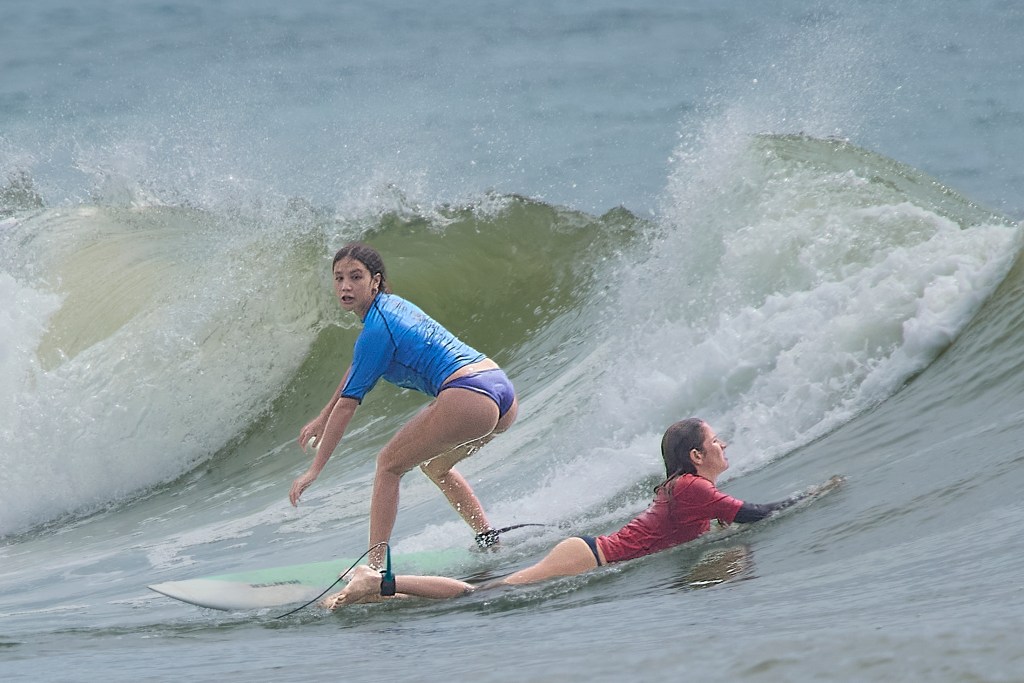
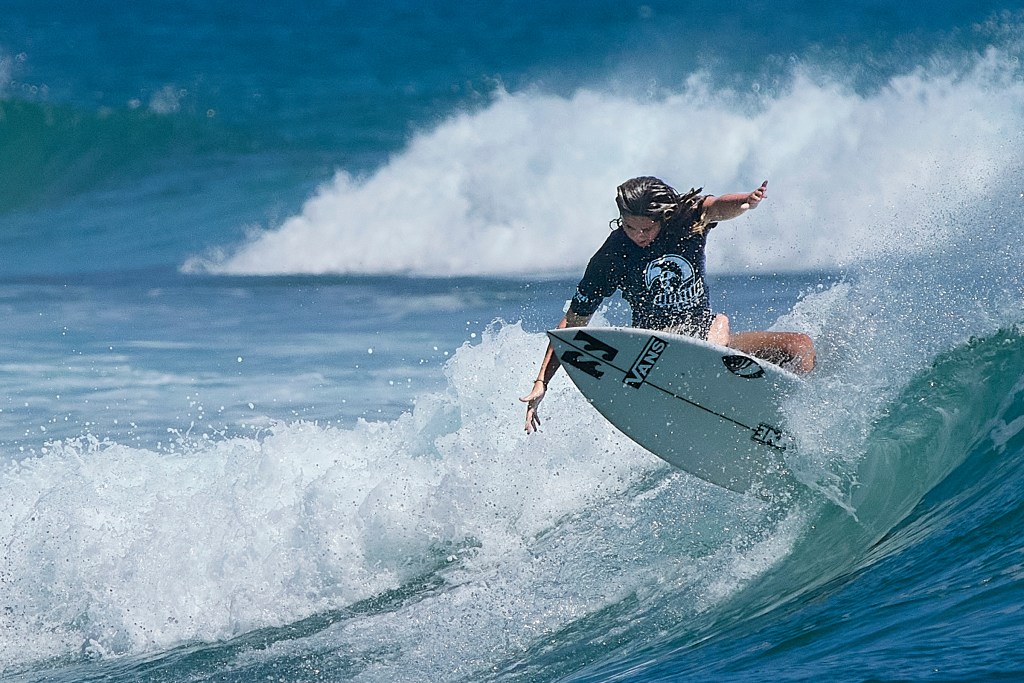
Hawai‘i became known as the birthplace of modern surfing, but ironically, the sport has remained on the outskirts of our own school system.
The Department of Education sanctioned surfing as a high school sport in 2004. But of the five regional athletic associations under the Hawai‘i High School Athletic Association — Oahu Interscholastic Association, Interscholastic League of Honolulu, Maui Interscholastic League, Big Island Interscholastic Federation, and Kaua‘i Interscholastic Federation — only the MIL has consistently sponsored high school surfing.
On Maui, local surf shops and restaurants often step up to help, covering the costs of surf meets so schools don’t have to pay entry fees. That kind of grassroots support has kept the sport alive, even without state funding.
Funding Closes The Gap
I guess you could say we were pretty lucky as a surf team on Maui. While other schools across the state struggled to get their programs off the ground, we had a community that showed up for us. However, students like me still had to fund their own boards, gear and rides, while other sports had full access to uniforms, equipment and travel stipends.
I remember one of the surf competitions was over a weekend in Hāna. For those of you who aren’t familiar with Hāna, it’s a powerful place on the east side of Maui, filled with mana and deep cultural history. It’s lush, remote and definitely more rural than most parts of the island.
That weekend, it basically felt like we were camping out there.
With two working parents, I had to figure everything out on my own, finding a ride for the two-hour drive along winding roads, and a place to stay for the night. I ended up crashing with a teammate’s family in a rental house near the beach. We made it work, but it showed just how much we had to rely on each other, and how little support we had compared to other sports.
HB133 closes that gap. The bill allocates $685,870 annually for the 2025–2026 and 2026–2027 fiscal years to help schools build real, sustainable surf programs complete with transportation, equipment, safety measures and coaching. It’s a shift from symbolic approval to tangible action, and it acknowledges what many of us have long known: Surfing is more than a sport in Hawai‘i. It’s culture.
It’s a practical and symbolic move, one that tells students that their culture matters, their passions matter, and they belong here.
Surfing taught me resilience, discipline and how to be present. Some of my teammates found their confidence in the water. Surfing gave them space to breathe and belong. I remember one teammate who had never played a sport before joining our group. By the end of the year, they were paddling out solo and entering the competitions.
This bill opens up new pathways, not just for fun, but for futures. While surfing scholarships aren’t as common as for many other sports, competitive college surfing does exist. The National Scholastic Surfing Association and other organizations host intercollegiate competitions across the U.S., and several mainland universities field surf teams. The University of Hawai‘i Mānoa doesnʻt, but it does have a recognized surf club that participates in local events.
And globally, surfing’s profile has risen as it made its Olympic debut at the Tokyo 2020 Games (held in 2021 due to the pandemic), and it’s now a regular feature in the Summer Olympics.
There’s still work to be done, but at least high school surf teams will have state funding. It’s a practical and symbolic move, one that tells students that their culture matters, their passions matter, and they belong here.
Looking back, I’m grateful for the time I had with my surf team, even if it was unofficial. We didn’t win many championships or have matching gear, but we had sunsets, saltwater and each other. We were part of something bigger than ourselves.
 Sign up for our FREE morning newsletter and face each day more informed.
Read this next:

Local reporting when you need it most
Support timely, accurate, independent journalism.
Honolulu Civil Beat is a nonprofit organization, and your donation helps us produce local reporting that serves all of Hawaii.
ContributeAbout the Author