High School Surfing Is A Thing In Hawaii, But Not As Much As You Might Think
Schools have struggled to start official teams with limited funding and no recognition from local athletic leagues.
In his first year coaching Kahuku High School’s surfing club, Trenton McCullough wasn’t expecting a bill for $1,000 near the end of the season.
Kahuku students had competed in a series of local meets hosted by the Hawaii Surfing Association, but participating schools needed to help pay for the judges, staff and equipment required to run the competitions through the winter and spring.
Typically, the expenses would fall to a school’s athletic department or the county league responsible for organizing high school sports. But at Kahuku High, surfing is an after-school club activity, ineligible to receive funds from the athletic department.
McCullough and his students fundraised and sold team shirts to cover the costs. The team has continued to raise money and seek donations from local surf shops every year since to send students to local and national competitions.
“It’s just an ongoing project that we’re always trying to fund,” McCullough said.
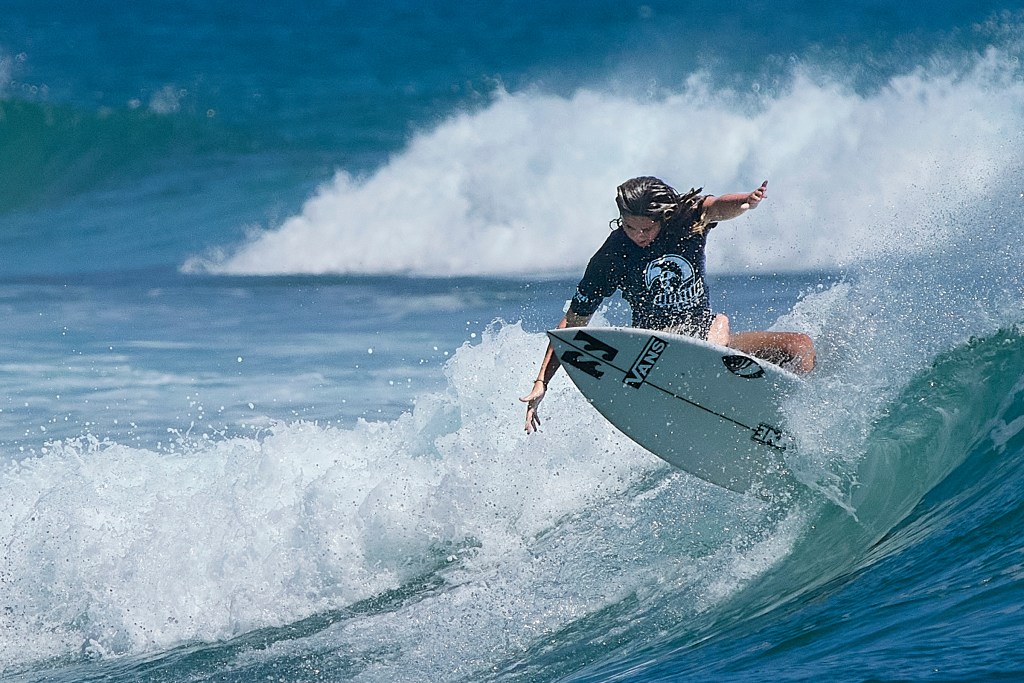
Kahuku’s struggles to support its surf club aren’t unique. Hawaii made surfing a high school sport in 2004, but only 13 campuses have formed official teams since then.
It’s more common for schools to have surf clubs that meet after school and are overseen by teachers doubling as volunteer coaches. Students can still represent their schools in local competitions, but the clubs don’t receive state funding like traditional athletic teams.
Some coaches believe the high costs of entering competitions and equipping students with proper gear and training has prevented surfing from gaining more popularity in schools. In turn, high school athletic leagues on Kauai, the Big Island and Oahu say they haven’t received enough interest from their members to establish surfing as a league sport and hold seasonal meets for teams.
“Liability’s just used as an excuse.” — Brady Giusta, Farrington High School teacher
The Hawaii High School Athletic Association doesn’t hold a state championship meet for surfing, since it needs at least three athletic associations to recognize the sport and hold their own league competitions.
It’s a Catch-22, said Sarah Fairchild, executive director of the Outrigger Duke Kahanamoku Foundation. Students and coaches want to create their own teams, but they can’t do it without school athletic funds. But the money won’t be available unless more schools can create their own teams and receive the formal recognition of their county leagues.
“This is a very complex process,” Fairchild said.
Interest in the sport is growing as students receive more opportunities to compete at the international level and see the success of local surfers like Olympic gold medalist Carissa Moore, Fairchild said, adding that the number of Oahu surf clubs may hit a high of 14 or more this year.
But it’s unlikely that schools will be able to keep up with the demand without greater state investment in the sport.
DOE’s Student Safety Concerns Questioned
Earlier this year, lawmakers considered a proposal to provide $42,000 to the Hawaii Department of Education to promote and expand surfing in schools. But school leaders responded to the bill with skepticism, citing concerns around the sport’s risks and student safety.
“While the Department appreciates the appropriations to support surfing in high school athletic programs, this would not address the larger risk factors that make surfing difficult for high schools to sanction,” said DOE Superintendent Keith Hayashi in his written testimony, adding that it can be difficult for schools to find safe conditions for holding surfing practices.
But the department has rigorous regulations in place to keep students safe in the water, said Brady Giusta, a Farrington High School teacher who runs the school’s surf club. Students participating in a surf club or on a team need to earn their junior lifeguard certifications before entering the water, and coaches must also complete a series of training on first aid and ocean rescue.

On Oahu, club teams also require their students and coaches to purchase sports insurance to participate in local competitions every year.
“Liability’s just used as an excuse,” Giusta said, adding that he’s only seen minor injuries in his 15 years of coaching high school surfing in Hawaii.
The barrier, Giusta said, is money.
Because the Oahu Interscholastic Association doesn’t sanction surfing as a sport or hold its own meets, schools often participate in competitions hosted by the nonprofit Hawaii Surfing Association. The entrance fees for the 2024 season were roughly $3,100 per school.
Since most high school athletic associations don’t include surfing as a sport, clubs are unable to receive funding to cover coaches’ salaries or competition fees. They try to reduce their expenses by using donated surfboards and asking students to carpool to the beach for practice to avoid the cost of school bus transportation.
Giusta said it would be a game-changer if surf clubs were recognized as varsity sports and didn’t need to rely on fundraisers or donations.
“It’s a really a labor of love,” he said. “It’s hard to sustain.”
Even if more Hawaii athletic associations approve surfing as a league sport, additional money for athletes and coaches isn’t guaranteed, said Bryce Kaneshiro, who serves as DOE’s extracurricular administrator and the executive director of the Oahu Interscholastic Association.
The Legislature would need to approve more funding for DOE’s athletic budget to cover coaches’ salaries and the costs of equipment and meets, he said, and it could take a long time for leagues to determine logistics of running their own surfing competitions.
“A lot of it is unknown,” Kaneshiro said.
Maui Leads The Way
Despite the challenges of establishing surfing as a high school sport, Maui has found a path forward.
In 2014, the Maui Interscholastic League recognized surfing as a varsity sport and held its first spring season when students regularly competed and contended for a championship.
Shifting surfing from a club to a league sport boosted participation among Maui high schools, said Kim Ball, MIL’s surfing co-coordinator. Since 2014, the number of Maui schools with surf teams has grown from eight to 12.
“It’s been unbelievable,” he said, adding that the MIL receives sponsorships from local surf companies and restaurants to cover the costs of the meets and avoid charging entry fees for schools.
But athletic leagues outside of Maui are still falling short when it comes to gathering enough school interest in surfing. In the Oahu Interscholastic Association, a majority of members need to approve surfing as a sport in order for the league to start hosting its own competitions and championship meets.
This year, eight Oahu public schools are planning to have surf clubs, four short of the required number of OIA members, Fairchild said.
The Big Island and Kauai have also been slow to adopt surfing at the school level, since local surf competitions are primarily for individual athletes instead of school teams. The charter school Hawaii Academy of Arts and Science offers surfing as an elective and recently started a club team, said director Steve Hirakami, but it’s hard to find other Big Island schools to compete against.
None of Kauai’s three DOE high schools have surf clubs on campus.
“I want everyone to be able to experience that.” — Iolani grad Sunny Kazama
Sunny Kazama, a recent graduate of Iolani School, a private school in Honolulu, hopes the sport will see a surge in interest after this summer. In July, Kazama and her family hosted the Honua Finals, an international surf competition for students at the Ala Moana Bowls that brought together teams from across the state as well as New Zealand and California.
Hawaii students are sometimes unable to attend the national championship meet in California, Kazama said, and schools on the outer islands don’t always experience the excitement of having surfing as a team sport. Participating in Iolani’s surf club throughout high school allowed her to gain more confidence and join a tight-knit community of passionate athletes, Kazama said.
“I want everyone to be able to experience that,” she said.
Civil Beat’s education reporting is supported by a grant from Chamberlin Family Philanthropy.
Civil Beat’s coverage of Maui County is supported in part by a grant from the Nuestro Futuro Foundation.