How The FBI Interfered In The Legislature And Let A Dirty Lawmaker Get Reelected
A new legal filing makes a compelling argument for why the public needs to be able to scrutinize federal law enforcement investigations.
July 13, 2025 · 9 min read

About the Author

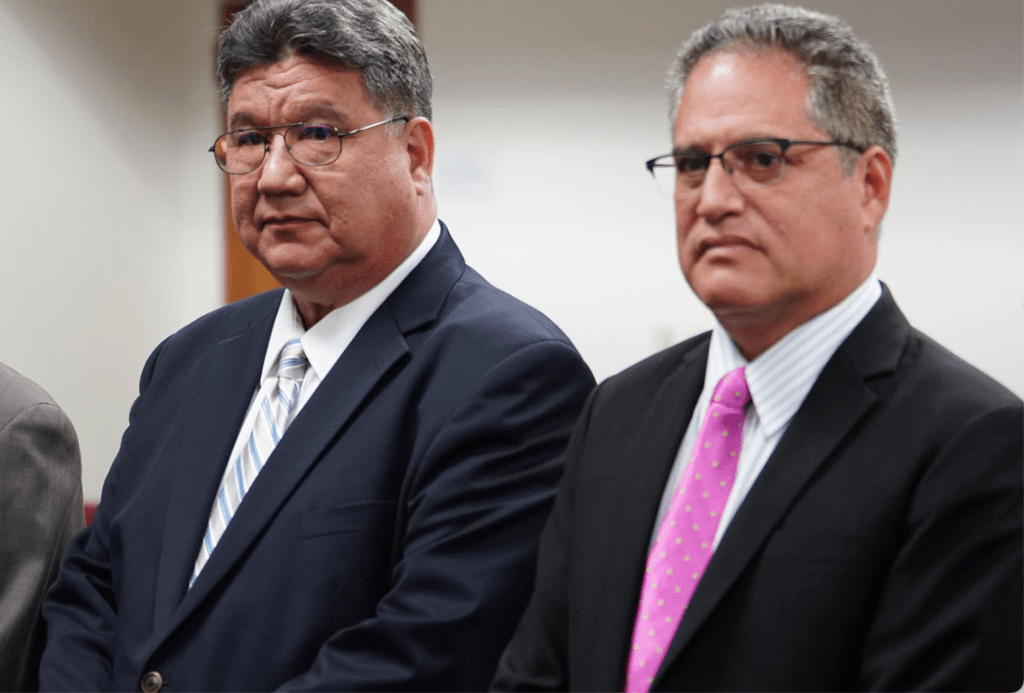
In January 2020, then-Sen. J. Kalani English was a powerful member of the Hawaiʻi Legislature. Not only was the Maui senator the longtime majority leader, but he held a seat on the politically influential Ways and Means Committee.
He was also on the take. For years, English had been in the pocket of Honolulu businessman Milton Choy, who owned a wastewater services company and had been paying English to steer legislation favorable to his business.
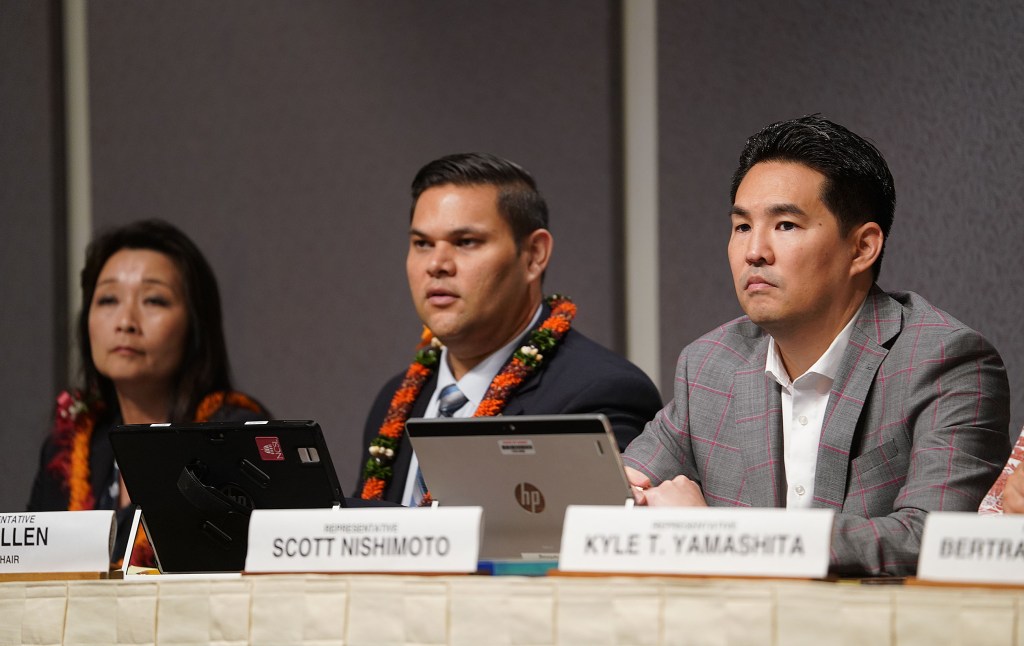
Choy was doing much the same for then-Rep. Ty Cullen, who in 2020 was vice-chair of the House Finance Committee, a position he’d held for several years.
What English and Cullen didn’t know was that by 2019, Choy was working for the FBI. And it was the FBI that was directing Choy’s bribery efforts and even providing him the cash he was then handing out to the lawmakers.

We’ve been writing about this story since charges against Cullen and English were publicly disclosed in February 2022.
But a new brief filed last week by the Public First Law Center on behalf of Civil Beat in our legal quest to get the federal investigative files released lays out in a stark new way the reason the files are so important for the public to see. Yes, we need to be able to check on what the two lawmakers were doing, but it’s equally concerning how the FBI handled this investigation.
FBI Fights Release Of Documents
Two things are very wrong here. One is that there’s no question the FBI interfered with the legislative process in a way that had major consequences for an important public issue.
And the government also let Ty Cullen get reelected again in November 2020. By then federal agents knew he was a blatantly corrupt public official.
In fact, in the year leading up to his uncontested August 2020 primary, Cullen got more money from the FBI than he received in campaign contributions from legitimate donors.
The FBI and U.S. Attorney’s Office have fought hard to keep us from getting the files from an investigation that ended more than three years ago. Both Cullen and English have served their relatively short prison sentences. Since last year, they’ve been living quietly back in the islands.
Milton Choy died last year, apparently from an illness, while still in federal custody in North Carolina.

But the FBI insists the files on those three must still remain off limits to public scrutiny because releasing them would jeopardize an ongoing investigation, a mysterious case that never quite seems to surface. The feds have revealed nothing more about public corruption in the Hawaiʻi Legislature since Choy, English and Cullen were sentenced three years ago. Yet they say they’re working on it.
In April, U.S. District Court Judge Shanlyn Park sided with the government. She denied Civil Beat’s request to consider releasing at least some of the files — documents and tapes that would show what happened in the English and Cullen cases but wouldn’t reveal any other lawmaker or other person who the FBI might be looking at.
Instead, Park decided that the FBI’s blanket assertion that there’s an ongoing investigation that would be compromised was good enough. She rejected standards set in prior federal cases where the government has been required to come up with some evidence that there actually is an ongoing investigation and then is only allowed to withhold specific records that clearly would have caused a problem.
And now, the new brief filed by the Public First Law Center as the case moves to the 9th U.S. Circuit Court of Appeals does make you wonder if what the FBI is hiding is more about the FBI than being worried about tipping off some other unidentified scoundrels.
Cesspool Problems? Blame The FBI
Consider this one narrow chain of events that Public First pieced together by going through the federal documents and court testimony that is in the public record:
In January 2020, two years before the charges against him were made public, English introduced Senate Bill 2380 that would fund research into cesspool conversion technologies. The House companion was House Bill 1859.
Under the FBI’s direction and using the FBI’s money, Choy bribed English and Cullen to support the legislation, which moved smoothly through both chambers for a time, even passing the full House. Then the FBI directed Choy to pay the pair again — this time to kill the legislation.
The legislative record from 2020 shows SB 2380 easily passed its first Senate committee only to die without a hearing in Ways and Means, where English was positioned.
In the House, HB 1859 cleared both its first committee and Finance, where Cullen reigned as vice chair, and unanimously passed the full House. It crossed over to the Senate where it died.
“During this period, Choy was cooperating with the FBI, who provided the money used to bribe Cullen and English,” Public First Executive Director Brian Black writes in the appeals brief. “And in 2020, under FBI supervision, Choy paid English to kill a bill that would have funded much-needed research to test cesspool conversion technologies. After the FBI’s interference in the legislative process, it would be five years before the Hawaiʻi Legislature would fund the research.”
Black notes that Hawaiʻi has nearly 88,000 cesspools that put 53 million gallons of raw sewage into groundwater and surface waters every day, potentially polluting drinking water supplies and harming streams and even seeping into the ocean and affecting coral reefs. So the setback in research to help mitigate the problem is far from inconsequential.
“There is significant public interest in the FBI’s decision to involve itself in the Hawaiʻi legislative process. … The FBI already had evidence of Choy bribing Cullen and English,” Black’s appeal continues. “But the FBI then directed Choy to bribe the legislators to introduce and kill popular legislation on a matter of significant public concern — the environmental impact of cesspools.
“What information did the FBI have when it made the decision to change the course of state legislation? What safeguards exist to ensure that the FBI does not regularly use federal monies to covertly influence state legislation? Why did the FBI use federal monies to kill state legislation when it already had evidence of bribes before the 2020 legislative session started? Did the FBI consider the importance of this legislation for the community? Did the FBI alert anyone in state government that Cullen and English were corrupt when, for example, Cullen ran for re-election in 2019 after multiple bribes?”
“The public interest in the FBI’s policies around meddling in state legislative affairs is exceptionally strong,” Black writes, adding: “The requested records would inform how the FBI became so involved in the state legislative process.”
Why Didn’t Voters Know?
Black makes a great case for why the public needs to be able to check up on the FBI’s meddling, particularly in this situation.
“Besides obvious accountability concerns in monitoring FBI investigations generally, these investigations raise specific concerns about the FBI interfering in Hawaiʻi’s legislative process,” he writes, noting that the FBI was doing nothing short of deciding what laws should be enacted in our state.
But I’m also struck by the other question he raises, and that is why did they let Cullen run for reelection when they knew he was dirty? Why did they wait until 2022 to let anyone know that Cullen and English had betrayed the voters who had put them in a position of public trust?
English would have been up for reelection in 2022 but he retired in 2021 saying he was suffering from long Covid. We now know that by then he knew the FBI was on to him — he and Cullen had been secretly arrested in 2021 but their charges weren’t made public until the next year.
Cullen resigned from the House as soon as the charges were revealed. They both pleaded guilty and were in prison within a few months.
But in 2020, when Cullen sailed through an uncontested primary and then trounced a Republican opponent in the November general with 66% of the vote, it was the FBI that violated the public’s trust. We should be able to safely assume that federal law enforcement officers will not let someone who has been so shamelessly corrupt be in a position to keep doing it.
Campaign finance records show Cullen collected $22,470 between September 2019 and the August 2020 primary.
Through Choy, the FBI provided $23,000 in bribe money to him in that same time period.
Given how quickly Cullen resigned the moment the FBI did go public, it’s likely that seat would have gone to someone who wasn’t willing to steer legislation in trade for tens of thousands of dollars in cash and poker chips.
“But the FBI remained silent; it did not alert authorities who could have removed Cullen and English from office, and it did not alert the electorate before the election despite knowing that Cullen had accepted multiple bribes,” Black writes.
Two election cycles have come and gone since 2022. The 2026 elections are already getting going. Who else is out there that voters need to know about?
And yet the FBI, the people we have been trusting to safeguard the democratic process, continues to remain silent.
Read the Public First Law Center brief to the 9th Circuit:
 Sign up for our FREE morning newsletter and face each day more informed.
Read this next:

Local reporting when you need it most
Support timely, accurate, independent journalism.
Honolulu Civil Beat is a nonprofit organization, and your donation helps us produce local reporting that serves all of Hawaii.
ContributeAbout the Author