Federal Judge Won’t Make Bribery Investigations Public — So We’re Appealing
The details behind bribery convictions of two Hawaiʻi lawmakers are vital to restoring the public’s confidence in the integrity of our political system.
A federal judge has ruled against Civil Beat in its efforts to obtain the FBI’s investigative files on two Hawaiʻi lawmakers who took tens of thousands of dollars in bribes from a Honolulu businessman in exchange for swaying legislation the way he wanted it to go.
We’re appealing, of course. And we’re hopeful the 9th U.S. Circuit Court of Appeals will look at the legal reasoning for releasing investigative files more favorably than Hawaiʻi U.S. District Court Judge Shanlyn Park did. A former public defender, Park is one of the newest federal judges in Hawaiʻi and took over our case from retired Judge Susan Oki Mollway.
Mollway, who had had the case since we filed it in May 2023, was pretty skeptical of the FBI and U.S. attorney in several instances, including their foot-dragging on going through their files and figuring out if any records could be made public, as we believe should happen now that the investigations into the two lawmakers are long closed. They’ve even served their prison time — and been released.
Readers often wonder about the reporting and editing process and other news practices. We think it’s important to explain our decisions and how we work, and we do so from time to time in our occasional series called “Behind The Story”.
When the FBI said it could only look through 500 pages of records a month — there were 35,000 pages in all — Mollway ordered federal attorneys to prove it. Instead they pretty quickly finished their review and concluded that basically nothing from the cases against Ty Cullen and J. Kalani English could be made public because it could affect an ongoing investigation. Nothing.
That was last fall. Mollway stepped down and the case went to Park.

At a hearing before Park in February, Assistant U.S. Attorney Dana Barbata stated the government’s case succinctly: The release of information from the Cullen and English files would harm a case the feds are purportedly working on.
“That is really the end of the story,” Barbata told the judge.
Park had surprisingly few questions for Barbata and took the government attorney’s word that there was even a case in the works, let alone what specific problems might come from releasing details of the investigation into the two lawmakers.
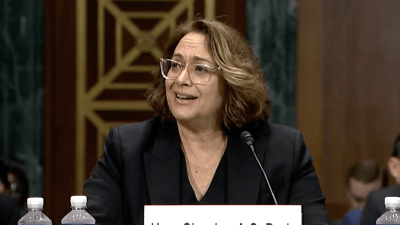
She did, however, repeatedly interrupt the attorney representing Civil Beat — Brian Black of the Public First Law Center — as he tried to explain why we believe previous federal court decisions require the government to prove how releasing information on closed investigations would impact an ongoing probe.
There’s an ongoing investigation, Park broke in as Black began to work through his argument. “How is that not enough?”
Black cited prior federal appellate court rulings that require the government to be very specific in separating details that could harm an investigation from information that would have no impact. He provided several examples of other courts rejecting blanket assertions that there is simply an ongoing investigation.
Black made clear to the judge that Civil Beat is happy to revise its request to include only records through the time of the arrests of Cullen and English. We realize that once the two knew they were busted and began cooperating with investigators, the government’s arguments about publicity interfering with an ongoing investigation may well have some legitimacy.
But prior to that point? It’s certainly possible the FBI learned of things that would lead to more investigations. But, as Black tried to convince Park, the FBI needs to break out those elements and show why they’re harmful to a future case.
The judge didn’t agree. “The Court finds Civil Beat’s arguments unpersuasive and concludes they do not overcome the FBI’s justifications for withholding,” Park wrote. “Accordingly, the Court grants the FBI’s Motion and permits categorical withholding, as disclosure of the requested records could reasonably be expected to interfere with ongoing enforcement proceedings and future investigations.”
It’s hard to imagine a situation more vital to the public’s confidence in government and our ability to trust elected leaders than this one. Hawaiʻi has been at the center of numerous corruption investigations for more than a decade and the fact that two state lawmakers took significant cash bribes topped the list.
But we still don’t know exactly what happened or when or why — or who all was involved with the bribes. We don’t know how the federal investigators operated and whether their actions were above reproach. Cullen and English pleaded guilty and avoided a public trial that would have shown the federal case against them. The only details we’ve seen are the few facts put forth by prosecutors when the lawmakers were sentenced — to minimal prison terms.
Compare that to the weekslong trial of former Honolulu county prosecutor Keith Kaneshiro, businessman Dennis Mitsunaga and their associates on charges that campaign contributions to Kaneshiro were payback for his prosecution of one of Mitsunaga’s employees. The public learned a lot about the world of political dealmaking, what’s acceptable in Hawaiʻi’s legal system and how federal investigations actually work. The jury eventually found all defendants not guilty as the public process worked through to the end.
As it stands in this case, all we have are more questions about the existence and extent of corruption in our Legislature. Civil Beat recently reported on a document that had been floating around from Cullen’s case, a memo filed by prosecutors that explained just a little bit about his cooperation in helping them identify others who might have been involved in dirty politics and have never been brought to justice.
The memo implied that at least one other legislator was on the take. All we learned was that Cullen and a target of the feds met with an “influential state legislator” and the other guy handed an envelope with $35,000 in it to the lawmaker for use in their election campaign. Was it a bribe? Was the envelope full of cash or just checks collected from other donors?
That was three years ago and we still don’t know what was really going on. Since then we’ve had another election. Did people unknowingly vote for a lawmaker willing to abuse the public trust? If not, isn’t it just as important for that legislator to be able to clear their name?
While the files that cover the investigation leading up to the arrest of Cullen and English likely won’t include answers to questions about the $35,000, that legislator or the guy who was handing out the money, they should provide important insight into how our politics work and the integrity of the system that governs us.
One thing we do know about the FBI from the few details that have been made public in the Cullen case: It’s not beyond the feds to let corruption continue unchecked while they investigate.
Consider that the Cullen timeline showed Choy started bribing Cullen in September 2019 while Choy was an FBI informant. Cullen was reelected in November 2020 with the FBI’s full knowledge of his bad acts. And Cullen was allowed to serve in the Legislature even after his October 2021 arrest, resigning only in February 2022 when the charges were made public.
There have been two elections since then. Has the FBI let the person who took $35,000 — if that was indeed a bribe — remain in office?
Our case against the FBI for the release of the Cullen and English files is just the first round. We’ve also asked for records of the investigation against the Honolulu businessman who started it all, Milton Choy, who died in prison last year. And we’ve also submitted Freedom of Information Act requests for the government case against two former Maui officials who took bribes from Choy.
Those have all been denied, too.
So you can see why our appeal to the 9th Circuit is something we feel we have to do. There’s a lot riding on it — for everyone.