Beth Fukumoto: Could Portland's Election Reforms Work In Hawaiʻi?
The Oregon city adopted the types of voting changes that we should consider in the islands.
September 28, 2025 · 7 min read


About the Author

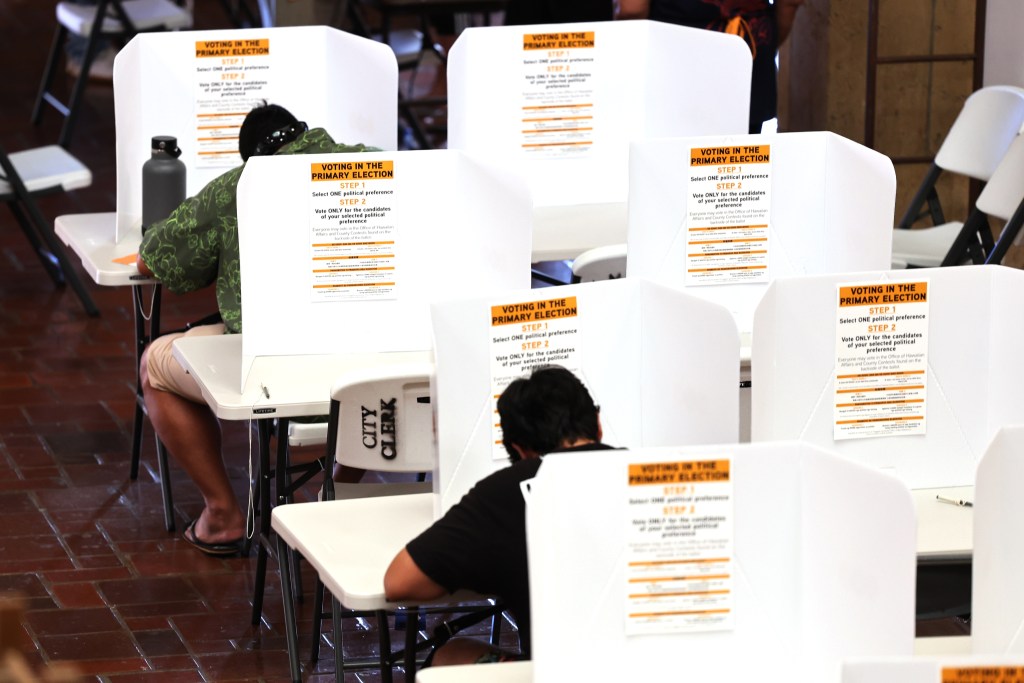
Around this time next year, Hawaiʻi voters will begin receiving their 2026 general election ballots in the mail.
If history holds, many of those envelopes will go untouched, and the most competitive races will already have been decided in the primary. Our voter turnout and election competitiveness are among the lowest in the nation.
Turnout in Hawaiʻi was once a source of pride. In the 1959 and 1960 general elections, 93% of registered voters in the new state cast ballots. Until 1994, general election participation rates typically remained at or above 80%. In 1996, rates dropped below 70% for the first time since statehood and haven’t recovered since. In 2022, we hit an all-time low of 48.7%.
We’re not alone, but we’re not doing much about the problem either. Meanwhile, other places are rethinking how elections work.

In 2022, Portland overhauled its city government by expanding the City Council and establishing four three-member geographic districts. Starting last year, it did away with a winner-take-all system and awarded seats to the three candidates in each district who emerged as winners through proportional ranked choice voting conducted in November.
Proportional RCV is similar to ranked choice voting, with one exception: Instead of one candidate ultimately winning with a majority of the votes, several candidates win with smaller shares.
Voters rank candidates in order of choice. They can rank as many candidates as they want, and ranking a backup choice will never hurt their top choice.
In Portland’s case, candidates who received just over the “threshold” of 25% of the vote won a seat. Excess votes (those above the threshold) were then counted for the voters’ second choices. After that, the candidate with the fewest votes was eliminated. Votes for the defeated candidate were then allocated to voters’ second choice candidate. This process continued until all seats were filled.

‘Worst-Of-All-Worlds Election System’
I have previously advocated for ranked choice voting, but Portland’s changes went beyond what I had imagined. It altered both the ballot and how people are represented. The early outcomes are worth examining as we consider ways to strengthen democracy in Hawaiʻi.
Before these changes, Portland chose a mayor and four commissioners in five citywide elections. If no candidate received more than 50% in primary races, the top two advanced to November runoffs.
It was the “worst-of-all-worlds election system,” I was told by Jenny Lee, deputy director of the Coalition of Communities of Color in Portland and former public policy director of the Hawaiʻi Appleseed Center for Law and Economic Justice.
“We saw really significant, straight up, lack of reflective representation about who Portland is as a city,” Lee said.
In 2020, frustration with that system coincided with the city’s once-a-decade charter review, and advocates began recruiting charter commissioners, building coalitions, running community workshops, and conducting extensive polls.
This process led to a charter commission proposal that voters passed in 2022. The changes removed primaries, increased the council to 12 members, and split the city into four districts with three seats each.
In addition to adopting a proportional ranked choice voting system to fill those seats, the city boosted its Small Donor Elections program by matching the first $20 from local donors at a 9-to-1 rate.
Polling showed 60% to 65% of voters preferred the new system and felt better represented and that their vote mattered more.
How did it work out? Independent analysts and the city’s own evaluation suggest both promise and pitfalls based on a review of the 2024 election.
Turnout did not skyrocket, but it did increase. The 2024 general election turnout in Portland was 71.2% compared to 66.8% in 2022. More importantly, with the city primary eliminated, the decisive election moved to November, when more people vote. Only 37% of voters participated in the 2022 Portland primary elections.
A post-election analysis by the MGGG/Data & Democracy Lab found that communities of color gained more representation in every district. No single group won all the seats, and fewer than 2% of ballots were spoiled in each district. The council became more diverse in terms of wealth, race, gender and ideology, and voters adapted to the new system well.
Polling showed 60% to 65% of voters preferred the new system and felt better represented and that their vote mattered more, Lee said.
A League of Women Voters’ candidate survey showed that three-quarters of candidates said the multi-winner ranked choice system influenced their decision to run. First-time, non-traditional and minority candidates reported increased confidence in their ability to succeed.
Candidates also noted that the changes enabled more direct voter contact and created a less negative, more collaborative campaign environment, with candidates often cross-endorsing or pooling outreach efforts.
Of course, there are trade offs. Portland had a lot of candidates, which made it harder for voters to follow the races. Candidates often targeted the 25% of voters they needed to win, rather than reaching out to the entire district. This allowed them to focus on their policies and values, but could also lead to increased political divisions.
Could It Work Here?
Are the benefits enough for Hawaiʻi to consider these changes?
We’ve used multi-member legislative districts before. Legally, we still could, although we haven’t used multi-member House seats since the early 1980s. The idea resurfaced at the Reapportionment Commission in 2011, though the commission members voted 5-4 in favor of retaining single-member districts.
While I believe that multi-member legislative districts would increase diversity in our Legislature, I’m not entirely sure it’s the right approach for our state at this moment. As a legislator, it was my job to represent my whole district, including the 32% who voted for my opponent.
I worry that the current political moment is already encouraging politicians to focus solely on their supporters, and if a candidate only needs 25% of the vote to win, that could exacerbate the problem.
A once-every-decade opportunity is at hand on Oʻahu, where the Honolulu Charter Commission is considering county charter changes to place on the 2026 ballot.
A full system overhaul is unlikely to happen in our current system. The state reapportionment commission is selected by legislators, and I can’t see them reverting to multi-member districts anytime soon.
As for ranked choice voting, we’ve managed to get it on the books for special elections to fill vacancies. However, instituting it in regular elections would benefit new candidates. We would need many incumbent legislators to support it against their own political self-interest, simply because it’s the right thing to do.
However, there is a practical path to explore the representational benefits, understand the administrative challenges and offer proof of concept for larger changes.
Start with county councils.
Honolulu and Hawaiʻi counties already elect members by district and could replace primary/general election contests with a single November ranked choice voting election and create multi-member districts.
Maui and Kauaʻi elect council members at-large.
In fact, a once-every-decade opportunity is at hand on Oʻahu, where the Honolulu Charter Commission is considering county charter changes to place on the 2026 ballot. Citizens have until Nov. 7 to submit proposals to the commission which will also be coming up with its own ideas. Commissioners will hear public testimony and finalize proposals for the ballot next summer.
Changes can’t happen overnight. They will need politicians to enact new laws, advocates to rally support and voters to approve charter amendments. But with the next election around the corner, it’s not a bad time to start.
 Sign up for our FREE morning newsletter and face each day more informed.

Local reporting when you need it most
Support timely, accurate, independent journalism.
Honolulu Civil Beat is a nonprofit organization, and your donation helps us produce local reporting that serves all of Hawaii.
ContributeAbout the Author