It's Official: Boards Can't Go Behind Closed Doors For Most Personnel Matters
The Office of Information Practices has finally formally acknowledged court rulings on hiring, firing and evaluating top public officials.
October 12, 2025 · 5 min read

About the Author

Earlier this month, the state Office of Information Practices quietly posted a brief update to an opinion it had issued nearly two years ago that many state boards and commissions had relied on to justify dealing with personnel matters in secret.
OIP now says its opinion allowing Sunshine boards to hire, fire and review some of Hawai’i’s most high-profile public officials in executive session was “palpably erroneous.”
That means they were really wrong. And it comes after a Circuit Court judge sided with the Public First Law Center in a lawsuit involving both the Agribusiness Development Corp. and the Defender Council whose boards had hired executive directors in closed-door executive sessions.
We’ve written a few times about the lawsuit and Judge Jordon Kimura’s ruling. But it’s important that people — especially members of boards and commissions and the attorneys who advise them — know that OIP has formally backed away from its previous position.

It’s actually taken years to get to this point. The legal journey began in 2017 when the Honolulu Police Commission secretly decided to pay outgoing Honolulu Police Chief Louis Kealoha $250,000 on top of his considerable public pension to leave the department. Commissioners announced the payout but refused to disclose any details, saying it was a personnel matter protected by privacy concerns.
The Public First Law Center (then known as the Civil Beat Law Center for the Public Interest) filed a lawsuit arguing that the state Sunshine Law didn’t require personnel matters to be taken up in executive session and that the public had a significant interest in knowing how decisions about their highest level officials were made.
In 2019, the Hawaiʻi Supreme Court agreed with the law center and issued a decision laying out that personnel matters relating to top state officials — essentially hiring, firing and performance evaluations — needed to be done in open public session unless there was a particular privacy issue being raised, like a medical concern.
The Police Commission was required to turn over detailed minutes of its executive sessions discussing the Kealoha payout and his departure.
Then for years boards simply ignored the Supreme Court decision. That included the Agribusiness Development Corp. and the Defender Council, which oversees the state Public Defenders Office. In 2023, both of those boards hired new agency leadership in closed-door sessions despite protests by journalists and public interest attorneys.
Perhaps most significantly, the Attorney General’s Office and OIP also decided to interpret the Supreme Court ruling in their own way, taking the position that hiring and firing inherently raised the kinds of privacy concerns that the Sunshine Law allowed to be dealt with out of the public’s view.
OIP, responding to an anonymous appeal of the ADC’s action on its new director, specifically opined that yes, the ADC was within the law when it hired her without public scrutiny. The law center filed its legal challenge soon after seeking to overturn the OIP opinion.
Meanwhile, while all this was playing out, the University of Hawaiʻi Board of Regents last year went behind closed doors to interview and hire the new UH president, Wendy Hensel, again despite concerns raised by the public and good-government advocates. Regents and the UH attorneys put more stock in the OIP opinion than in the Supreme Court ruling.
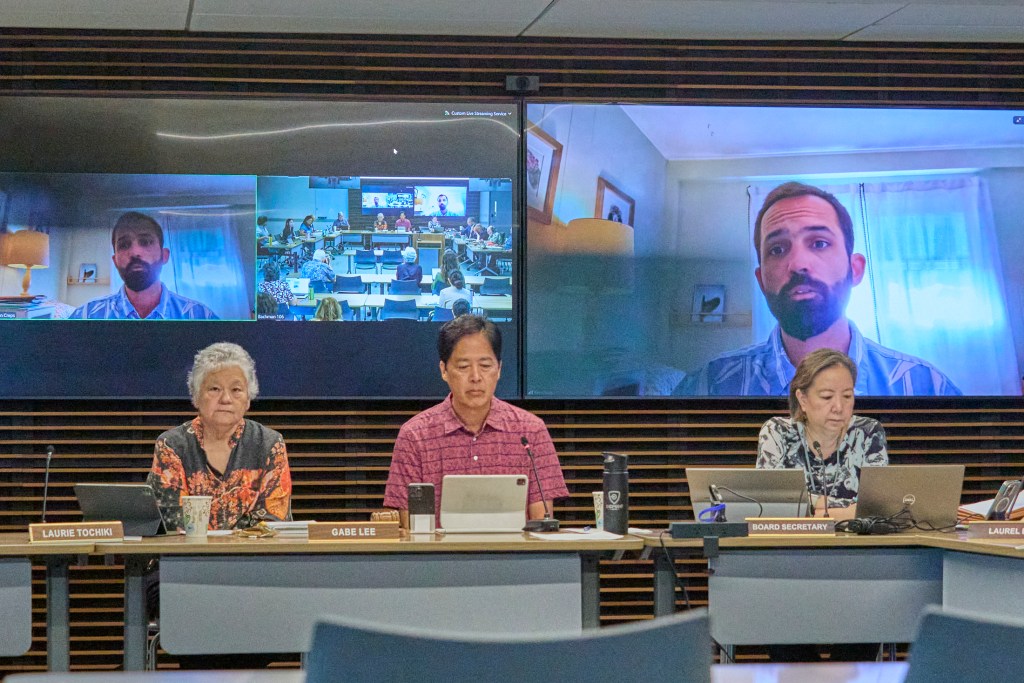
Then in August, the law center’s case challenging OIP’s thinking ended with Circuit Judge Jordon Kimura finding that the Supreme Court had in fact limited privacy concerns to a pretty small set of circumstances, such as a medical, mental health or other truly sensitive personal issues.
Carlotta Amerino, the OIP director, says the opinion letter in the ADC case really only spoke to the ADC’s decision to interview job candidates privately. The Supreme Court’s 2019 ruling, she says, addressed a broader range of cases including when personal privacy might need to be considered.
“The court said there can be times when it’s appropriate to go into executive session when considering the hire, fire, evaluations etcetera but that the Sunshine Law’s provisions have to be strictly construed,” she says, noting those provisions are generally in regard to personal medical or financial issues.
“I would say there may be situations (where) some kind of highly personal information is going to be discussed they can still go into executive session,” she adds.
Still, law center attorneys believe those situations are very limited and that Kimura’s ruling — followed by OIP quietly acknowledging its error — has laid the issue to rest.
“The public has the right to understand why a high level government official was hired, fired, or given a hefty pay raise,” says Ben Creps, the law center’s lead attorney in the case. “If there were previously doubts about that being the law, those doubts are extinguished now.”
 Sign up for our FREE morning newsletter and face each day more informed.

Local reporting when you need it most
Support timely, accurate, independent journalism.
Honolulu Civil Beat is a nonprofit organization, and your donation helps us produce local reporting that serves all of Hawaii.
ContributeAbout the Author