Kirstin Downey: Without Historic Inventory, We Don't Know What We're Losing
A big challenge for preservationists: They can’t save what they don’t know about.
October 17, 2025 · 9 min read

About the Author

How many important historic properties are there in Hawaiʻi?
Nobody knows for sure.
This makes it hard to map an effective strategy for conservation. And the passage of controversial new legislation last session that guts historic preservation is making it all the more essential to know what’s important.
That’s why it’s so promising to see the growing collaboration and information-sharing among the Oʻahu Historic Preservation Commission, which oversees all Honolulu, the State Historic Preservation Division, known as SHPD, and the Historic Hawaiʻi Foundation, a nonprofit group that focuses on historic preservation.
The lack of a central inventory of historic sites has been a long-standing problem in Hawaiʻi, and this collaboration will help fix it.

Ideas showcases stories, opinion and analysis about Hawaiʻi, from the state’s sharpest thinkers, to stretch our collective thinking about a problem or an issue. Email news@civilbeat.org to submit an idea or an essay.
Though the SHPD has an extensive warehouse of data, maintains an information website known as HICRIS and provides an extensive list of properties — mostly those named to the state and national registers of historic places — the agency has never been given the money to compile a single accessible, easily usable online database for the public and county planning departments. County planners need the information because they issue construction permits for projects to proceed.
That’s allowed a number of unfortunate events to occur, where historic properties were damaged or demolished by construction projects, with county and state officials subsequently pointing the finger at each other.
Funding Requests Rejected
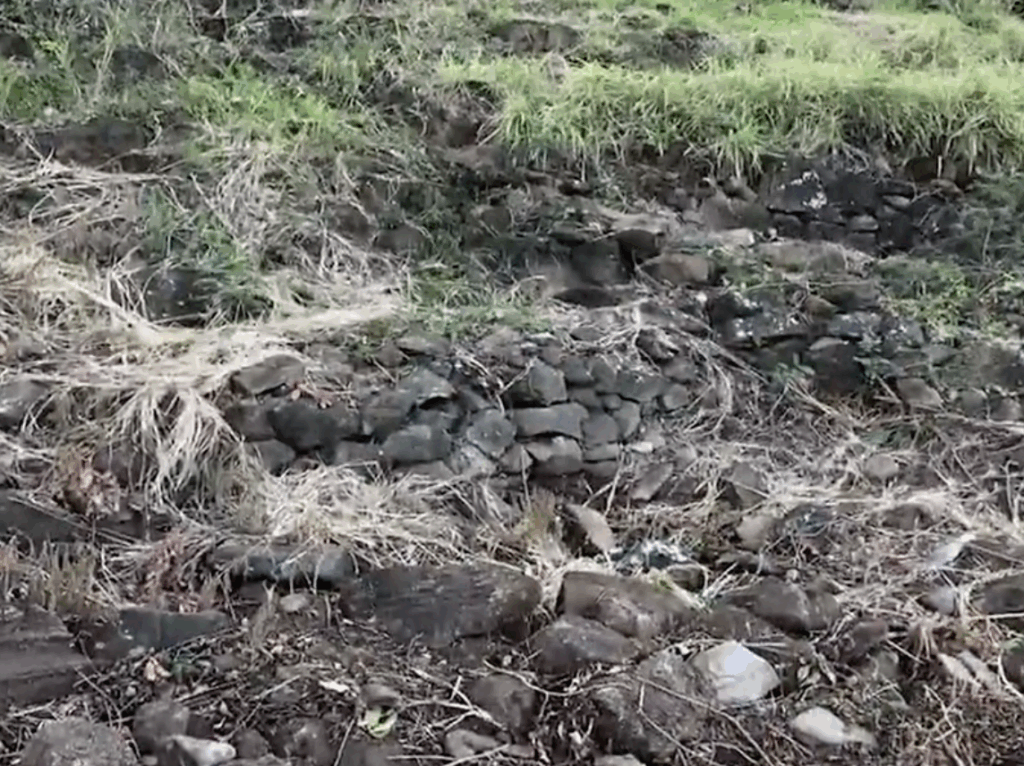
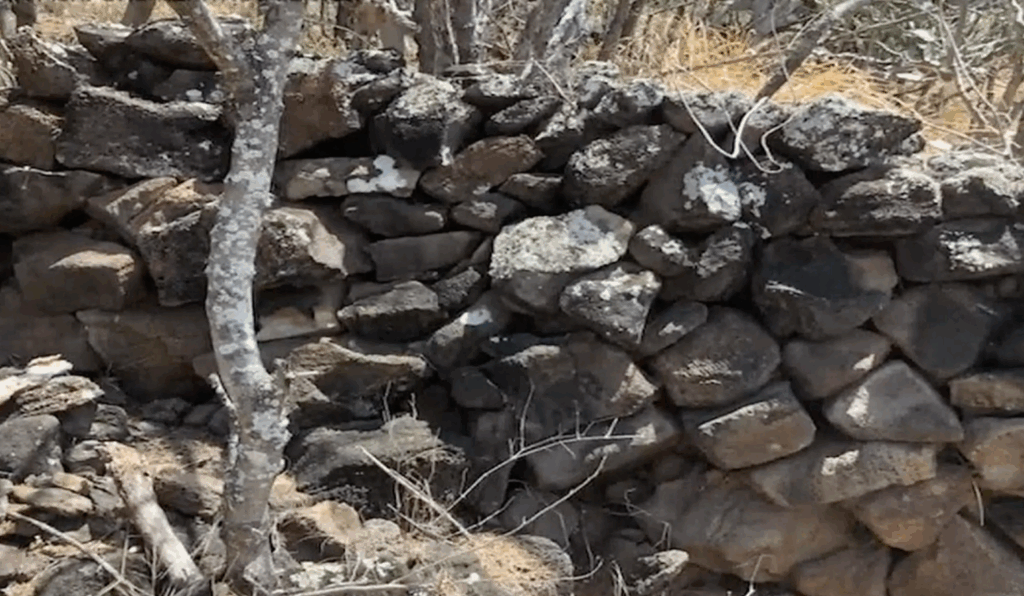
In February 2022, for example, a row of ancient stone walls in Niu Valley, in an area that was a defense lookout for King Kamehameha, near a documented heiau, was torn down to expand a driveway, with state and city officials each blaming the other for the error, saying they didn’t know or weren’t told it was a sensitive site.
Historic preservation supporters have repeatedly but unsuccessfully asked for money for that kind of easily accessible inventory. That same year, Senate Bill 2757 proposed funding the creation of a comprehensive historic inventory, which supporters called “critical to managing and protecting historic properties and grave sites.”
At that time, Suzanne Case, then chair of Hawaiʻi’s Department of Land and Natural Resources, told state lawmakers that “development of a comprehensive inventory has never been funded,” although she added that it was “essential.”
Without such an inventory, the bill noted, the State Historic Preservation Division had been forced to rely on its prior documentation in support of other projects, information shared by knowledgeable insiders, past reviews and hurried efforts to investigate sites at the time construction projects are proposed.
The bill failed, as have other similar efforts over the years.
Now the Oʻahu Historic Preservation Commission, which was created by Mayor Rick Blangiardi in 2023, is stepping up the city’s efforts to establish an inventory for the island, pulling together information from SHPD and the Historic Hawaiʻi Foundation.
The Oʻahu commission is working to make sure that the city’s planning and permitting database interacts more smoothly with the state’s historic property records, to better act as an early warning system when construction projects are proposed in places that are historically significant. Michael Kat, Oʻahu’s newly appointed historic preservation planner, is working closely with SHPD officials to make this happen.
“We want the development proposals, early in their projects, to learn where the sites might be so they can mitigate before they get too far in their planning,” said commissioner Mahealani Cypher, at a recent meeting. “And indeed, that is our kuleana.”
The commissioners are hoping to make this information available to the public as well, possibly even including additional information about historic events that have occurred in the vicinity.
The commission is actually obligated to establish such an inventory because this is required by federal law as a condition for receiving funding, said commissioner Glenn Mason. He said he also hopes it will help inform the public about historic places.
Ideally this list will eventually include properties that have not yet been named to the state or national historic registers, lacked sponsors for registration or have been simply overlooked.
In addition, as time passes, events occur that make places significant in new ways. The sites of major protests and strikes, for example, are now recognized as marking important historical events, though they frequently went unacknowledged at the time because they were so controversial.
New Pressure From Developers
Kiersten Faulkner, Historic Hawaiʻi Foundation’s executive director, thinks the commission is making significant progress.
“I think that the City and County of Honolulu has the right idea of starting with what we already know and putting it into a searchable system that works well with other resources,” she told me. “I mean, that’s the first step. The fact that they are doing this is actually very exciting.”
The work of identifying and recognizing Hawaiʻi’s historic places has become more pressing because of new pressures being brought by real estate developers against historic preservation. They have complained that the slow review process at SHPD, which has been chronically understaffed and underfunded, has slowed housing development.
It is more important than ever for historic places to be known and properly acknowledged so they can be more easily protected from encroaching development or destruction.
In July, Gov. Josh Green signed into law a controversial measure, Act 293, that eliminates historic preservation review for housing projects unless the construction site is being built atop a property that has been listed on the state or national register or where the site was already disturbed. He had indicated he would veto the measure but changed his mind.
The nine-member commission unanimously opposed the legislation.
Faulkner is also concerned about the legislation’s possible effect.
“So much, and especially of Hawaiian history, has been erased from the landscape,” Faulkner said. “And these new definitions make it that they no longer have that level of protection and recognition.”
That means it is more important than ever for historic places to be known and properly acknowledged so they can be more easily protected from encroaching development or destruction.
Information Is Scattered
Many kinds of historic property inventories do exist, scattered in a number of places. The Historic Hawaiʻi Foundation provides probably the most useful inventory, housed on its website, highlighting properties on the state and national registers.
Kauaʻi’s Historic Preservation Review Commission also maintains a list of properties that may be eligible for the state or national register of historic places and has updated its inventory list from time to time.
But most such inventories in the state are “piecemeal” and outdated, Faulkner said.
According to a SHPD spreadsheet, there are some 1,101 properties on the state register and 385 on the national register. It sounds like a lot, but in a state that encompasses 6,423 square miles, that’s only one state-registered property for every 6 square miles.
The rock walls of Niu Valley were not listed on any kind of historic register, but their destruction was greatly lamented as a further loss of Hawaiʻi’s patrimony.
What’s listed, therefore, is “miniscule,” compared to what is legitimately historic, Faulker said.
That’s because the registration process can be expensive and complicated. Applications can run hundreds of pages, cost thousands of dollars and frequently need to be prepared by an expert. Consequently, only a small portion of what should rightly be considered historic or worthy of consideration for preservation gets named to the registers. That means some important properties go unnoticed until it is too late.
The rock walls of Niu Valley were not listed on any kind of historic register, but their destruction was greatly lamented as a further loss of Hawaiʻi’s patrimony.
Much more work identifying Hawaiʻi’s most important heritage sites needs to be done, Faulkner said, with more funding provided to SHPD as the state agency most responsible for monitoring historic preservation on all the islands.
What the Oʻahu commission is doing is getting a good thing started.
“The next step, of course, would be to find out what we don’t already know and build on it and see it grow and see it become more reflective of our entire history, not just the small slice of it that’s already gone through the process,” Faulkner said. “They’re building the framework, they’re building the relationships and they are trying to get all the data talking to each other.”
 Sign up for our FREE morning newsletter and face each day more informed.
Read this next:

Local reporting when you need it most
Support timely, accurate, independent journalism.
Honolulu Civil Beat is a nonprofit organization, and your donation helps us produce local reporting that serves all of Hawaii.
ContributeAbout the Author