Here's How To Get The Hawaiʻi Elections Commission Back On Track
The state Elections Commission has gone off the rails. Lawmakers and others have some ideas for fixing it but it won’t be easy.
November 23, 2025 · 14 min read

About the Author

After more than two years of highly contentious marathon public meetings, it seemed improbable that the Hawaiʻi Elections Commission could possibly top itself.
And yet, the Oct. 29 meeting went where no other state board had gone before.
As usual, it was fueled by dozens of angry testifiers who signed up for the Zoom meeting. Here’s a few excerpts:
- A testifier using the screen name “Public Trust” accused commissioner Jeffrey Osterkamp of lying because he is a lawyer and lawyers “lie about everything.”
- Jennifer Hunt told Osterkamp and some of his colleagues that “prison is looming. You guys are not doing the right thing, and someone’s going to be going to prison.”
- Vernelle Oku said commissioners would be held responsible if they are found to have violated the law: “And treason is actually, it’s not just prison — it’s death.”
- Keenan Place-Puaa was one of several testifiers to use profanity: “You guys teaching people who watching this fucking circus show how for break the law and you guys, is that what you guys want in this community?”
- A testifier named Cal had this to say: “I don’t believe in you guys’ shit and you guys’ bullshit. It’s time for the kānaka take people like you and throw you guys in the fucking volcano. That’s why she keep erupting. That’s why she mad.”
And that’s just what the testifiers had to say. Commissioners clashed, too, including one who raised the possibility of criminal conduct on the part of state and county elections officials.

It all transpired during a nearly 12-hour meeting over the course of two days separated by a week of recess because one of the commissioners had been evicted from the first meeting.
This is not government business as usual. While board and commission meetings can be contentious affairs (the Board of Land and Natural Resources is one of several prominent panels that often deal with issues that draw passionate testimony and debate), something is clearly amiss at the Elections Commission.
It also comes as the commission is making major news with its request to the Legislature to consider eliminating statewide mail-in balloting in favor of a return to same-day, in-person voting. There is a request as well to audit the results of Hawaiʻi’s 2024 general election, which some commissioners say are suspect.

Meantime, a Wisconsin man who has filed at least 18 lawsuits against election clerks and offices over alleged fraud, filed a lawsuit in the U.S. District Court of Hawaiʻi earlier this month against local election officials. Peter Bernegger, who has participated in the Elections Commission meetings and finds allegations of election irregularities in Hawaiʻi plausible, wants defendants to retain and preserve all records related to the Nov. 5 election through Sept. 5 of this year.
State lawmakers and good government advocates are increasingly worried about the direction of the Elections Commission and question its integrity.
“I feel that they’ve lost sight of their mission, and their mission is to provide secure, accessible and convenient election services to all citizens statewide,” Rep. Adrian Tam said at a Nov. 13 press conference defending mail-in balloting. “That is their mission. That is what they were founded to do.”
The commission “has found itself in a partisan fight that is not native or needed in this state,” said Camron Hurt, executive director of Common Cause Hawaiʻi, who spoke at the same press conference and was referring to what he believes are mainland MAGA intrusions into local elections.
“What they are doing is severely damaging and is causing unrepresentable harm to our state and to the integrity of our voting system here in the state.”
There are ways, however, for the commission itself to reconsider how it runs its meetings to make them shorter and less confrontational.
How commissioners are selected could also be improved, making the process similar to that of the ethics and campaign spending commissions.
But that will take legislation, and the new session begins in January — an election year. Politics hovers over the history, composition and work of the Elections Commission.
It’s All Politics
The commission used to have five members, with one of them appointed by the governor. But in 2004 a new law established the commission’s current composition in a debate that pitted the Democrat-controlled Legislature against a Republican governor — one of only two in Hawaiʻi state history.
Then-Gov. Linda Lingle vetoed the enabling legislation, which called for replacing what was known as the Elections and Appointment Review Panel with a nine-member Elections Commission. It was one of several bills that the governor and her administration characterized as attempting to erode the powers of the chief executive.
Lingle complained that she would have no appointment power to the commission and thus no say in hiring and firing the chief election officer. She also said it was wrong to have the Hawaiʻi chief justice fill any commission vacancy, as the high court regularly hears election cases. The bill blurred the separation of powers between the executive and judiciary branches, she argued.
It wasn’t just politics and the constitution that concerned Lingle. She contended that the commission’s composition would favor the three neighbor island counties over the City and County of Honolulu, as each county would have two representatives. But Oʻahu is where 80% of the population lived at the time.
The Legislature easily overrode Lingle’s veto. Democratic Rep. Scott Saiki rejected the administration’s argument that Democrats were trying to weaken the governor’s power. By having four commission members selected by Democratic lawmakers and four by Republicans, with a ninth member selected by the commission to be chair, the law allowed for equal representation, lawmakers believed.
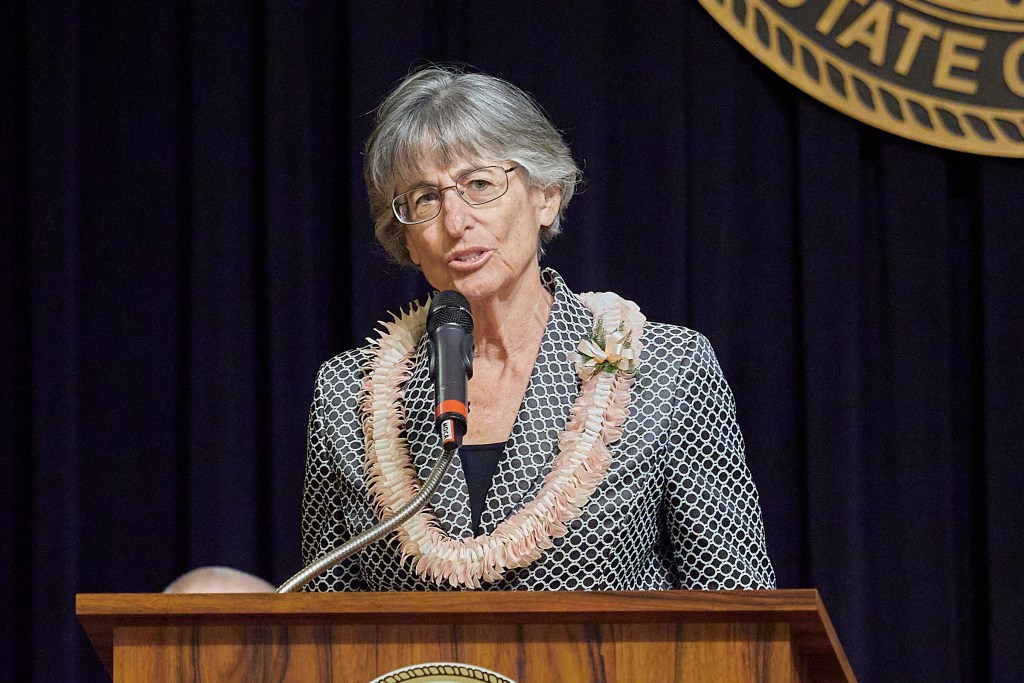
Politics continues to color the work of the Elections Commission and calls for reform put the process for selecting commissioners once again front and center. Civil Beat columnist Beth Fukumoto, a former House minority leader who had a hand in naming commissioners, last week wrote that Hawaiʻi needs “clearer standards” for Elections Commission appointments.
“We should expect that anyone making these appointments is looking for a core set of skills, conducts a simple interview, and documents their process,” she wrote.

Fukumoto also pointed toward the nonprofit Election Reformers Network that has established model legislation for states that want to create an impartial election administration “to further reduce party dominance of electoral process and diversify interests on election boards.”
Tam is not the only legislator worried about the Elections Commission. Sen. Karl Rhoads says he is looking at whether the state needs procedures in place in case the commission fires Chief Election Officer Scott Nago just prior to the 2026 election, as it is the chief election officer that certifies results.
There is also concern about turnover on the commission, as several commissioners over the past two years left before completing their terms. There has also been a push, thus far unsuccessful, to remove commission chair Mike Curtis.
Curtis declined an interview with Civil Beat. But in an email Friday he said tensions and the length of commission meetings “are functions of confrontational politics originating in the White House.”
Curtis also noted that last legislative session a proposal to require Senate confirmation of commissioners stalled in committee. The bill was Tam’s. Six of the nine House Republicans voted against it and two of the other three skipped the vote.
What The Legislature Could Do
Only the Legislature can change the laws governing the Elections Commission and only the governor has the authority to remove or suspend a commission member for cause after due notice and a public hearing.
The political make-up of the Elections Commission no doubt influences how it operates, something that is in stark contrast to the Hawaiʻi State Ethics Commission and the Hawaiʻi Campaign Spending Commission, two other prominent government watchdog agencies. At their meetings, discussion is invariably civil, agenda items are focused, consensus is easily attained and meetings rarely last for more than an hour or two.
That, too, is by design, and lawmakers might look to how those commissioners are selected as a model for the Elections Commission.
Commissioners on the ethics and campaign spending boards are selected by the Judicial Council, an advisory body appointed by the Hawaiʻi Supreme Court. In addition to the chief justice, it includes other judges, lawyers and laypersons.
The primary statutory responsibility of the Judicial Council is to study and make recommendations on the administration of justice in Hawaiʻi courts. But it also advertises for and interviews applicants for the ethics and campaign spending commissions before selecting nominees and sending those names to the governor, who makes the appointments. Commissioners are not required to go through Senate confirmation.
But elections commissioners are appointed by legislators: two by the Senate president, two by the Senate minority leader, two by the House speaker and two by the House minority leader. (See table below.)
A commission chair is added to the panel by the commissioners, while vacancies not filled within 15 days are made by the chief justice. Curtis was already serving as a commissioner when he was named to replace outgoing chair Scotty Anderson in November 2023.

In yet another illustration of how political the Elections Commission has become, applicants for the non-paid position at the time included Karl Dicks, who was not interviewed by the commission because he did not show up for the interview meeting. Dicks is a former Honolulu mayoral candidate and Republican state Senate candidate who sued unsuccessfully in 2002 on claims that other politicians improperly campaigned before they were registered for their elections.
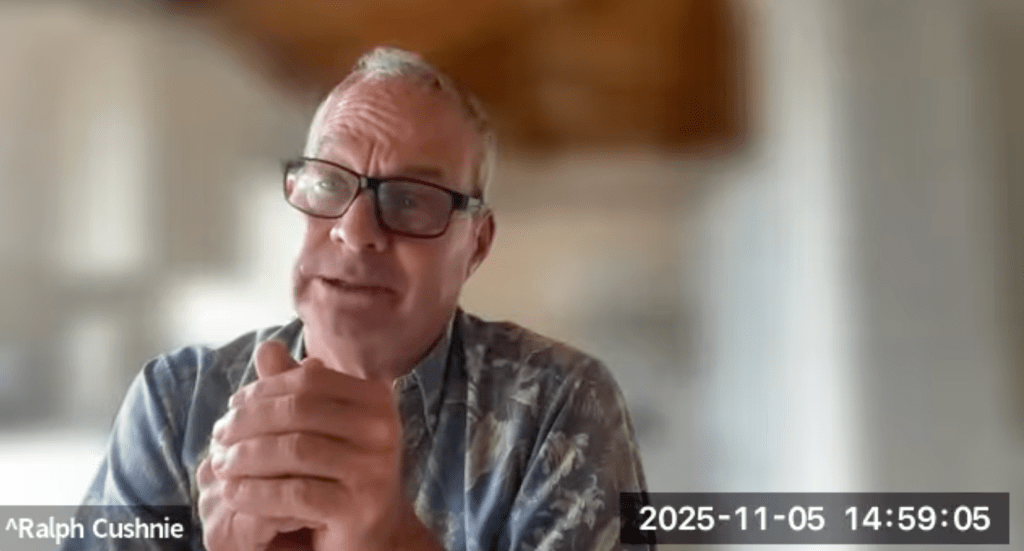
Current Commissioner Ralph Cushnie, one of the most contentious members, also applied to be chair. By that time he had already repeatedly raised concerns with the Elections Commission about the certification of the 2022 primary results. A complaint from Cushnie was eventually dismissed by the Hawaiʻi Supreme Court.
Peter Young was also considered for chair and interviewed by commissioners. He was later appointed to the commission as a member but resigned abruptly in August.
Tam indicated the Legislature would take up the issue of the Elections Commission in the 2026 session, since it is legislators who make the appointments. He said he would still like to see Senate confirmation of the commissioners, something called for in a bill he introduced last session and which carries over to the new session.
“What I’m advocating for is for us to at least give them some kind of Senate confirmation, so the public has the right to testify on their qualifications. I think the public has a right to know who we’re putting on our Elections Commission, and the public should have a right to know whether our election commissioners are conspiracy theorists.”
But Tam also suggested that it is the appointments made by Republicans that have led to turmoil.
“I think a better question is, why are the minority members putting election conspiracy theorists on this commission?”
Tam added, “I have not had any conversations with the minority members. I think it’s their job to have conversations with the members that they put on there as to ask them why they’re moving us in this direction.”
Rep. Lauren Matsumoto, the House minority leader, picked Cushnie of Kauaʻi. She declined to comment on the appointment and had no response to Tam.
She did, however, respond to a question about how she felt about the work of Cushnie and his allies on the commission.
“I appreciate their efforts to increase transparency within the Office of Elections and respond to public calls for more in-person voting opportunities,” she said in a text message. “Trust in our election process is vital, and we must all work together to uphold it.”
What The Commission Could Do
There are also steps the commission itself could take to streamline meetings and make them less belligerent.
Prior to Covid, the nine-member Elections Commission would hold its public meetings at the State Office Tower located in downtown Honolulu across from the State Capitol. The commissioners from the neighbor islands — two each for the counties of Kauaʻi, Hawaiʻi and Maui — would fly to Oʻahu for the meeting.
Now, commission meetings are held almost entirely over Zoom. Some testifiers still show up at the Office of Elections in Pearl City but they must testify over Zoom.
Offering more in-person meeting opportunities might help promote civility. Brian Black, president and executive director of the Public First Law Center, suggests holding videoconference meetings, which come with certain requirements under the state Sunshine Law.
Videoconference meetings would have set in-person locations on every island — for example, one in Hilo and one in Kona on the Big Island — where members of the public could observe and testify rather than Zoom in remotely. The idea is that, when people are in the same room with others, they may be less likely to engage in a less acrimonious fashion.
(It might also lead to other improvements in decorum. One frequent testifier, Junya Nakoa, sometimes Zooms in from his car not wearing a shirt.)

The commission would also not be required to accept testimony from people at home, for instance, or other locations if multiple in-person sites were available, Black said. “Over time, the commission should strive to bring back remote meetings, but in the short term, it may help reduce the heated rhetoric in some of these commission meetings.”
Part of the current problem is that the commission often allows people to talk about whatever correspondence it’s received without organizing it into a meaningful discussion item. That often leads to extended discussion and testimony.
“Boards are not required to agendize every piece of correspondence received,” Black said.
The commission could also adjust its complaint process. Currently, all complaints that come before the commission are posted on the agenda even if they are duplicative of complaints that are already under investigation or have been resolved. Black said any changes to the complaint process would have to be made to the commission’s administrative rules.
Whether commissioners would go along with changing how they conduct meetings is unclear. They often split 5-4 on motions, and there have been harsh accusations leveled at one another.
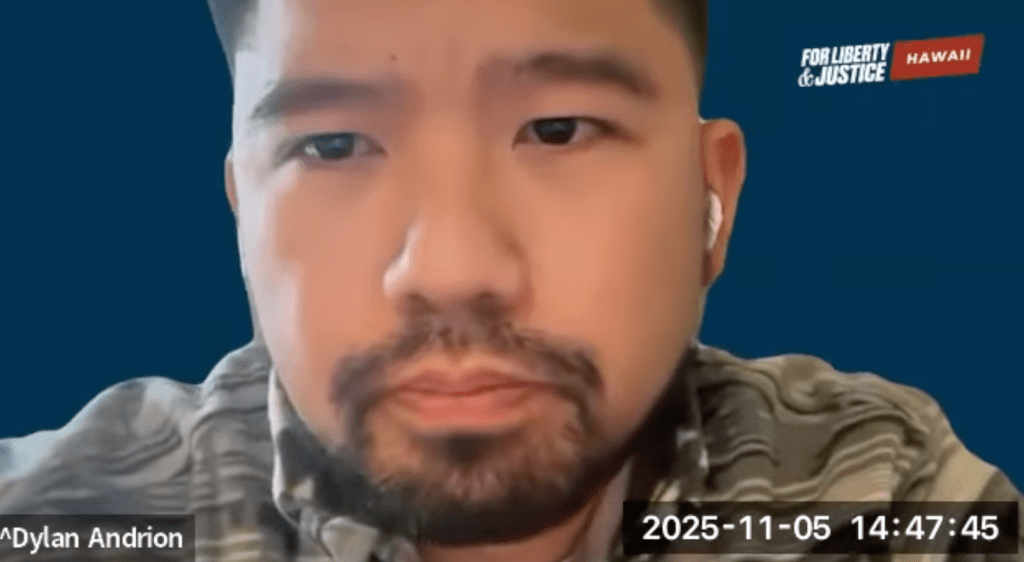
At the last meeting, commissioner Osterkamp, for example, characterized commissioner Cushnie’s allegations of irregularities in ballot counts in Hawaiʻi County as “fiction.” Cushnie countered that Osterkamp had “cherry-picked records” for a report that found there was nothing wrong with the way the county conducted its election.
Chair Curtis was accused of concealing evidence that Cushnie argued was important in order for commissioners to do their job. Cushnie even raised the possibility that Nago “and his cohorts” may have stuffed the Big Island general election count with 19,000 additional ballots.
The Elections Commission is expected to meet next after Thanksgiving, and among the ideas for its consideration are to arrange for some commissioners to visit county clerks to learn more about the balloting process and to see if there are ways to address concerns about counting votes
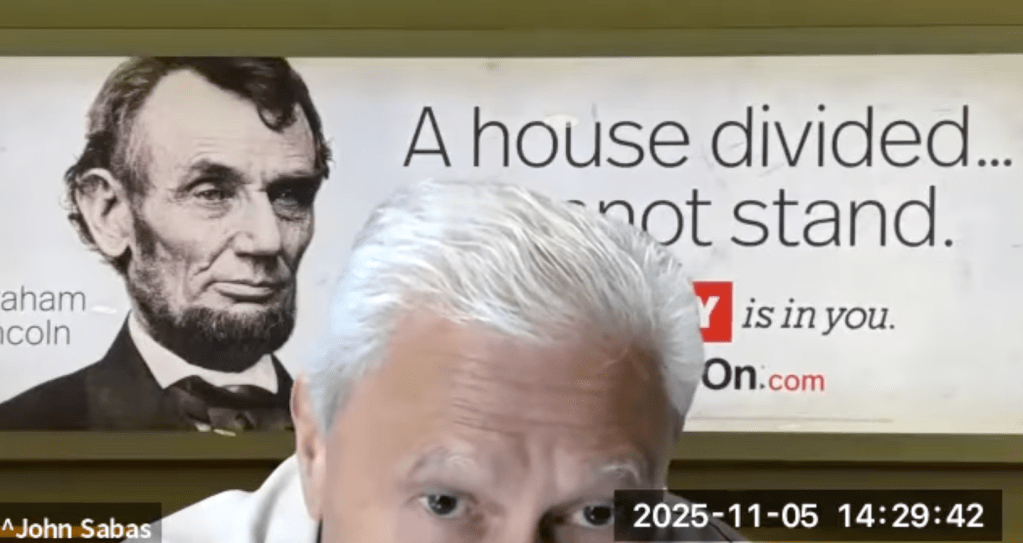
Several commissioners — especially the two new ones, John Sabas and James “Kimo” Apana — expressed a desire that the commission could somehow find solutions to restore trust in the election process. But they also suggested that they felt the intense public scrutiny of their work.
“I’ll give you a little history that I heard about this, this commission,” said Apana in the 11th hour of the 12-hour meeting Nov. 5. “And my first reaction was, ‘Why would I want to do this work?’ And then I thought about it and I said, ‘You know what, we owe it to the public to give them the best system we can. Is it walk-in? Is it mailing? Whatever we choose, we need to give them the best system we can.'”
 Sign up for our FREE morning newsletter and face each day more informed.
Read this next:

Local reporting when you need it most
Support timely, accurate, independent journalism.
Honolulu Civil Beat is a nonprofit organization, and your donation helps us produce local reporting that serves all of Hawaii.
ContributeAbout the Author