The Sunshine Interview: Camron Hurt Of Common Cause Hawaiʻi
The good-government advocate talks about improving the elections process and enacting more state government reforms.
December 7, 2025 · 31 min read

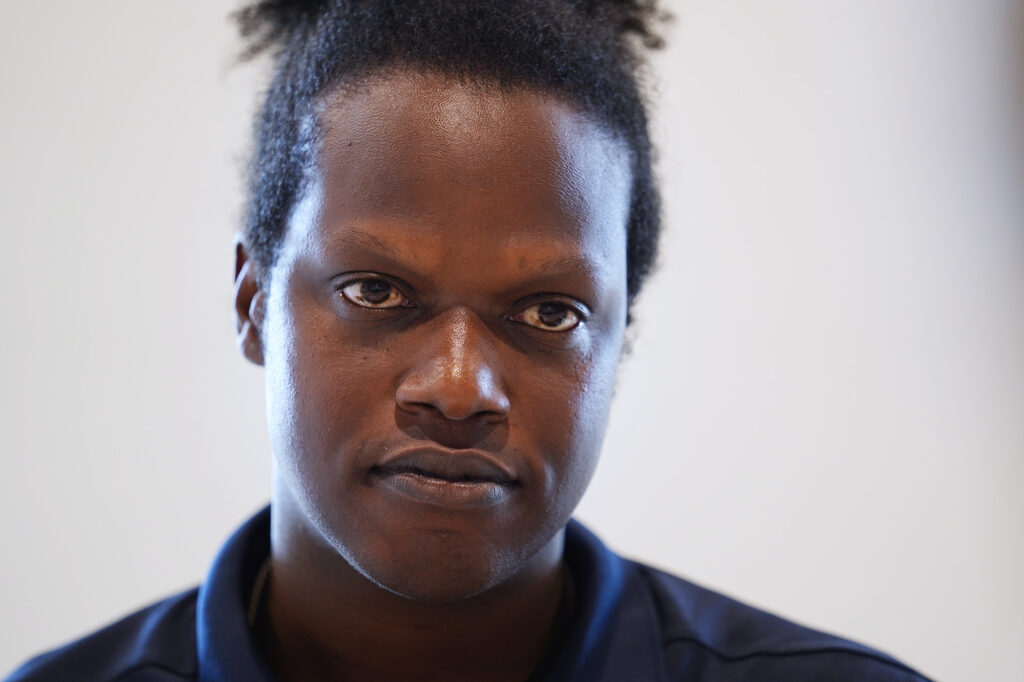
About the Author

Bills on closing pay-to-play loopholes at the Legislature and a Honolulu City Charter amendment on ranked choice voting are priorities of Camron Hurt, state director of Common Cause Hawaiʻi. But he also wants to hear more from state leaders on areas where they have been silent, notably an ongoing federal corruption case. Hurt began by explaining the purpose of Common Cause. This interview has been edited for length and clarity.
Common Cause Hawaiʻi, in the simplest terms, is a good government, citizen lobbyist group. It means that we lobby for the public interest when it comes to good government issues — that’s half of what we do. The second part is we’re a governmental watchdog organization. So as watchdogs, we are overseeing what’s going on in state and local levels here in Hawaiʻi and making sure that the government is being held to account.
It looks like you are trying to do a little more outreach. One of your goals when you started three years ago was to try and spread beyond Honolulu. How’s that been going?
I will say that it’s going very well, but not as fast as I want it to. Within my first year, we were very kind of Honolulu-centric. But over the past year and a half, I’ve been really present in Maui, been really present in Hawaiʻi County, and actually, this next quarter, we’re looking to build up our presence on Molokaʻi. So we’ll be hosting some town halls out there coming up in the new year.

The Honolulu Charter Commission is considering dozens of amendments. Tell us why you think ranked choice voting is so important.
Party division is leading to some of the most intense problems that we have at home, and ranked choice voting is a way that we can kind of start to get away from that a little bit more. We’ve already got our county offices that aren’t partisan. What we would like to see is this whole cultural shift, and ranked choice voting is one of the key ingredients for that to where you’re moving away from party politics and more into the candidate politics. And what we’ve seen from places like Alaska and California that have adopted forms of ranked choice voting is a better candidate pool.
I don’t really understand what the (concern) is about it besides the fact that it does challenge the party’s power. I think that’s important. I also think that it is important that the best people on consensus get to be in office, not the people who can win a fraction of a minority vote and then take that position that’s not really reflecting the will of the people. So I would say that’d be the principal point.
Republicans, in fact, were very critical because a Democrat managed to get elected to Congress in Alaska a few years ago. The argument has been, “Well, the party does a good job of recruiting people and finding the right people, and if you take away the party’s influence, that’s not good. That’s not really going to serve democracy very well to just let the masses decide who the second-best and third-best candidates are.”
Yeah, that sounds like treacherous language to democracy! I don’t understand how — sorry, because I’m flabbergasted — because that’s such a real comment. But in the same breath, it would be completely asinine to take what a party member affiliate would say as far as what’s best for democracy when it comes to the masses, because the whole point of the party system is to not have a mass consensus. It’s to get your tribal consensus. So I would say somebody who would put up an argument like that as an argument in good faith, and is actually arguing from a power position, is afraid of the power that they would lose.
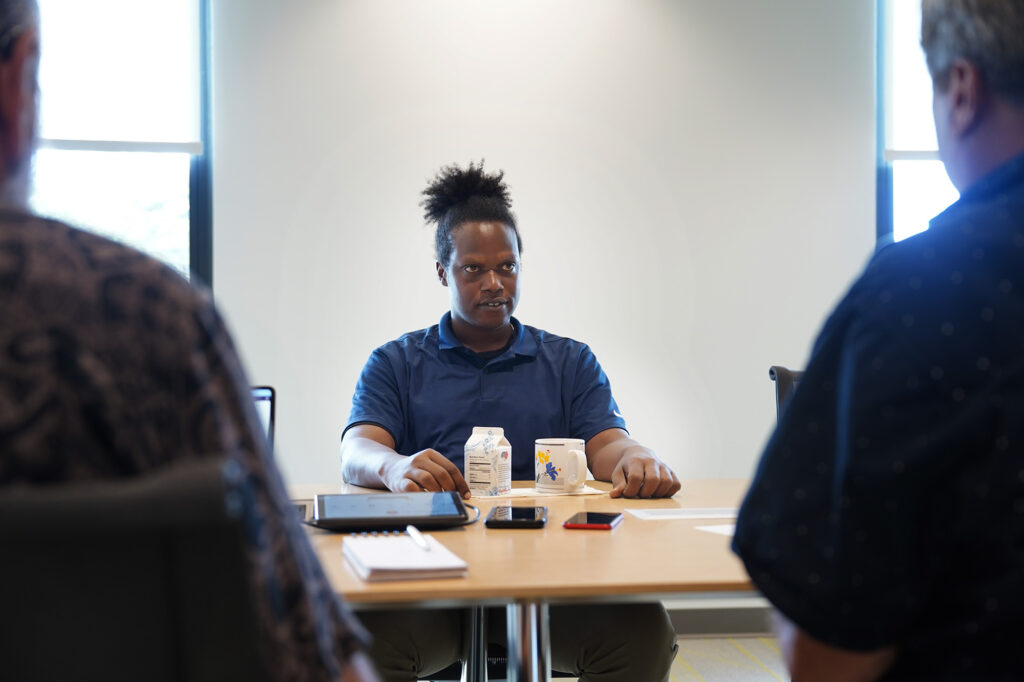
I also think if you ask the general public how they feel about ranked choice voting — and you can’t say ranked choice voting, because if you meet somebody on the street, they’d be like, “What?” — but how do you feel if we let everybody run, and we let them have the parties, but we’ll rank how they get their votes, and then we’ll be able to choose from that. I think you’re going to find the public is way more on that side than what a party operative says is hijacking their power.
Another criticism about ranked choice voting is that it’s complicated, that people don’t understand it. “What do you mean I’m ranking here’s who I want first, and then second and third? And then maybe my first choice won’t get there, but my second will?” Do you think it will be complicated and will confuse people?
Oh, I do. I do. I think any new way of voting starting out, there’s going to be a learning curve, and I think that’s where organizations like my own come together to really work symbiotically with the Legislature, to start holding mass education sessions, getting out mass print material, working really in conjunction with state offices to make sure that we’re educating people — as much as possible, setting up quick answer hotlines, making sure there are places to email your questions in, and things like that.
This would just apply to city and county offices, but it sounds like I’m hearing, if you had your druthers, you’d love to see ranked choice voting apply to statewide office.
You may see a bill this session.
What if we just went to truly open primaries, where you could just vote for whoever you wanted to vote for, including nonpartisan candidates that have a hell of a time advancing in our system here. What would you think about that?
I would absolutely support that. I think that it would be a step toward a less party-intense democracy out of the two. I just think ranked choice would be the most absolute (approach). We could just tie this up in a bow. But I do love the idea of open primaries. But I wonder if our parties here in the state are capable of doing that and not flipping out.
Historically, at least, the Democrats flipped out. There was a legal challenge some years ago, and the attorney for the Democratic Party argued in court, saying, “You can’t change this. This is very important.” But the counter argument was, “Wait a minute, why can’t I pick a Republican in this race, and why can’t I pick a Democrat in this race, and why can’t I pick a nonpartisan or Green in this race? This is my vote.” And by the way, that’s what you do in the general election anyway, right? There’s no limitation. The party’s argument to this was basically, “Well, you’re going to take away our important nurturing of our candidates who bring our values.”
Which I find so ironic here, because the party has no control, really, or influence over their legislative members. So by telling me that this is so necessary, I call B.S. There’s no way. These people do not listen to anything that Derek Turbin (chair of the Democratic Party of Hawaiʻi) says no matter what, and they’re not going to. So this idea that the parties are so, you know, instrumental in how we carry out our elections in democracy, it’s all a fallacy.

Back to the Legislature, what are you hearing about the pay-to-play bill — closing the loophole on government contractors, grantees, the officers and so forth. This is the one that made it all the way to the very end and was supported practically unanimously and then died, of course, during conference committee.
This is definitely one of the ones where we’re coming back in the 2026 session for everything we didn’t get in 2025. So that will include campaign financing, that will include the pay-to-play loophole, automatic voter registration and a foreign influence corporation ban from donating directly into our elections.
What’s going to be different next year? Because some of these have come up several times in a row. What’s going to change people’s minds?
What I think has already started to change was — and this is probably going to floor some people that I say this — but I’m seeing a more responsive House. When there are concerns that I have, the House is seemingly quick to act on it. When there were issues with getting bills heard and why they weren’t getting heard. And these were great bills that members supported, leadership supported, they responded to it. When it came to an inadequate response from the speaker, as far as the (federal corruption investigation into donations totaling) $35,000, when she heard the pushback, she changed course and responded to it.
So I would say that there is a willingness for the House to try to make something happen. I do think the House is in on trying to make a positive step in good government. And I think you see that with the new finance chair, Chris Todd, who has been very open and receptive to having meetings and talking things through and being very frank in his conversations.
I worry where the Senate is mostly. They’re usually kind of the wild card, but they passed some of these bills (government reform) through. I know three of them passed through unanimously. I would hope that they would keep that same energy this year.
This idea that the parties are so instrumental in how we carry out our elections in democracy, it’s all a fallacy.
I also think that people are paying a lot more attention. One of the things that I said in an op-ed that I wrote last year is not a single good government piece of legislation was passed. I’ll say this: the Campaign Spending Commission did get increased funding, and they got another added position and the money to fund that. But apart from that, we don’t have anything to hang our hats on. And when I say “we,” I’m not talking about Common Cause. I’m talking about us as a state. What are we doing to protect our democratic infrastructure in the year to year, especially when we see how it can be unraveled from the federal level, or even if you look at different local municipalities who have unraveled it in certain ways?
So I think there is more of a desire to do more good government work. And I think you can even see that with the fact that Rep. Adrian Tam called a press conference about elections. When was the last time we really talked about Rep. Tam, who’s the chair of tourism, coming out supporting something on good government?
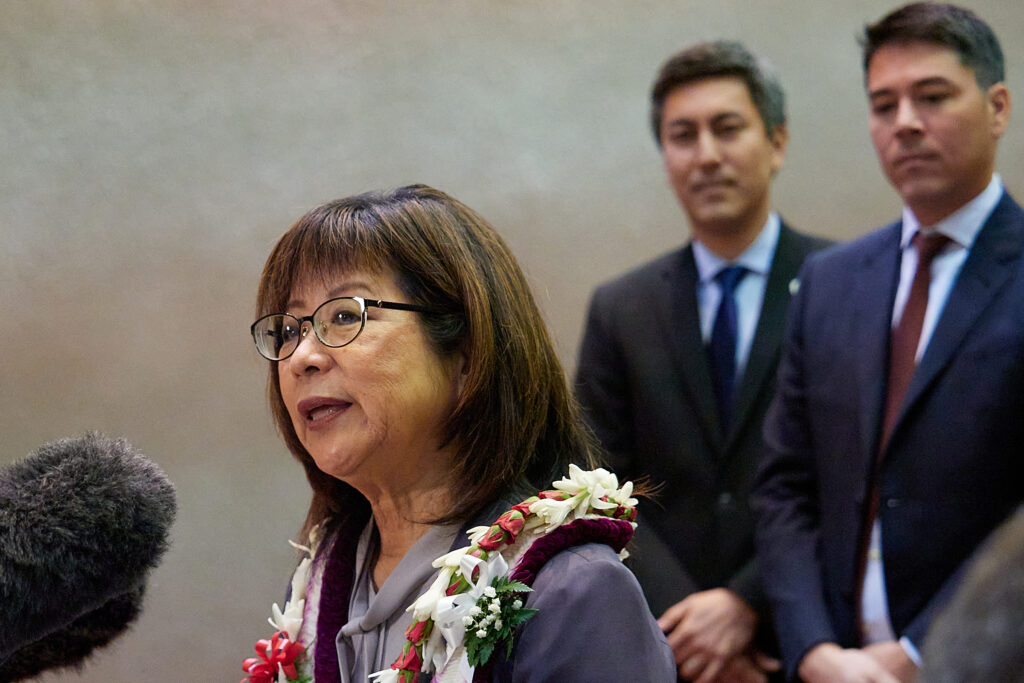
Let’s stay just a minute with the House. What is driving the House toward change, and what is not driving the Senate?
I think the House has probably taken a lead because you’ve probably seen the most turnover in the past 10 years in the House than in the Senate. So there’s a lot of new blood. There’s a chance for even more new blood in the upcoming elections. We are always concerned with what’s going on in the House, and not for nothing. They give us good material. I mean, there’s so much infighting at times there that it’s hard to stay away, or if things don’t get passed, it usually seems like the House doesn’t have it together.
So I think there’s just been a lot more focus on the House again, which leads to the turnover that we’re seeing too with the Senate. It’s more establishment. The people who are there don’t feel threatened for their jobs at all. I mean, Mike Gabbard has been in office since before I was born. I don’t mean that to be rude in any way, but I’m saying that’s the kind of comfortability that man has. “Nobody’s coming for me.”
I think there is a culture of being rank and file, and if you step out, you’ll be ostracized, or you will never have a career again.
While in the House you have lost (former Speaker Scott) Saiki. We are losing Della Au Belatti, and you have the first-ever woman speaker (Nadine Nakamura), and she’s having to keep control. That’s another thing when leadership changes, that everybody has to coalesce around that leader. I’m not sure that everybody is coalescing around the speaker. Therefore, I think that the speaker has to be more intentional about changing so she can get more people to come on board with her, being more “big tent.”
But you’re saying there’s people that are restless in that chamber that want change. If they’re not going to get it from their leaders, there may be a shake-up.
I think you could see that with anybody, not just in the House but also in the Senate. If there is a sense of change and the leader does not respond to that, then there could be an issue. I would praise the speaker, though, because I think the reason why she has been so quick to embrace change and embrace going in new directions in leadership has been to accommodate her members, and I think she’s done a good job.
How do you feel she’s done on this call led by Ali Silvert and others on this federal investigation that stemmed from the Ty Cullen and J. Kalani English bribery cases? There’s a cloud that continues to hang over the case. The speaker at least tentatively responded to calls that the House should be taking this on, that perhaps they should investigate and subpoena. How do you feel about her response?
Her initial response left much to be desired. However, when she came back — I think it was on a Sunday, like she gave us a response on Friday, and they gave a different response on Sunday that was more measured. It wasn’t what I wanted to hear, but it was more measured, and I could respect that.

I have a background in legal so I know how investigations work. You can’t come out and say, “Oh, the feds are investigating, therefore we can’t do anything right now,” because that’s not true. There is such a thing as concurrent jurisdiction and concurrent investigations. They happen all the time.
It is incumbent on the (Hawaiʻi attorney general) right now, who the speaker is speaking with, to explain why there can’t be a concurrent investigation, and saying that there were no federal charges does not mean there were no federal violations. Does that mean there were no state or campaign spending violations or ethics violations? So I think that’s on the AG to explain to the speaker, so the speaker can explain it to the people.
I also think that it is the height of political privilege to think that this is not a big deal. You are essentially asking voters to go to the poll and potentially cast a vote for somebody who took a bribe, as far as we know. How are we supposed to trust leadership, the candidates or the election system, when we know that there’s a potential crook running knowingly to members? Or maybe they don’t know who it is, but they’re not trying to find out who it is.
I think one of our more general themes when it comes to the Legislature — and this started last year when the pay-to-play bill got killed by leadership — is how to get these kind of rank-and-file members to actually start speaking up and asserting themselves, and not just sort of letting five people run the whole place and telling them what to do.
I think what I’ve seen in my time here is we have a culture that says, “Head down, be polite, get it done. It’s not that serious.” And in my first year at Common Cause, I was extremely quiet. And my reason for pointing that out is I watched a lot. I’ll never forget: I was in a meeting that I thought was with allies, and we were talking about drop boxes, and I remember saying, “Hey, we need way more drop boxes on the West Side.” And I got my head bit off. Off. “How dare I?” I know what my predecessor had to do to even get drop boxes. We should just be happy that they were there. And I remember being like, “Oh my God. One of these people (does) not know me to be talking to me like this, but I’m going to shut up and I’m going to take it for now.”
How are we supposed to trust leadership, the candidates or the election system, when we know that there’s a potential crook running knowingly to members?
I took that incident really to heart, and so I shut up as much as I could my first year to really get the whole scope and everything. And then after my second year, I was like, “No, all gloves are off, because this entire idea of we need to be polite and meek to have friends does not work. It simply does not work.” And when it came to even my editorial that I wrote about the end of the legislative session from last year, I sent it out to allies to actually sign on to it. Nobody took me up. But as soon as it got reaction, all the allies reposted it and claimed the win.
That being what it is, going back to your initial point, what can we do to get rank and file? There has to be a lightning rod, because somebody — and that’s why, again, you can hate or dislike (GOP state Senator) Brenton Awa’s politics for what they are, but he gets a response because he does speak out at least when it comes to the feeling that people have toward being not fairly represented, or feeling like it’s a corrupt system. He’s speaking to that, and what you’ve seen is nobody’s really been able to touch him. The guy can miss how many votes, and what are you going to do about it? Because he’s going to win his district.

So I think there is a culture of being rank and file, and if you step out, you’ll be ostracized, or you will never have a career again. I’m saying as I’m looking at that, is if you’re standing with the people and you’re standing on something, right? I haven’t found that to be true. Now I also don’t have, you know, generational connections here. So maybe it’s harder to get me flustered than somebody who’s been three generations in this state.
The issue of drop boxes has come up again because of the long lines on election night. I’m hearing that there will be a push not just on the West Side of Oʻahu, but on the Big Island and Maui, which are so large geographically, to get more of these places to have voting centers stay open for a longer period of time. Is that something that you’ve heard about as well?
I think there needs to be a lot more focus on the counties when it comes to elections, rather than the Legislature, because they really just have more of the teeth with it. The state can give them the money for (drop boxes) and try to mandate things. But definitely the counties have been talking to them about increasing drop boxes and talking to them about (helping with) in-person, day-of voting. I want to be very clear: I don’t think we have a problem on Oʻahu with voter centers. The thing that blew my mind was we had more voter centers for early voting than we did for (election day).
But as you know, so many people waited until the final day, including Brenton Awa, who allegedly was the last person to vote in line. But where are we going with this? You’re saying you don’t feel that the voting centers may be necessarily a problem.
The voting centers aren’t the problem. What we need to do is we need to come up with a system that quantifies how many drop boxes need to be around a certain level of population, right? Because I don’t understand, again, how the West Side has two drop boxes but Kailua has five. And then you want me to state the obvious? That the Native Hawaiian side (of the island) has the fewest drop boxes? Get out of here.
The West Side has a very large, percentage-wise, population of Native Hawaiians.
Yes. And then were they’re disenfranchised from the vote? I can’t stomach that. You can’t make that make sense to me. I’m from the South. I know what it looks like when voters are not being fairly represented or not having fair access to the ballot. The only place you can vote the day of (an election) on the West Side is Kapolei. Are you kidding me? So if I live on the North Shore, I may have to drive an hour. Yeah, no, that is completely asinine. And that is an abdication of your duty to make sure that people can access the ballot. I think that is the most disingenuous argument that I’ve heard from the left since I’ve been in this position is that people shouldn’t be trying to vote the day of.

Can we throw in one other area on the Legislature? Because I think it’s kind of key to the possibility for more reforms. Where do you stand on a longer legislative session?
I think that it would be great to first break it up, because we have a constitutional clause that says how long the Legislature should be. There’s nothing to say that has to run the way that it does concurrently. So I would say — and again, this goes back to what we said initially about any type of change in a political system is going to take time — I’d like to see it breaking up. Why not have the (Legislature) in session in January, off in February, on in March, off in April, on in May and so on. Why not be more intentional about when communities meet and how we’re using that time?
There are times during the session that those people are there, not doing anything, there’s nothing on the agenda. They’re just there. So we’re wasting that day. You can’t waste the time of the people. You just can’t, and so I want to see them be more intentional about their day.
So the easiest way, I think, would be for the speaker and Senate president to come together and figure out a way to break up those days that are in the Constitution. Now, you can also go through it with a constitutional amendment and try to just expand the whole session as it is. But I think we’ve got to get into what that cost looks like, because that’s a very real thing.
And this is probably shocking: I’m all for legislators getting paid. I love the Singapore model. You pay your legislators an above-living wage, and then you rack up corruption charges. And then if you get caught on corruption, it’s at least life almost. I think the one they just caught, the first in 15 years, I think he got 37 years. I think that that is important, that you’ve got to pay your legislators a wage that’s livable.
And if I understood you correctly, it would make them less susceptible to corruption.
And then you can also hold them to, I feel, better account.
And then would you prohibit outside employment?
Yes, immediately. You work for the people.
The thing that I always think of is the conference committee period and the artificial deadlines that come into play and, of course, play into the hands of the money chairs to totally control so much of that last-minute legislation. A longer session might make it harder to do that.
It would give so much more time for everybody, including them. If we did spread it out, there would never have been need to rumble about a special session. We wouldn’t have to worry about scheduling emergency hearings because ICE just raided Kauaʻi — they would already happen. And I think if you’re a governing body, why wouldn’t you want to govern your state throughout a period, rather than in a season?
I assume that you feel the same way with City Council.
I remember when they got their raise, I was actually called to give comment on it, and I supported it. At first, they were making $68,000. Who can live off that in Hawaiʻi with a family? I mean that humbly. When I was making $68,000 I lived in a very small, 500-square-foot, 2-bedroom apartment, couldn’t afford car or car insurance, and had to keep up with my kid and groceries and every other bill. That’s not livable.
I know it’s our reaction that we don’t want to pay politicians because we view them as corrupt. But how are you going to get good people to run if they can’t support their families, if they take on this position?
You know, I asked somebody recently in my district who does great work, great work. I was like, “Hey, have you thought about you could run?” And they literally said to me, “I can’t afford to run.” And I was like, “No, you could raise money. I think you would be great at that.” He’s like, “No, no, if I got the job, I couldn’t afford my life.”
That really made me step back. So are we actually encouraging the best of the best to run? When we don’t have a reasonable living salary for the amount of work, these people are responsible for to their constituents. They’re on call, sometimes 24/7, especially in emergencies. So pay them what they’re owed, and then when you pay them what they’re owed, you’ll get better candidates too. Right now, the only people who truly can run are established people. You get some of the outsiders every once in a while who are able to really try to like galvanize popular support. But most of these people, let’s really look at them. They’re coming from establishment jobs as attorneys, developers or financial business people, and they have the money to where they can take the hit.
I recently had a legislator tell me his wife would be happy if he quit, because he could be making so much more money. He could afford to think like that, but regular people who would want to do good work, who maybe have the knowledge to do the work, they can’t afford to take on that burden.
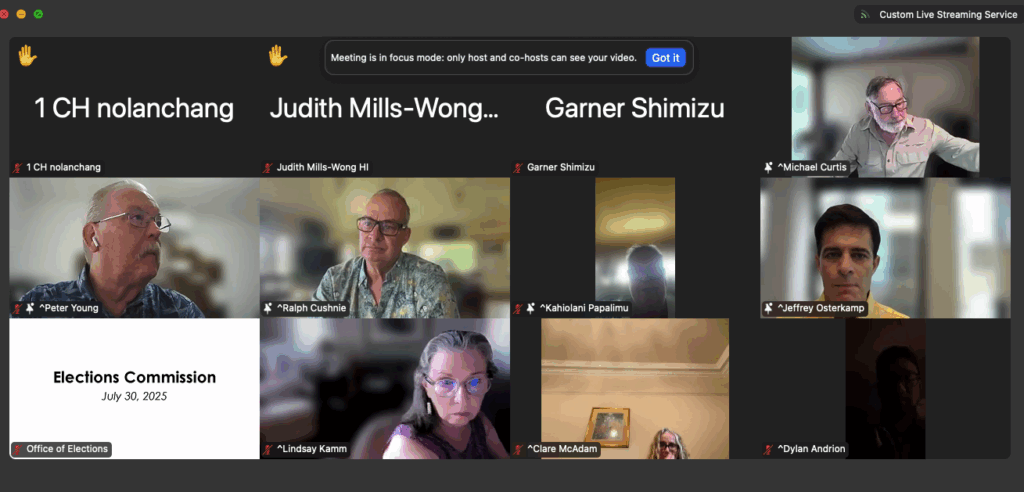
You were at the press conference with Rep. Tam regarding the elections commission and defending mail-in voting. What’s your take on how that commission is doing its job, and what changes might be needed to improve its work or make it less contentious? My understanding is there might be some other legislation proposed, particularly about how you screen the people that get selected to be on that commission, because right now, it’s all political.
Rep. Tam came to me with this at the beginning of last session. I was like, “Nah, I don’t see it.”
With his bill requiring Senate confirmation.
I was like, “Nah. I don’t really think so. That could really kind of start something.” As I have watched these commission meetings, I am all in on Rep. Tam’s bill this year, because the thing is, we’re getting to a point where the commission is doing more harm than good. Again, I said this in the press conference. They’re taking a continental issue and trying to make it applicable.
I recently saw an open letter that one of the commissioners put out to Rep. Tam, which was full of half-truths, which was full of also misinformation. He didn’t say about the investigations that didn’t find these mass voter miscounts. He didn’t say that when they were found there was an investigation immediately launched and people went into places to do what they could. It’s such a nonsensical issue.
I do think there are lessons to learn. For (chief election officer) Scott Nago, I would definitely be working on my chain of command and making sure that that policy is made public before the next election. I would definitely be reaching out to other organizations such as mine to see if they can offer different educational services or training service for people who want to be ballot (observers) or recruiting advocates that are in the space, to see if they would volunteer their time.
But there are some suggestions, including from some of the Republican people, saying we need to have more input and oversight so that we can be sure that those ballots aren’t being harvested. And having more observers on the scene would help in that regard. Is that what you’re getting at?
Oh, please. We don’t have enough workers to work election centers, but now we’re going to get enough people to be ballot watchers? That’s going to require money. And I’m so enthralled and confused how this hasn’t been a problem until Donald Trump said it was a problem for him on the mainland. That is absolutely bonkers to me. And so I think, truly, I will 100% back Rep. Tam’s statement. I think they are conspiracy theorists (complaining at the elections commission). I think they are sowing this division where there isn’t any.
And again, if they really cared about making sure our elections were secured, they really cared about access to the ballot, then they would be joining us. They would be joining the likes of Common Cause. Why not join us in a call to make sure that we are doing everything we can to secure these elections? Where is the commission giving any written policy recommendations? Where is the work? Because all I see is somebody screaming, “Fire, fire, fire,” where there’s absolutely no smoke.
Are there any other issues in the state, any of the other islands, anything else that you guys are tracking that we should get on top of?
Oh, our governor is MIA in the worst way right now.
Say that again?
Our governor is MIA in the worst way right now.
The governor of Hawaiʻi is missing in action. What do you mean by that?
I mean that for everything that the people of Hawaiʻi are going through, his response has been lackluster when it comes to immigration. He has completely ceded that idea to being cooperative with the Trump administration so worse things don’t happen to us. It hasn’t stopped people from being transported from the continent to our federal facilities here, which leads to a whole host of other issues. It hasn’t stopped communities on Big Island and Kauaʻi from being raided, and we know that this agency is going to get a huge funding injection at the beginning of the year, which means their operations are only going to spread. We have no real infrastructure right now, even if we don’t want to be competitive to even respond to a sizable, immediate increase in ICE activities.
There’s no appeasing this administration, they’re going to come for what they want when they want it. And you can think you’re doing all the appeasement in the world. It’s not going to stop them when the time comes.
So I think immigration is one. I honestly think the tax reform is another. You know, I couldn’t turn on YouTube without hearing the “largest tax cut in history. I’m going to get me a latte, make it large,” while now legislators are literally debating rolling back that tax cut.
Where are you, governor? When we have issues going on here in the state around the government shutdown, our governor said on camera he was flying to DC in the middle of shutdown to help end the shutdown. Now, I am a studied political scientist, but I’ve never in the history of America heard of a governor helping to end a governmental shutdown. That’s what you have a federal delegation for.
We also have an issue with him responding to the needs of the Hawaiian community when it comes to even how he’s handling the military leases. One of the things that I find just to be deeply appalling is that there was something in the proposal about them putting in money to build another federal detention center here.
Yeah, the deal on military leases that he’s proposed would include a number of things that he’d like to see in exchange. The governor did appoint an advisory committee, including Native Hawaiian leaders, to help in facilitating these discussions with the Army. He also did respond with the food stamp benefits and arranging for money at the local level, and feeling that there was no need to come back into special session. So in those regards, I suppose it’s fair to say that he has been responsive.
On putting together the group, I would push back against that. I’m sorry, it was after the fact. It was after the fact. And you don’t need to create that. You have to have buy-in from the Legislature and OHA, your Native Hawaiians, right there. So I question the authenticity of (the advisory committee) he’s put together.
Why is he missing in action?
I don’t know that. I don’t know why. I’m not even going to try to speculate why. I wish he wasn’t. I wish he was more present. He’s running for reelection, and he’s comfortable in that. I mean, as he should be — who’s going to challenge him? He’s boasted he’s one of the most popular governors. We deserve more, though. You’re not done with your first term yet, and you’re talking about a potential presidential run.
We deserve more, but we deserve to be able to have our governor be completely present in this state for the issues that we need help with. Where is he on calling for transparency on the $35,000 (bribe investigation)? Where is he calling for more drop boxes or or more in-person voting? He’s at every Hollywood premiere that happens in the state, but we can’t get him to show up to the things that truly matter for us. And I’m not saying this as a definitive critique of him.
It sounds like a definitive critique.
I’m saying these are areas of growth that I would like to see. These are areas I would like to see our governor grow. I know the governor. I think he has a good heart. (But) I think ambition can lead you astray sometimes.
 Sign up for our FREE morning newsletter and face each day more informed.
Read this next:

Local reporting when you need it most
Support timely, accurate, independent journalism.
Honolulu Civil Beat is a nonprofit organization, and your donation helps us produce local reporting that serves all of Hawaii.
ContributeAbout the Author