Beth Fukumoto: Explaining The Sweet Side Of At-Large City Council Districts
A proposal before the Honolulu Charter Commission deserves thoughtful attention.
January 4, 2026 · 6 min read

About the Author

In my last column, I used a family discussion about Christmas dessert to stage a low-stakes demonstration of ranked-choice voting in action.
With ranked ballots, you can express your real preference instead of just picking who you think will win. It is a better way to choose one winner in a single district.
This week, I want to use a new version of that example to talk about a bigger question: not just how we mark our ballots, but how we distribute power.
Should Honolulu keep nine winner-take-all council districts, or switch to a proportional system that lets different communities win at-large seats based on their share of support, as Common Cause Hawaiʻi suggests in a proposal to the Charter Review Commission?

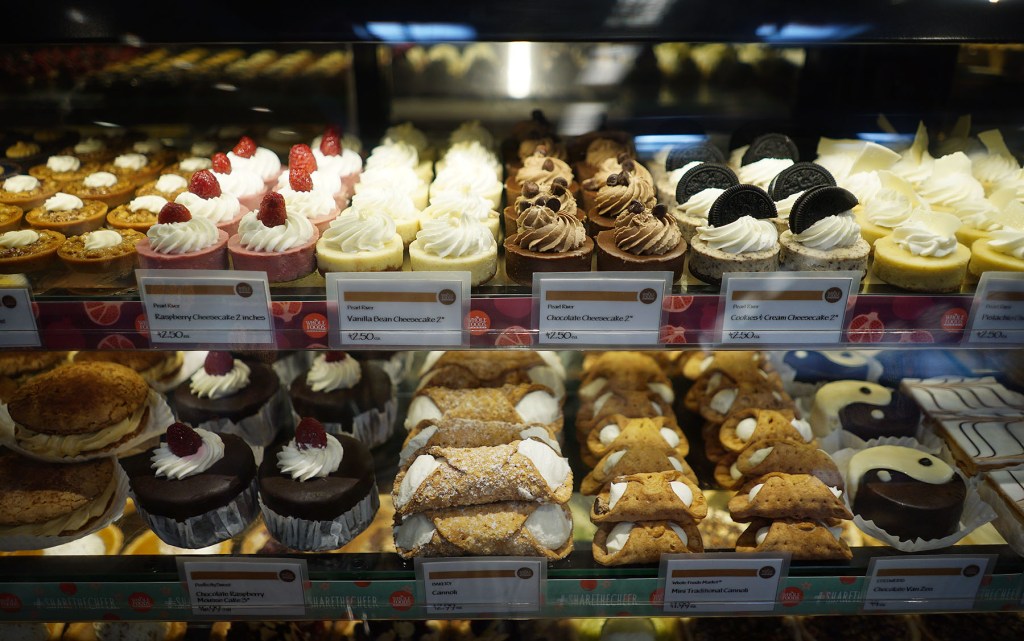
To get there, let’s move the dessert argument out of my parents’ dining room and onto the street. It is New Year’s Eve, and our whole block is throwing a party with one shared dessert table for everyone.
With our current winner-take-all rules, everyone gets one vote for one dessert. Every year, the two favorites, Chocolate Haupia Pie and Pumpkin Custard, get most of the votes. Other choices show up but never win, and it always comes down to these two.
Shaking Up The System
This year, you want things to be different. You decide to go all in and shake up the system with a campaign for Ube Cheesecake.
You bake samples, go door-to-door, and ask neighbors to try them. People love it. There is a decent buzz. But they all tell you some version of the same thing: “I like it, but if I don’t vote for Chocolate Haupia, the Pumpkin Custard will win.”
In the winner-take-all, pick-one system we know, Ube Cheesecake can only win if enough people want it, believe others want it too, and trust that everyone will actually vote for it. People have to take a leap of faith together to really change the result.

A ranked-choice ballot changes that calculation without changing the basic structure. You can tell your neighbors, “Just rank what you want. If Ube Cheesecake can’t win, your next choice will still count. You won’t accidentally elect the dessert you like least.”
In the old system, change took that shared leap of faith: everyone had to want something new and believe others would vote for it, all at once.
With ranked choice, you only need a critical mass of people to truly want something new. If you are alone, your vote is not wasted. If you are not alone, those first-choice rankings can add up and show that a new option is possible.
It’s an improvement. But in the end, you are still only picking one dessert.
That works well enough when it’s a friendly dessert competition. It stops working when the same fight drags on for years, half the block claims to hate haupia, the other half claims to hate custard, and some neighbors just skip dessert altogether because nothing on the table feels like it was meant for them.
A Multi-Winner Election
This is where proportional representation comes in. Instead of asking only, “Which single dessert wins?” it asks a different question: if we are going to share this table, how many different desserts should be on it, and how do we decide which ones?
Instead of just one dessert spot for the whole block, imagine the party decides there will be nine spaces on the dessert table. Everyone still gets one ballot and can rank their choices. But now it is a multi-winner election. If you can rally roughly one-ninth of your neighbors behind Ube Cheesecake, it will claim one of those nine spots.
In practice, if most people still prefer Chocolate Haupia or Pumpkin Custard, those desserts will likely take several places on the table. They are still the favorites, and that should show. But now, if one group wants Ube Cheesecake, another wants Coco Puffs, and another prefers a fruit tray, each group can get their choice as long as they represent a real share of the neighborhood.
As the Charter Commission considers its options, we have to decide whether we are satisfied fighting over one pie per district, or ready to design a council that looks more like a block party table where everyone sees at least one thing they actually asked for.
The table starts to look more like the actual mix of tastes on the block, and you are no longer fighting over a single dish.
That’s the basic idea behind proportional ranked-choice voting for the City Council. We still have nine seats. The question is whether those nine seats should continue to be nine separate “dessert fights” in nine districts, each with one winner who gets all the representation, or whether we should treat them more like a shared dessert table, where different groups of voters are guaranteed some space.
A nine-member at-large system, like the one Common Cause and Camron Hurt suggest, would be like having one big neighborhood dessert election. Every voter in Honolulu would rank council candidates on the same ballot. The system would be set up so that any group with about 10% to 11% of voters — like renters, Native Hawaiians, climate advocates, kupuna or young families — could realistically elect at least one of their preferred candidates, even if their choice wouldn’t win in a single-member district.
The core idea is simple, even if the math behind it is not. Ranked-choice voting lets people be honest about what they want without wasting their vote. Proportional representation goes a step further by changing who can win at all, making room for more than one flavor at the table.
As the Charter Commission considers its options, we have to decide whether we are satisfied fighting over one pie per district, or ready to design a council that looks more like a block party table where everyone sees at least one thing they actually asked for.
 Sign up for our FREE morning newsletter and face each day more informed.
Read this next:

Local reporting when you need it most
Support timely, accurate, independent journalism.
Honolulu Civil Beat is a nonprofit organization, and your donation helps us produce local reporting that serves all of Hawaii.
ContributeAbout the Author