Beth Fukumoto: Hawaiʻi Needs To Deal With Exploding Technology This Session
We need to decide how to pay for infrastructure, how to keep systems reliable and how to protect people.
February 1, 2026 · 6 min read

About the Author

State legislatures across the country are responding to two major technological disruptions.
Data centers are increasing energy demand, and artificial intelligence is changing how decisions are made. Some states are setting rules to protect ratepayers, consumers and civil rights. Others are competing for growth and hoping the risks sort themselves out later.
Hawaiʻi is not exempt from any of it. We need to decide who will pay for infrastructure, how to keep systems reliable and what protections people should have when technology makes important decisions for them. Since federal policy is not providing clear guidance, states have to take the lead. But, so far, Hawaiʻi has been slow to step up.
Let’s start with data centers.

States across the country are realizing that data centers are no longer just a niche economic issue. The National Conference of State Legislatures reports that data centers now use about 4.4% of U.S. electricity, making their growth a major concern for energy policymakers.
Some states are responding with clear regulations. In Texas, for example, any facility using more than 75 megawatts is considered a “large load” and must join demand-management programs, including installing shutoff equipment to keep the grid reliable. Maryland and Oregon have chosen a different approach, requiring utilities to set up separate rate schedules so that the costs of data center infrastructure do not fall on residential customers. California, Georgia and New Jersey have also considered similar protections for ratepayers.
Hawaiʻi faces the same pressures but does not have the same policy support. Data center growth here is real, not just a possibility. The AlohaNAP facility on Oʻahu is in Phase 1 of an expansion, adding 1.5 megawatts of capacity, with plans to become a multi-building campus. The University of Hawaiʻi has approved a lease for Google to build a cable landing station at UH West Oʻahu, which will connect Hawaiʻi to Japan, Australia and the mainland through a trans-Pacific fiber system.
Some lawmakers have also supported this growth with legislation, such as Senate Bill 338 which aimed to bring back the Technology Infrastructure Renovation Tax Credit and specifically include data servers. While the bill passed the Senate, it stalled in the House where it was awaiting a hearing by the Finance Committee.
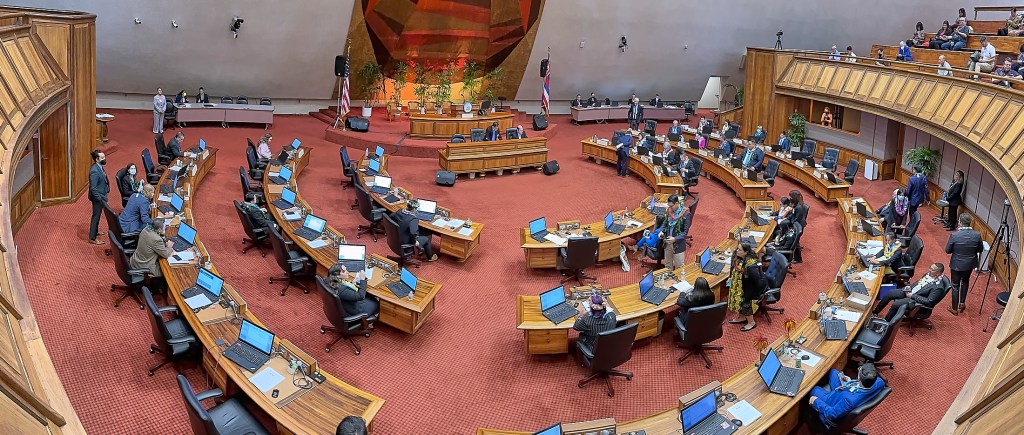
Hawaiʻi’s energy system is also under strain. Hawaiian Electric Co. is asking for its first major rate increase in five years to cover infrastructure and wildfire prevention. Oʻahu residents already pay the highest electricity rates in the country. Adding large, energy-intensive facilities brings up the same questions other states face: who pays for upgrades, how to keep the system reliable, and how to protect residents from higher costs caused by industrial demand.
Hawaiʻi’s technological growth needs support from the Legislature, but we should not ignore the resource challenges data centers have created elsewhere. As lawmakers look for ways to improve connectivity, they should also follow other states in making sure data infrastructure growth does not outpace energy responsibility.
Artificial intelligence brings a similar challenge, with even less room for mistakes. States are regulating AI because federal standards are incomplete or disputed. The National Conference of State Legislatures reports that every state considered AI legislation in 2025, and 38 states passed about 100 measures. Many of these laws target deepfakes, impersonation and AI use in jobs and government. Others address bias, transparency and privacy, especially where automated systems affect people’s rights or access to services.
If we want reliable infrastructure, fair systems and public trust in the technologies shaping daily life, we should not wait until something breaks.
Some states have moved beyond narrow bans toward broader governance frameworks. California and Texas, for example, enacted laws requiring disclosure of AI use, risk-mitigation practices and oversight of systems designed to influence consequential decisions. These efforts reflect a recognition that AI is already embedded in hiring, education, health care and law enforcement, whether regulators are ready or not.
Hawaiʻi’s record is more complicated. In 2025, the state led the nation in the number of AI innovation and development bills introduced, but most failed to pass. In his report on Hawaiʻi’s AI regulation, Civil Beat’s Chad Blair described a scattered approach by the 2025 Legislature, with no broad plan to govern or utilize AI across state agencies and the private sector.
Lawmakers acknowledged the problem. Rep. Andrew Garrett told Blair, “Right now, Hawaiʻi does not have a cohesive strategy for how we approach artificial intelligence, and that’s something we need to be honest about.”
The 2026 session is a chance to change course. Garrett’s bill to establish a Hawaiʻi Artificial Intelligence Council stalled in House Finance last year, but this session includes a renewed push to build guardrails around how AI is developed and deployed. One proposal would create an Office of Artificial Intelligence Safety and Regulation within the Department of Commerce and Consumer Affairs, charged with overseeing the deployment of AI technologies and preventing the use of systems that have not been shown to be safe. Another measure would require greater transparency and consumer protections for AI systems used in everyday interactions, including risk management requirements, impact assessments for higher-risk uses, and reporting obligations when things go wrong.
Other bills address high-stakes, real-world risks. One measure seeks to limit the spread of deepfakes and realistic digital imitations, targeting AI-generated images, audio, and video that can mislead, impersonate, or cause harm. Another proposal aims to protect young people by establishing clear safeguards for AI companions and conversational systems that interact with minors, acknowledging the potential impact on children’s mental health and development.
A third bill centers on health care, requiring meaningful disclosures and human oversight whenever patients interact with AI systems or algorithms influence medical decisions, ensuring that automation does not operate invisibly or without accountability.
These proposals show the Legislature is starting to treat artificial intelligence as a system that needs rules, accountability and public trust, not just as a novelty or a set of isolated risks. Whether this leads to a real framework will depend on how many of these measures move forward and if they are seen as part of a bigger plan, not just one-off fixes.
What connects data centers and artificial intelligence is not hype or ideology, but responsibility. These systems quietly shape daily life, from how information moves to how decisions are made, often before anyone notices. Federal policy has not provided clear answers on how to govern them, so states must decide whether to step in and set limits.
Like with budgets and social programs, these choices are not just technical. They show our values, priorities and willingness to plan ahead. Hawaiʻi does not need to move faster than every other state. But if we want reliable infrastructure, fair systems and public trust in the technologies shaping daily life, we should not wait until something breaks.
 Sign up for our FREE morning newsletter and face each day more informed.
Read this next:

Local reporting when you need it most
Support timely, accurate, independent journalism.
Honolulu Civil Beat is a nonprofit organization, and your donation helps us produce local reporting that serves all of Hawaii.
ContributeAbout the Author