Less than 3 days left to help us reach 250 donors by May 15. Make a gift of any amount today!
Tom Coffman’s Legacy Includes History Of Japanese Americans After Pearl Harbor
The late author preserved a story that too few Americans know at a time fear and racism overwhelmed the nation.
February 8, 2026 · 4 min read

About the Author
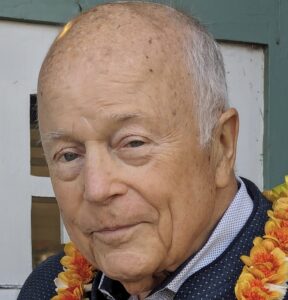
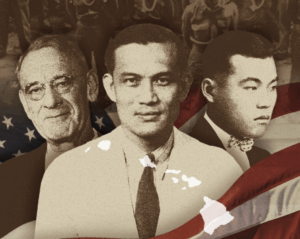
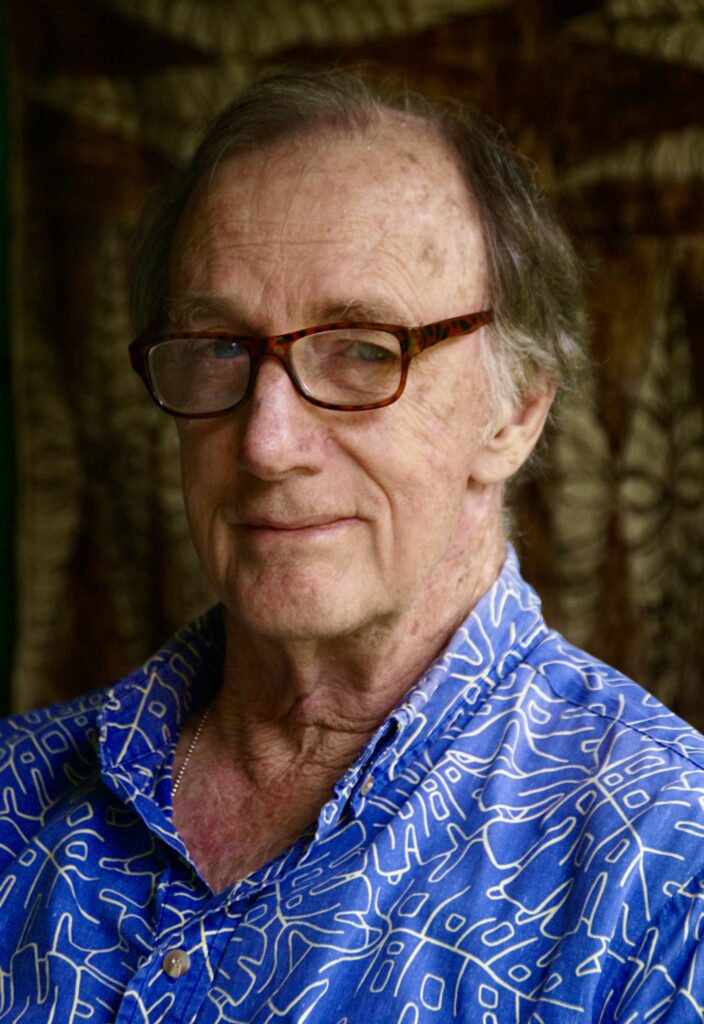
The recent death of the local journalist and author Tom Coffman should remind the reading public, especially, of his last book, “Inclusion: How Hawaiʻi Protected Japanese Americans From Mass Internment, Transformed Itself, And Changed America,” published by the University of Hawai‘i Press in 2021.
The book tells the fascinating story of how Hawai‘i responded to the Japanese attack on Pearl Harbor on Dec. 7, 1941 — radically differently from reactions on the mainland. This different response has never been adequately recognized on the mainland.
In Rachel Maddow’s recent attempt on MS NOW to inform her audience about the similarities between the present persecution of mostly non-white migrants and immigrants by ICE agents and the persecution of American citizens of Japanese background following the Pearl Harbor attack, she never mentions Hawaiʻi.

Ideas showcases stories, opinion and analysis about Hawaiʻi, from the state’s sharpest thinkers, to stretch our collective thinking about a problem or an issue. Email news@civilbeat.org to submit an idea or an essay.
What is even more striking is that Maddow also never refers to President Franklin D. Roosevelt as the architect of the internment campaign.
Coffman describes how, in a 1936 memorandum, Roosevelt had already directed the construction of “concentration camps” in Hawai‘i in the event of war. These camps were to incarcerate anyone of Japanese ancestry who had played host to visiting Japanese ships.
In addition, Roosevelt demanded the formulation of an arrest list for the Territory of Hawai‘i. His deep-seated suspicion of Japanese Americans — especially those living in Hawai‘i — became almost paranoid after the attack and was shared, following his “Day of Infamy” speech on Dec. 8, by military leaders in the Pentagon.
On the West Coast, this suspicion led to the internment of more than 140,000 Japanese Americans, most of them U.S. citizens. Yet, strikingly, this belief that local Japanese constituted a potential fifth column — already engaged in or planning acts of sabotage — was not shared by military and civic leaders in Hawai‘i.
Coffman presents a remarkably detailed picture of Hawai‘i after Pearl Harbor. He makes his readers understand how the islands’ multi-ethnic diversity shaped the perceptions of military leaders before and after the attack. Their lived experience of diversity without inter-ethnic violence resembled the impression formed by W.E.B. Du Bois, the eminent Black scholar, when he stopped in Hawai‘i in 1937, returning from travels through Nazi Germany, Stalin’s Soviet Union, the Chinese Republic, and Japan.
Du Bois wrote: “When this is published, I shall be in Hawaii, in that marvelous experiment in race mingling that lies in the midst of the Pacific.”
Military leaders in Hawai‘i dismissed Roosevelt’s suspicions. They were supported in this rejection by representatives of the local community.
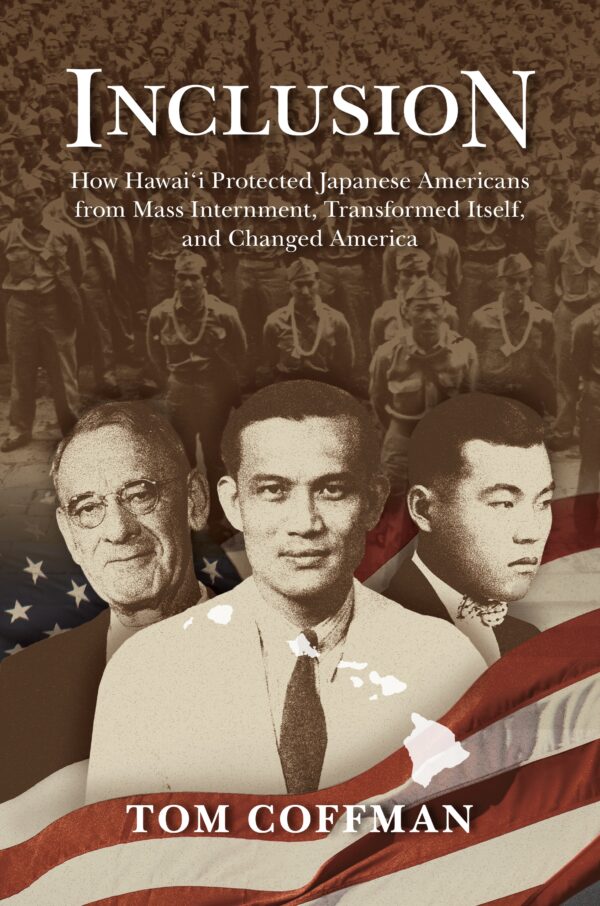
Coffman introduces us to Hung Wai Ching and Shigeo Yoshida—both shaped by their education at McKinley High School and by University of Hawai‘i President Charles Hemenway, who became, as Coffman writes, a father figure to them. Both men worked closely with Captain John Burns of the Honolulu Police Department — later governor — and FBI agent Robert L. Shivers, helping them understand local attitudes before and after the attack.
Unlike the Japanese on the West Coast, only a small number of Hawai‘i’s approximately 40,000 Japanese residents were interned. On Dec. 7 and 8, 291 Japanese, 93 Germans, and 13 Italians were arrested. After all, Nazi Germany and Fascist Italy had declared war on the United States on Dec. 8 in solidarity with their Axis partner, Imperial Japan.
When I met Tom Coffman twice in 2024, I praised “Inclusion” but questioned his impression that Hawai‘i’s different response to Pearl Harbor had significantly influenced mainland perceptions. Having lived in Hawai‘i since 1970 and taught political science at UH Mānoa for 50 years, I have always been struck by the general ignorance among mainland residents of Hawai‘i’s history — especially its contemporary political culture.
But that only deepens the importance of the author’s message. Coffman preserved a story that too few Americans know — that in the very moment when fear and racism overwhelmed the nation, Hawai‘i offered a different model.
 Sign up for our FREE morning newsletter and face each day more informed.
Local reporting when you need it most
Support timely, accurate, independent journalism.
Honolulu Civil Beat is a nonprofit organization, and your donation helps us produce local reporting that serves all of Hawaii.
ContributeAbout the Author