Our Superpower Is Collective Action
We need to raise the voices of our communities to challenge what our government could look like.
March 8, 2026 · 6 min read


About the Author
As a civics teacher, it’s my responsibility to ensure that my students, and sometimes the larger public, have a good understanding of different forms of government. I have found most people feel like they have a solid knowledge of these differences, but pushing past the surface can lead to glaring foundational gaps.
To begin with, democracy is not something we earn, it is the truth of the world. In his book “Two Cheers for Politics,” Jedediah Purdy argues that everything is a democracy. Since large tasks can only be accomplished when we work together, we find ourselves having to collectively agree on courses of action.
Sometimes these decisions are made on an individual basis. We choose which businesses we patronize, but the success of the business is democratically determined. We understand this: businesses use advertisements to attract more customers and consumers utilize boycotts to pressure businesses to change. This is a basic function of living with other humans and is separate from government.

Governments are an articulation of democracy. It is a set of rules to govern the collective decision-making process. The only difference is which people are engaged by their government, and who is considered not worthy of participation.
Some governments attempt to allow voice from all of their people, others only respond to the needs of a few citizens. In the governments that only care for a minority, tactics of fear, violence and economics are wielded to force people to participate in the government’s collective actions.
The horrors of authoritarian governments have not been carried out by single villainous individuals, as we like to tell in our histories, but by participating populations. Participation is sometimes willing, sometimes at gunpoint.
The Limits Of American Democracy
Historically, the American Constitutional System was not designed to accommodate all of the people living in the United States. The framers of the Constitution spoke out against democratic rule, and made limitations on participation. People who were enslaved were chattel property, women were not allowed to vote, and states had property requirements for voters. The Constitution allowed citizens to vote for their representatives, but not for senators (later revised by amendment) or president.
Besides these beliefs, the framers were under technological limitations. With communication taking weeks between states, it was necessary to use representative government to make decisions. They consolidated power within those representatives as the “voice of the people,” with the intention that their representees would hold them accountable.
The first constitutions of the Hawaiian Kingdom were much more responsive to the general population. The 1852 Constitution allowed suffrage for male citizens who were 20 or older and had paid their taxes.
Voting requirements were stricter under the reign of Kamehameha V in the 1864 Constitution, but relaxed by King Lunalilo. The communication between islands was much faster than on the continent and literacy was much higher, making political involvement easier for subjects.
After the 1887 coup d’etat, the government became completely respondent to the minority plantation owner class. Their view of government was much more in line with the original American vision: paternalistic land owners who knew better, and did not regret removing voting rights from the general population, while giving them to non-citizens who had enough money. This vision calcified in the 1893 overthrow and the founding of the Republic, later Territorial, government.
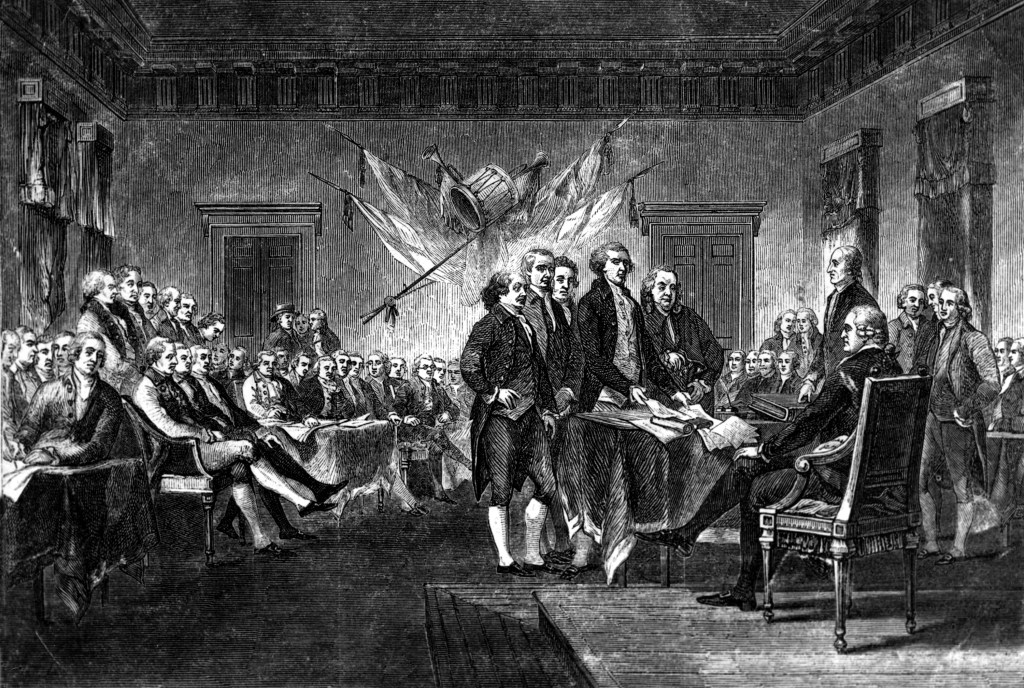
However, the 20th century saw a long historical arc of integrating more people into the consideration of government affairs. Equal rights acts were enforced nationally. Locally, statehood gave more self control to the voters of Hawaiʻi, and enfranchisement grew. There were only 174,000 (28%) registered voters in the 1959 ballot initiative for statehood. We are now at over 839,000 (58%).
Using this framing, we can understand the cultural clash occurring in the United States: those who wish to continue moving forward, broadening the scope of voices who matter to the national conversation, and those who want to go back to when they did not have to listen to everyone.
The current administration continues to pursue actions to reduce the voices of the people who count, down to one singular ranting slur of unhinged semi-consciousness.
Their vision of the future is a more responsive system to a more exclusive clientele. Authoritarians are able to take swift actions and their supporters benefit. This mindset is dangerous because any divisions of humanity are arbitrary and one can find oneself forced into the outside group without any just cause.
We need to expand democracy in our government.
The discourse about limiting democracy must be battled at every turn. We are facing enormous challenges in climate, housing, cost of living, natural disasters and food security. These will only be solved through collective action, not through mandated pet projects of committee chairs.
In my classroom, we engage with the idea that the failure of democracy is not because of a lack of resources or a lack of will of the people, it is because of a lack of empowerment and creativity. Recognizing and validating community concerns and bringing people together to find common ground is a necessity that must be preserved. The Mauna Kea Stewardship and Oversight Authority is managing to sit astronomers and community advocates together and grapple with the future of the sacred mountain.
It may take time, but our path forward is to raise the voices of our communities to challenge what our government could look like.
We have the opportunity to engage in a lot of creative thinking with the Honolulu Charter Commission amendments that are being proposed at this moment as well as the upcoming vote on the Hawaiʻi state constitutional convention.
Not only do we deserve democracy, we deserve a government that actively engages citizens. The general public is begging for inclusivity in government decision making. We must create an articulated process that sheds prior misconceptions about who belongs, utilizes 21st century communications, and gives us the chance to wield humanity’s superpower of collective action.
 Sign up for our FREE morning newsletter and face each day more informed.
Read this next:

Local reporting when you need it most
Support timely, accurate, independent journalism.
Honolulu Civil Beat is a nonprofit organization, and your donation helps us produce local reporting that serves all of Hawaii.
ContributeAbout the Author