The Most Influential People At The State Capitol Are Out In The Hallway
Top lobbyists often have more influence than the lawmakers themselves who pass or reject their bills.
March 8, 2026 · 13 min read


About the Author

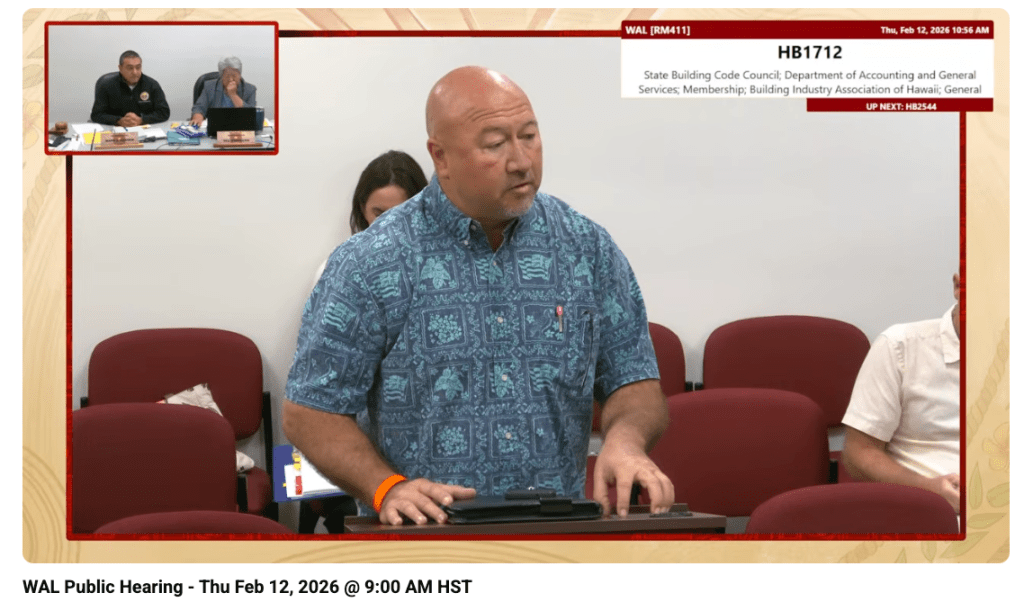
Conference Room 411 at the State Capitol was packed on Feb. 12 as testifiers spoke at length about major bills of interest concerning shoreline mitigation, water rights and condominiums operating on ag lands.
Little noticed was House Bill 1712, which would give representatives of the Building Industry Association of Hawaiʻi and the General Contractors Association of Hawaiʻi permanent standing as part of the State Building Code Council. BIA-Hawaiʻi was lobbying hard for the addition and had sent out email alerts to supporters to submit favorable testimony.
Kika Bukoski, a lobbyist for Plumbers & Fitters UA Local 675, opposed the legislation. He offered a compromise, however: Allow two additional members on the building code council, one from Local 675 and another from the International Brotherhood of Electrical Workers, Local 1186.
“We’ve been trying to work on this for years,” Bukoski, who also happens to be a lobbyist for IBEW 1260, told the House committee. “We’d like to have a more balanced representation from all stakeholders across the industry.”

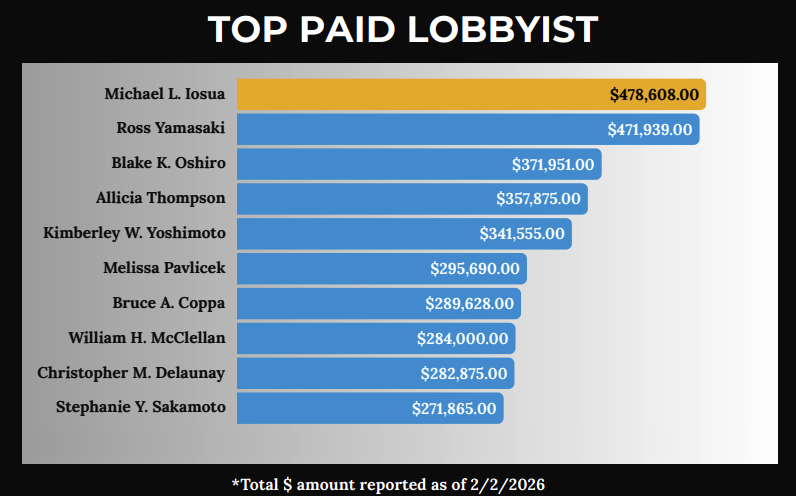
In the end, Water and Land Chair Mark Hashem amended the bill to add all four groups to the building code council. That was a win for both Bukoski and BIA-Hawaiʻi government affairs lobbyist Stefani Sakamoto, one of the Top 10 highest-compensated lobbyists in 2025, according to the Hawaiʻi State Ethics Commission.
All members of House Water and Land (Republicans included) embraced the legislation with no opposition.
HB 1712 was not a done deal, however. On Wednesday, House Judiciary and Hawaiian Affairs Committee Chair David Tarnas deferred the measure after at least one person testifying argued that adding more members would hamper the work of the council.
“Just 15 is way too many people already,” architect Reid Mizue said.
The very next day, on Thursday, Senate Ways and Means Chair Donovan Dela Cruz asked during the Senate floor session to have the Senate version of HB 1712 waived past his committee so it could be given a vote Friday. The senator offered no explanation, and he did not respond to an inquiry from Civil Beat.
But it sure seemed a little lobbying was going on somewhere in the building. On Friday the companion measure — Senate Bill 2339 — passed quietly and unanimously and now heads to the House.
‘It’s About Relationships’
Lobbying is a word that can carry negative connotations, especially in this age of political corruption.
At least two lobbyists I spoke with for this article expressed resentment that their entire profession has been tainted by recent headlines about bad legislators and the people who bought them off. In this regard, they sounded a lot like many legislators who have expressed the same sentiment about their own work — that there are always a few “bad apples” but most lawmakers are well-meaning, hard-working public servants.
“I take a little offense when people say I know a lot of people or that I am related to or work for or campaigned for someone,” one influential lobbyist told me. “In fact, none of that matters when you are trying to deconstruct the intricacies of issues like the green fee or condo insurance.”
Yes, lobbyists have far more influence than average citizens or certain advocates. But that’s what they are paid to do, after all.
None of the lobbyists I spoke to for this story would agree to talk on the record for fear of endangering relationships with lawmakers and others at the Capitol. In fact, they argue that the key to successfully lobbying is relationships, which are already central in a small island state that maintains high school connections long after graduation.
A Note On Anonymous Sources
“It’s all about networking,” one veteran lobbyist told me. “It’s about getting your foot in the door.”
Lobbyists must continually nurture those relationships to ensure they don’t lapse, keep a direct and open line of access and make sure clients and legislators understand the bills they are voting on. Like Bukoski and Sakamoto, they do that in person at hearings. But even more important are the conversations that take place in the hallways outside the conference rooms, in the offices of legislators and by working the phones.
“We know the issues better than most legislators,” said another. “The challenge comes in explaining things.”

The explaining comes through testifying, where nearly two-thirds of the positions taken during the 2025 session were in support of legislation rather than in opposition. According to Trey Gordner and Colin Moore, who authored a UHERO study published last June, lobbying in Hawaiʻi “appears geared more toward advancing proposals than blocking them.”
While powerful senators and representatives are important figures in state government and widely known in local media, business and political circles, lobbyists typically give more attention to bills than most lawmakers.
Plumbers & Fitters UA Local 675, for example, was one of three lobbying groups in the 2025 session that took 170 positions on legislation. According to the UHERO study, that figure was over 28 times as many as from the typical Hawaiʻi lobbyist.
Some lobbyists are familiar figures at the Capitol, including Bukoski, who also happens to be chair of the Honolulu Authority for Rapid Transportation, and Sakamoto, who previously ran her own firm, Sakamoto Consulting.
But their work continues behind the scenes to persuade lawmakers of their point of view. All must master the byzantine intricacies of state and county laws and rules and — most important of all — not screw things up or garner bad press.
As one prominent lobbyist told me, “Reputation is everything. If you are involved in scandal, that’s bad for business.”
Lobbyists are constantly on call, too, especially during the legislative session from January to May. They need to stay on top of every twist and turn in the murky legislative process.
One lobbyist I spoke with before the Feb. 20 “first lateral” deadline told me, “I’m just sitting around waiting for my bills to die.”
There are many more lobbyists in Hawaiʻi than there are lawmakers, and it can be a challenge to keep track of them and the issues they lobby on. The Ethics Commission, which oversees lobbyist registrations and financial reporting and scrapes the data for analysis, reported 616 active lobbyists in 2025 (up from 271 in 2013) and 470 lobbyists organizations statewide (roughly the same count as in 2024).
There were more than 1,100 filings from registered lobbyists in Hawaiʻi in 2025 and through the present day. Many of the filings are for lobbyists who registered more than once, as many lobbyists typically represent more than one client.
Lobbying is also evolving and is no longer dominated by familiar figures such as the late George “Red” Morris, the late John Radcliffe and the recently retired Bob Toyofuku. Younger generations are stepping up, armed with social media and artificial intelligence skill sets. And newer and younger lawmakers wary of undue monied interests have to be won over.
Donating to campaigns remains essential to lobbying, and several of the top-paid lobbyists in 2025 also contributed generously to local candidates last year. But several lobbyists told me donating to a lawmaker is no guarantee that the lawmaker will vote the way the lobbyist prefers.
“I rarely ever found where it makes a difference in terms of getting what I want,” one told me.
Top Lobbying Firms
Lobbying is a very profitable profession in the islands. Their combined compensation totaled more than $10.2 million last year, according to the Ethics Commission.
While there are hundreds of lobbyists, several stand out when it comes to influence and accomplishment, according to a half-dozen or so lobbyists I spoke with. They include three firms whose lobbyists were also among the Top 10 highest-compensated lobbyists in 2025: Imanaka Asato, Capitol Consultants of Hawaii and Hawaiʻi Public Policy Advocates.
The work of the latter two firms is so closely married to state government that their websites feature large photos of the Capitol building on their homepages.
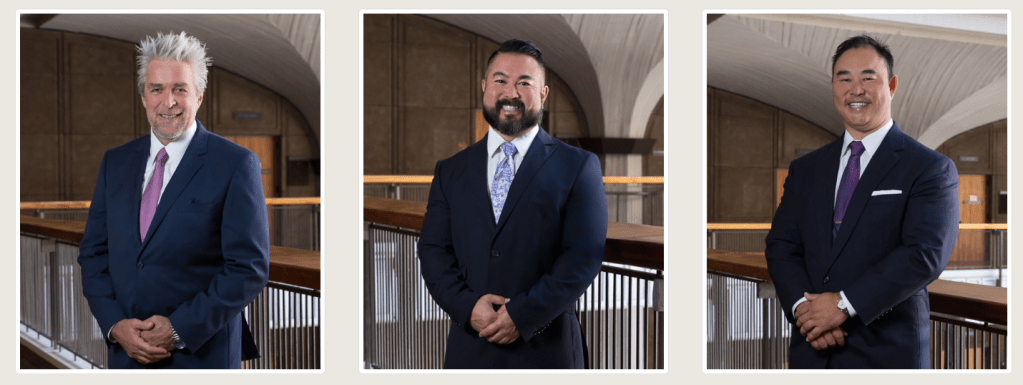
Three of those top-paid lobbyists — Bruce Coppa, Blake Oshiro and Ross Yamasaki, all regular glad-handers at the Capitol — work for Capitol Consultants, which was founded by Morris and Radcliffe. Experience in the Big Square Building on Beretania is a desirable job qualification for would-be lobbyists, and Coppa and Oshiro fit the bill.
Coppa, who has extensive experience in public relations, is a former chief of staff for Gov. Neil Abercrombie and former state comptroller. He was the first executive director of Pacific Resource Partners, a joint carpenters union and unionized contractors organization that remains highly influential in local politics. Coppa’s clients today include Tesla, Pfizer and Bayer U.S.
Oshiro is a former deputy chief of staff for Abercrombie and a former House Majority Leader. He also chaired or led legislative committees relating to the environment, land use, labor and criminal and constitutional law.
An attorney (law school is another commonality among lobbyists), Oshiro took a leave from Capitol Consultants two years ago to work for Gov. Josh Green. His clients today include Airbnb, Boyd Gaming, Disney Vacation Development and Uber Technologies.
While lobbying involves law degrees and government credentials, other experiences and contacts are seen as assets, too.
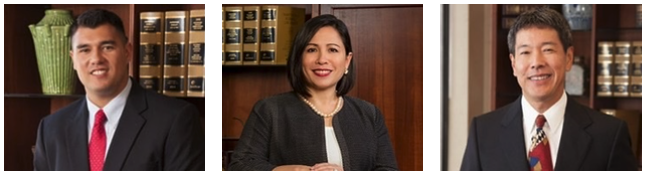
Yamasaki, who has a background in design and architecture, played football at UH Mānoa and currently chairs the Stadium Authority. His clients include Walmart, Lilly USA and Aflac.
Capitol Consultants’ other Hawaiʻi clients include Young Brothers, UHA Health Insurance, the HR company Altres, The Queen’s Health Systems, Charley’s Taxi and the Hawaiʻi Community Foundation.
Coppa is a smooth talker who, with designer eyeglasses and a little hair gel, always has a smile on his face as he makes the rounds at the Capitol. Oshiro was one of the most respected House members during his time in office with a knack for bringing lawmakers together on hot-button issues without antagonizing adversaries.
Other well-paid lobbyists are Michael Iosua and Kimberley Yoshimoto. Both work for Imanaka Asato, founded by Mitchell Imanaka and Richard Asato Jr.
Iosua and Yoshimoto are part of a new generation of lobbyists who are better able to relate to lawmakers of their age and experience. The majority of the Hawaiʻi House, for example, is comprised of lawmakers under age 50, many of whom got into office only recently.
“For the younger ones, it’s just easier for them to relate to the younger legislators,” one lobbyist explained to me. “Because they’re doing the same thing, watching the same stuff, doing the same social media, whatever — right?”
Clients for Imanaka Asato include AES Corporation, D.R. Horton Hawaiʻi, Realtor Association of Maui, Verizon Communications, Chick-fil-A, Hilton Grand Vacations, Haseko Development, Marriott Vacations Worldwide Corporation, Howard Hughes Holdings, Alexander & Baldwin and Blackstone Real Estate Services.
Connections made in previous jobs help make good lobbyists. Yoshimoto, for instance, was director of external affairs for U.S. Sen. Brian Schatz and chief of staff for Schatz when he served as lieutenant governor. And Iosua served as the assistant attorney general for the government of American Samoa, where he represented the territorial government in legal transactions and civil actions.

A third major firm, Hawaiʻi Public Policy Advocates, was cofounded and is run by a wife and husband team that are both graduates of the University of Hawaiʻi William S. Richardson School of Law. They also both served as staff members at the Capitol.
Melissa Pavlicek is the president and Steve Teves is the chief consultant of HPPA, as it is known. Danny Cup Choy is the firm’s vice president of government affairs. Last fall, state Sen. Henry Aquino left his seat before his term was up to go to work for HPPA.
Pavlicek, who regularly roams the halls and sits in conference rooms at the Capitol, is a steady, well-liked and traditional lobbyist along the lines of Bob Toyofuku.
Clients for the firm include America’s Health Insurance Plans, U.S. Renal Care, Inc. c/o Liberty Health Partners, Kamehameha Schools, Transform Hawaiʻi Government, Turo Inc., Sports Betting Alliance, Alaska Airlines, Bishop Museum, Schnitzer Steel Hawaii Corp. and Opportunity Youth Action Hui.
No compilation of top lobbyists in Hawaiʻi can be complete without mention of labor groups. They include public sector unions United Public Workers, the Hawaii Government Employees Association and the Hawaiʻi State Teachers Association; and George Paris, the executive director of the Hawaiʻi Iron Workers’ Stabilization Fund.
The muscle-flexing of unions already has been seen in the 2026 legislative session over legislation that would restructure the role of complex area superintendents in the Department of Education.
Senate Bill 3334, which was amended multiple times before managing to pass a deadline Friday so that it is voted on next week, has rallied the HSTA (which supports SB 3334) and the HGEA, which has called the bill “a political ploy” and condemned the bill’s author, Sen. Donna Kim, for “mob-like tactics.”
Unions like HGEA, HSTA and UPW also are able to rally their members to get out the vote or sign-wave for candidates at election time. Campaign donations remain part of the lobbying playbook. But in 2023 a new law prohibited donations from lobbyists during, just before and just after legislative sessions.
Starting in 2025, lobbyists must also disclose which specific bills or items they lobbied on. The Top 10 bills last session, according to the 2025 Ethics Commission Report, included the Electric Utility Securitization Act (major legislation that passed and will help Hawaiian Electric Co. respond to future wildfires), a bill banning flavored nicotine products (it died) and a bill calling for a study to create a Wildfire Recovery Fund (also dead).
It is not a coincidence that the biggest spenders in the 2025 session included groups with vested interests in some of those very bills including Hawaiian Electric Co. (the state’s largest utility, which spent $236,000 lobbying in 2025), Altria Client Services (the national tobacco lobby, which spent $197,000) and Kamehameha Schools ($147,000), a large landowner that along with HECO and other groups contributed to the $4 billion settlement for people and businesses affected by the 2023 fires.
The pattern of lobbying on bills of interest will likely be seen in the 2026 session, when lobbyist reports for the first two months of this year are due March 31.
Major issues of interest to lobbyists this session include adjusting the visitor green fee, gambling and tobacco proposals, short-term rentals and a proposed working relationship between the Hawaiʻi Medical Services Association, the state’s largest health insurer, and Hawaiʻi Pacific Health, one of its biggest hospital companies.
 Sign up for our FREE morning newsletter and face each day more informed.
Read this next:
Local reporting when you need it most
Support timely, accurate, independent journalism.
Honolulu Civil Beat is a nonprofit organization, and your donation helps us produce local reporting that serves all of Hawaii.
ContributeAbout the Author