The Sun Is Still Shining For Key Reform Bills Halfway Through Session
But a few significant issues failed to generate much interest this year as legislators scurried to meet the crossover deadline.
March 15, 2026 · 12 min read


About the Authors


Lawmakers have largely stayed the course they set out in January to improve accountability and transparency in state and local government.
As the legislative session moves into its second half, hot-button issues like cracking down on misconduct by elected officials or prohibiting law enforcement from hiding behind face masks survived last week’s deadline for bills to cross over to the other chamber.
Bills to better control the flow of money into the political system, including concerns over pay-to-play state contracts passed both the Senate and the House. Also still in play is an interesting effort to use Hawaiʻi’s law governing corporations to counter the Citizens United U.S. Supreme Court ruling that essentially treats corporations as people, allowing them to donate large sums of money to candidates.

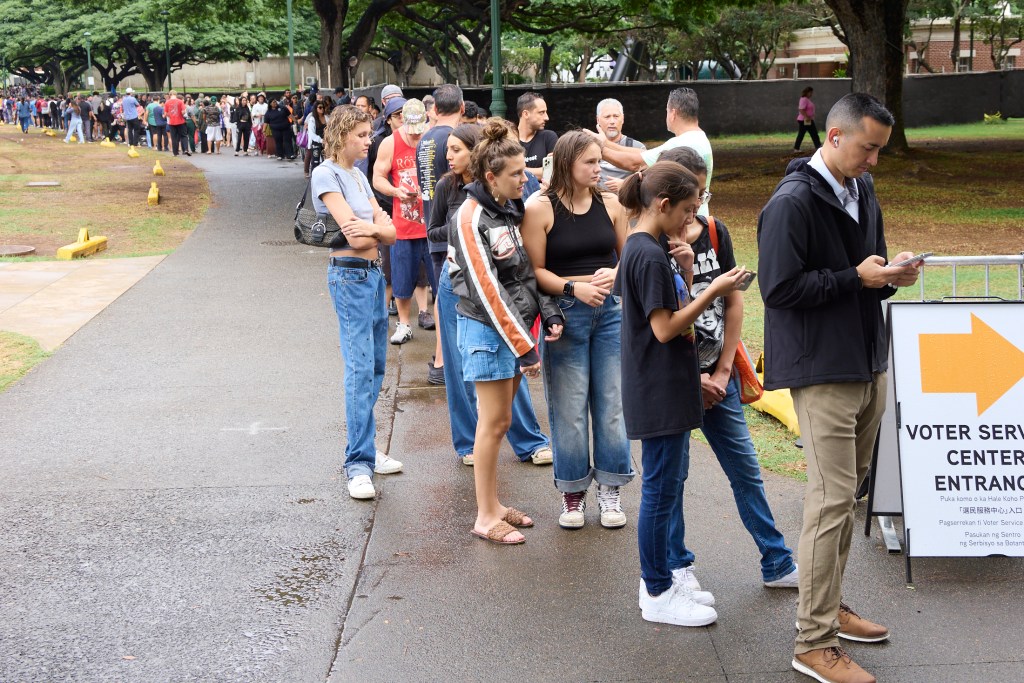
House members have taken a stab at addressing long lines at voter centers on election days by pushing through a bill that includes providing more money to the counties for more voter centers.
A long-sought program to publicly pay for candidates’ campaigns as a way to entice more people to run for office remains alive in two different bills — one that would bolster the existing partial public finance program and another that would create a new comprehensive system.
Several bills supported by the Hawaiʻi State Ethics Commission are still moving, including expanding the list of members of boards and commissions and state officials who would have to file financial disclosure statements that would be open to the public. At the same time, the House passed a bill that would take a step backward when it comes to financial disclosure by exempting the University of Hawaiʻi Board of Regents from making their disclosures public.
Lawmakers began the session with a number of ideas to try to bring some order to the chaos swirling around the state Office of Elections and the Hawaiʻi Elections Commission but ended up with just a couple of bills that would insulate the chief election officer from political pummeling.
A bill sponsored by House Speaker Nadine Nakamura establishing a working group to study the feasibility of a year-round legislative session made it through, although a bill that would have sent that question directly to voters in the form of a proposed constitutional amendment didn’t even get a hearing.
Legislators generally have no real appetite for sending most big questions to the ballot where voters could weigh in directly. And this session has seen few exceptions to that mindset. Proposed constitutional amendments for term limits, a ranked-choice voting system, legalizing adult-use cannabis and creating a statewide citizens’ initiative process are essentially dead, along with a few others.
A couple of perennial constitutional issues are still headed for the ballot so far. Those include increasing the retirement age of judges from 70 to 75 and changing the way yes and no votes are counted on ballot propositions. Lawmakers also are considering amending the constitution to allow counties to use bonds or other means to pay for housing and schools.
Notably, lawmakers seemed to have little interest in changing Hawaiʻi’s long-standing practice of passing legislation without knowing how much it’s going to cost. A number of bills were introduced that would have required fiscal notes on measures before they could be approved or other financial accountability. None even got a hearing.
Legislators once again balked at outlawing campaign contributions during session. They’ve eliminated organized fundraisers and prohibited registered lobbyists from donating during session but year after year have rejected a Campaign Spending Commission measure that would stop all campaign contributions during the legislative session.
And bills aimed at creating civic education curriculum or media literacy programs for schools also failed to get any traction.
So where do Sunshine Bills stand now? We started out the session with a list of more than 200 bills we were tracking. We’re down to about 60.
And now we’ll see how serious lawmakers, particularly legislative leaders, really are about some of these issues. It was easy enough to rally support for, for instance, toughening the bribery laws and other penalties for misconduct when the State Capitol was abuzz about a mysterious legislator who’d taken $35,000 in a paper bag while the FBI watched.
As Senate Ways and Means Chair Donovan Dela Cruz told reporters last week, “From my point of view, with my committee, I’ve just got to make sure we can afford some of these things.”
The ongoing scramble to find cash to pay for pressing state needs may once again doom a big-ticket item like publicly financed political campaigns. But many if not most of the items on our Sunshine Bill list below don’t appear to cost much, if anything. Although without fiscal notes or financial analysis it’s hard to say.

Of course that hasn’t stopped legislative leaders from killing them in the past as happened with the pay-to-play bill that died last session when the money chairs refused to sign off on it. No reason for the rejection has ever been given.
Still, Dela Cruz says he’s not using the power of his committee just to kill things leadership doesn’t like.
“If we want to provide that tax relief to the taxpayers, we’ve got to be very realistic of what we really can’t afford,” he says.
Or, as Senate President Ron Kouchi put it, “If you want to say it’s an excuse to kill it, I would say, if I need to choose between serving the most vulnerable in our communities or funding public elections, I’m going to choose the most vulnerable in our communities to be protected.”
And with that in mind, here’s what’s still alive (with our usual shorthand about the bill, a link to the bill itself for more details and the name of the lawmaker who introduced it):
CIVIL BEAT’S LIST OF SUNSHINE BILLS
ETHICS
Bribery and misconduct
SB 2249 – Honolulu Prosecutor Package: enhanced penalties for bribery (Kouchi, by request)
SB 2737 – Makes failure to report bribery a misdemeanor (Rhoads)
SB 2830 – Misconduct by a public official is punishable up to 10 years after leaving office (Rhoads)
SB 2494 – Statute of limitations for bribery expands to nine years (Keahokalole)
Disclosure
SB 2246 – State Ethics Commission Package: Expands the list of members of boards and commissions and state officials who have to file financial disclosures, including more DOE officials, pension and retirement officials, green infrastructure authority, technology development corporation and school facilities board. (Kouchi, by request)
SB 2248 – State Ethics Commission Package: Expands list of governor appointees who have to file financial disclosures (Kouchi, by request)
HB 2106 – State Ethics Commission Package: Expands the list of members of boards and commissions and state officials who have to file financial disclosures, including more DOE officials, pension and retirement officials, green infrastructure authority, technology development corporation and school facilities board. (Nakamura, by request)
HB 1873 – Exempts UH Board of Regents’ from making financial disclosures public, and exempts strategic planning retreats from open meetings law (Garrett)
Ethical standards
HB 2107 – State Ethics Commission Package: Prohibits top state officials from hosting fundraisers (Nakamura, by request)
SB 2247 – State Ethics Commission Package: Prohibits top state officials from hosting fundraisers (Kouchi, by request)
SB 2245 – State Ethics Commission Package: Revolving door restrictions, prohibits new state employees from taking official action on matters they worked on before state employment, and prohibits former employees of governor and lieutenant governor from representing persons or businesses for a period of 12 months after termination from state employment (Kouchi, by request)

Nepotism
SB 2661 – Repeals language in State Code of Ethics that exempts legislative and judiciary employees from prohibitions against nepotism (Kim)
ELECTIONS
HB 1525 – Appropriates money for more voter service centers, a digital voter guide and an outreach campaign to encourage voting (Tarnas)
SB 2239 – Automatic voter registration when working with some state agencies (Chang)
HB 322 – Automatic voter registration when getting driver’s license, permit etc. unless opt out (Kapela)
SB 2471 – Citizens United: Corporations/artificial persons can’t participate in elections (Rhoads)
HB 1716 – Any political party listed on ballot for 20 years or more is deemed always qualified (Poepoe)
SB 2466 – Chief election officer can only be terminated for cause (Rhoads)
SB 2143 – Attorney general fills in as chief election officer if position becomes vacant (Rhoads)
SB 2499 – Office of Elections Package: More time for filling legislative vacancies (Kouchi, by request)
HB 2099 – Office of Elections Package: More time for filling legislative vacancies (Nakamura, by request)
CAMPAIGN FINANCE
Pay to play
SB 2530 – Campaign Spending Commission Package: Prohibits state or county contractor’s officers and any officer’s immediate family, with contracts of $100,000 or more for goods or services or $250,000 or more for construction, from contributing to candidate or noncandidate committees, candidates, or any person for any political purpose for the duration of the contract. Prohibits grantees, grantees’ officers and grantees’ officer’s immediate family, with grants of more than $100,000, from contributing to candidate or noncandidate committees, candidates, or any person for any political purpose for the duration of the grant. (Kouchi, by request)

HB 1519 – Restricting contributions from contractors and grantees, compensated officers and immediate family members to candidates in same branch of government that administers the contract. Requires contractor to provide the state with a list of compensated officers and their immediate family members. (Tarnas)
Public financing of campaigns
SB 2528 – Campaign Spending Commission Package: Increases the expenditure limit and the amount of partial public campaign financing (Kouchi, by request)
HB 2050 – Campaign Spending Commission Package: Increases the expenditure limit and the amount of partial public campaign financing (Nakamura, by request)
SB 2313 – Establishes a comprehensive public financing program for candidates, beginning in 2028 (Rhoads)
Other campaign finance related
HB 772 – Bans the use of campaign funds to purchase up to two tickets for an event or fundraiser held by another candidate or committee (Belatti)
SB 2982 – Prohibits foreign corporations from making campaign contributions and election expenditures (Chris Lee)
SB 2447 – Statute of limitations on campaign finance violations starts when the crime is discovered (Rhoads)
HB 1520 – Statute of limitations for campaign finance violations begins upon discovery of offense (Tarnas)
HB 2054 – Campaign Spending Commission Package: Submit campaign finance forms electronically (Nakamura, by request)
SB 2532 – Campaign Spending Commission Package: Submit campaign finance forms electronically (Kouchi, by request)
PUBLIC RECORDS
SB 2312 – Records created, received, maintained or used by government contractors are subject to UIPA (Rhoads)
SB 2151 – Prohibits suspension of public records law during emergencies and allows Legislature and counties to end emergencies (Rhoads)

SUNSHINE
SB 2849 – Make agendas for public meetings more user-friendly (San Buenaventura)
SB 2397 – Changes definition of quorum for neighborhood boards to be a majority of all seats that are filled (Fukunaga)
ACCOUNTABILITY AND TRANSPARENCY
Police and public safety
SB 3322 – No masks for law enforcement and public policies about identifying themselves (Rhoads)
SB 2203 – Makes use of a mask or disguise by law enforcement a crime (Chang)
HB 2540 – Prohibits facial coverings on law enforcement and requires greater transparency regarding publishing policies (Belatti)
HB 1886 – Provision regarding contracts between state and federal law enforcement including no face masks and ID requirements (Tarnas)
SB 2145 – Right to record law enforcement (Rhoads)
HB 1790 – Requires police to collect and report data on law enforcement stops, uses of force, and complaints to the Hawaiʻi Crime Lab (Tarnas)
SB 2519 – Pushes deadline for getting law enforcement standards in place til 2028 (Kouchi, by request)
Other things
HB 2469 – Establishes a Regular Session Review Working Group to determine the essential timing and effective framework for a lengthened legislative calendar (Nakamura)
HB 1805 – Establishes Office of Child Advocate within the Ombudsman’s Office to oversee services to children and their families by various state agencies and to investigate complaints (Marten)
SB 2970 – Prohibits a state agency from entering into any procurement or construction contract with any business that is owned by a relative or household member of a director or deputy director of a state department (McKelvey)
SB 2348 – Hawaiʻi Civil Rights Protection Act: Authorizes civil lawsuits and protections for interference with constitutionally protected free speech (Rhoads)
SB 2929 – Allow legal notices to be published on state and county websites (McKelvey)
Bail reform
HB 1516 – Conditions for bail to include considering where money comes from (social security, social benefits) and ability to pay (Tarnas)
HB 2413 – No bail required for nonviolent offenders (Tarnas)
Claims against the state
HB 2250 – vehicle for paying claims against the state (Nakamura, by request)
CON AMS
SB 3219 – Allows counties to issue bonds to pay for housing infrastructure (Hashimoto)
HB 2476 – Allows counties to issue bonds to pay for housing infrastructure (Evslin)
SB 2315 – Makes the standard for ratification of a constitutional amendment proposed by the Legislature to require that a majority of all the votes tallied upon the question be a “yes” vote, and not include blank, spoiled, and over votes in determining whether a majority was reached (Rhoads)
SB 2152 – Increase mandatory retirement age for judges from 70 to 75 (Rhoads)
HB 2147 – Establish a surcharge on residential investment property to increase funding for public education (Perruso)
 Sign up for our FREE morning newsletter and face each day more informed.

Local reporting when you need it most
Support timely, accurate, independent journalism.
Honolulu Civil Beat is a nonprofit organization, and your donation helps us produce local reporting that serves all of Hawaii.
ContributeAbout the Authors