Beth Fukumoto: There Are Creative Ways To Get More Voter Centers This Year
The Legislature killed bills that would have funded more voter centers but we can increase in-person capacity before August without legislative action.
April 19, 2026 · 6 min read

About the Author

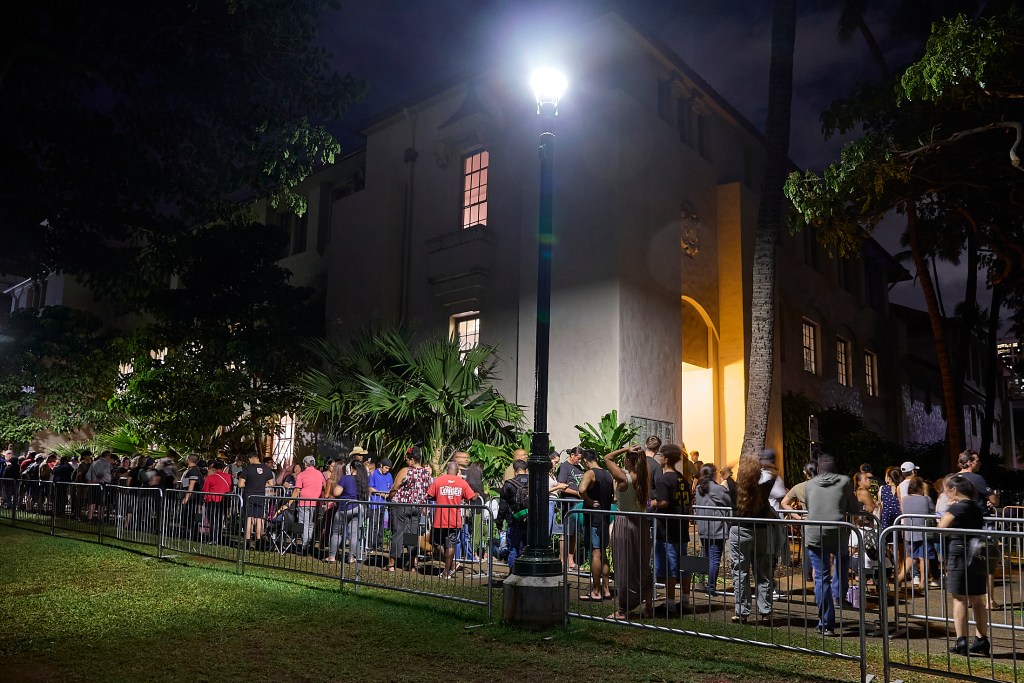
Twelve voter service centers will operate across the entire state for the 2026 election, the same number that led to hours-long lines, delayed results and frustrated voters in 2024.
Bills to fund more centers failed in the Legislature last week, opposed by county clerks citing logistical concerns. While those concerns are real, the cost of inaction could be high if we don’t come up with alternatives.
The furthest-advancing voter service center bill, House Bill 1525, passed the House but failed to receive a hearing in the Senate after county clerks from three of the four counties testified that they couldn’t adequately staff additional centers. That concern is very real.

According to the Election Assistance Commission’s 2024 survey, nearly half of all election jurisdictions nationwide report difficulty recruiting poll workers. And voter service center workers have to do more than a traditional poll worker.
It makes sense that the Legislature didn’t move forward. The state budget is tight, so giving money to an agency that says it can’t use it feels like a waste.
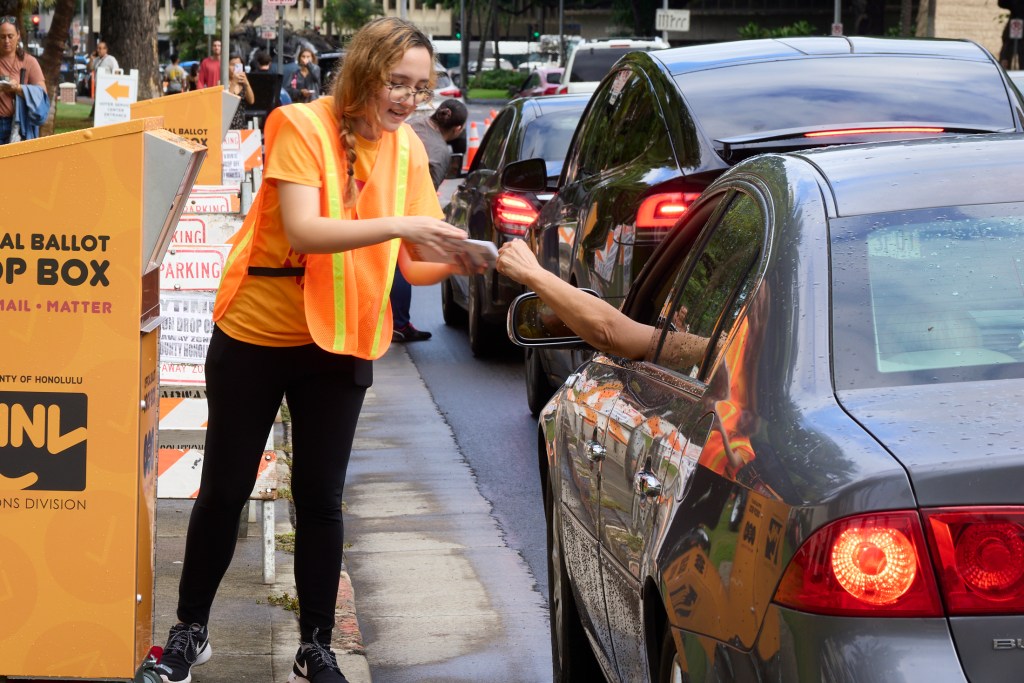
And the clerks made a good point about the existing alternatives. Every registered voter in Hawaiʻi already receives a ballot in the mail. They can return it by mail, drop it at one of more than 50 drop boxes distributed across the state, or visit a voter service center during the 10 business days before each election.
Voting is easier now than it’s ever been. And, Hawaiʻi’s elections are secure. Every mail ballot goes through signature verification. Ten percent are audited by law. Voters can track their ballot from mailing to acceptance. We have a solid, accessible system as is.
But that system is also under unprecedented strain as bad actors, from the president to members of Hawaiʻi’s Elections Commission, cast doubt on the process.
Nationally, threats are coming from all three branches of government. The Trump administration signed an executive order attempting to curtail mail voting that courts have called likely illegal. The SAVE America Act, which passed the House on a narrow 218-213 vote, would require documentary proof of citizenship to register to vote. The Brennan Center estimates more than 21 million Americans can’t easily produce those documents. The Supreme Court is weighing whether states can count ballots that arrive after Election Day.
While all three could ultimately fail, they have already succeeded in increasing people’s distrust of the system.
We have our own version of that problem at home. A narrow majority on Hawaiʻi’s nine-member Elections Commission has spent two years claiming, without evidence, that our elections are corrupt, voting to ask the Legislature to abandon mail voting entirely and audit the 2024 results. Commission meetings have devolved into marathon sessions dominated by false claims and conspiracy theories imported directly from the national MAGA playbook.
The House Republican caucus has pushed the same agenda from the State Capitol. House Bill 1761, introduced this session as part of the minority caucus package, proposed abolishing ranked-choice voting, requiring signature verification in the presence of official observers, and changing the chief election officer from an appointed to an elected position.
The Republican bill failed, as did the commission’s requests. Congress is unlikely to pass the SAVE America Act, and the president’s executive order could be overturned. But this kind of persistent, bad-faith questioning does damage on its own.
And that’s what worries me most. The sustained questioning of our mail-in ballot system will push more people to vote in person. If you’ve spent months hearing that mail ballots are being lost, miscounted or invalidated by changing federal rules, showing up in person feels safer.
And, with a longer-than-usual ballot, voters who show up at either of Oʻahu’s voter service centers will need more time to cast their vote. That means longer lines, which could discourage voters or reinforce the narrative that the system is broken.
So what do we do about it? The most immediate question is whether or not we can increase in-person capacity before August without legislative action.
County councils control their own election budgets, so they don’t need a state appropriation to act. It’s worth asking whether any of them are willing to. Civic organizations can also step in directly. Across the country, groups have begun adopting polling locations and sending their members to train as staff. It doesn’t solve the staffing problem permanently, but it helps for one election.
Voter education matters just as much right now. A targeted push before the general election explaining how the system works, reminding voters that BallotTrax lets them track their ballot in real time, and spelling out what signature verification actually means would make a difference. But the Office of Elections can’t do it alone.
Idaho just passed legislation that allows potential jurors to volunteer as poll workers instead of serving jury duty.
Research shows most trusted messengers for election information aren’t politicians or the media. People are most likely to listen to faith leaders, business owners, and community members. Church communities and chambers of commerce can host officials to explain how Hawaiʻi’s system actually works. Employers can share drop box locations with their employees. Civic organizations can continue to publicly vouch for the process. None of that requires a bill or a budget. It just requires people deciding it’s worth doing.
And, for future elections, there are policies we could consider to increase and staff voter service centers. Idaho just passed legislation, unanimously in both chambers and with county clerk support, that allows potential jurors to volunteer as poll workers instead of serving jury duty. It’s creative, it costs nothing, and it directly addresses the constraint our own clerks named.
Hawaiʻi should also push back on the Trump administration’s decision last August to reverse the federal rule that allowed colleges to place students in election offices through the Federal Work Study Program.
These are all fights worth having. The people working to undermine confidence in Hawaiʻi’s elections are counting on us to treat this as beyond our control. But the responsibility to protect and strengthen the process we have belongs to all of us, not just lawmakers.
 Sign up for our FREE morning newsletter and face each day more informed.
Read this next:

Local reporting when you need it most
Support timely, accurate, independent journalism.
Honolulu Civil Beat is a nonprofit organization, and your donation helps us produce local reporting that serves all of Hawaii.
ContributeAbout the Author