Olin Lagon: The Story Behind 'Hawaiʻi Ponoʻī' You Might Not Know
The name Nalanieha left me curious. It took me to a German army musician on loan to Hawaiʻi and one of the worldʻs most popular guitar shapes.
September 17, 2026 · 7 min read

About the Author

Last week I wrote about the street sign below, Kula Kōlea. It hid an extraordinary story that crossed my life over decades and oceans. If you have not read it, give that one a read first.

My hope was that others would get curious and look up the stories of names all around us. I did not plan to write a follow-up column, but right there in my own photo was another name that I ignored, Nalanieha. Maybe I should take my own advice and get curious, too. I looked that one up.
Buckle up. That one too took me to unexpected places around the world.
I am learning ʻōlelo Hawaiʻi, and so before looking, I guessed that Nalanieha meant the four heavens. Four beautiful things in Kalihi Valley? Why not? Even Mark Twain called Kalihi the Valley of Enchantment.
I was wrong. It was probably Nā Lani ʻEhā, referring to “four royals” not “four heavens.” Perhaps it was the name given to four royal siblings – King Kalākaua, Queen Liliʻuokalani, Princess Likelike and Prince William Pitt Leleiohoku II. Or maybe it referred to a song I found with that title. I kept digging and the rabbit holes had rabbit holes.
But I found one thread that deeply connected the four royals and that song, a German soldier on loan here from the Emperor of Germany, so I decided to focus on him.
Hold on to that soldier for a bit longer. I need to start with my guitar.
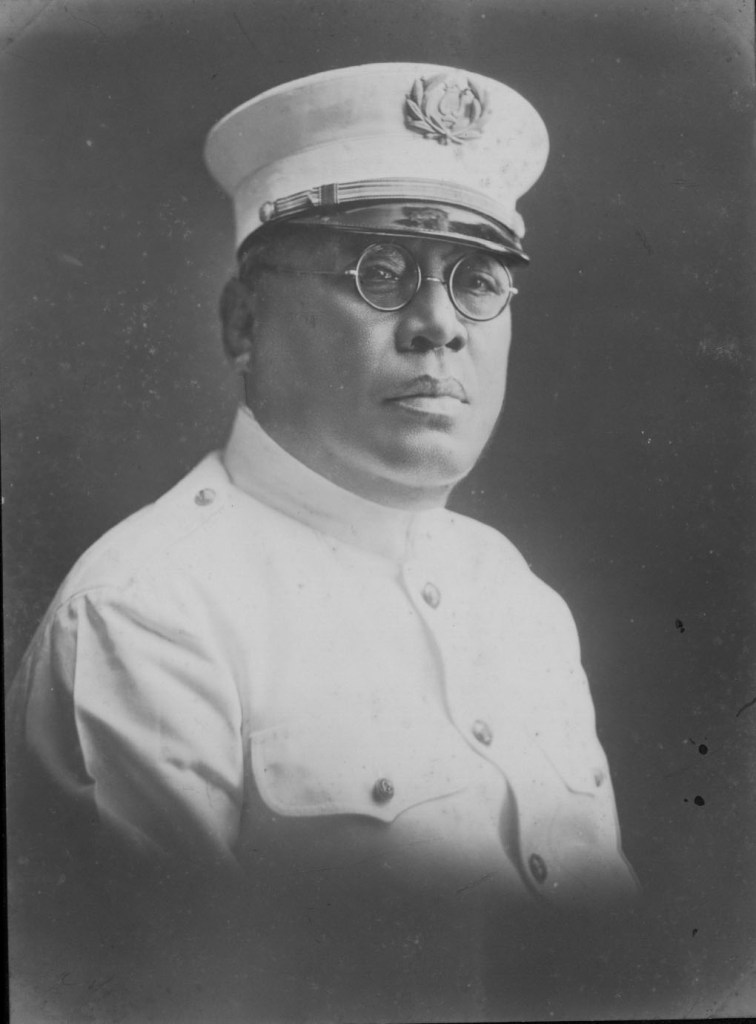
I have an Alvarez dreadnought model, the most imitated and widely played acoustic guitar shape on earth. The author of that song, “Nā Lani ʻEhā,” was Mekia Kealakai and he is the person behind it.
Guitars in his day were small instruments with soft strings, good for small performances. Kealakai wanted the guitar to be a main stage instrument and convinced the Martin guitar company to take the very unusual step of building him a custom model that he specified. It was huge and used steel strings that reverberated loudly. Martin called it the Kealakai model and used it as the template for the first ones sold.
I wish Martin had kept that name. Instead they reached for the military and borrowed the name from one of the biggest battleships around, the Dreadnought. The shape built for Kealakai is what so much of the world now thinks of as a guitar. There must have been tens of millions of dreadnought guitars built worldwide since his first model.
Where did a Hawaiian kid learn to play like that? At the Honolulu reform school. From a German soldier.

Ideas showcases stories, opinion and analysis about Hawaiʻi, from the state’s sharpest thinkers, to stretch our collective thinking about a problem or an issue. Email news@civilbeat.org to submit an idea or an essay.
Letʻs go back a bit to 1869. A typhoon damaged an Austrian warship and it limped into Honolulu Harbor for repairs. A military band was on board and decided to give free concerts in town. Nobody here had heard European waltzes and marches played like that.
King Kamehameha V heard them too. He must have loved that sound so much that he sent a formal request to Kaiser Wilhelm I, the German Emperor, asking for a bandmaster to train his royal band.
The Emperor said yes. Eventually Heinrich Berger was selected, a 27-year-old army musician, straight out of the war with France. The German government gave him four years to train us and put him on a boat.
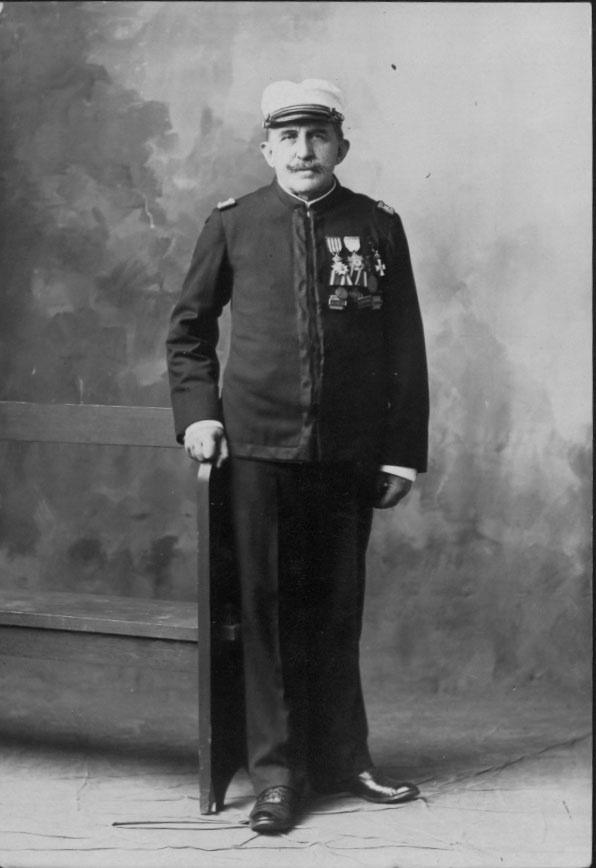
Berger landed in Honolulu on June 3, 1872. Kamehameha Day was June 11, and that year was the first time it was celebrated. He was asked to have the band ready for it. Imagine that you had eight days to teach a group your craft and none of you speak each other’s language.
Berger made it work. He took “Heil Dir Im Siegerkranz,” the Emperor’s own anthem, and called it “Hymn to Kamehameha I.” Hawaiians already knew that tune. The kingdom had used “God Save the King” (same tune) on state occasions for years. Kamehameha V dropped it in 1866 for an original melody by Liliʻuokalani. Six years later Berger brought the same tune right back, this time wearing a German uniform. That tune reached us twice, once from London and once from Berlin.
Give the original German version a listen. Youʻll recognize it.
Copycat National Anthems
I dug a little more and like matryoshka dolls, there were more and more tunes hidden inside. The Germans had gotten the melody from that British anthem “God Save the King.” Where the British got it, nobody knows for sure. One theory, which historians call a legend, is that the French had it first and the original tune was created to celebrate Louis XIV’s recovery from ʻōkole surgery (the actual ʻōkole, not how we use it colloquially).
I did not realize how uncreative countries can be about picking a national anthem. This tune continued to travel and was used by Switzerland, Liechtenstein, Norway, the Russian Empire, Sweden, Siam, and about a dozen more. Beyond national anthems, it was also used in patriotic hymns such as “My Country, ‘Tis of Thee.”
Now, his connection to the four royal siblings.
Berger was close to them and arranged their songs for the band. Two years after Berger first performed that hymn to Kamehameha I, Kalākaua wrote Hawaiian words to it and Berger reworked the melody. In 1876 the kingdom adopted it as the national anthem, “Hawaiʻi Ponoʻī.” It replaced the anthem his sister Liliʻuokalani had written ten years earlier, the one that had pushed this same tune out. The old melody was back.
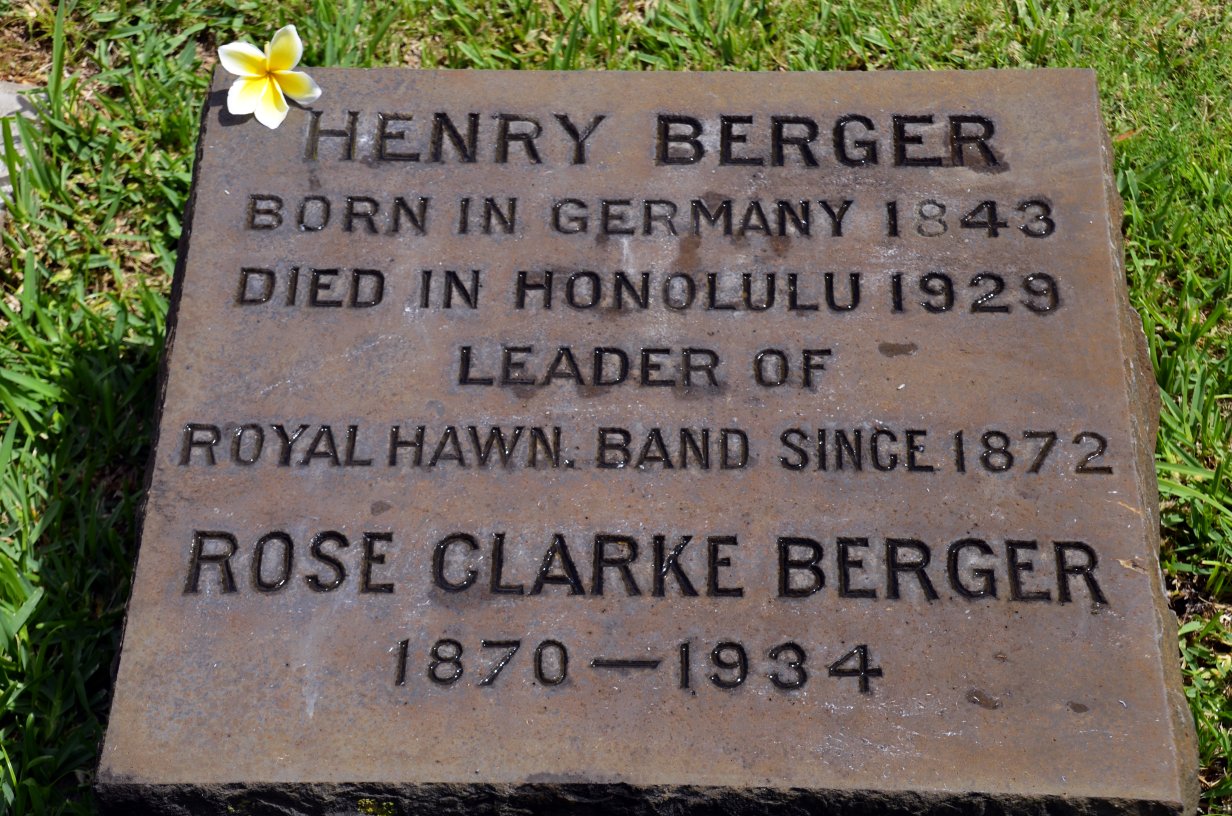
When Bergerʻs four-year loan was pau, he returned to Germany, stayed six months, and turned right back around. He took Hawaiian citizenship in 1879 and returned to his old job as bandmaster. He kept that role through the overthrow all the way until he retired in 1915. Five years after that, Kealakai comes back into my story. The man behind the dreadnought came home and took over his teacherʻs role as bandmaster. That German soldier lived out the rest of his life in Honolulu.
The Strange Journey of “Hawaiʻi Ponoʻī”
After all that digging, I felt some angst about my beloved “Hawaiʻi Ponoʻī.” I could not unhear that it might have started as a jingle for a French king’s ʻōkole surgery, then became a British anthem, then a German imperial hymn, before it landed here for a second time, after we had already tossed it out once. I never even connected it to the tune of “My Country, ‘Tis of Thee.”
I let that feeling sit for a few days. And I think that is what curiosity asks of us. You keep an open mind. You seek truth even in sacred places. You let yourself wonder about things as they might be, even when that is not how they feel to you. I have deeply admired curious people who can hold the wonder of what is in front of them and hold back judgment at the same time. There is a lot of beauty in that letting go.
A few days later, that angst is gone. It grew into a feeling that things we love do not get smaller when we learn where they came from. They get bigger. They carry more people.
Geez, I will never look at this Kalihi bridge the same way again.
 Sign up for our FREE morning newsletter and face each day more informed.

Local reporting when you need it most
Support timely, accurate, independent journalism.
Honolulu Civil Beat is a nonprofit organization, and your donation helps us produce local reporting that serves all of Hawaii.
ContributeAbout the Author