The Sunshine Blog: How Do They Do It? GOP Candidates Surge In General
Short takes, outtakes, our takes and other stuff you should know about public information, government accountability and ethical leadership in Hawai‘i.
September 6, 2026 · 12 min read

About the Author

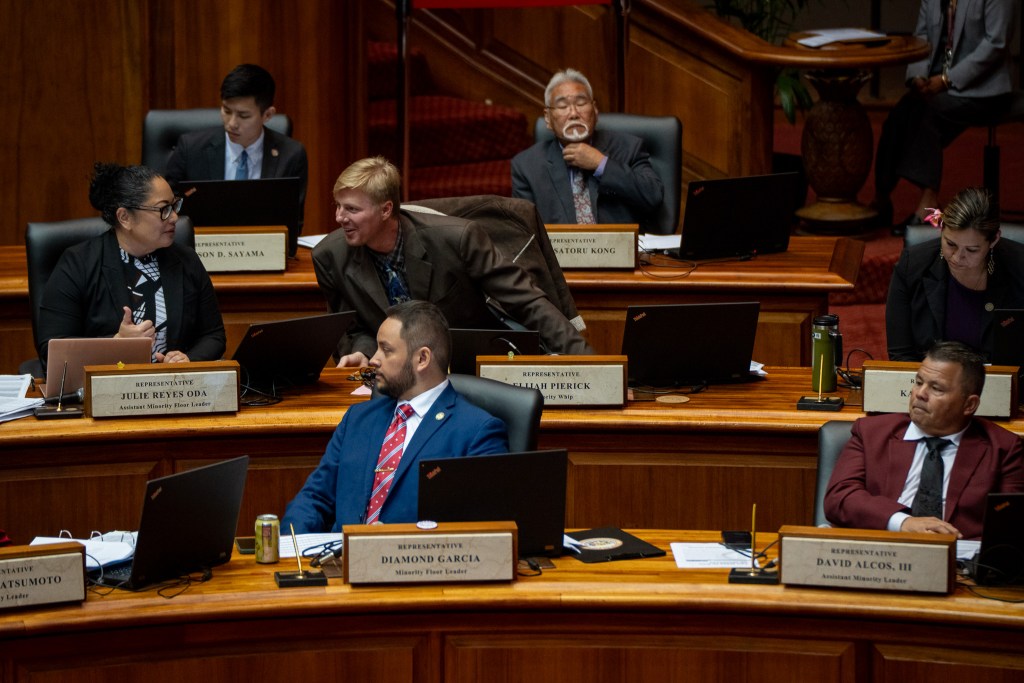
Numbers game: The Sunshine Blog was perusing the Aug. 8 primary results and was struck by the particularly low vote totals for incumbent Republicans in the House. Fewer than 1,000 votes for Diamond Garcia, Garner Shimizu and Chris Muraoka and about 1,100 for Julia Reyes Oda. Meanwhile, their Democratic opponents tallied many hundreds more.
Uh-oh, The Blog thought, these guys are in trouble come Nov. 3.
But are they?
A review of vote totals from prior elections shows a funny thing happened on the way to the general. Republicans who chalked up half or a third as many votes in the primary as their Democratic opponents ended up prevailing — sometimes by a lot.

So The Blog called someone who should know because he’s been in this situation before. Garcia, the House Minority Floor Leader, received fewer votes than Democratic rival Anthony Paris in the 2024 primary and came back to beat him by more than 1,000 votes in the general.
Same situation this year. Garcia collected 941 votes in the primary to Paris’ 1,996. He says he’s not at all worried that he won’t prevail in West Oʻahu’s House District 42 when all the votes are counted Nov. 3.
That’s because, Garcia and other political pundits The Blog spoke with say, Hawaiʻi’s primary system isn’t a good indicator of what the final outcome might be because it forces people to vote exclusively for the party rather than the candidate.
If you pull a Democratic ballot, for instance, you can only vote for a Democrat in every other race. So if you decided to go with a Democratic ballot in the primary because you wanted to, say, support Ed Case in his competitive race against Jarrett Keohokalole, you’d have to vote for Paris, the Democrat, in District 42. But in the general, when you can vote for whoever you want regardless of party, you could go with Garcia.
Garcia calls it “a historical fact” that Republicans may look like they’re not going to do very well in our overwhelmingly blue primary but then prevail year after year.
“That was a question that fascinated me when I entered politics in 2018,” Garcia tells The Blog. “Andria Tupola would get like 600 votes in the primary and then smoke her opponent in the general election by like 3,000 votes.”
Tupola is, of course, the popular Westside Republican who The Blog has a bit of a political update on in the next item. Keep reading.
So Republicans pick up a lot of independent voters in the general, plus the people who either pulled a Democratic ballot or sat out the primary to begin with, Garcia says. Once someone can vote their mind instead of a partisan ticket, Republicans do well especially in conservative districts on the Westside.
Some longtime politicos have a “one-third rule” — if a Republican gets one third of the total votes cast in the primary there’s a good chance they’ll go on to win the general. If they get about as many votes as the Democrat in the primary, the general will be a blow out.
The Blog applied that rule to GOP incumbents who won in 2024 and are trying to keep their seats in this year’s election. The rule certainly held up two years ago:
- House District 32: In 2024, Republican Garner Shimizu collected 1,017 primary votes to Democrat incumbent Micah Aiu’s 2,407. In the general, Shimizu prevailed 4,596 to 4,518 for Aiu. This year’s primary: Shimizu 904; Aiu 2,800.
- House District 40: In 2024, the GOP’s Julia Reyes Oda got 680 votes in the primary to Democrat Rose Martinez’s 1,513. In the general, it was Reyes Oda 4,300 to Martinez 3,836. This year’s primary: Reyes Oda 1,163, Martinez 1,895.
- House District 45: In 2024, Republican Chris Muraoka got 631 votes in the primary while Democrat Desire DeSoto got 976. Muraoka ended up with 3,123 in the general vs. DeSoto’s 2,914. This year: Muraoka collected 910 in the primary while challenger Kalehua Kaopua received 1,416.
Given the one-third rule of thumb one Republican who might be worrying is Rep. Joe Gedeon, who was appointed to the seat last year when longtime Rep. Gene Ward died. Gedeon came through the District 18 primary with 1,309 votes. But Democratic challenger Jamie Wataru far exceeded the rule with 5,105 votes.
One Democrat who might be in trouble: House Majority Leader Sean Quinlan who got 1,765 votes in his North Shore district to Republican Mark Talaeai’s 1,007.
The Blog is eager to see how the math works out in the end.
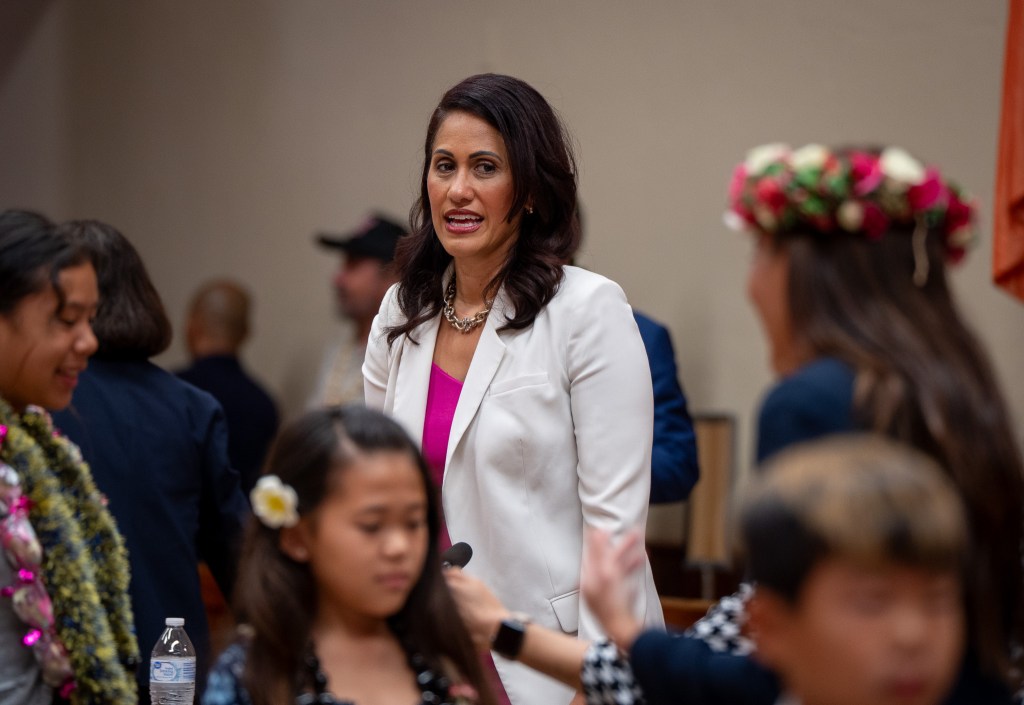
Madam Mayor?: And speaking of Andria Tupola, the Honolulu City Councilwoman, former state House representative and unsuccessful candidate for governor, is steadily building a war chest for a run for mayor in 2028 when Rick Blangiardi is termed out.
Tupola has already held four campaign fundraisers for her expected run and has two more set for later this month (one at Bishop Museum in Honolulu, the other at Plantation House by Gaylords in Līhuʻe) and another in October at the Hilo Yacht Club.
The fundraisers come in the wake of the news that Honolulu City Councilman Tommy Waters is out of the running for a third consecutive term. The Blog and much of Oʻahu know by now that Waters’ actually had his sights set on mayor too, so the question now is whether his being out of office will help or hurt him two years from now.
Tupola is not waiting to find out. She has raised $132,041 so far for her mayoral bid and spent most of it already. Generous donors include Ko Olina developer Jeff Stone.
Of note: Blangiardi raised about $2.4 million when he ran for reelection two years ago and spent most of it.
Jumping ship: It seems like just yesterday that state Rep. Daniel Holt gave up his House seat (and what was considered to be an easy climb to a Senate seat with the retirement of Sen. Karl Rhoads this year) to go to work as a special assistant to the chair of the Board of Land and Natural Resources.
That was in February. Less than six months later, Holt is on the move again, this time to become vice president of external and government affairs with interisland shipping company Young Brothers.

The company put out a news release about the same time Civil Beat’s Kevin Dayton was inquiring about the new hire as well as the ethics of lobbying so soon after leaving his legislative gig. Young Brothers says Holt’s new job will involve “outreach to government, industry and community partners.”
However, the state ethics code requires Holt to wait a year from the time he resigned from the Legislature before he lobbies lawmakers. That one-year restriction on lobbying by Holt also applies to DLNR. So, in other words, no lobbying former lawmaker buddies until February 2027, and no lobbying DLNR until July 2027.
Holt, 41, tells Dayton he went to work for Young Brothers on July 27.
Robert Harris, executive director and general counsel for the state Ethics Commission, said state law allows Holt to lobby at the city and county level in his new job starting now, and he can also lobby members of Gov. Josh Green’s administration, just not DLNR yet.
“There’s lots of change here at the company,” Holt says, “and I’m just trying to help out how I can.”
“It’s continuing on my work to help out the state,” he says. “The big thing is lowering the cost of living for people and I think we have a real good opportunity here, so I was excited for the new challenge. I know we’ve had some struggles in the past, but we’re trying to turn things around here and I’m happy to be on board to do what I can to help the people of Hawaiʻi.”
Young Brothers succeeded in pushing a controversial new law through the Legislature this year that grants automatic rate increases of up to 5% a year to the shipper for three years.
The company is regulated by the state Public Utilities Commission and needs PUC approval for rate increases, but Young Brothers says that approval process is too slow. The company complained inflation and other expenses force it to operate at a loss while it awaits PUC decisions, and the law passed by lawmakers this year and signed into law by Gov. Josh Green bypasses that normal PUC process.
Holt served almost 10 years in the state House representing Kalihi-Pālama, Iwilei, Chinatown and Sand Island, and was chair of the House Economic Development Committee for a time. He resigned from his House seat on Feb. 13 to take the $135,000-per-year state job with DLNR.
Kids these days: U.S. District Court Judge Jill Otake provided a lesson in American history last week when she upheld a state law that requires you to be at least 21 years old to buy a gun in Hawaiʻi.
The challenge was brought by Juda Roache, described in Otake’s ruling as being over 18 but under 21, who would buy his own firearms if only that pesky law wasn’t there. “He would also accept a firearm and ammunition as gifts from his mother,” the ruling says.
Other plaintiffs include Aloha Strategics (doing business as Danger Close Tactical) and JGB Arms, both federally licensed firearms dealers in Hawaiʻi, who complained they can’t sell guns or ammunitions to customers under 21. And of course the Second Amendment Foundation, a nonprofit gun-rights advocacy organization that is one of the largest and most influential in the U.S. with more than 720,000 members.

And yet their challenge did not stand up to Otake’s review of why adults have believed for the last 250 years that there are some things kids just don’t have the good sense to handle. Firearm purchases being just one of those.
You can read her 43-page opinion below which is an interesting romp through some of the social norms dating back to our nation’s founding. But here are the high points, and can The Blog just say, “well, duh.”
“Based on the record before it, the Court finds solid evidence in Founding era common law that society restricted the practical ability of people under 21 from acquiring goods, including firearms, because of concerns about their judgment and maturity …
“After the Founding, as society became more industrial, urban, and commodified in the 19th century, people under 21 began working for wages outside the home in large numbers and were able to keep their earnings for the first time. These societal trends also coincided with technological advances that made firearms more efficient and lethal for violent purposes. As soon as this occurred, states began restricting acquisition of arms, including pistols, by people under 21 because of their lack of maturity and involvement in crime. These laws went largely unchallenged.”
Hawaiʻi’s current age restriction is in keeping with that long-standing realization that sometimes kids will be kids and not in a good way. OK, The Blog is paraphrasing Otake here, but you get the point.
Read more here:
Filling the puka: Two important government watchdog agencies are back at full staffing, just in time for the general election and the new Hawaiʻi Legislature.

Wesley Bogdan is the newest member of the five-member Campaign Spending Commission, which helps to make sure that campaign donations and expenditures are lawful and transparent. Bogdan served in private legal practice, and with the Commonwealth of the Northern Mariana Islands offices of the attorney general and public defender, as legal counsel to two CNMI governors and in senior legal positions with the Asian Football Confederation.
From 2017 through 2023, he served as an associate judge of the CNMI Superior Court. After retiring from the bench, he and his wife relocated to Hawaiʻi.
Bogdan continues to work as a legal consultant, mediator and international football integrity officer. His term expires on June 30, 2027.

And Laura Valenzuela is the newest member of the five-member Hawaiʻi State Ethics Commission, which administers the State Ethics Code and Lobbyists Law. She currently manages affordable housing on Maui, where she has helped residents navigate the challenges of the Covid-19 pandemic, major property redevelopment and the recovery following the Lahaina wildfire.
Valenzuela is a certified hospice aide who has volunteered in support of patients and their families during the end-of-life journey. Her term ends on June 30, 2030.
 Sign up for our FREE morning newsletter and face each day more informed.
Read this next:

Local reporting when you need it most
Support timely, accurate, independent journalism.
Honolulu Civil Beat is a nonprofit organization, and your donation helps us produce local reporting that serves all of Hawaii.
ContributeAbout the Author