The ACLU Didn't Need To Join This Fight
I am ending my membership in the national ACLU, after it joined groups suing Hawaiʻi over its law aimed at keeping dark money out of elections.
October 25, 2026 · 9 min read

About the Author
There is a difference between predicting that a law will lose in court and helping to ensure it loses. The national office of the American Civil Liberties Union seems to have forgotten that difference, and it is an important distinction.
The national ACLU recently filed a friend-of-the-court brief, also called an amicus brief, in a federal lawsuit challenging Act 11, Hawaiʻi’s new law aimed at keeping corporate and dark money out of our elections. An amicus brief is a written argument from a group that is not a party to the case but wants the judge to hear its views. The ACLU sided with the Grassroot Institute of Hawaiʻi, a libertarian-leaning think tank, arguing that the law violates the First Amendment.
That puts the ACLU also on the same side as the U.S. Chamber of Commerce, which has filed its own lawsuit against the law.
The ACLU did not need to join this fight, and it shouldn’t have. Make no mistake about it, I think the courts will probably strike down Act 11. The U.S. Supreme Court’s 2010 decision in Citizens United v. Federal Election Commission makes that the likely outcome.
But being right about how a case will end is not always a reason to join in efforts to defeat a law that tries to fix a problem. While the ACLU’s position may be legally correct, it is politically wrong. It sends exactly the wrong message to the public and to every state and good government group trying to fix our broken campaign finance system at a time when dark money is corrupting our electoral process throughout the nation.

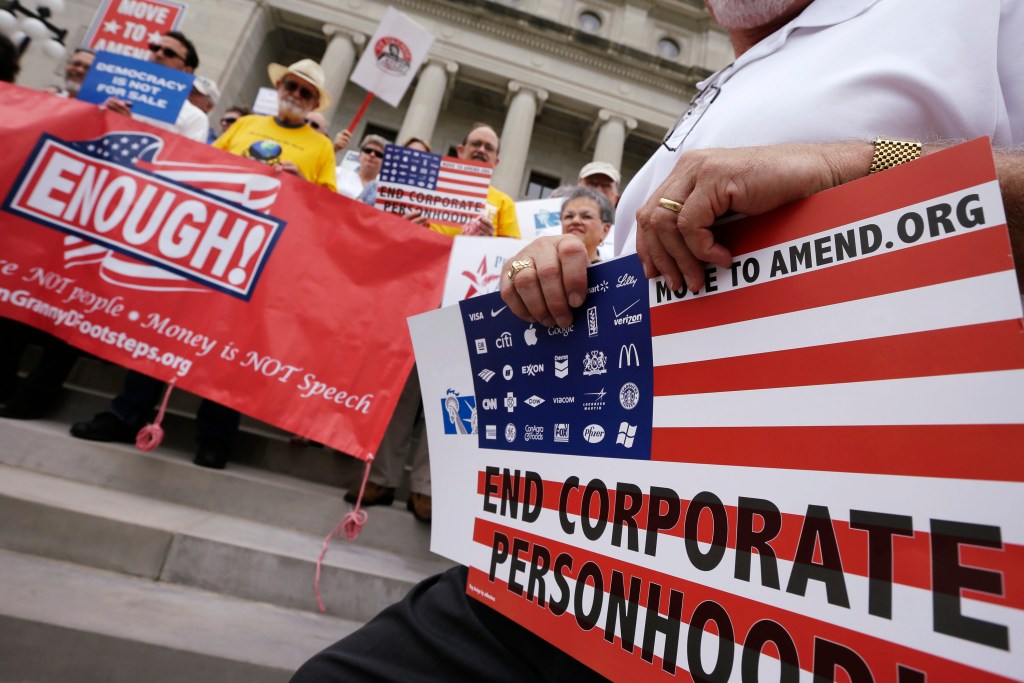
In Citizens United, the Supreme Court ruled that the government cannot stop corporations, unions and other groups from spending unlimited money to support or oppose candidates, as long as they do not coordinate directly with a campaign. The court treated that spending as free speech protected by the First Amendment. Many scholars believe this decision represents one of the more disastrous rulings in the long history of the Supreme Court.
Since then, money has poured into American elections, much of it from groups that do not have to reveal their donors. That is what people mean by “dark money.” According to a friend-of-the-court brief filed by the Campaign Legal Center and Citizens for Responsibility and Ethics in Washington, dark money in federal elections grew from less than $5 million in 2006 to $1.9 billion in 2024.
Hawaiʻi’s Attempt To Stem Dark Money
Hawaiʻi tried something new. Act 11 does not regulate political speech directly, instead it changes state corporate law. Corporations exist only because the state allows them to exist, and each state decides what powers they have. Act 11 says the powers Hawaiʻi gives to corporations, nonprofits, unions and similar groups do not include spending money on candidate elections or certified ballot measures. The law is set to take effect on July 1, 2027.
It is a creative idea. It is also a long shot, because the Supreme Court has repeatedly said that the First Amendment protects the speech of people who join together through a corporation or association. Even Hawaiʻi’s own attorney general warned lawmakers the bill was likely unconstitutional. But that does not mean it is not a worthy effort and one that should not be supported.

Ideas showcases stories, opinion and analysis about Hawaiʻi, from the state’s sharpest thinkers, to stretch our collective thinking about a problem or an issue. Email news@civilbeat.org to submit an idea or an essay.
The law was challenged almost immediately. In June, the Grassroot Institute of Hawaiʻi sued in federal court with help from the Washington, D.C.-based Institute for Free Speech. In September, the U.S. Chamber of Commerce filed a second lawsuit.
The national ACLU chose to join. In its brief, the ACLU told the court that Act 11 would block or discourage a large amount of everyday political advocacy by nonprofits, and that may be legally correct.
Importantly, the Hawaiʻi chapter of the ACLU did not join in that brief, effectively splitting from the position taken by its national office. Our local chapter made the decision not to be a part of the legal movement to block Act 11. In my view, it made a political decision, recognizing that the ACLU does not need to weigh in on every single First Amendment fight.
The ACLU has real legal concerns. It says Act 11 is written so broadly that it could stop nonprofits like the ACLU from spending money on ballot measures about abortion access, LGBTQ rights and voting rights. It also worries that the law’s ban on “indirectly” supporting or opposing candidates is vague enough to make groups afraid to speak at all. Those are serious points.
But every one of those points was already in front of the judge. The Grassroot Institute and its lawyers at the Institute for Free Speech are experienced First Amendment litigators. The U.S. Chamber of Commerce is one of the best-funded legal operations in the country. Neither one needed help from the ACLU to make the argument that Act 11 goes too far.
ACLU’s Past Speech Fights Were Different
This is the heart of my disagreement. In the 1970s, when the ACLU defended unpopular speakers, it was often because no one else would. Here, the opposite is true. Well-funded conservative and business groups were always going to challenge this law, and they did. The ACLU’s brief adds very little to the legal outcome. What it adds is the ACLU’s name and reputation to one side of a political fight about money in our elections. That is a choice, not a necessity.
This is bigger than Hawaiʻi. We are not going to be the last state to try this. Montana voters are deciding on a similar measure this November, and organizers in other states are working on their own versions. Over the next few years, I expect many states to pass laws trying to limit the damage Citizens United has done.
Some of those laws will be well designed. Some will be clumsy. Many will probably lose in court. But each one is a sign that ordinary voters are fed up with elections that feel bought and paid for.
If the ACLU continues to follow the path it took here, it will end up filing briefs against these efforts all over the country, side by side with the Chamber of Commerce and conservative think tanks. It will do this even though those groups will always be there to make the same arguments. Each time, the message to voters will be the same: the nation’s best-known civil liberties group is standing in the way of reform.
That message matters. The ACLU’s influence comes from its credibility with people who care about democracy. Spending that credibility on fights it does not need to join is a grave abuse of that trust.
This is not the first time the ACLU’s national leadership has put a rigid principle ahead of common sense. In 1977, a small American Nazi group announced it would march through Skokie, Illinois, a village that was home to thousands of Holocaust survivors. The village tried to stop the march. The ACLU went to court to defend the Nazis’ right to march there.

The ACLU won in court, but the political cost was enormous. By most accounts, the organization lost about 30,000 members who could not accept that their dues were being used to defend Nazis in front of Holocaust survivors. The fight caused deep anger inside the organization, and many longtime supporters walked away.
I understand the ACLU’s position: Free speech means protecting speech we hate. But at least in Skokie, the ACLU could say that no one else would take the case. That cannot be said about Act 11 and the other attempts that are to follow. Here, the ACLU joined a fight that powerful groups were already waging.
I suggest that the same kind of internal dissent and discussion that followed Skokie should happen now. Members and chapters across the country should ask the national office the same question I am asking: why did you join this fight when you did not have to? Why is the ACLU name, reputation and credibility being used in this manner?
Why I Am Leaving The National ACLU
The ACLU has some of the smartest constitutional lawyers in the country. If it believes laws like Act 11 go too far, it should use that talent to help states write better ones.
Instead of filing legal briefs against efforts that try to work around Citizens United, the ACLU should be meeting with legislators, attorneys general and good-government groups. It should be asking hard questions with them. How do we protect nonprofits that advocate on ballot measures while limiting super PAC spending? How do we require real disclosure of who is paying for political ads? What can states do within the limits Citizens United has set?
That kind of work would protect free speech and strengthen democracy at the same time. It would also keep the ACLU on the side of the voters who are trying to take their elections back.
I have decided to withdraw my membership in the national ACLU. I will continue to support our local chapter directly. I do not do this lightly. I have long respected the organization’s work defending civil rights and civil liberties.
But membership is one of the few ways ordinary people can tell a large national organization that it has made a mistake. To my knowledge, the ACLU’s national leadership did not consult or ask for input from its membership when it made its decision. Its unilateral actions leave me little choice but to withdraw my membership as a sign of protest.
I hope others will join me in asking the national ACLU to rethink its position. It does not have to agree with Act 11 or with similar laws other states are developing. It does not have to pretend these attempts will survive legal scrutiny. It only has to recognize that predicting a law’s defeat is very different from actively working to defeat it.
In this case, and the ones to come, sitting on the sidelines is not only the wiser choice, but the right choice.
 Sign up for our FREE morning newsletter and face each day more informed.
Read this next:

Local reporting when you need it most
Support timely, accurate, independent journalism.
Honolulu Civil Beat is a nonprofit organization, and your donation helps us produce local reporting that serves all of Hawaii.
ContributeAbout the Author