Jeta: Shattering Micronesian Myths Through Teacher Workshops
Through “Carrying Culture: Micronesia,” Hawaiʻi educators are challenging stereotypes and embracing students’ cultural heritage through art.
October 13, 2026 · 8 min read

About the Author
“It’s better to be Black than Micronesian.” That was my ugly introduction to the local slur “Micros” when I moved to Hawaiʻi in 2022.
In San Francisco, I had a hānai uncle from Guam. But I had always known Uncle Brandon as CHamoru, never as Micronesian. It wasn’t until I encountered Micronesia Mart on Kalākaua Avenue that I learned Micronesia is a Pacific subregion, an identity prescribed to its people.
I later met a Honolulu Police Department officer who rationalized the prejudice. He claimed that Micronesians, particularly those from Chuuk, lacked a Western legal system back home and brought their homegrown criminality to Hawaiʻi. By his reasoning, Chuukese people were predisposed to crime.
His remarks were disturbing, especially in light of the 2021 killing of 16-year-old Iremamber Sykap, an unarmed Micronesian teenager shot eight times by an HPD officer.
Hostility toward Micronesians is so pervasive that some schools require students to undergo “transfer counseling” before leaving home to study in Hawaiʻi. An academic milestone gets hijacked by a sobering warning: Don’t ever say you’re Micronesian.
In the 1980s, no one prepared Mary Therese Perez Hattori for what awaited her at the University of Hawaiʻi at Mānoa.
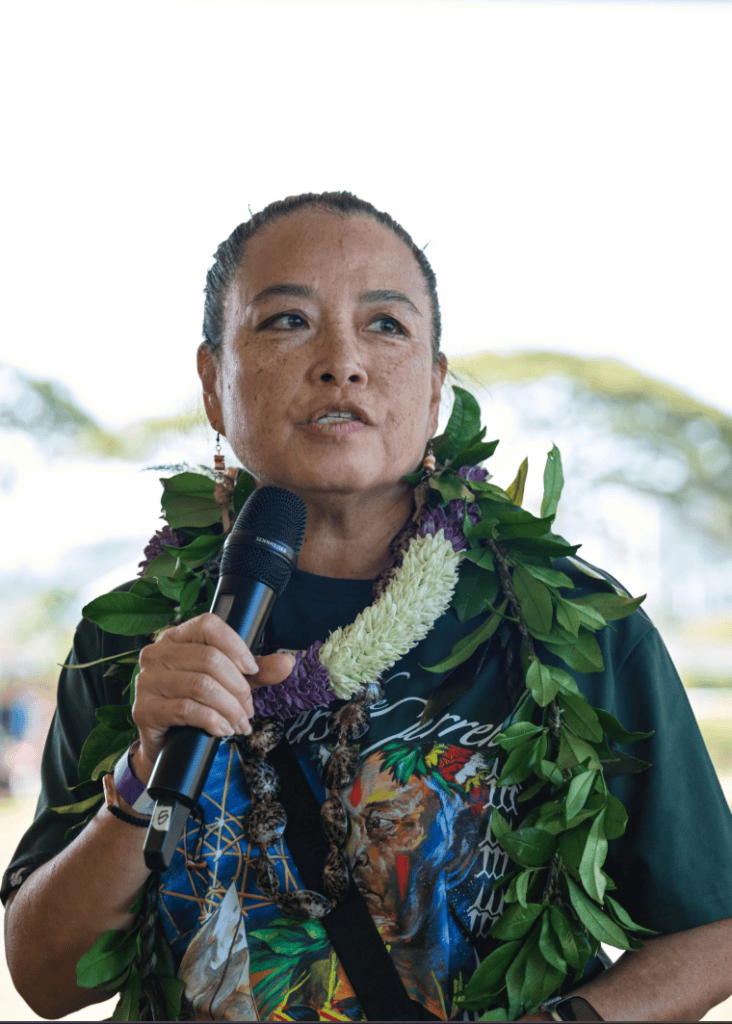
Of Japanese ancestry, Hattori could pass as local, but her thick CHamoru accent invited anti-Micronesian ridicule, often disguised as “local humor.” Raised in the matrilineal society of northern Guam, she encountered overt racism and sexism for the first time in her life, in the Aloha State of all places.
Over time, Hattori shed her accent, married a local, and earned a doctor of education (EdD) degree, but she never forgot how it started.
“Going to college, being the beneficiary of scholarships… I realized I was in a position where I could impact perceptions,” she says.
Today, Hattori challenges the single story of Micronesia.
“Hawaiʻi is one of the worst places to be if you’re Micronesian in terms of social acceptance,” she says. “But it’s also a place where Micronesians have thrived. We have medical doctors, lawyers, biochemists, and artists…”
For over a decade, Hattori has used the arts to reveal this fuller picture of the Pacific.
The “Hidden Minority”
In 2015, Civil Beat published a landmark seven-part series on Micronesian migration to Hawaiʻi that should be required reading for locals.
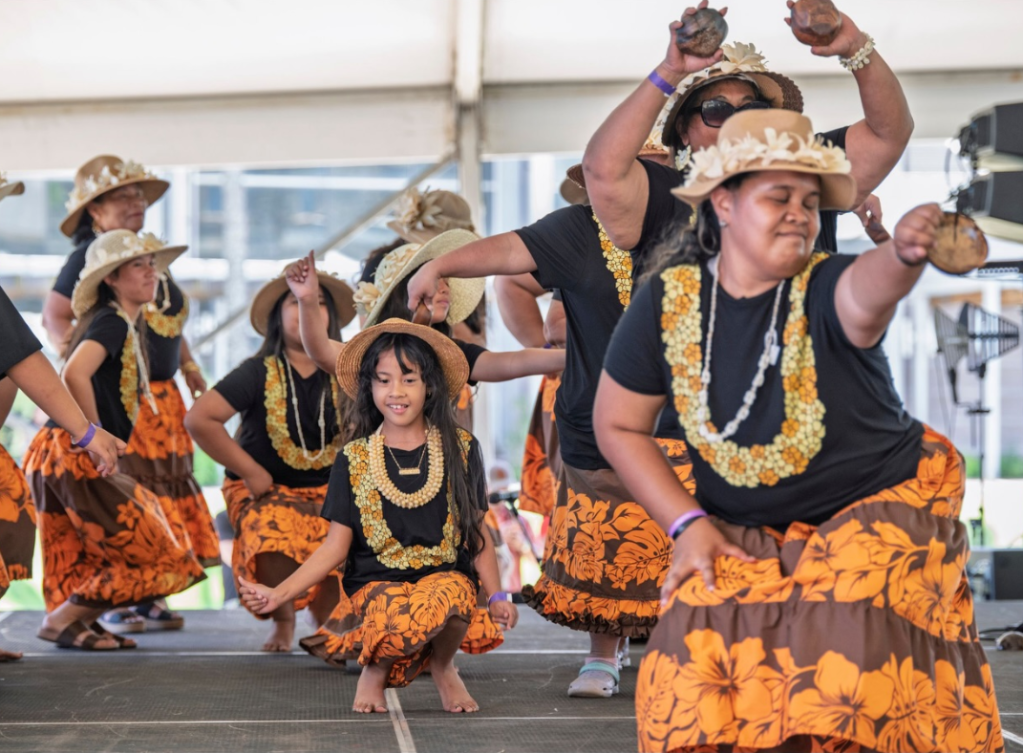
When the Honolulu Museum of Art underwrote the series, its leadership had already begun reconsidering its role as a “community” museum. Recognizing the growing Micronesian communities in surrounding neighborhoods, HoMA set out to create an arts-integrated training program for local educators.
Hattori and HoMA’s then-curriculum specialist Justin Davies were tasked with designing a workshop that incorporated Micronesian arts in an educational framework.
The initiative gave rise to the annual Celebrate Micronesia Festival, now held at the Bishop Museum every spring, and evolved into the statewide professional development program known as Carrying Culture: Micronesia.
Culturally Sustaining Pedagogy
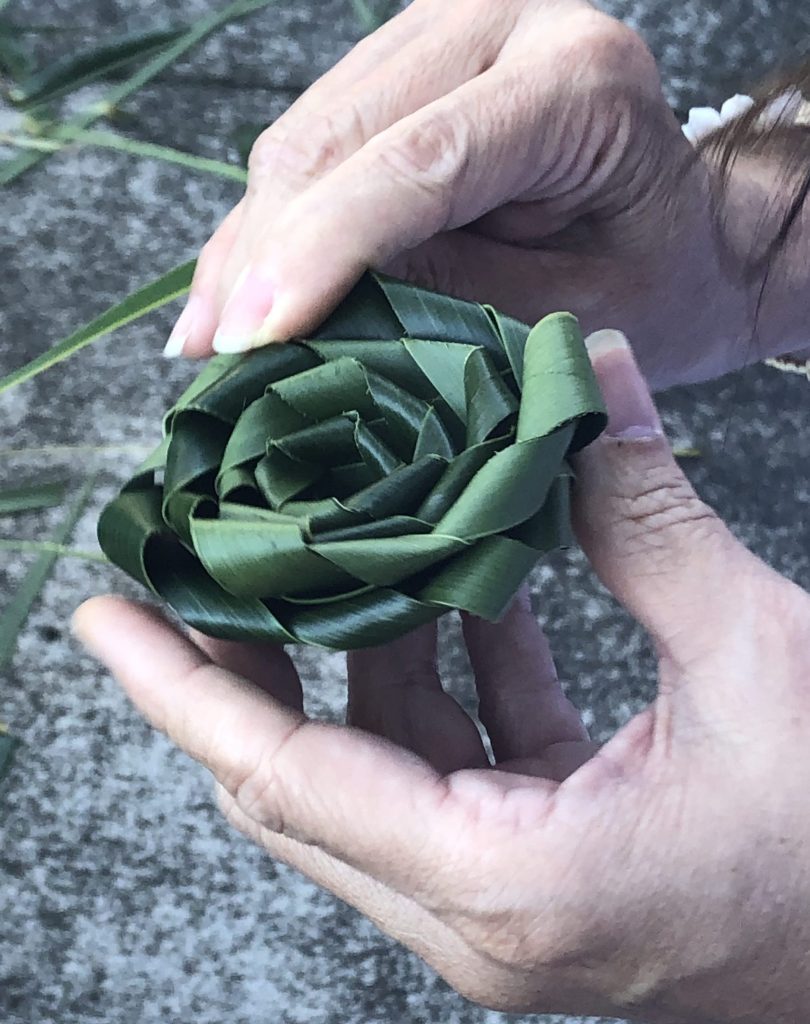
Developed with the Hawaiʻi Department of Education, the three-day program combines community panels, lessons on Pacific history with an emphasis on the Compact of Free Association, and hands-on cultural activities like “enra” – coconut frond weaving.
The training equips educators with the foundational knowledge needed to build culturally sustaining, state-aligned curricula that support English Language Learner instruction.
Hattori requires nearly all facilitators to be Micronesian, ensuring educators learn directly from community experts and not outsiders.

Ideas showcases stories, opinion and analysis about Hawaiʻi, from the state’s sharpest thinkers, to stretch our collective thinking about a problem or an issue. Email news@civilbeat.org to submit an idea or an essay.
To complete the program, educators must submit portfolios documenting student learning through artwork and writing samples, along with their own written reflections. Upon approval, educators are eligible for salary reclassification (a pay raise).
The next workshop takes place Nov. 14 at the East-West Center alongside the “Ocean of Peace” exhibition. Registration closes this week, on Oct. 14.
The Language Barrier
The need for culturally informed educators is evident in Hawaiʻi’s English Learner classrooms.
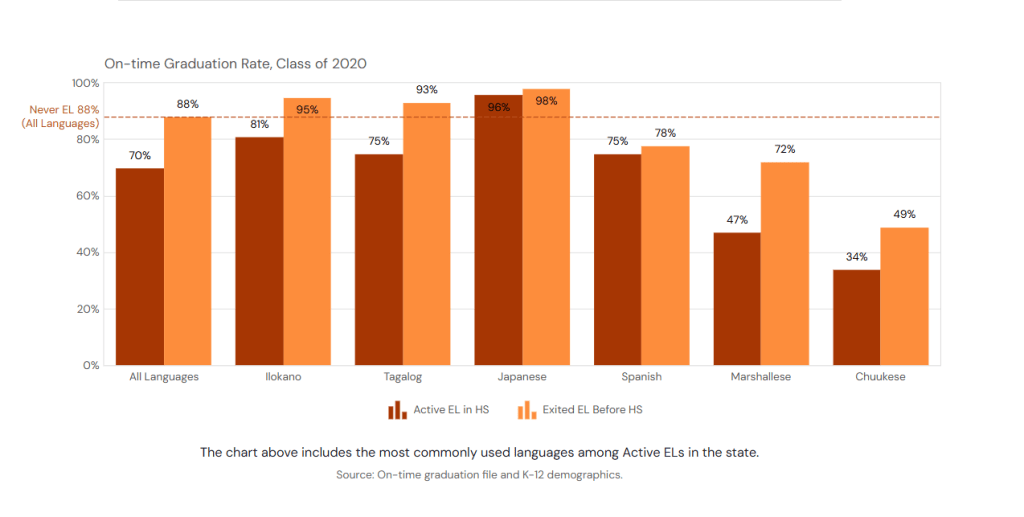
In the 2019–20 school year, 5,671 public school students receiving EL services spoke one of five Micronesian languages: Chuukese, Marshallese, Pohnpeian, Kosraean and Yapese. Of these, Chuukese and Marshallese were among the top three languages of EL students in Hawaiʻi.
According to state education data for the Class of 2020, Marshallese-speaking students who exited EL programs before high school had a 72% on-time graduation rate, compared with 47% among those still enrolled. For Chuukese-speaking students, the rates were 49% and 34%, respectively.
Not all EL courses available to high school students count toward graduation, putting them further behind.
Shortages of qualified EL teachers and discrimination also create additional barriers. Documented accounts of bullying include Micronesian students being targeted simply for speaking their native languages, creating yet another obstacle to learning English, while biases persist within the education system itself.
“Bringing successful professional Micronesians into the training has really been transformational,” Hattori says.
“It’s forced teachers to set aside the myths and stereotypes because we’re presenting them with Micronesians who have broken through all the barriers.”
The Lingua Franca Of Art
In 2014, EL educator Viviana Martinez arrived on the Big Island through Teach for America. An immigrant from Guadalajara, Mexico, who grew up in Orange County, she empathizes deeply with the “second-class citizen” treatment of her Micronesian students.
At Konawaena High School, she observed that Micronesian students were disproportionately failing classes and receiving disciplinary referrals. Determined to understand why, Martinez completed “Carrying Culture: Micronesia” in 2018.
Until then, she had never considered herself an art teacher.
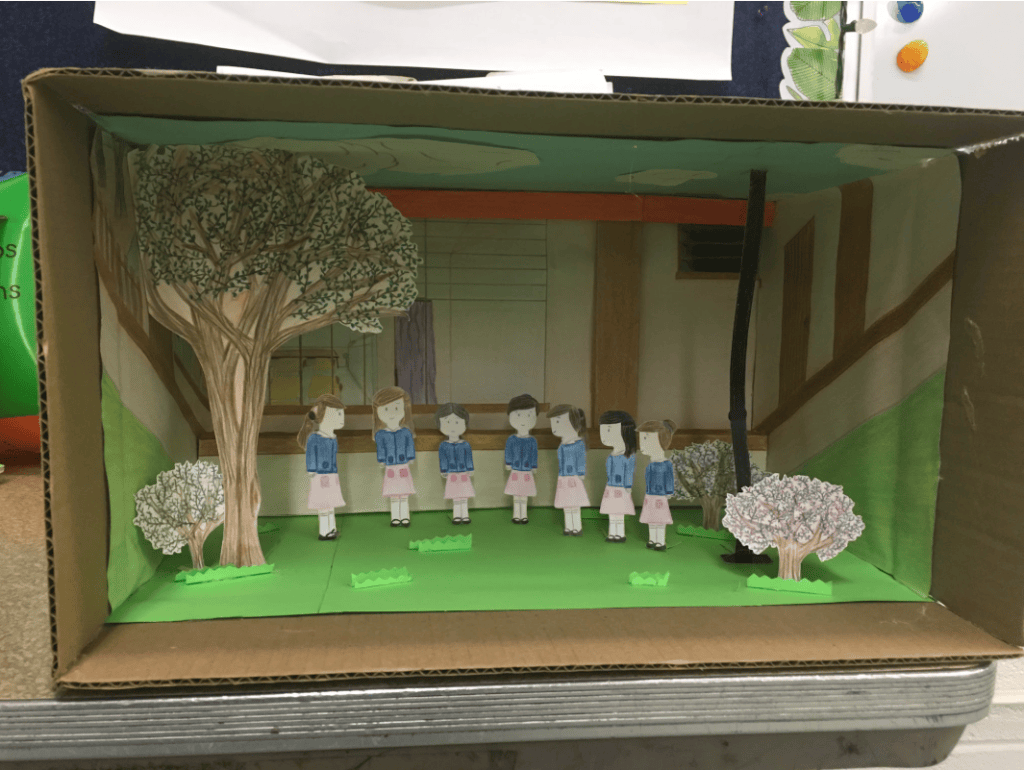
“This workshop gave me permission to create art and then ask my kids to do it,” she says. “I wasn’t really incorporating art in this way before. I never asked my kids to make dioramas.”
For EL students, art provides a less intimidating entry point for language development.
“It is very easy for English learners to talk about art,” Martinez says. “It’s interpretive. There’s no right or wrong.”
Martinez made cultural heritage a learning resource in her classroom. Students brought family artifacts from their home islands to create “walking museums,” sharing the stories behind them. They wrote bilingual children’s books, which they also read aloud to younger students at local elementary schools.
Art became a springboard for creative writing, with students crafting narratives around artworks. Employing translanguaging strategies, Martinez encouraged students to write in both English and their native languages, reversing the “English-as-king” mentality that erases cultural identities.
Instead of suppressing their heritage, Martinez allowed it to flourish.
Carrying It Forward
Since completing “Carrying Culture: Micronesia,” Martinez has continued to deepen her engagement with Pacific cultures. This year, she served as a chaperone on a Pacific and Asian Affairs Council study tour to Palau, where students heard from master navigator Landon “Moss” Sewralur.
The lessons from the training also extended beyond her classroom.
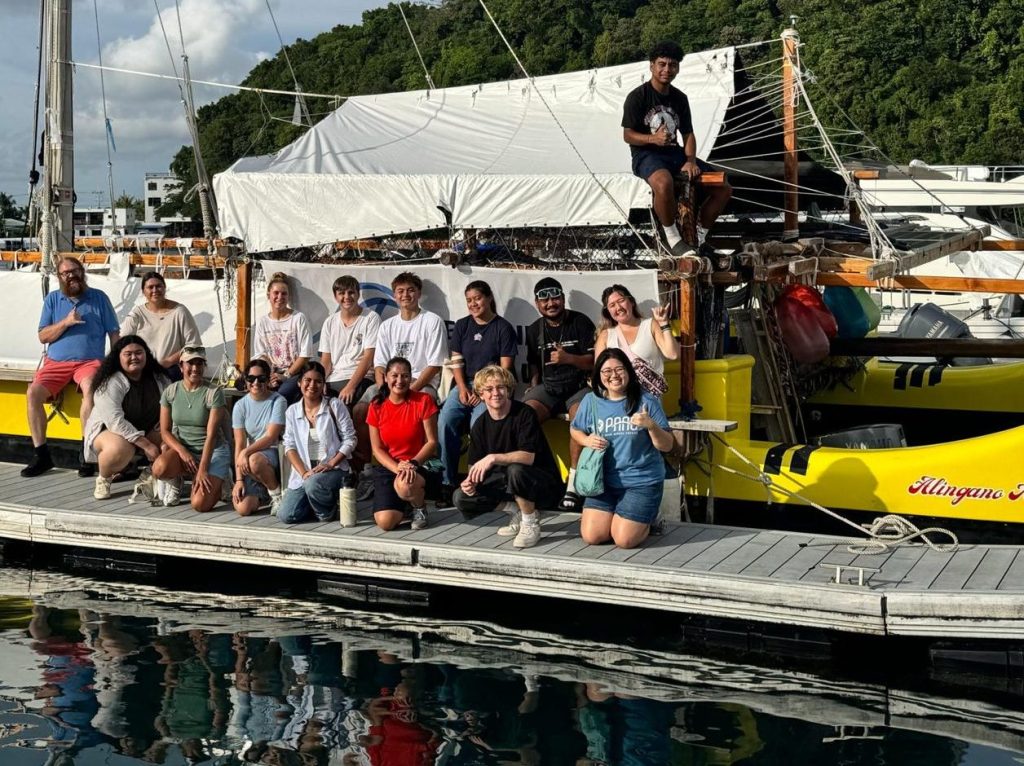
Inspired by the panel discussions, Martinez organized a similar event for her fellow faculty members. Through Micronesians United Big Island, she connected with Thomas Raffipiy, nephew of legendary master navigator Papa Mau Piailug, who traveled from Hilo to Kona to speak with staff.
Beyond the faculty panel, Martinez sought to address institutional practices that alienated Micronesian families. When students missed school, an automated system called the number on file. Unanswered calls were logged without further follow-up.
Understanding the role of extended families in Micronesian communities, Martinez reached out to students’ aunties, grandmothers, and cousins instead. Previously unreachable families began responding to calls and texts.
Martinez also rallied school administrators to visit families at home, where Micronesian parents would feel more comfortable to talk. Through “listening circles,” school leaders heard firsthand how isolated and unheard students felt at school.
“We stopped asking kids to stay after school for homework help,” she says. “That was not working. They needed to catch the bus. They had no way to get home.”
Educators instead brought tutoring to students, setting up homework stations where they lived.
Martinez recalls a telling detail: “When the kids got off the bus, the girls would go to their apartments and change into more traditional clothing. Just seeing them in their traditional clothes, they were so much more relaxed.”
At home, students could study comfortably in their cultural garments. At school, the same attire would draw attention to being “Micro” and possibly tip off the bullies.
“What we perceive as non-participation or non-engagement is really a misunderstanding of culture,” Martinez says. “The kids want to learn and they want to do well.”
The problem is painstakingly clear: “It’s the system that is set up against them.”
Editor’s note: This is the first of two columns exploring Mary Therese Perez Hattori’s work with the arts to broaden our perspective of Pacific cultures. Next week’s column will feature artists of the “Ocean of Peace” exhibition at the East West Center.
 Sign up for our FREE morning newsletter and face each day more informed.
Local reporting when you need it most
Support timely, accurate, independent journalism.
Honolulu Civil Beat is a nonprofit organization, and your donation helps us produce local reporting that serves all of Hawaii.
ContributeAbout the Author