

Honolulu Police Shooting: Teen’s Family To Get $1 Million Despite Pushback
Honolulu City Council members approved the settlement to protect the officers involved in the 2021 fatal shooting of Iremamber Sykap from future liability.
The family of a 16-year-old killed by Honolulu police in 2021 will receive $1 million in a civil settlement despite hundreds of residents voicing opposition to the agreement.
The Honolulu City Council voted unanimously Wednesday to approve the settlement for the family of Iremamber Sykap, a Micronesian boy who was shot by officers while fleeing arrest in a stolen Honda Civic on April 5, 2021.
His grandmother and mother sued the city and police department for wrongful death and negligence, arguing Sykap was unarmed and posed no threat to officers when they shot him. Honolulu Prosecutor Steve Alm initially charged three officers in the shooting, but a judge later threw out their cases.
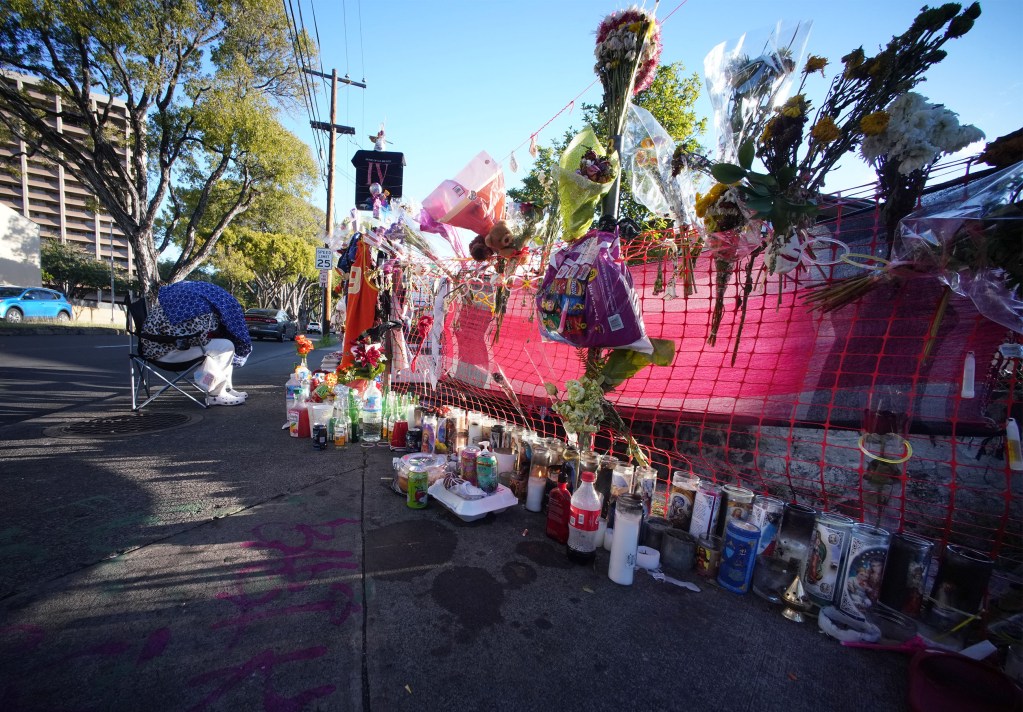
Before Wednesday’s meeting, council members received written testimony from more than 600 residents who opposed the settlement, many arguing it would set a bad precedent for Honolulu because Sykap was violating the law when he was shot. Michael Kitchens, administrator of Stolen Stuff Hawaiʻi, an influential Facebook group with more than 200,000 members, put a callout on the page asking people to submit testimony against the settlement.
“Approving a settlement under these circumstances signals that the City is willing to assume liability even when officers were cleared and when the surrounding conduct posed danger to the public,” he wrote in his own testimony to the council. “This risks encouraging future lawsuits regardless of the merit of the underlying facts, places an unnecessary financial burden on taxpayers, and erodes public confidence in the fairness of our legal and administrative processes.”
Although the vote was unanimous, five council members — Val Okimoto, Scott Nishimoto, Augie Tulba, Andria Tupola and Tommy Waters — did so with reservations. Some said they voted in favor of the settlement not because they believed the officers did anything wrong, but because they wanted to protect them from future liability.
Eric Seitz, the attorney representing Sykap’s family, said he’s not concerned with whether the city admits wrongdoing.
“They’re paying out $1 million, that’s a pretty big concession,” he said. “When we agreed to settle this case, for far less than I think it’s actually worth, we did that only with the stipulation that it had to be enough money to indicate that this child’s life was worth something.”
Officers’ Cases Thrown Out
The shooting sparked grief and outrage among many community members at the time, and created deep divisions in Honolulu as the question of whether the shooting was justified played out in the courts.
Demonstrators called the killing an unwarranted use of force and many accused police of racially profiling Sykap, who was Micronesian. But other residents supported police department and union officials who said the officers acted appropriately to protect themselves and the public.
Alm filed charges against three officers, even though a grand jury had declined to indict them. Geoffrey Thom was initially charged with murder and Zackary Ah Nee and Christopher Fredeluces were charged with attempted murder.
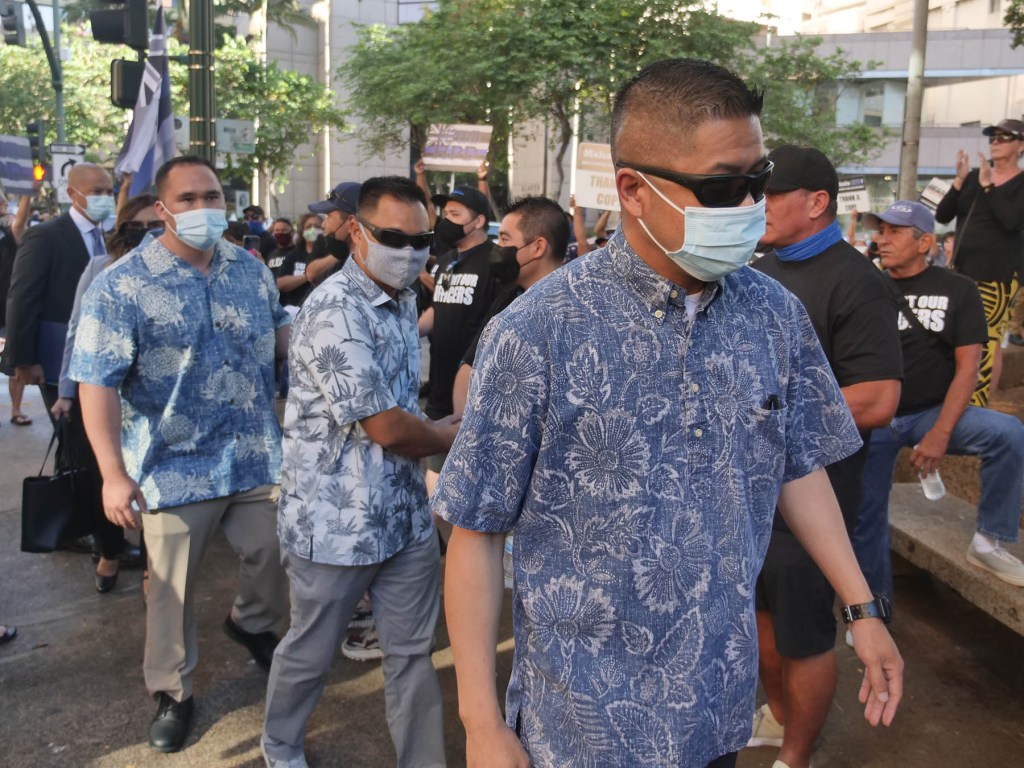
The officers pursued Sykap, who was driving the Honda Civic with five other young occupants, from Kawaikui Beach Park in East Honolulu to Waikīkī. The Honda stopped at the intersection of Kalākaua Avenue and Philip Street just after 5 p.m.
Fredeluces went to the driver’s side, pointed his gun and commanded the occupants to exit the vehicle while Ah Nee ran to the passenger’s side door and tried to open it. It was locked. He drew his gun and banged on the window with his hand.
At that point, Thom, who was standing behind the Honda, began firing into the rear window. He fired 10 rounds, eight of which struck Sykap, according to court records.
Fredeluces fired a single round into the driver’s side door but did not strike Sykap.
The car began moving forward, hitting Ah Nee’s patrol vehicle before running onto a sidewalk and toward the canal. Ah Nee fired four shots, striking Sykap’s brother, Mark Sykap, who was in the passenger seat, in his shoulder and hand.
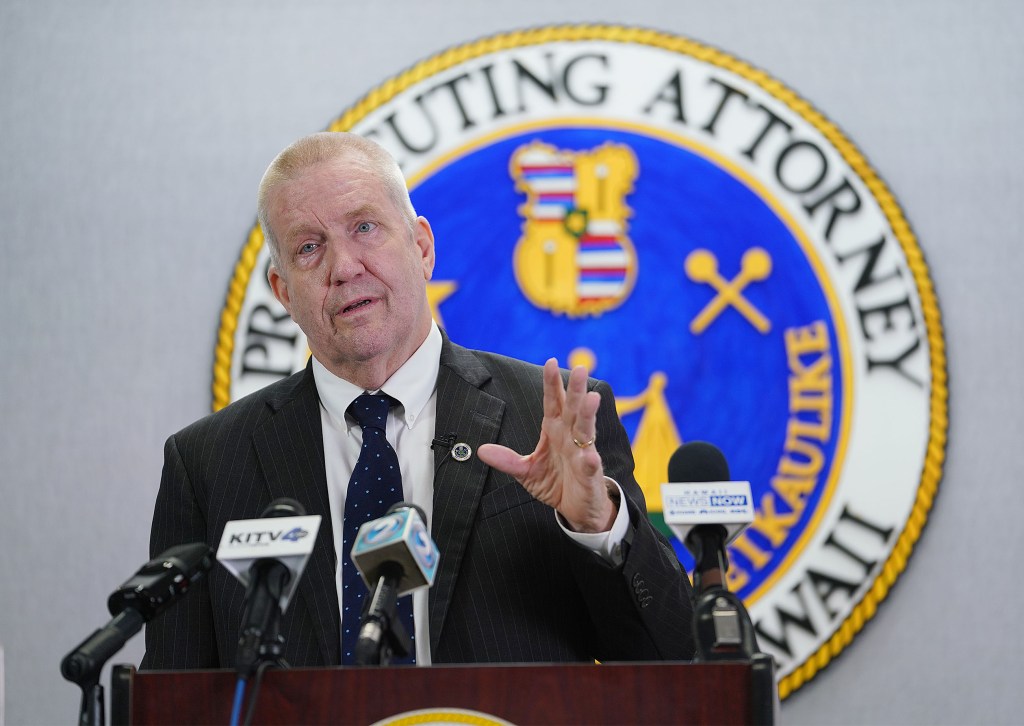
Alm’s criminal complaint said the officers’ use of force was “unnecessary, unreasonable and unjustified under the law.”
But Honolulu District Judge William Domingo threw out the cases, arguing it was unreasonable for prosecutors to say the officers were not in danger when they shot Sykap. Domingo took into consideration the fact that Sykap was evading arrest, which he called a provocation.
Alm later criticized the judge and the police department for their handling of the case and said HPD allowed the officers involved in the shooting death to write their reports in the same squad room.
Wrongful Death Suit
In their lawsuit, Sykap’s family cited police department policy prohibiting officers from shooting into vehicles unless the driver is threatening someone with deadly force by means other than the vehicle itself or if other circumstances warrant the officers using deadly force.
Sykap was “unarmed and posed no risk of harm to any of the Defendants,” the lawsuit states.
The judge in the civil case, First Circuit Judge Lisa Cataldo, in October granted multiple motions from Seitz, the Sykap family’s attorney, to prevent certain evidence from being presented by the city if the case went to trial.
Jurors would not have been able to consider the fact that an inoperable gun was found in the car after the shooting. Officers could not see it at the time, so its presence in the car was irrelevant to their decision to shoot, Seitz said. Evidence surrounding Sykap’s alleged criminal history, behavioral issues at school and the fact that a toxicology report showed he had methamphetamine in his system at the time of his death would also not have been admissible.
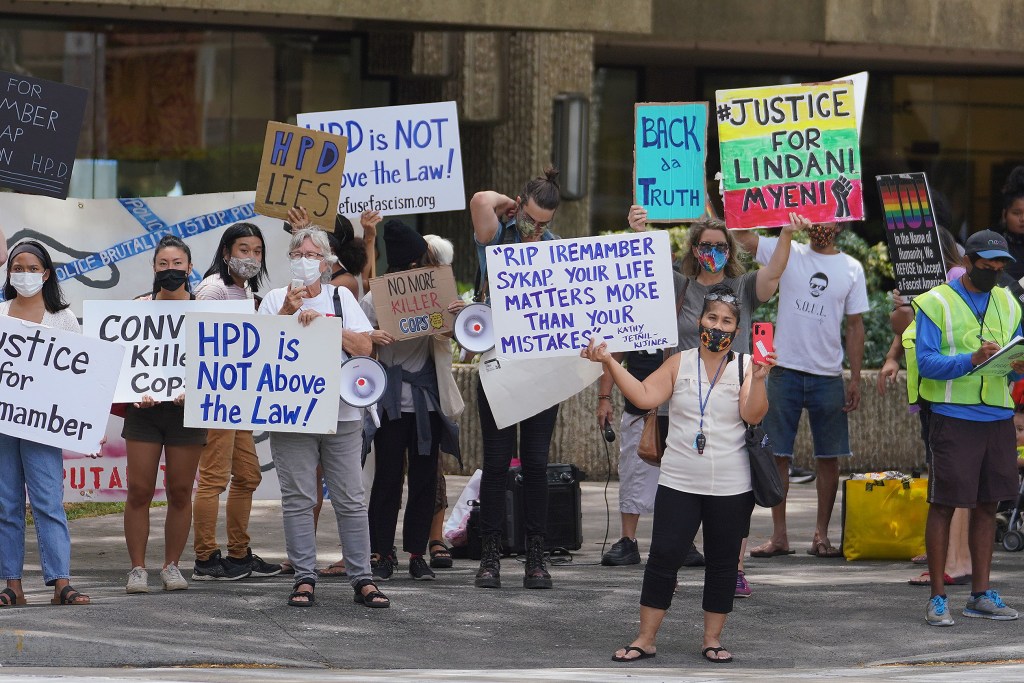
The city would also have been prevented from admitting evidence about crimes Sykap is accused of committing in the days leading up to the shooting.
The stolen vehicle he was driving that day had been tied to armed robberies and thefts, but Sykap was never charged with any of those crimes or identified as a suspect by any victims or witnesses, according to a motion filed by Seitz.
Police, however, point to the crimes committed in the days before the shooting as part of the justification for the officers’ actions.
The officers “were attempting to arrest a crew that had just carried out a home invasion robbery, adding to a list of armed felonies committed in a stolen car while waving guns out of the window as they sped from one victim to the next,” Nicholas Schlapak, president of the state police union, said in a statement Wednesday. “These facts have been scrutinized three times: by a Grand Jury, by a State Judge, and by an internal administrative investigation. In all three cases, the outcome was the same: our officers acted appropriately.”
The city’s corporation counsel, Dana Viola, on Wednesday said approving the settlement would prevent the officers from being sued individually in the future. Council members also expressed concern that the officers would not be able to testify in a civil trial because their statements could be used against them if prosecutors were ever to refile criminal charges. There is no statute of limitations for murder.
Council member Tulba, who represents Waipahu, Iroquois Point, West Lock, ʻEwa Villages and portions of ʻEwa Beach, said he disagreed with settling the case but would vote to do so to protect the officers.
“Settling for a million dollars is not something I want to do,” he said. “It’s a hard pill to swallow, especially when the case has raised serious concerns about repeat offenders and the concern they place on public safety in our communities.”
Interim Honolulu Police Chief Rade Vanic testified that he supported the officers but also supported council members approving the settlement.
A few people testified in person during the meeting, but those who submitted written testimony wrote that they did not want their taxpayer dollars going to settle the case.
“It is deeply concerning to ask Honolulu taxpayers to fund a settlement when the officers were cleared, the suspect was engaged in serious criminal activity, and the surrounding circumstances posed a threat to the public,” wrote Catherine Macomber. “A settlement under these facts sends the wrong message.”
Seitz said police were not justified in their use of deadly force, but he voiced concerns about getting a fair trial because of hateful and racist comments online directed toward Sykap, his family and other members of the Micronesian community.
Some of the testimony submitted to the council contained racist statements targeted at Micronesians.
After the settlement was approved Wednesday, Seitz said Sykap’s family was “relieved that it’s over.”
Rare Opposition
The last time the City Council received such strong opposition to a police-related settlement was in the case of Lindani Myeni, a Black man who was shot by Honolulu police during a struggle on April 14, 2021, just days after the Sykap killing.
Dozens of Honolulu police officers in uniform appeared before the City Council in October 2024 to oppose a $1.5 million settlement for Myeni’s wife, who filed a wrongful death lawsuit in 2021.

The two officers who shot Myeni, Brent Sylvester and Garrick Orosco, were cleared of wrongdoing in June 2021 by Alm’s office, which declined to pursue charges against them.
On the night of the shooting, Myeni attacked the officers, who tried to use less-lethal methods, like deploying a Taser, to subdue him. Both officers were injured and one suffered multiple facial fractures.
Attorneys for Myeni’s wife argued that the officers did not announce themselves as police when they approached Myeni that night and blinded him with their high-intensity flashlights. Myeni attacked them in self-defense, thinking he was being jumped by unknown assailants, the lawyers argued.
City Council members later declined to vote on the settlement, saying it should be decided by the courts. First Circuit Judge Karin Holma dismissed the case in July, ending the trial before evidence could be considered by a jury. Holma argued there was no evidence that officers had violated Myeni’s constitutional rights.

