Why Honolulu Needs An Office Of Data Innovation
Charter Amendment Question 15 would make Oʻahu’s chief data officer a permanent steward of a public resource.
October 16, 2026 · 5 min read


About the Author

Every time you renew your car registration, report a pothole through 311, or apply for social services, you add a piece of information to the City and County of Honolulu’s records. Those records seem unrelated, but together they could show the city where processes get stuck, where roads need repair and where residents are struggling to get help. That only happens if someone is responsible for stewarding that information.
How responsive and effective city services are depends on how well we manage that data. It is our data. Like our natural resources, it is a public good, and it needs deliberate and thoughtful management.
Question 15 on the general election ballot for Oʻahu voters is very simple. It will make that stewardship permanent by establishing a chief data officer and an Office of Data and Innovation in Honolulu’s Charter. Of note, the chief data officer and two data positions are already fully funded. So voting yes on 15 will not substantively add to the city’s budget; it simply ensures this critical function will persist regardless of shifting leadership priorities.
Data Is A Public Priority
This year’s charter amendment process brought in a record 295 submissions, and roughly a quarter addressed data privacy, governance, transparency or artificial intelligence. One proposal (P118) called for a digital privacy and data protection framework. Another (P007) would require agencies to limit how much personally identifiable information they collect (see the full list). These and other proposals reflect data concerns that many residents share, and rightly so.
Privacy protections, limits on data collection, and responsible use of AI all depend on consistent standards across departments. That requires a permanent position that oversees the city’s evolving data landscape and has the authority to follow through on solutions for the long term.
The Gap In Our Charter
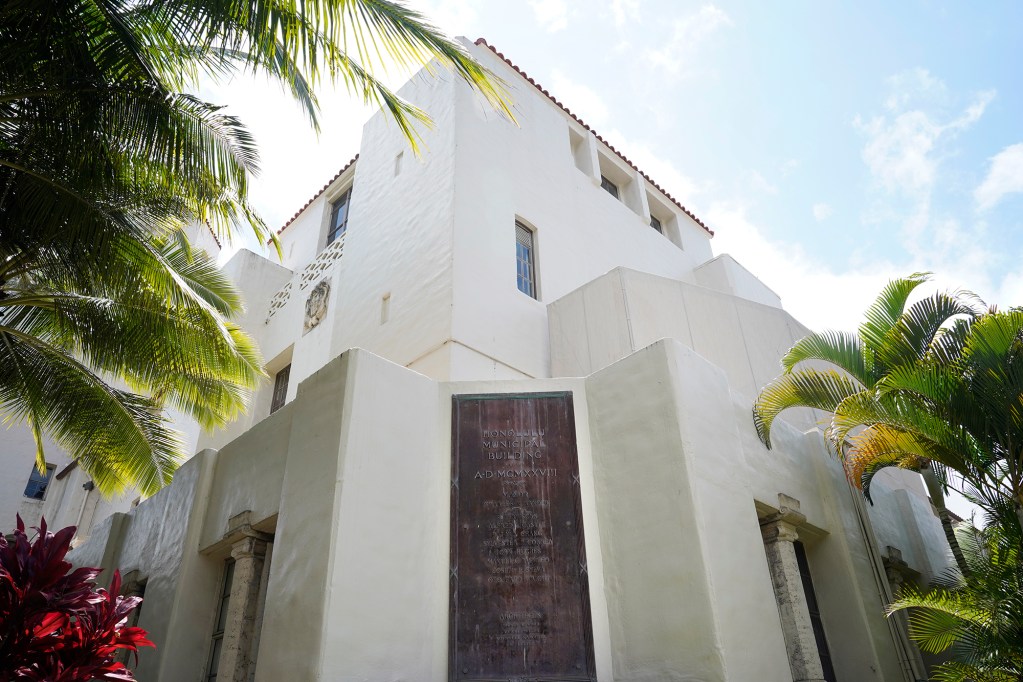
Honolulu currently has both a chief information officer and a chief data officer. The CIO heads the Department of Information Technology, a department established in the City Charter.
In 2022, Ordinance 22-031 established the CDO role in the Managing Director’s Office, along with two supporting positions. Because the CDO, unlike the CIO, is not in the charter, future administrations could defund or eliminate the position without a public vote, leaving a critical function vulnerable.
How is a CDO different from a CIO? Think of the city’s data as water. The CIO and DIT build and maintain the system that carries it: the pipes, the pumps and the locks on the gates. The CDO makes sure what flows through those pipes is clean, used responsibly, and reaches the people who depend on it.
The CIO runs the system; the CDO manages the resource. We need both, but only one of them is in our City Charter today.
A Look Inside Our Chief Data Officer’s Role
The city has more than 20 departments and offices; each one collects and manages its own data. Before the city can build the dashboards, tools, and services residents can see, it has to understand what data each department has, where the gaps are and how to make it all work together, which is exactly the groundwork the CDO has been laying.
The city’s initial data plan (2025), published a year into the CDO’s tenure, highlighted six impact areas after a months-long review of how well each city department collects, manages and uses its data. A 2026 report by the CDO describes progress on establishing a data governance framework, developing data and AI best practices and building data capacity across the city.
For the past two years, the Hawai‘i Data Collaborative has partnered with the CDO to tackle strategic issues and build tools that directly benefit residents. City departments have long stored data in disconnected systems that hold inconsistent or duplicate records, making it difficult to tell what programs actually work.
HDC has supported the CDO in ongoing development of the city’s central property data inventory, an innovation that combines property data from multiple city sources into a “single source of truth,” driving a clearer understanding of the city’s property holdings available for affordable housing development.
AI is already changing city processes, which makes careful oversight more important than ever. The question is not whether this technology can do a job, but whether it should and under what conditions it is used responsibly and ethically.
The CDO brought departments together to work on the city’s AI governance policy. The data and AI challenges we face now, and the ones we cannot yet predict, need a champion inside government who keeps that data secure and deploys new technology responsibly, so the city runs more efficiently.
A Commitment To Our Data
Question 15 isn’t a silver bullet for the city’s many challenges, but it is an opportunity to build the foundation for a city that uses data wisely and responsibly to address those challenges.
A yes vote on Question 15 will be a significant step forward toward a more transparent and effective Honolulu, one that treats our data as the public resource it is.
Editor’s note: The Hawaiʻi Data Collaborative was founded and supported by The Omidyar Group and recently announced plans to dissolve and merge its team with other Omidyar teams in Hawai‘i. Civil Beat also was founded by Pierre and Pam Omidyar and continues to receive substantial funding from their donor advised fund at Hawaiʻi Community Foundation, but operates independently.
 Sign up for our FREE morning newsletter and face each day more informed.
Read this next:

Local reporting when you need it most
Support timely, accurate, independent journalism.
Honolulu Civil Beat is a nonprofit organization, and your donation helps us produce local reporting that serves all of Hawaii.
ContributeAbout the Author